
China
World battling Against Covid-19 Pandemic

The World is undergoing serious economic, social and health crisis as the Covid-19 outbreak originating from Wuhan China, has spread to almost all the continents of the World except Antarctica – the Unhabitated Continent.
Hundreds of People died in china, Iran, France, South Korea and Italy. Italy has been severely gripped by a coronavirus. The Covid-19 after bringing catastrophe in Asia reached Europe and Africa.
Though Africa has limited cases as reported but given the alarming and catastrophic situation rising every day. The South Asian countries i.e. Pakistan, India, Bangladesh though ill-prepared to fight against this Pandemic have done a tremendous job in terms of preparations and taking preventive measures to limit the spread of the fatal Covid-19.
As hundreds of cases are reported positive, fear, economic crisis, education and health effects have played havoc to the countries to fight Covid-19. The World Health Organizations (WHO) has declared it pandemic asking countries to follow the precaution or preventive measures as circulated by WHO and Isolation facilities for those diagnosed positive.
The States have started diverting their funds towards fighting this novel Virus and having set up Emergency Health Centers and Isolation Centers for quarantining those arriving from worst-affected countries i.e. China, Iran, France, America and Italy.
Sindh has been the worst affected by this Virus with 413 confirmed cases as most of the cases are imported from Iran via Taftan.
These include those pilgrims (Zairian) who are returning from Iran after visiting holy places. CM Sindh has so far done a marvelous job by setting up Isolation and Screening Camp at Sukkur to diagnose and keep them at the facility to avert any possibility of contraction to their families.
Punjab Stands 2nd with growing cases of 312 and the number is rising .KP stands 3rd with sudden appearance of 121 cases since these confirmed cases are also imported through Taftan border as the affected patients had recently returned from a pilgrimage from Iran. Baluchistan is on 4th Number with 119 confirmed cases, AJK/GB 82 and Islamabad capital with 20 cases.
The media is regularly breaking and updating news every moment regarding the novel coronavirus, adding the rise to the concerns regarding the sudden outbreak of the pandemic to more countries. The concerns and feelings of fear run high amid cancellations and postponement of all sporting activities, education, colleges, universities and Wedding or public gatherings.
Companies such as Google, Yahoo, Twitter, Microsoft and Apple have advised their employees to stay at home and work from their home. They also circulated the WHO guidelines among their employees and avoid gatherings of more than 10 people as announced in the latest guidelines of WHOM.
Countries are strictly following the preventive measures communicated to the people by WHO experts and putting bans on unnecessary travel in the city or out of city or borders.
It is the alarming and panicking situation since No vaccine nor has injection been made to treat those affected with the novel coronavirus. WHO cautions the countries having limited facilities to conduct tests and treat the patients advising states around the world especially the Asia and Europe to take preventive measures until the vaccine to treat this deadly virus could be discovered by Medical scientists and microbiologists?
At the moment Covid-19 has caused more deaths than Ebola outbreak in African countries, especially in Congo. According to reports that as per, the calculations based on the Center of disease control, the scenarios suggested that as many as 2.4 million to 21 million people in the U.S. could require hospitalization, potentially crushing the nation’s medical system, which has only about 925,000 staffed hospital beds as reported by Media.
The number is very low to house the huge number of affected people from covid-19. It may bring a panicking situation in a developed country like the USA. Less than a tenth of those are for people who are critically ill.
It would be disastrous to deal with the pandemic given the Medical facilities available at the US and the African states.
At the moment, China is the worst hit with 3287 deaths due to novel coronavirus followed by Italy with 7503 deaths, South Korea with 107 deaths, Iran with 2000 deaths.
Luckily, the situation Africa is under control since so far there are a few reported cases but there is no confirmation of the Virus cases yet.
The African nations have started preparations for fighting this deadly virus, they have one advantage of fighting with the Ebola virus and the lessons learnt from dealing with that epidemic such health and hygiene requirements.

Though African countries have limited resources and facilities yet they have started following the WHO Precautionary measures to deal with Possible outbreak of the deadly virus that has spread all over the world.
Its implications are dreadful and catastrophic for the world at large. The world has been struggling to deal with this pandemic as Schools, colleges, universities, restaurants; religious Places have been shut over the fears of this Pandemic.
People are advised through the media campaigns and instructions circulated by WHO to adopt the precautionary measures to remain safe from this disease. Though the symptoms include fever, cough, close breathing affecting lungs, the precautionary material is being aired on Media to apprise people of this deadly virus that has been spreading at a massive scale.
Unfortunately, the medical scientists and microbiologists have not been able to discover any antidote to control it from the spread and contain it. Even WHO appears to be helpless against this disease rather circulated precautionary measures to remain on the safe side until a vaccine could be made for the treatment of the virus?
The physicians have been advising the common treatment for fever such as Paracetmol ,cough syrup and self-isolation to recover from this pandemic as preventive measure .
Till date, there are 100 reported cases in African Countries with two deaths happened in Morocco and Egypt each.
According to statistics of WHO the Country wise break up of reported cases of Virus covid-19: Algeria -20, Burkina Faso-2, Cameron-2, Democratic Republic of Congo -1, Egypt highest number of cases -59 includes one death, Morocco -3 with one death, Nigeria 2, Senegal 4, South Africa -13, Tunisia -5 and Togo -1. So far, the situation in African countries is normal only Egypt has the maximum number of cases reported.
The African Countries have been well prepared to contain the outbreak that has played havoc around the world specifically in Asian countries i.e. China, Iran and Europe. There are at least 471742 reported cases worldwide and over 21297 deaths owing to this deadly virus including 3287 deaths in china alone followed by 7503 deaths in Italy and Spain 3647.
The Ebola Experience has enabled the African nations to develop a comprehensive plan to fight this Novel Corona Virus. There are about 100 cases have been reported in 11 African Countries while there were only two deaths.
Most of the cases in Egypt are those passengers who had travelled from abroad and the crew members of the ship coming from the countries which are being worst or moderately affected by the deadly coronavirus. The reported cases are just imported out of Africa as there is not any domestic viral outbreak.
However, apart from the rest of world, African states have done a tremendous job to contain Covid-19 by adopting strict preventive measures by completely banning Travel from the countries which are the worst affected by the Corona Virus.
In this connection, Rwanda has not reported any case, yet it has advised the citizens to maintain hygiene in the country. Rwanda has installed hand Washing Taps and sanitizers to defeat the viral outbreak in the country.
Similarly, Kenya has not reported any cases, yet it has established the 120-bed Quarantine centre and two Testing facilities at Nairobi.
Nigeria has also made mandatory to use hand sanitizers while visiting banks, restaurants, Office and supermarkets to limit the spread of deadly Novel Corona Virus.
Even several health workers have been deployed by the Government of Nigeria at the international Airports to screen the passengers to avert any possibility of a contracting virus.
According to News reports that the Experience of Nigeria’s dealing with the Ebola Virus has enabled the African Nations to adopt the preventive measures to limit the contraction of Novel Coronavirus in the country.
All the Airline companies have suspended their flights over the fears of Covid-19 that include Rwanda Air, Kenyan Airlines, and Royal Air Morocco.
The lessons learnt from the Ebola virus have strengthened the preparation of African Nations to fight Novel coronavirus effectively since they have focused on maintaining hygiene in light of their dealing with the Ebola outbreak.
They have learnt that hand washing is the first line of defence against any viruses. The case studies of Ebola have furthered their defence.
On the other hand, China has been able to overcome the outbreak by bringing the number to single digits. WHO has also recommended learning from China how it faces this pandemic.
Chinese Experience should be utilized to help control the pandemic in Italy as it has been worst hit by Covid-19 where the death toll crossed 7503 People and Iran 2000 people.
Even WHO should take experts from African countries, China and Europe to develop a strategy to fight this pandemic. The pandemic has been contracted in India with confirmed cases of 665, Pakistan with confirmed cases of 1067 as per the latest information available. The numbers are constantly growing increasing concerns of people regarding the preparedness of various nations against this Pandemic.
Though, the cases reported and confirmed in South Asia are mainly those who travelled to Iran, Syria, and China. There is so far no confirmed case of domestic nature though 8 death cases have reported in Pakistan ,13 deaths in India ,5 deaths in Bangladesh.
Luckily, after a long time, SAARC Leadership held the online Video conference to exchange level of readiness against this Novel Corona Virus. The Video Conference was held on the request of Indian PM Narendra Modi. Dr Zafar Mirza proposed a regional Mechanism to fight covid-19 and even demanded to lift Curfew in IOK over the concerns of Novel Corona Virus.
Finally, it is essential to follow WHO prescriptions to remain secure until the vaccine could be developed for this deadly virus. Medical experts claim that the vaccine may take 18 Months to be available to fight this Pandemic.
WHO has cautioned the developing countries around the world to take preventive measure to prevent people from falling prey this pandemic especially those who have limited resources and ill-prepared to fight this Deadly Covid-19 effectively.
The Circumstances in Sindh are very alarming, Government of Pakistan must take strong measures of screening at Taftan border with the composition of experts from Health Ministry both Public and Private Sector to fight this Pandemic and contain it from spreading rapidly.
Lockdowns have been announced throughout Pakistan as per WHO Guidelines for Social Isolation to limit the covid-19 outbreak in the country . The Situation is under control but violation of Lockdown have been reported as people are nonserious despite Sindh CM’s strict directions regarding Preventive measures .
PM has also announced a Hefty Relief Package to tackle the issue of Economic Slowdown owing to covid-19 and providing relief to People engaged on daily wages whose livelihood has been on risk .
On the other hand , hantavirus has started ringing alarm bells as one death has been reported in china . Hantavirus is caused by mice waste and have similar symptoms as we have been told about Covid-19 but luckily , it does not spread like covid-19 .
Discover more from Startups Pro,Inc
Subscribe to get the latest posts sent to your email.


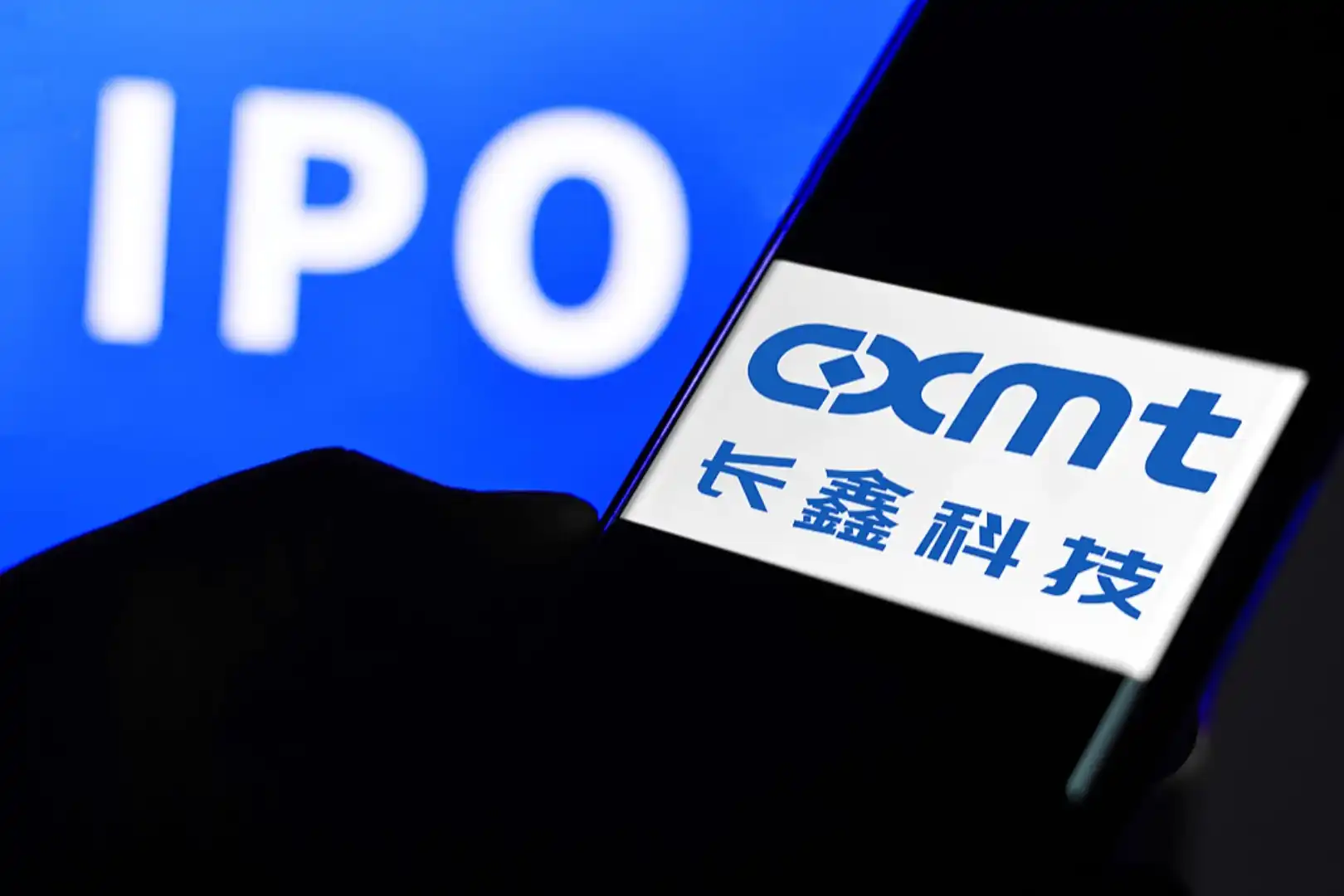
On its first day of trading on Shanghai’s STAR Market, ChangXin Memory Technologies — known globally as CXMT — did something few companies of any nationality have ever managed: it became more valuable than one of its country’s largest state-owned banks within hours of going public. Shares surged approximately 466% above their IPO price, closing the day with a market capitalization of roughly RMB 3.3 trillion — enough to overtake Industrial and Commercial Bank of China as the most valuable China-listed company, with more than RMB 140 billion of shares changing hands during the session alone.
The Numbers Behind the Debut
CXMT’s offering was not a marginal listing padded by speculative retail enthusiasm — it was Asia’s largest IPO of 2026 by a wide margin, and mainland China’s second-largest ever, trailing only Agricultural Bank of China’s $22.1 billion 2010 offering. The Hefei-based chipmaker raised 57.92 billion yuan, roughly $8.6 billion, pricing shares at 8.66 yuan before they closed the debut session at 49 yuan. Based on 2025 sales figures cited in its own IPO prospectus, CXMT held a 7.67% share of the global DRAM memory-chip market — positioning it as a genuine, if still distant, challenger to the three companies that have long dominated the sector: Samsung Electronics, SK Hynix, and Micron Technology.
The company’s underlying financials help explain investor enthusiasm. CXMT’s revenue reached 50.8 billion yuan, approximately $7.5 billion, in the first quarter of 2026 alone — a year-on-year increase of more than 700%, driven by surging AI-related demand for the DRAM chips used across AI servers, personal computers, smartphones, and automotive electronics.
Why This Listing Is a Geopolitical Story, Not Just a Financial One
Brookings Institution fellow Kyle Chan, an expert in China’s technology policy, framed CXMT’s significance in explicitly strategic terms, describing the company as playing a critical role in China’s AI push, particularly in the face of US export controls. That framing matters because of what US restrictions specifically target: Washington’s export-control regime has barred China from importing high-bandwidth memory (HBM) chips — a high-performance category of DRAM that is critical for training and running advanced AI models. CXMT’s expansion is, in effect, China’s most concrete industrial answer to that restriction: building domestic capacity in the exact chip category the US has tried hardest to keep out of Chinese hands.
The timing also matters. CXMT’s Shanghai debut followed closely behind South Korea’s SK Hynix completing a $26.5 billion Nasdaq IPO, meaning global capital markets absorbed two of the memory-chip industry’s largest-ever public offerings within weeks of each other — a signal of just how central memory chips have become to the broader AI infrastructure investment cycle reshaping capital markets globally in 2026.
The Cash-Drain Concern
Not every signal ahead of the listing was unambiguously bullish. In the days before the debut, CXMT’s looming IPO stoked fears of a broader cash drain from Chinese equities, as investors pulled capital from other Chinese tech holdings to fund participation in what was widely expected to be an oversubscribed offering — a dynamic that contributed to a pullback in Chinese technology shares in the sessions immediately preceding the listing.
Analysts have also flagged sustainability questions about the memory sector’s current earnings profile more broadly. One market strategist cautioned that the industry may be nearing a short-term peak in memory-cycle sentiment, warning that the exceptional margins and profitability currently visible across the DRAM sector are unlikely to persist through a full cycle and will eventually normalize — a caution that applies to CXMT’s own trajectory as much as to its global peers, even as the company’s near-term revenue growth remains extraordinary.
What Comes Next for China’s Chip Ambitions
CXMT has stated its IPO proceeds will be deployed primarily toward mass production of memory wafers and expanded R&D — a direct, capital-intensive bet on scaling output rather than diversifying into adjacent businesses. For China’s broader semiconductor self-sufficiency strategy, CXMT’s success (or eventual stumble) will serve as a bellwether for whether domestic Chinese chipmakers can translate state-backed capital access and captive domestic demand into genuine competitiveness against entrenched South Korean and American incumbents — the same question underlying Beijing’s parallel investments across the semiconductor supply chain, from lithography equipment to rare-earth-dependent chip materials.
The Bottom Line
CXMT’s 466% debut is simultaneously a financial-markets story, an AI-infrastructure story, and a geopolitics story — and the three are now inseparable. For investors and policymakers tracking the broader US-China technology competition, CXMT’s post-IPO performance over the coming quarters will offer one of the clearest available signals of how effectively Chinese state-directed capital can compensate for continued exclusion from the most advanced Western and allied semiconductor technology.
Discover more from Startups Pro,Inc
Subscribe to get the latest posts sent to your email.
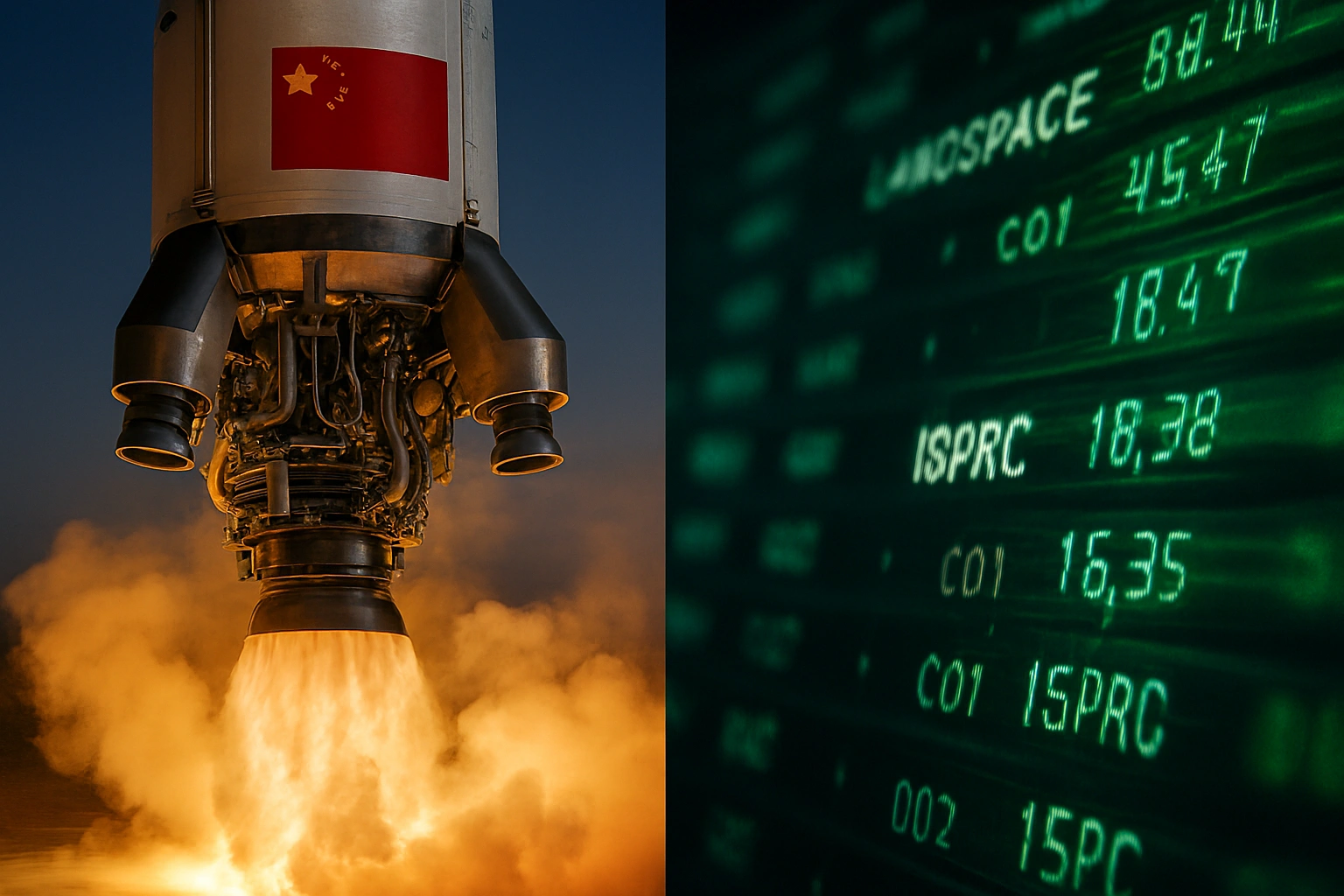
The launchpad is no longer just a stretch of concrete in Florida or Kazakhstan. It has expanded to include the trading floors of Shanghai and Shenzhen. In a coordinated financial maneuver as precise as an orbital insertion burn, China is propelling its top private rocket start-ups into the public markets. This month, the IPO plans for four major firms—LandSpace, i-Space, CAS Space, and Space Pioneer—have advanced with bureaucratic swiftness. It’s a move that signals a profound shift: the 21st-century space race will be won not just by engineers, but by capital markets. As Beijing systematically builds its commercial space arsenal to counter Elon Musk’s SpaceX, we are witnessing the financialization of the final frontier.
The IPO Quartet: A Strategic Unfolding in Real Time
This is not a trickle of investment but a flood. The Shanghai Stock Exchange’s recent interrogation of LandSpace Technology’s application is the linchpin, advancing a plan to raise 7.5 billion yuan (US$1 billion). They are not alone. i-Space has issued a counselling update, CAS Space passed a key review, and Space Pioneer published its first guidance report—all within a critical seven-day window in January 2025.
| Company | Planned Raise (Est.) | Flagship Vehicle / Tech | Current IPO Stage (Jan 2025) | Strategic Angle |
|---|---|---|---|---|
| LandSpace | ¥7.5 Bn (~$1Bn) | *Zhuque-3* (Reusable Methalox) | SSE Star Market Review | China’s direct answer to SpaceX’s Falcon 9 reuse. |
| i-Space | To be confirmed | Hyperbola series | Counselling Phase | Early private pioneer, focusing on small-lift reliability. |
| CAS Space | To be confirmed | *Lijian-1* (Solid) | Review Passed | Spin-off from Chinese Academy of Sciences, blending state R&D with private agility. |
| Space Pioneer | To be confirmed | *Tianlong-3* (Kerosene) | Guidance Published | Aims to be first private firm to reach orbit with a liquid rocket. |
The message is clear. As noted in a Financial Times analysis of state-guided industry, China is executing a “cluster” strategy, fostering internal competition within a protected ecosystem to produce a national champion. These IPOs provide the war chest not just for R&D, but for scaling manufacturing—a key lesson learned from watching SpaceX.
State Capitalism Meets the Final Frontier
To view this solely through a lens of Western-style venture capitalism is to misunderstand the engine of China’s space ambition. This IPO wave is a masterclass in the synergy between state direction and private market discipline. Beijing’s “China Aerospace 2030” goals and the mega-constellation project Guowang (a direct competitor to Starlink) create a guaranteed, sovereign demand pull. The government, as the primary customer, de-risks the initial market for these companies, allowing them to scale at a pace unimaginable in a purely commercial environment.
As a Center for Strategic and International Studies (CSIS) report on space competition astutely observes, China’s model “leverages the full toolkit of national power—industrial policy, military-civil fusion, and strategic finance—to create a self-sustaining space ecosystem.” The IPOs on the tech-focused Star Market are a critical piece, moving the funding burden from state balance sheets to public investors, while retaining strategic oversight. This contrasts sharply with the U.S. model, where SpaceX and its rivals have been fueled primarily by private VC, corporate debt, and, in Musk’s case, the cash flow of a billionaire’s other ventures.
The Valuation Galaxy: Appetite, Hype, and Calculated Risk
Investor appetite appears voracious, driven by the siren song of the trillion-dollar space economy projected by firms like Morgan Stanley. The narrative is compelling: China has over 100 commercial space firms, a booming satellite manufacturing sector, and a national imperative to dominate low-Earth orbit. The IPO funds will be channeled into the holy grail of reuse—LandSpace’s goal to land and refly its Zhuque-3—and scaling launch rates to dozens per year.
Yet, risks orbit this sector like space debris. Overcapacity is a real threat, as four major firms and dozens of smaller ones vie for domestic launch contracts. Technical reliability remains unproven at SpaceX’s scale; a high-profile public failure post-IPO could shatter confidence. Furthermore, geopolitical tensions threaten supply chains and access to foreign components, pushing an already insulated market further into redundancy. As Reuters reported on China’s tech sector challenges, self-sufficiency is both a shield and a potential constraint on innovation.
The Long Game: Catching SpaceX or Carving a Niche?
The central question for analysts and investors alike: Is the goal to create a true, global SpaceX competitor, or a dominant national champion that secures the Chinese sphere of influence? The evidence points to the latter, at least for this decade.
While reusable rocket technology is the stated aim—with LandSpace targeting a first reuse by 2026—the immediate market is sovereign. The launch of the 13,000-satellite Guowang constellation will require hundreds of dedicated launches, a contract pool likely reserved for domestic providers. This creates a parallel “space silk road,” where Chinese rockets launch Chinese satellites for Chinese and partner-nation clients, largely decoupled from the Western market.
However, to dismiss this as merely a protected play is to underestimate Beijing’s long vision. By achieving cost parity through reuse and massive scale, China’s leading firm could, by the 2030s, emerge as a formidable low-cost competitor on the commercial international market, much as it did in solar panels and telecommunications infrastructure.
The Bottom Line: An Inflection Point, Not a Finish Line
This month’s IPO rush is not the culmination of China’s commercial space story, but the end of its first chapter. It marks the transition from venture-backed experimentation to publicly accountable scale-up. The capital influx will test whether these firms can evolve from innovative start-ups into industrially disciplined aerospace giants.
The global implications are stark. The United States and Europe now face a competitor whose space ambitions are underwritten not by the fleeting whims of market sentiment, but by the deep, strategic alignment of state policy, national security, and now, liquid public capital. The race for space dominance has entered a new, more financialized, and intensely more competitive phase. The countdown to a bipolar space order has well and truly begun.
Discover more from Startups Pro,Inc
Subscribe to get the latest posts sent to your email.
Introduction
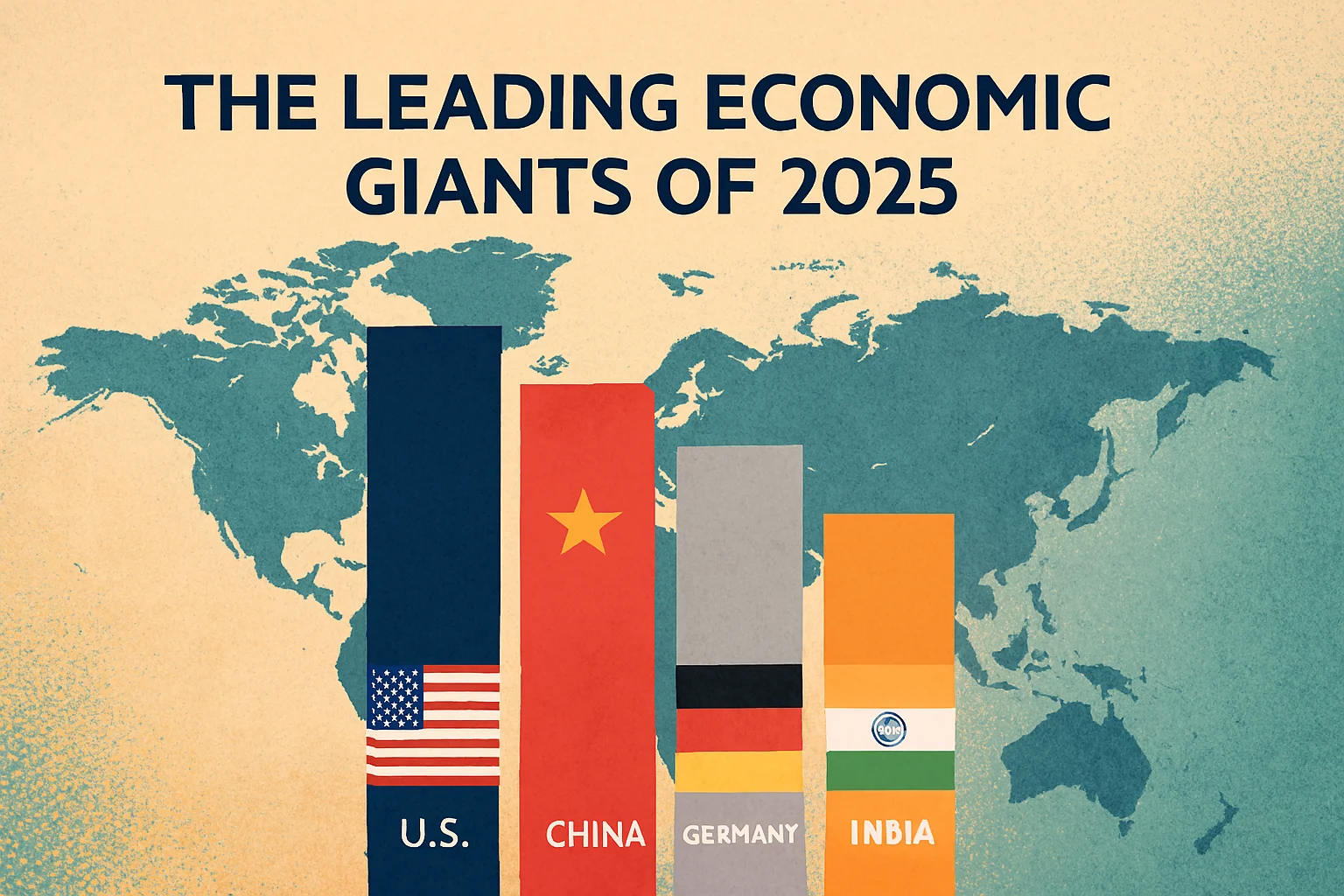
As December 2025 draws to a close, the global economy stands at a fascinating crossroads. The fourth quarter has revealed both continuity and disruption: familiar giants, such as the United States and China, continue to dominate, while rising powers, including India and Germany, reshape the hierarchy. The chessboard of global GDP leaders is shifting, and the implications for trade, investment, and geopolitics are profound.
This article provides a data-driven analysis of the leading economic giants of 2025, comparing nominal GDP, purchasing power parity (PPP), and growth trajectories. It integrates authentic statistics from the IMF, OECD, and Fitch Ratings, while embedding SEO-rich
United States – Still the Nominal Leader
The United States remains the world’s largest economy in nominal terms, with GDP estimated at $29 trillion in 2025. Growth has moderated to around 2%, reflecting a mature cycle but supported by robust consumer spending and AI-driven productivity gains.
- Inflation: ~2.75%, easing from earlier highs.
- Monetary Policy: The Federal Reserve has begun rate cuts, balancing inflation control with growth support.
- Sectoral Strength: Technology, healthcare, and financial services continue to anchor resilience.
Despite China’s PPP dominance, the U.S. retains unmatched influence in global capital markets, innovation ecosystems, and reserve currency status.
China – Closing the Gap
China’s economy has expanded to nearly $26 trillion nominal GDP, with growth around 4.8% in 2025. On a PPP basis, China leads the world, outpacing the U.S. by an estimated Int. $10.4 trillion.
- Exports: Strong performance in EVs, semiconductors, and renewable energy.
- Domestic Demand: Rising middle-class consumption continues to drive growth.
- Challenges: Property sector fragility and demographic headwinds remain.
China’s ability to sustain growth above advanced economies underscores its role as a global GDP leader 2025, though questions linger about structural reforms.
India – The Rising Star
India has emerged as the fastest-growing major economy, with GDP growth near 6% in 2025. Its nominal GDP is projected at $4.8 trillion, positioning it to surpass Japan by 2026 and claim the fourth-largest spot globally.
- Drivers: Digital economy expansion, infrastructure investment, and strong domestic demand.
- Demographics: A youthful workforce contrasts sharply with aging populations in advanced economies.
- Global Role: Increasing influence in supply chains, fintech, and renewable energy.
India’s trajectory exemplifies the emerging markets rise 2025, making it a focal point for investors and policymakers alike.
Germany – Europe’s Anchor
Germany solidified its position as the third-largest economy, overtaking Japan in 2023 and maintaining momentum in 2025. With GDP around $5.5 trillion, Germany anchors the Eurozone, which grew at 1.4% in 2025.
- Industrial Strength: Automotive, engineering, and green technologies.
- Policy Focus: Energy transition and fiscal discipline.
- Resilience: Despite global headwinds, Germany’s export machine remains robust.
Germany’s role as Europe’s anchor highlights the Eurozone Q4 outlook, balancing stability with innovation.
Japan & Emerging Markets
Japan, once the world’s second-largest economy, has slipped to fifth place with GDP around $4.7 trillion. Growth remains sluggish (~1%), constrained by demographics and deflationary pressures.
Meanwhile, emerging markets such as Brazil, Indonesia, and Nigeria are showing resilience. Their collective growth underscores the global growth forecasts 2025, with commodity exports, digital adoption, and regional trade blocs driving momentum.
Comparative Data Table
| Country | Nominal GDP (2025 est.) | Growth Rate | PPP Position |
|---|---|---|---|
| US | $29T | 2% | #2 |
| China | $26T | 4.8% | #1 |
| Germany | $5.5T | 1.4% | #4 |
| India | $4.8T | 6% | #3 |
| Japan | $4.7T | 1% | #5 |
Conclusion – Looking Ahead to 2026
As 2025 ends, the economic giants Q4 2025 analysis reveals a reshaped hierarchy. The U.S. remains the nominal leader, China dominates PPP, India rises rapidly, and Germany anchors Europe. Emerging markets add dynamism to the global outlook.
Looking ahead to 2026:
- AI-driven productivity will offset demographic challenges.
- Green energy transition will redefine industrial competitiveness.
- Geopolitical risks (trade tensions, regional conflicts) will test resilience.
The economic outlook 2026 suggests a world where power is more distributed, innovation is more global, and competition is more intense.
Discover more from Startups Pro,Inc
Subscribe to get the latest posts sent to your email.

PM Invites US-Based Pakistani Business Community to Invest in Pakistan as Investment Opportunities Expand

Trump Accounts Reshuffle Tens of Millions in Big Tech & AI Holdings

NIC Islamabad Launches Exclusive Acceleration Program with Up to PKR 5 Million Equity-Free Grant Support

World School Summit 2026 Malaysia: 41st Edition

Global Digital Trade Expo 2026: Dates, Schedule, Venue, Registration and Everything You Need to Know

How to Claim Your Sony PlayStation Store Credit Settlement (Up to $33.66)

CES 2027 Las Vegas: Registration Details, Dates and Venue [Ultimate Guide]

IPhone 18 Pro Specifications, Pricing, and Thermal Architecture Leaks Analyzed

Pre-IPO Investing Strategies: How Institutional Money is Approaching Anthropic

Smash Bros Ultimate 13.0.5 Patch Notes: What Actually Changed
How to Claim Your Sony PlayStation Store Credit Settlement (Up to $33.66)
IPhone 18 Pro Specifications, Pricing, and Thermal Architecture Leaks Analyzed
Pre-IPO Investing Strategies: How Institutional Money is Approaching Anthropic
Global Digital Trade Expo 2026: Dates, Schedule, Venue, Registration and Everything You Need to Know
Smash Bros Ultimate 13.0.5 Patch Notes: What Actually Changed

NASA Cyberattack 2026: What the China Hack Means for Your Data Security
CES 2027 Las Vegas: Registration Details, Dates and Venue [Ultimate Guide]
NIC Islamabad Launches Exclusive Acceleration Program with Up to PKR 5 Million Equity-Free Grant Support
World School Summit 2026 Malaysia: 41st Edition
Trump Accounts Reshuffle Tens of Millions in Big Tech & AI Holdings
-
Digital5 years ago
Social Media and polarization of society
-
Digital6 years ago
Pakistan Moves Closer to Train One Million Youth with Digital Skills
-
Digital5 years ago
Karachi-based digital bookkeeping startup, CreditBook raises $1.5 million in seed funding
-
Kashmir6 years ago
Pakistan Mission Islamabad Celebrates “KASHMIRI SOLIDARITY DAY “
-
Digital6 years ago
WHATSAPP Privacy Concerns Affecting Public Data -MOIT&T Pakistan
-
News6 years ago
Dr . Arif Alvi visits the National Museum of Pakistan, Karachi
-
China5 years ago
TIKTOK’s global growth and expansion : a bubble or reality ?
-
Business5 years ago
Are You Ready to Start Your Own Business? 7 Tips and Decision-Making Tools