
China
China’s safety model useful to defeat COVID-19 Pandemic in Pakistan

Coronavirus outbreak has shaken the huge global health system and economies, but the way China stepped up to contribute to the response by accomplishing their tasks including updating infrastructure, fighting misinformation and providing virtual work and awareness tools is surprising.
Various news reports from China have revealed that during the last week, only one new case of coronavirus infection was reported from the origin city of the disease, Wuhan.Head of the Division of Epidemiology and Biostatistics at Hong Kong University, Ben Cowling, in his recent article published last week, has verified that China, due to its strict initiatives, has brought almost an end to its first wave of coronavirus infections.

The World Health Organization (WHO) in a statement has acknowledged the efforts of China government for adopting effective safety measures to overcome the pandemic.
“No doubt that China has taken drastic measures and techniques to isolate and quarantine its virus-affected people in a disciplined way, WHO said, adding that Chinese used effective initiatives of successful lockdowns for huge numbers of people, shutdowns of vast swaths of society, everywhere in the country.”
According to Medical Superintendent Services Hospital Dr Iftikhar Ahmed said that Chinese safety model has proven a successful to overcome the disease.
The Chinese as a nation set an example by adopting aggressive ‘social distancing’ and ‘self-quarantining’ initiatives to overcome the pandemic, he added.
He expressed the hope that transmission of the coronavirus was likely to slow down due to the advent of warm and humid season conditions ahead. Moreover, the human immune system in warm temperature become stronger than in winter, he added.
“The global epidemic was likely to stay till the start of hot weather conditions, adding we need an awareness and management campaign on the lines of Chinese model”, he informed.
Giving the details, he said that washing of hands with soap at least five times a day, avoiding public gatherings, strict social distancing, sanitizing homes and mobile phones regularly, spread awareness, educating people in family and at work place, were the salient features of Chinese safety model.
According to Chinese Health Ministry document, its current population is around 1.42 billion, and more than 50 million people were placed under an aggressive lockdown from January, due to the spread of virus. The world, which was scared from China, is surprised on its speedy recovery from the deadly virus.
Chairman of the Consortium for the Globalization of Chinese Medicine, Dr Cheng in his recent statement has said that Chinese traditional herbal medicine cure was another reason of the recovery from the deadly disease, adding that the Chinese traditional herbs were safe, effective and easy to use in coronavirus treatment.
He confirmed that after good results, the Chinese government was now advising doctors to consider mixing Western antiviral drugs with traditional Chinese herbal medicine in treatment of the affected patients.
The WHO health mission to China which included 13 foreigner and 12 Chinese scientists has released a finding report in which it has observed that the government and people of China adopted unprecedented aggressive measures to combat the deadly virus, saying a few weeks ago the Chinese hospitals were overflowing with COVID-19, but now empty beds in the hospitals were being witnessed, and no further cases were being reported.
The mission has compiled this report after touring to various places and hospitals besides five major cities of China. It is worth mentioning here that during the widespread panic of coronavirus in China, the Senate of Pakistan has passed a resolution of standing affirm with its Chinese brethren in the moment of difficulty.
The Spokesperson of China’s Ministry of Foreign Affairs, after receiving aid had thanked Pakistan through its tweet saying ‘a friend in need is a friend indeed’.The government of Pakistan has also donated medical equipment and dispatched medical teams to work with Chinese brothers and sisters hand in hand to overcome the epidemic.
Meanwhile, Pakistan is the first country who resumed its flight operation with China just after the suspension of three days. At International political front, this sends a clear and strong message that Pakistan is standing with China under all circumstances.
It may be mentioned here that Chinese trade ministry has confirmed that China after a speedy recovery from the disease, is now enhancing its business volume and overcoming economy damages by restoring its factories, which are likely to
come back to 90 percent working capacity, during the May, 2020.
The shopping malls have started teeming with customers, and the new infection cases have dropped dramatically, the ministry said, adding the remaining COVID-19 patients are recovering rapidly and the Chinese government has started process of dismantling the temporary hospitals erected during an emergency.
Discover more from Startups Pro,Inc
Subscribe to get the latest posts sent to your email.


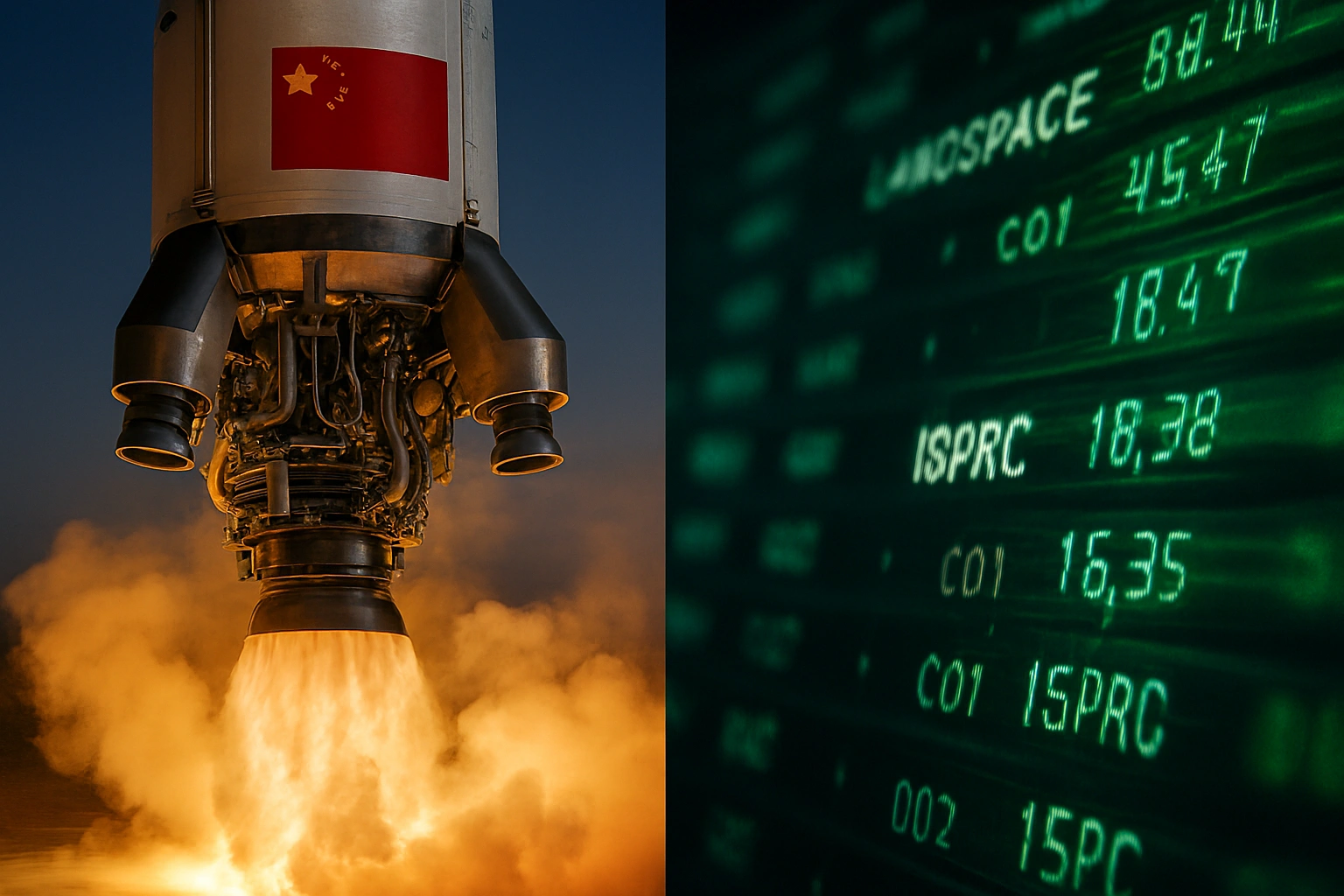
The launchpad is no longer just a stretch of concrete in Florida or Kazakhstan. It has expanded to include the trading floors of Shanghai and Shenzhen. In a coordinated financial maneuver as precise as an orbital insertion burn, China is propelling its top private rocket start-ups into the public markets. This month, the IPO plans for four major firms—LandSpace, i-Space, CAS Space, and Space Pioneer—have advanced with bureaucratic swiftness. It’s a move that signals a profound shift: the 21st-century space race will be won not just by engineers, but by capital markets. As Beijing systematically builds its commercial space arsenal to counter Elon Musk’s SpaceX, we are witnessing the financialization of the final frontier.
The IPO Quartet: A Strategic Unfolding in Real Time
This is not a trickle of investment but a flood. The Shanghai Stock Exchange’s recent interrogation of LandSpace Technology’s application is the linchpin, advancing a plan to raise 7.5 billion yuan (US$1 billion). They are not alone. i-Space has issued a counselling update, CAS Space passed a key review, and Space Pioneer published its first guidance report—all within a critical seven-day window in January 2025.
| Company | Planned Raise (Est.) | Flagship Vehicle / Tech | Current IPO Stage (Jan 2025) | Strategic Angle |
|---|---|---|---|---|
| LandSpace | ¥7.5 Bn (~$1Bn) | *Zhuque-3* (Reusable Methalox) | SSE Star Market Review | China’s direct answer to SpaceX’s Falcon 9 reuse. |
| i-Space | To be confirmed | Hyperbola series | Counselling Phase | Early private pioneer, focusing on small-lift reliability. |
| CAS Space | To be confirmed | *Lijian-1* (Solid) | Review Passed | Spin-off from Chinese Academy of Sciences, blending state R&D with private agility. |
| Space Pioneer | To be confirmed | *Tianlong-3* (Kerosene) | Guidance Published | Aims to be first private firm to reach orbit with a liquid rocket. |
The message is clear. As noted in a Financial Times analysis of state-guided industry, China is executing a “cluster” strategy, fostering internal competition within a protected ecosystem to produce a national champion. These IPOs provide the war chest not just for R&D, but for scaling manufacturing—a key lesson learned from watching SpaceX.
State Capitalism Meets the Final Frontier
To view this solely through a lens of Western-style venture capitalism is to misunderstand the engine of China’s space ambition. This IPO wave is a masterclass in the synergy between state direction and private market discipline. Beijing’s “China Aerospace 2030” goals and the mega-constellation project Guowang (a direct competitor to Starlink) create a guaranteed, sovereign demand pull. The government, as the primary customer, de-risks the initial market for these companies, allowing them to scale at a pace unimaginable in a purely commercial environment.
As a Center for Strategic and International Studies (CSIS) report on space competition astutely observes, China’s model “leverages the full toolkit of national power—industrial policy, military-civil fusion, and strategic finance—to create a self-sustaining space ecosystem.” The IPOs on the tech-focused Star Market are a critical piece, moving the funding burden from state balance sheets to public investors, while retaining strategic oversight. This contrasts sharply with the U.S. model, where SpaceX and its rivals have been fueled primarily by private VC, corporate debt, and, in Musk’s case, the cash flow of a billionaire’s other ventures.
The Valuation Galaxy: Appetite, Hype, and Calculated Risk
Investor appetite appears voracious, driven by the siren song of the trillion-dollar space economy projected by firms like Morgan Stanley. The narrative is compelling: China has over 100 commercial space firms, a booming satellite manufacturing sector, and a national imperative to dominate low-Earth orbit. The IPO funds will be channeled into the holy grail of reuse—LandSpace’s goal to land and refly its Zhuque-3—and scaling launch rates to dozens per year.
Yet, risks orbit this sector like space debris. Overcapacity is a real threat, as four major firms and dozens of smaller ones vie for domestic launch contracts. Technical reliability remains unproven at SpaceX’s scale; a high-profile public failure post-IPO could shatter confidence. Furthermore, geopolitical tensions threaten supply chains and access to foreign components, pushing an already insulated market further into redundancy. As Reuters reported on China’s tech sector challenges, self-sufficiency is both a shield and a potential constraint on innovation.
The Long Game: Catching SpaceX or Carving a Niche?
The central question for analysts and investors alike: Is the goal to create a true, global SpaceX competitor, or a dominant national champion that secures the Chinese sphere of influence? The evidence points to the latter, at least for this decade.
While reusable rocket technology is the stated aim—with LandSpace targeting a first reuse by 2026—the immediate market is sovereign. The launch of the 13,000-satellite Guowang constellation will require hundreds of dedicated launches, a contract pool likely reserved for domestic providers. This creates a parallel “space silk road,” where Chinese rockets launch Chinese satellites for Chinese and partner-nation clients, largely decoupled from the Western market.
However, to dismiss this as merely a protected play is to underestimate Beijing’s long vision. By achieving cost parity through reuse and massive scale, China’s leading firm could, by the 2030s, emerge as a formidable low-cost competitor on the commercial international market, much as it did in solar panels and telecommunications infrastructure.
The Bottom Line: An Inflection Point, Not a Finish Line
This month’s IPO rush is not the culmination of China’s commercial space story, but the end of its first chapter. It marks the transition from venture-backed experimentation to publicly accountable scale-up. The capital influx will test whether these firms can evolve from innovative start-ups into industrially disciplined aerospace giants.
The global implications are stark. The United States and Europe now face a competitor whose space ambitions are underwritten not by the fleeting whims of market sentiment, but by the deep, strategic alignment of state policy, national security, and now, liquid public capital. The race for space dominance has entered a new, more financialized, and intensely more competitive phase. The countdown to a bipolar space order has well and truly begun.
Discover more from Startups Pro,Inc
Subscribe to get the latest posts sent to your email.
Introduction
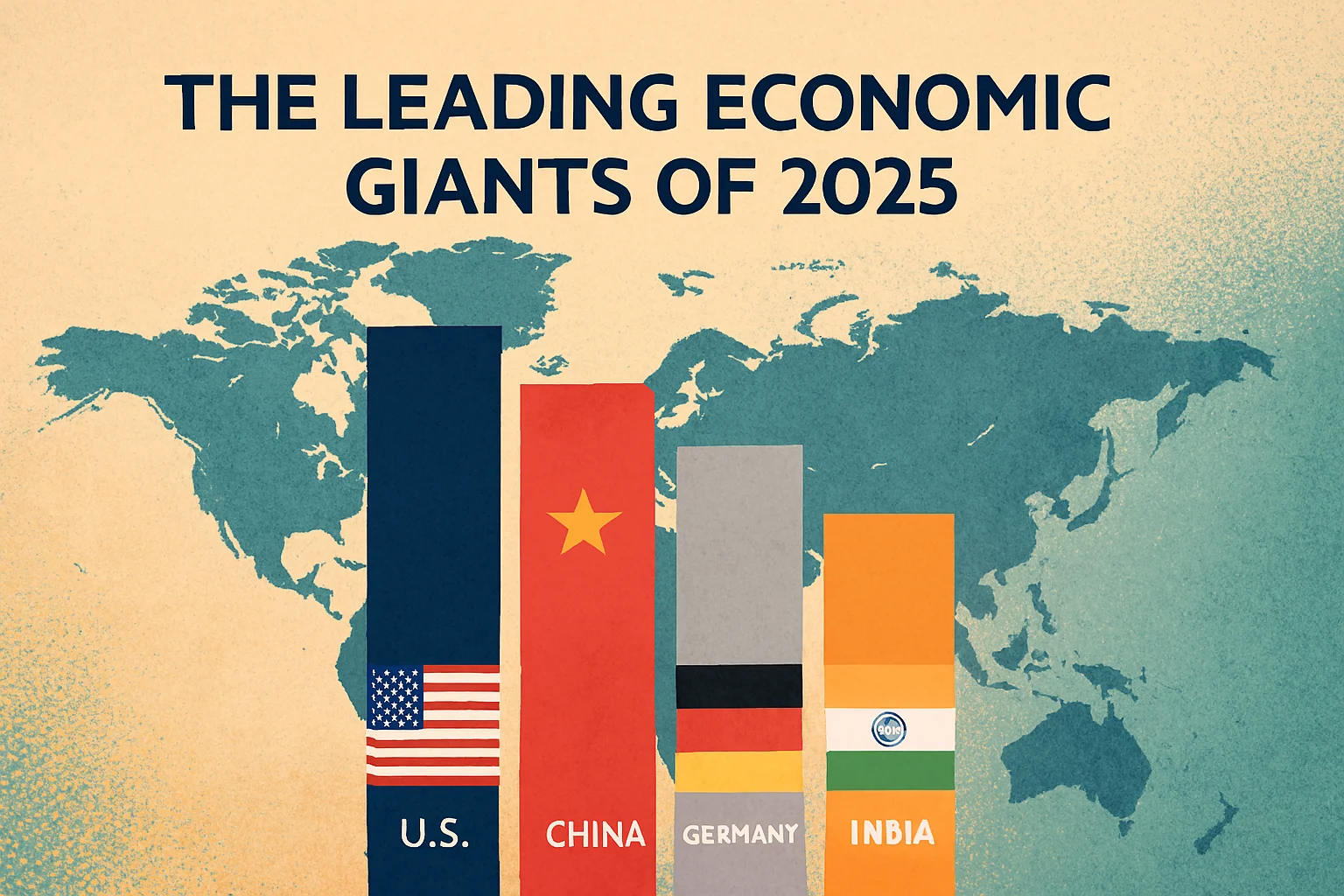
As December 2025 draws to a close, the global economy stands at a fascinating crossroads. The fourth quarter has revealed both continuity and disruption: familiar giants, such as the United States and China, continue to dominate, while rising powers, including India and Germany, reshape the hierarchy. The chessboard of global GDP leaders is shifting, and the implications for trade, investment, and geopolitics are profound.
This article provides a data-driven analysis of the leading economic giants of 2025, comparing nominal GDP, purchasing power parity (PPP), and growth trajectories. It integrates authentic statistics from the IMF, OECD, and Fitch Ratings, while embedding SEO-rich
United States – Still the Nominal Leader
The United States remains the world’s largest economy in nominal terms, with GDP estimated at $29 trillion in 2025. Growth has moderated to around 2%, reflecting a mature cycle but supported by robust consumer spending and AI-driven productivity gains.
- Inflation: ~2.75%, easing from earlier highs.
- Monetary Policy: The Federal Reserve has begun rate cuts, balancing inflation control with growth support.
- Sectoral Strength: Technology, healthcare, and financial services continue to anchor resilience.
Despite China’s PPP dominance, the U.S. retains unmatched influence in global capital markets, innovation ecosystems, and reserve currency status.
China – Closing the Gap
China’s economy has expanded to nearly $26 trillion nominal GDP, with growth around 4.8% in 2025. On a PPP basis, China leads the world, outpacing the U.S. by an estimated Int. $10.4 trillion.
- Exports: Strong performance in EVs, semiconductors, and renewable energy.
- Domestic Demand: Rising middle-class consumption continues to drive growth.
- Challenges: Property sector fragility and demographic headwinds remain.
China’s ability to sustain growth above advanced economies underscores its role as a global GDP leader 2025, though questions linger about structural reforms.
India – The Rising Star
India has emerged as the fastest-growing major economy, with GDP growth near 6% in 2025. Its nominal GDP is projected at $4.8 trillion, positioning it to surpass Japan by 2026 and claim the fourth-largest spot globally.
- Drivers: Digital economy expansion, infrastructure investment, and strong domestic demand.
- Demographics: A youthful workforce contrasts sharply with aging populations in advanced economies.
- Global Role: Increasing influence in supply chains, fintech, and renewable energy.
India’s trajectory exemplifies the emerging markets rise 2025, making it a focal point for investors and policymakers alike.
Germany – Europe’s Anchor
Germany solidified its position as the third-largest economy, overtaking Japan in 2023 and maintaining momentum in 2025. With GDP around $5.5 trillion, Germany anchors the Eurozone, which grew at 1.4% in 2025.
- Industrial Strength: Automotive, engineering, and green technologies.
- Policy Focus: Energy transition and fiscal discipline.
- Resilience: Despite global headwinds, Germany’s export machine remains robust.
Germany’s role as Europe’s anchor highlights the Eurozone Q4 outlook, balancing stability with innovation.
Japan & Emerging Markets
Japan, once the world’s second-largest economy, has slipped to fifth place with GDP around $4.7 trillion. Growth remains sluggish (~1%), constrained by demographics and deflationary pressures.
Meanwhile, emerging markets such as Brazil, Indonesia, and Nigeria are showing resilience. Their collective growth underscores the global growth forecasts 2025, with commodity exports, digital adoption, and regional trade blocs driving momentum.
Comparative Data Table
| Country | Nominal GDP (2025 est.) | Growth Rate | PPP Position |
|---|---|---|---|
| US | $29T | 2% | #2 |
| China | $26T | 4.8% | #1 |
| Germany | $5.5T | 1.4% | #4 |
| India | $4.8T | 6% | #3 |
| Japan | $4.7T | 1% | #5 |
Conclusion – Looking Ahead to 2026
As 2025 ends, the economic giants Q4 2025 analysis reveals a reshaped hierarchy. The U.S. remains the nominal leader, China dominates PPP, India rises rapidly, and Germany anchors Europe. Emerging markets add dynamism to the global outlook.
Looking ahead to 2026:
- AI-driven productivity will offset demographic challenges.
- Green energy transition will redefine industrial competitiveness.
- Geopolitical risks (trade tensions, regional conflicts) will test resilience.
The economic outlook 2026 suggests a world where power is more distributed, innovation is more global, and competition is more intense.
Discover more from Startups Pro,Inc
Subscribe to get the latest posts sent to your email.
China
Second China-Europe Railway Forum 2025: Xi’an Hosts Global Leaders for Belt and Road Connectivity Boost

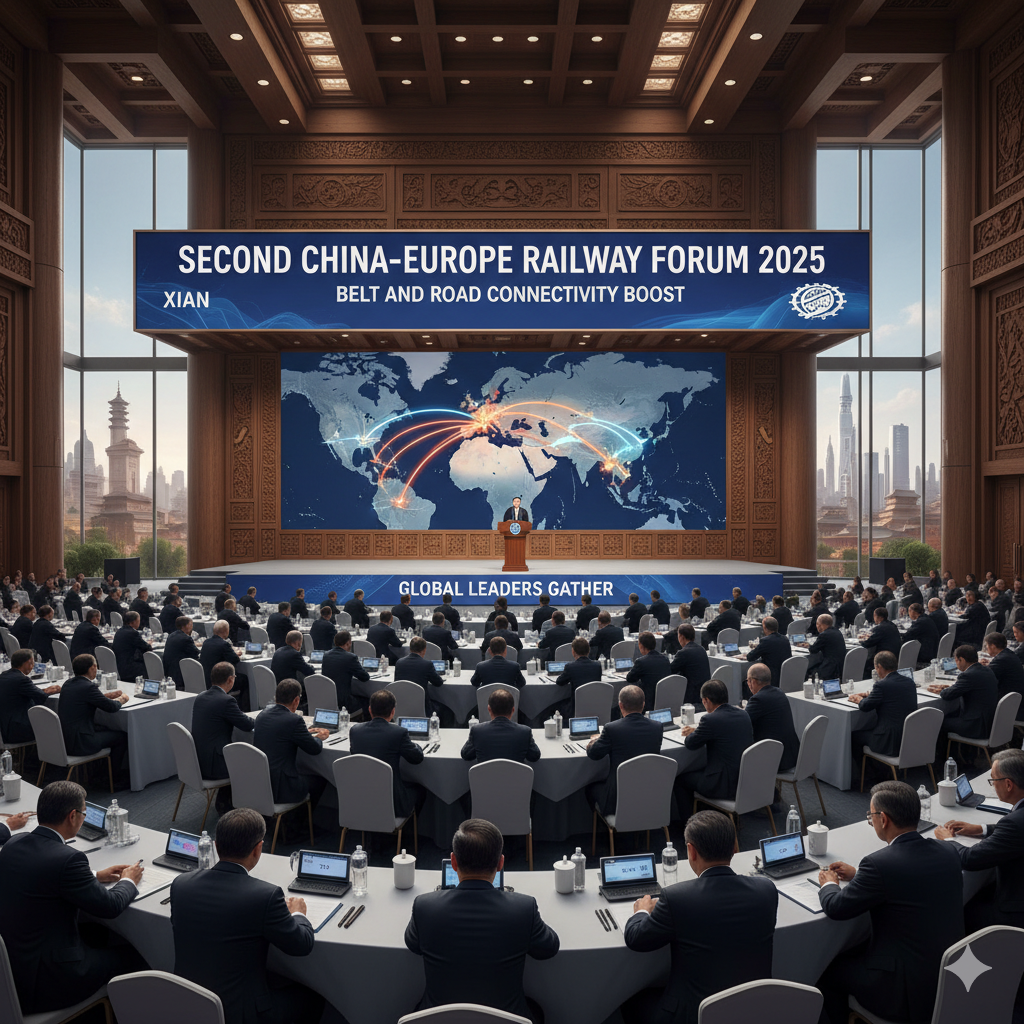
Xi’an, China – November 13, 2025 – In a landmark move for Eurasian trade and logistics, the ancient city of Xi’an is set to become the epicenter of innovation as it hosts the Second China-Europe Railway Express Cooperation Forum from November 18-20, 2025. Announced by China’s National Development and Reform Commission (NDRC), this high-profile event promises to accelerate the China-Europe Railway Express—a vital artery of the Belt and Road Initiative (BRI)—delivering faster, greener, and more reliable freight connections between Asia and Europe.
If you’re tracking the future of international rail freight, Eurasian supply chains, or sustainable logistics, this forum is unmissable. With freight volumes surging 20% year-over-year on key routes, the event arrives at a pivotal moment for global trade amid geopolitical shifts and rising demand for eco-friendly transport alternatives to air and sea shipping.
Why the China-Europe Railway Express Matters in 2025
The China-Europe Railway Express, operational since 2011, has revolutionized cross-continental cargo movement. Trains now zip from cities like Chongqing and Chengdu to European hubs such as Duisburg and Madrid in just 12-15 days—half the time of maritime routes. Last year alone, over 17,000 trains carried 1.7 million TEUs (twenty-foot equivalent units), underscoring its role in resilient global supply chains.
Hosted in Xi’an—the historic starting point of the ancient Silk Road—this forum builds on the inaugural 2023 event in Lianyungang, which drew 500+ delegates and sparked collaborations worth billions. Under the theme “Connecting Asia and Europe for a Shared Future”, expect deep dives into:
- Enhancing safety and efficiency: Strategies for “bulletproof” rail systems amid increasing volumes.
- Expanding trade corridors: New routes through Central Asia, the Middle East, and beyond to diversify beyond traditional paths.
- Green innovation in logistics: Low-carbon tech, electric locomotives, and digital twins for sustainable BRI growth.
Agenda Highlights: What to Expect at the Xi’an Forum
The three-day extravaganza kicks off with a star-studded opening ceremony featuring speeches from NDRC officials, EU transport ministers, and BRI partners. Parallel sessions will ignite discussions on:
- Ultra-Efficient Transport Systems: Exploring AI-driven scheduling, automated customs clearance, and high-speed upgrades to handle 2 million+ TEUs annually by 2030.
- Diverse Trade Corridors: Mapping untapped routes like the New Eurasian Land Bridge, with spotlights on Kazakhstan, Poland, and emerging African extensions.
- Integrated Development Breakthroughs: From blockchain for secure tracking to renewable energy powering rail hubs—unlocking $100B+ in BRI investments.
Live demos, B2B matchmaking, and networking galas will connect freight forwarders, policymakers, and tech innovators. Past attendees rave about tangible outcomes, like the 2023 forum’s MoUs that boosted rail freight by 15% on key lines.
| Key Forum Stats | Details |
|---|---|
| Date | November 18-20, 2025 |
| Location | Xi’an International Convention Center, Shaanxi Province |
| Expected Attendees | 800+ from 50+ countries |
| Focus Areas | Rail Safety, New Corridors, Green Tech |
| Predecessor Success | 2023 Lianyungang event: 500 delegates, 20+ partnerships |
Xi’an: Where History Meets High-Speed Future
As Shaanxi’s capital and UNESCO World Heritage site, Xi’an blends Terra Cotta Warriors grandeur with modern rail prowess. Home to the Xi’an Dry Port—handling 1M+ TEUs yearly—it’s a natural fit for this Belt and Road milestone. Visitors can tour the Silk Road Museum post-forum, tying ancient trade vibes to today’s China-Europe freight revolution.
Join the Momentum: Register Now for the China-Europe Railway Forum
Whether you’re a logistics exec eyeing Eurasian rail opportunities or a policy wonk passionate about sustainable BRI projects, secure your spot via the official NDRC portal. Early bird registration closes November 15—don’t miss riding the rails to a connected tomorrow!
For more on China-Europe trade trends, Belt and Road updates, or global logistics news, subscribe to our newsletter. Share your thoughts: How will this forum shape international freight in 2026? Comment below!
Sources: NDRC Press Release, Belt and Road Portal. Images: Courtesy of Xi’an Convention Bureau (alt: “High-speed freight train on China-Europe Railway Express route”).
Discover more from Startups Pro,Inc
Subscribe to get the latest posts sent to your email.

Gold and Bitcoin Are Rallying Together. That Almost Never Happens.

Strait of Hormuz Reopening 2026: Why Oil Markets Still Haven’t Recovered

Indian IT Stocks Slump Up to 7% After Accenture Cuts Revenue Outlook

The End of the Demo Era: VivaTech Turns 10 and Demands Utility

Top Asian Startups 2026: 7 Tech Unicorns Reshaping the Global Economy

Top 10 US Stocks Profitable This Week: AI, Oil, and a Market Running on Conviction

If AI Isn’t Ready to Replace Workers, Why Are Companies Cutting Jobs Anyway?

The HR Pros Turning Workplace Horror Stories Into Startup Success: How the Hosts of ‘HR Besties’ Weaponized Candor, Outmaneuvered SHRM, and Built a Media Empire

How the UK’s Earned Settlement Model Will Reshape SME Hiring Plans in 2026 and Beyond

Top 10 Media Startup Ideas for Massive Success in 2026
Gold and Bitcoin Are Rallying Together. That Almost Never Happens.
The End of the Demo Era: VivaTech Turns 10 and Demands Utility
Strait of Hormuz Reopening 2026: Why Oil Markets Still Haven’t Recovered
Indian IT Stocks Slump Up to 7% After Accenture Cuts Revenue Outlook
-
Digital5 years ago
Social Media and polarization of society
-
Digital5 years ago
Pakistan Moves Closer to Train One Million Youth with Digital Skills
-
Digital5 years ago
Karachi-based digital bookkeeping startup, CreditBook raises $1.5 million in seed funding
-
News5 years ago
Dr . Arif Alvi visits the National Museum of Pakistan, Karachi
-
Digital5 years ago
WHATSAPP Privacy Concerns Affecting Public Data -MOIT&T Pakistan
-
Kashmir5 years ago
Pakistan Mission Islamabad Celebrates “KASHMIRI SOLIDARITY DAY “
-
China5 years ago
TIKTOK’s global growth and expansion : a bubble or reality ?
-
Business4 years ago
Are You Ready to Start Your Own Business? 7 Tips and Decision-Making Tools