
Events
CES 2027 Las Vegas: Registration Details, Dates and Venue [Ultimate Guide]


CES is back. The most powerful tech event in the world is returning to Las Vegas to set the agenda for AI, mobility, digital health, and sustainability for the next decade. If you are planning to attend, exhibit, or cover CES 2027, this guide covers everything you need to know.
What is CES 2027?
Organized and produced by the Consumer Technology Association (CTA), CES 2027 is the flagship global stage for innovation. The Consumer Electronics Show (CES) 2027 has been officially scheduled from Wednesday, January 6 through Saturday, January 9, 2027. Expect 130,000+ attendees, 4,000+ exhibitors, and keynotes from the world’s biggest tech brands.
CES 2027 will take place January 6-9, 2027 in Las Vegas. The primary venue is the Las Vegas Convention Center (LVCC), with additional official venues including Venetian Expo and ARIA. Registration is not yet open but you can sign up for notification on CES.tech. It opens in September 2026.
CES 2027 Dates and Official Schedule
Official dates confirmed by CTA: Jan 6-9, 2027.
| Date | Phase | Access |
|---|---|---|
| Jan 3-4, 2027 | Media Days & Pre-Show Keynotes | Media Only |
| Jan 5, 2027 | Opening Day & Eureka Park Preview | All Registered |
| Jan 6-9, 2027 | Main Exhibits & Conference Program | All Registered |
| Jan 9, 2027 | Closing Day | All Registered |
Media events and preview programs begin several days before the main exhibition opens.
CES 2027 Venue: Where is it Held?
CES is a city-wide event. You cannot do it in one hall.
1. Las Vegas Convention Center (LVCC) – The Main Hub
The primary hub for CES 2027 will be the Las Vegas Convention Center. This is where you will find Automotive, AI, Robotics, Smart Cities, Enterprise Tech, and the big keynote stage.
Address: 3150 Paradise Rd, Las Vegas, NV 89109
2. Venetian Expo (Formerly Sands Expo)
Traditionally hosts Eureka Park (home to 1,400+ startups), Digital Health, Smart Home, Wearables, and Lifestyle tech.
3. Additional Official Campuses
As with previous editions, CES 2027 will extend beyond a single venue and span more than 12 official locations including ARIA Resort & Casino, Wynn, Fontainebleau, and Venetian conference venues.
Pro Tip: Use the Las Vegas Monorail. It is often the most reliable transportation option during CES week and avoids heavy Strip traffic.
CES 2027 Registration Details: How to Register
Is Registration Open?
Not yet. Registration for CES 2027 isn’t open yet – it’s expected to open around September 2026. The official place to check is ces.tech. You can already sign up for registration notifications via the official CES website.
Official Registration Link: https://www.ces.tech/attend/registration-notification/
WARNING – Scam Alert: The Consumer Technology Association has designated Maritz as the ONLY official registration vendor of CES 2027. Do not buy from third-party sites offering “free CES passes”.
How to Register – Step by Step
- Go to CES.tech
- Create a CES attendee profile with your corporate email
- Select your attendance type: Industry Attendee, Media, Exhibitor, etc.
- Upload proof of industry affiliation (see below)
- Choose your pass and pay securely via Maritz
- Receive approval – applications are reviewed by organizers before approval
Who Can Attend? Is CES Open to Public?
No. CES is not open to the general public. It is a trade-only event. You must qualify.
Eligible:
- Technology professionals, manufacturers, retail buyers
- Investors, analysts, startups, marketing professionals
- Media representatives with published work
Required documents may include company ID, business card, professional website profile, corporate email, or industry credentials.
CES 2027 Pass Types & Ticket Price
CES follows a tiered pricing structure:
1. Exhibits Pass: Access to exhibit halls and show floor
2. Exhibits Plus Pass: Exhibit access plus select conference content
3. Deluxe Conference Pass: Full conference access, keynotes, and premium sessions
Pricing (Estimated based on CES 2026):
Official 2027 pricing is TBA. Based on last year:
- Early Bird Exhibits Pass: ∼$149 – $350
- Standard: $350 – $599
- Exhibits Plus: $649 – $899
- Deluxe: $1,400 – $1,800
Prices increase significantly closer to the event. Registering early is the best way to secure lower pricing.
Why You Must Attend CES 2027 – Key Themes
- Artificial Intelligence: Generative AI, Edge AI, AI hardware
- Advanced Mobility & Vehicle Tech
- Digital Health & Wearables
- Robotics & Manufacturing
- Sustainability & Energy
- Gaming, Cybersecurity, and Smart Home
Travel, Hotels & Survival Tips
- Book Hotels Now: Official CES hotel blocks sell out by October. Venetian, Wynn, and LVCC-area hotels go first.
- Wear Comfortable Shoes: Many attendees walk 15,000–25,000+ steps daily.
- Plan Your Schedule: It is impossible to see everything. Prioritize must-see exhibitors.
- Stay Hydrated & Power Up: Bring reusable water bottle and portable charger.
FAQs – CES 2027 Las Vegas
Q1: What are the exact dates for CES 2027?
A: Wednesday, January 6 to Saturday, January 9, 2027 in Las Vegas.
Q2: Where is CES 2027 venue?
A: Las Vegas Convention Center is the main hub, plus Venetian Expo and 10+ official hotels across the Strip.
Q3: When does CES 2027 registration open?
A: Expected September 2026. Sign up for alerts on CES.tech.
Q4: How much does a CES ticket cost?
A: Official pricing TBA. Early bird Exhibits Pass typically starts around $149-$350.
Q5: Can anyone attend CES?
A: No, it is trade-only. You need industry credentials to get approved.
Note : Do you want to showcase or feature your event on Startupspro.co.uk Email your event Details to : events@whiril.com
Discover more from Startups Pro,Inc
Subscribe to get the latest posts sent to your email.


Startups
NIC Islamabad Launches Exclusive Acceleration Program with Up to PKR 5 Million Equity-Free Grant Support

Building initial traction is a major milestone for any startup—it proves market demand, validates your product-market fit, and sets the stage for real business value. However, transitioning from early traction to rapid scaling is often where Pakistani startups face their toughest hurdles: securing non-dilutive capital, opening doors to enterprise clients, and preparing for institutional investment rounds.
To bridge this crucial gap, NIC Islamabad (National Incubation Center) has officially launched its Acceleration Program, designed specifically for growth-stage ventures ready to expand operations, enter new markets, and dominate their sector.
What Makes the Acceleration Program Different?
Unlike early-stage incubation that focuses on ideation and prototype development, the NIC Islamabad Acceleration Program is hyper-focused on execution, revenue growth, and capital deployment.

Here is a breakdown of what accepted growth-stage startups gain:
1. Up to PKR 5 Million in Equity-Free Grant Support
Dilution at the growth stage can prove costly for founders. Through this program, eligible startups receive up to PKR 5,000,000 in equity-free grant funding. This non-dilutive capital allows founders to extend their runway, invest in talent acquisition, optimize product infrastructure, or launch targeted marketing campaigns without giving up equity.
2. Global Mentorship Network
Scale-up challenges require guidance from seasoned founders and operators who have navigated similar growth curves. Program participants gain direct access to global industry leaders, domain experts, and international tech mentors who provide one-on-one strategic direction.
3. Market Access & Enterprise Connections
Scaling requires commercial traction. The acceleration framework facilitates warm introductions to enterprise clients, corporate partners, and regulatory bodies across Pakistan and international jurisdictions.
4. Investor Readiness & Fundraising Support
Moving toward Seed or Series A rounds demands structured financial models, airtight data rooms, and compelling pitch narratives. The program offers intensive pitch polishing, financial modeling advisory, and direct matchmaking with regional venture capital funds and angel investor syndicates.
Program Core Pillars at a Glance
| Pillar | Value Delivered | Target Outcome |
| Capital Support | Up to PKR 5M Equity-Free Grant | Runway extension & scale deployment |
| Global Mentorship | Industry veterans & domain experts | Execution strategy & operational efficiency |
| Commercial Access | Enterprise B2B linkages & market integration | Pipeline expansion & enterprise deals |
| Investor Readiness | Financial modeling, data room prep, & VC demos | Seed / Series A funding closure |
Who Is Eligible?
To maintain a high-density, peer-driven growth environment, this acceleration cohort is strictly tailored for high-potential ventures:
- Ignite-Funded Startups Exclusively: The program is open to startups that have received funding support through Ignite National Technology Fund.
- Proven Traction: Startup must demonstrate initial customer adoption, recurring revenue, or measurable user engagement.
- Scalable Business Model: Clear pathway to regional or global expansion with an addressable market.
Why Equity-Free Funding at the Growth Stage is a Game-Changer
“Preserving founder equity while accelerating growth is the ultimate advantage for early-stage teams.”
For growth-stage founders, capital strategy is just as vital as product strategy. Securing up to PKR 5 Million without surrendering equity gives founders the flexibility to hit critical growth KPIs, increasing company valuation before entering their next equity funding round.
How to Apply
Applications are currently LIVE, but slots are limited to ensure personalized support for each selected startup.
- Visit the Portal: Head over to NIC Islamabad Official Portal.
- Submit Your Application: Present your traction metrics, product roadmaps, and growth objectives.
- Screening & Pitching: Shortlisted ventures will be invited for evaluation by the acceleration committee.
👉 Ready to take your startup to its next stage? Apply now at nicislamabad.com.
Discover more from Startups Pro,Inc
Subscribe to get the latest posts sent to your email.
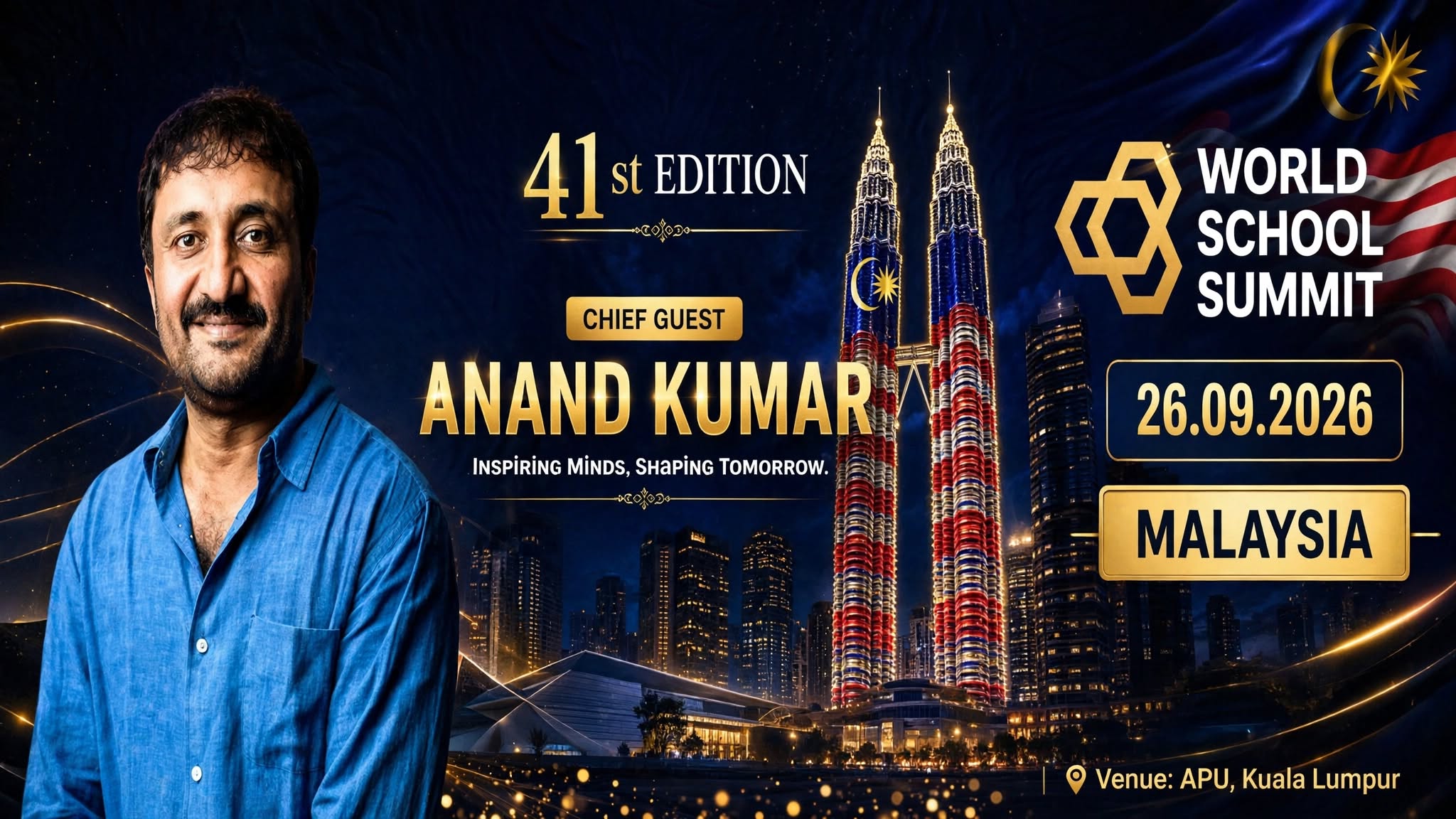
Dates, Venue, Chief Guest & Registration — Complete Guide
The world’s most influential gathering of school leaders returns to Asia — bigger, bolder, and more global than ever.
The World School Summit (WSS) is not just an event. It’s where education transforms from local impact to global legacy. For its 41st Edition, WSS lands in Kuala Lumpur, Malaysia, bringing together 40+ nations, visionary educators, institution builders, policymakers and EdTech innovators on one platform.
At a Glance
Event: 41st Edition World School Summit – Malaysia
Date: 26 September 2026
City: Kuala Lumpur, Malaysia
Official Venue: Asia Pacific University of Technology & Innovation (APU)
Chief Guest: Anand Kumar — Mathematician, Educator, Founder of Super 30
Theme: Inspiring Minds. Shaping Tomorrow.
Organized in collaboration with: Asia Pacific University of Technology & Innovation (APU), Malaysia
Where the world’s school leaders gather to shape the future of education.
What is the World School Summit?
WSS is a flagship global platform curated by Cluster of Achievers (COA). For over 40 editions across continents, it has recognized excellence, fostered leadership, and connected professionals through impactful summits, awards, and collaborative experiences.
The WSS Difference:
- Before: Local Recognition, Limited Network, Regional Reach
- After: Global Recognition, International Network, Worldwide Exposure
Why Malaysia 2026 is Special
This is the first time the summit scales to Malaysia with APU as the academic partner — a university ranked among Malaysia’s leading tech and innovation universities. Expect world-class infrastructure, immersive networking, and a true Asia-Pacific gateway for global collaboration.
Meet the Chief Guest: Anand Kumar
The 41st Edition will be graced by Anand Kumar, one of India’s most celebrated education reformers.
Mathematician, educator, and the man behind Super 30 — his Patna-based initiative that selects 30 exceptional but underprivileged students every year and coaches them free of cost for IIT-JEE, turning sheer talent into world-class opportunity. His presence embodies this year’s theme perfectly: access, excellence, and transformation.
Venue Spotlight: APU, Kuala Lumpur
Asia Pacific University of Technology & Innovation (APU), Kuala Lumpur
The 41st World School Summit will be hosted at APU — a leading Malaysian university known for innovation, technology, and global education.
With its futuristic campus, auditoriums, and collaborative spaces, APU offers the ideal setting for learning, award celebrations, and high-value networking. Centrally located in Kuala Lumpur, it’s easily accessible from KLIA and city hotels.
Agenda Snapshot – 26th September 2026
A power-packed day designed for insight and recognition:
- Arrival & Registration (09:00 AM – 09:45 AM): Guests arrive, complete registration, and network with distinguished attendees
- Welcome Address (09:45 AM – 09:50 AM)
- Keynote Sessions & Panel Discussions: Curated learning meetings with global education leaders
- Award Ceremony & Trophy Distribution by Chief Guest
- Networking Lunch & Global Collaboration Meet
Who Should Attend?
- School Owners, Principals & Directors
- Education Entrepreneurs & EdTech Founders
- University Leaders & Policymakers
- Outstanding Teachers & Counselors
- Curriculum Designers & Institutional Innovators
If you are shaping the next generation of learners, you belong on this stage.
Registration & Nomination Process
WSS follows a nomination-based selection model to maintain quality and merit.
How it works:
- Nominate Now: Secure your place at the 41st World School Summit, Malaysia — 26th September, 2026
- Evaluation: Each nomination is evaluated carefully based on merit, impact, and alignment with the Summit’s vision
- Confirmation: If your profile is shortlisted, you will receive an official confirmation email from the World School Summit Team
Your entire participation at the World School Summit will be free of cost for shortlisted nominees under the standard nomination track. For enhanced visibility, you can choose from premium Package Passes:
Basic / Elite: All curated sessions + Award Category/Title + Certificate & Trophy by Curator + Single Entry Pass + Networking Lunch
Signature / Premiere: + Honorary Doctorate Award with Maryland State University, USA + Premium Seating + Panelist Invitation
Luxury / Exclusive: + Podcast shoot for Let’s Talk Education + 10 Reels & 1 Hour Podcast + Guaranteed 1M Reach + Fireside Chat as Speaker + Brand Logo as Supporting Partner + 6×6 Stall to showcase products
Why You Cannot Miss This
- Global validation for your institution
- On-stage recognition with international media coverage
- Direct access to 40+ countries’ education leaders
- Collaboration opportunities, student exchange ideas, and tech partnerships
- Award Certificate and Trophy that travels beyond borders
FAQs
Is registration open?
Yes, nominations for the 26th September 2026 edition are open on malaysia.isaevents.org
Do I need a visa for Malaysia?
International delegates should apply for a Malaysian eVisa well in advance. Organizers provide invitation letters after shortlisting.
What is included in the venue?
Full-day access to APU campus facilities, keynote sessions, award ceremony, and networking lunch.
Ready to take your school from local to legendary?
The 41st World School Summit in Malaysia is your launchpad. With Chief Guest Anand Kumar and a world-class stage at APU Kuala Lumpur, 26.09.2026 will be a date that defines your global journey.
[ Nominate Now at malaysia.isaevents.org ]
Inspiring Minds. Shaping Tomorrow. See you in Malaysia.
Discover more from Startups Pro,Inc
Subscribe to get the latest posts sent to your email.
Analysis
Global Digital Trade Expo 2026: Dates, Schedule, Venue, Registration and Everything You Need to Know

The Global Digital Trade Expo (GDTE) 2026 is set to bring together technology companies, digital-trade businesses, investors, policymakers, buyers and international organizations in Hangzhou, China, as artificial intelligence increasingly reshapes the global economy.
The 5th Global Digital Trade Expo will take place from September 23 to 27, 2026, at the Hangzhou Grand Convention and Exhibition Center in Zhejiang Province. The event will place particular emphasis on AI, digital trade, cross-border e-commerce and emerging technologies.
With representatives from 121 countries and regions and 29 international organizations confirmed to attend, GDTE 2026 is expected to be one of the year’s major international gatherings focused on digital trade and technology.
Global Digital Trade Expo 2026: Quick Details
| Event | Details |
|---|---|
| Event | 5th Global Digital Trade Expo (GDTE) |
| Dates | September 23-27, 2026 |
| Venue | Hangzhou Grand Convention and Exhibition Center |
| Location | Hangzhou, Zhejiang, China |
| Theme | Digital Trade, Global Connectivity |
| Main Focus | AI, digital trade, cross-border e-commerce, emerging technologies |
| Exhibition Area | About 170,000 square meters |
| International Participation | 121 countries and regions |
| International Organizations | 29 |
| Public Access | From 1:00 p.m. on September 24 |
| Official Website |
The expo is jointly hosted by the Ministry of Commerce of the People’s Republic of China and the People’s Government of Zhejiang Province, with Hangzhou and relevant commerce authorities serving as organizers.
When Is the Global Digital Trade Expo 2026?
The fifth GDTE is scheduled for:
September 23-27, 2026
The main exhibition will be held at the Hangzhou Grand Convention and Exhibition Center.
Public access is scheduled to begin at 1:00 p.m. on September 24, giving members of the public an opportunity to experience the technology demonstrations and interactive exhibitions.
GDTE 2026 Schedule at a Glance
September 23, 2026
Opening activities and professional/exhibition programming begin.
September 24, 2026
Public access begins from 1:00 p.m., with visitors able to explore exhibitions, technology demonstrations and interactive experiences.
September 25-26, 2026
The expo’s business, industry, investment and technology activities continue, including thematic forums, matchmaking and specialist events.
September 27, 2026
Final day of the fifth Global Digital Trade Expo.
Because individual forums and business-matching sessions may have separate schedules and registration requirements, visitors should check the official GDTE website before travelling.
What Is the Global Digital Trade Expo?
The Global Digital Trade Expo is China’s national-level international professional exhibition dedicated specifically to digital trade.
The event was created as a platform for displaying emerging digital technologies, products and business ecosystems while encouraging international cooperation, investment, technology exchange and trade.
Unlike a conventional technology exhibition, GDTE connects technology development with international commerce.
That makes the event particularly relevant to:
- Technology companies
- AI companies
- Software developers
- E-commerce businesses
- Exporters and importers
- Digital-service providers
- Fintech companies
- Investors
- Startups
- Government agencies
- Research institutions
- International buyers
- Trade associations
- Business delegations
AI Takes Center Stage at GDTE 2026
Artificial intelligence is expected to be one of the defining themes of this year’s expo.
More than one-third of exhibitors are expected to showcase AI-related products and technologies, highlighting the transition of AI from experimental technology toward practical commercial applications.
The exhibition will cover areas including:
- Artificial intelligence
- AI models
- Computing power
- Quantum technology
- Robotics
- Smart mobility
- Digital healthcare
- Cross-border e-commerce
- Digital entertainment
- Smart spaces
- Spatial intelligence
- Emerging digital services
The expo will also feature a new token globalization zone, focusing on the intersection of AI models, computing power and electricity.
Major Exhibition Zones
GDTE 2026 follows an expanded exhibition structure featuring a flagship digital-trade exhibition, specialized industry zones and an innovation-focused area.
1. Silk Road E-Commerce Zone
The Silk Road E-Commerce Zone will focus on cross-border digital commerce and international trade.
It is particularly relevant for businesses looking to expand internationally through digital platforms, AI-powered trade tools and e-commerce ecosystems.
Officials say nearly 30 AI tools for cross-border trade will be showcased in the zone.
2. Artificial Intelligence Zone
The AI zone will showcase developments involving:
- AI models
- Computing chips
- Quantum technologies
- AI applications
- Intelligent systems
3. Smart Mobility Zone
This section will highlight next-generation transportation technologies, including eVTOL aircraft and other advanced mobility solutions.
4. Digital Culture & Entertainment Zone
Digital media, XR, generative AI and entertainment technologies will be among the major themes.
The exhibition is expected to demonstrate how AI and immersive technologies are transforming entertainment and cultural industries.
5. Digital Healthcare Zone
This zone will highlight technologies such as:
- Surgical robots
- Exoskeletons
- Brain-computer interfaces
- AI-assisted healthcare
- Digital medicine
6. Smart Spaces Zone
The smart-spaces section will focus on areas such as:
- Smart cities
- Spatial intelligence
- Digital platforms
- Smart building management
- Low-carbon buildings
Global Business and Investment Opportunities
GDTE is not simply a technology showcase.
A major objective is to connect companies and international buyers with potential commercial, investment and technology partners.
The 2026 programme includes:
- 12 themed events
- 13 industry events
- Four investment and trade-promotion events
- 21 competitions and other frontier activities
Among the major events are expected to be the BRICS Special Economic Zones Hangzhou Dialogue, Silk Road E-Commerce Day and Digital Trade Africa Day.
The expo will also release the Global Digital Trade Development Report 2026 and China Digital Trade Development Report 2026. The United Nations is also expected to officially publish a global report during the event.
Who Should Attend GDTE 2026?
The event is especially relevant to professionals working in:
Technology
AI, cloud computing, software, robotics, quantum computing and emerging technology companies can use GDTE to identify potential partners and customers.
E-Commerce
Cross-border sellers, marketplaces, logistics providers and digital-payment companies can explore international business opportunities.
Finance and Fintech
Fintech companies and financial institutions can examine developments in digital payments, AI and digital financial services.
Startups
For startups, the expo can provide access to investors, technology partners, international buyers and potential distributors.
Investors
Investors can use the event to monitor emerging technology sectors and meet companies developing commercial applications of AI and other technologies.
Governments and Trade Organizations
Government agencies and trade-promotion organizations can explore new approaches to digital trade governance and international cooperation.
How to Register for Global Digital Trade Expo 2026
Registration requirements can vary depending on whether you are attending as a professional visitor, exhibitor, buyer, media representative or member of a business delegation.
The safest option is to begin through the official GDTE website:
The official website has historically provided professional-audience registration through its online channels.
Important Registration Advice
Before completing registration:
- Visit the official GDTE website.
- Select the appropriate visitor or professional registration option.
- Provide accurate personal and organizational information.
- Check whether your category requires registration review.
- Complete any identity or business verification requested.
- Save your confirmation or registration information.
- Check the final badge/entry instructions before travelling to Hangzhou.
For business delegations and specialized events, registration may be handled separately by participating organizations.
For example, the American Chamber of Commerce in Shanghai states that participation in its GDTE-related programme is subject to registration review and confirmation, while visitors seeking a GDTE badge may need to use the expo’s independent registration channel.
Is GDTE 2026 Free?
The exhibition itself is promoted as a professional event, but registration requirements can differ depending on the category of participation.
Some third-party event listings describe visitor admission as complimentary, while professional applications may be subject to review.
Visitors should therefore verify the latest admission and registration conditions directly through the official GDTE registration system rather than relying on third-party ticket websites.
Where Is the Global Digital Trade Expo Held?
The 2026 event will be held at:
Hangzhou Grand Convention and Exhibition Center
Hangzhou, Zhejiang Province, China
The venue is located in Hangzhou’s Xiaoshan District.
Hangzhou is particularly significant for GDTE because the city is one of China’s major technology and digital-commerce centers and has developed a strong ecosystem around e-commerce, fintech, cloud computing and artificial intelligence.
Why GDTE 2026 Matters for Global Digital Trade
The timing of the fifth GDTE is significant.
Digital trade is moving beyond conventional e-commerce. AI is increasingly influencing:
- Product discovery
- Digital advertising
- International payments
- Customer service
- Supply-chain management
- Trade documentation
- Translation
- Market research
- Business matching
- Logistics
- Cybersecurity
- Cross-border commerce
GDTE 2026 therefore provides a window into how these technologies could change the way companies conduct international business.
The event’s emphasis on AI also reflects a broader shift from simply demonstrating AI capabilities toward deploying AI in real commercial and industrial environments.
What Happened at the Previous GDTE?
The scale of GDTE has expanded considerably.
The fourth Global Digital Trade Expo in 2025 concluded with 102 major outcomes, while investment and trade-intent agreements reportedly reached 161.98 billion yuan, approximately US$22.7 billion at the reported exchange rate.
The 2026 edition is expected to build on that momentum with a larger exhibition footprint and broader international participation.
Global Digital Trade Expo 2026: Key Takeaways
For companies and professionals interested in international technology markets, the fifth GDTE offers several important opportunities:
For entrepreneurs: access to potential partners and customers.
For investors: exposure to emerging AI and digital-trade businesses.
For exporters: opportunities in cross-border e-commerce.
For technology companies: a platform to demonstrate products to international buyers.
For policymakers: discussions around digital-trade governance and international rules.
For researchers: access to emerging developments in AI, digital commerce and technology.
Final Word
The Global Digital Trade Expo 2026 is shaping up to be an important international event at the intersection of artificial intelligence, technology and global commerce.
Taking place in Hangzhou from September 23-27, 2026, the fifth edition will feature approximately 170,000 square meters of exhibition space, participation from 121 countries and regions, and representatives from 29 international organizations.
With AI expected to dominate the exhibition, the event will offer businesses and professionals an opportunity to see how emerging technologies are moving from laboratories and demonstrations into practical applications in international trade.
For prospective visitors, exhibitors and business delegates, the most important step is to verify the latest registration requirements directly through the official before making travel arrangements.
Event: 5th Global Digital Trade Expo
Dates: September 23-27, 2026
Venue: Hangzhou Grand Convention and Exhibition Center, Hangzhou, China
Focus: AI, digital trade, cross-border e-commerce and emerging technologies
Official Website:
Discover more from Startups Pro,Inc
Subscribe to get the latest posts sent to your email.

Xbox Nano Controller 2026: $49.99 Price, Features, November Release

PM Invites US-Based Pakistani Business Community to Invest in Pakistan as Investment Opportunities Expand

Trump Accounts Reshuffle Tens of Millions in Big Tech & AI Holdings

NIC Islamabad Launches Exclusive Acceleration Program with Up to PKR 5 Million Equity-Free Grant Support

World School Summit 2026 Malaysia: 41st Edition

Global Digital Trade Expo 2026: Dates, Schedule, Venue, Registration and Everything You Need to Know

How to Claim Your Sony PlayStation Store Credit Settlement (Up to $33.66)

CES 2027 Las Vegas: Registration Details, Dates and Venue [Ultimate Guide]

IPhone 18 Pro Specifications, Pricing, and Thermal Architecture Leaks Analyzed

Pre-IPO Investing Strategies: How Institutional Money is Approaching Anthropic
-
Digital5 years ago
Social Media and polarization of society
-
Digital6 years ago
Pakistan Moves Closer to Train One Million Youth with Digital Skills
-
Digital5 years ago
Karachi-based digital bookkeeping startup, CreditBook raises $1.5 million in seed funding
-
Kashmir6 years ago
Pakistan Mission Islamabad Celebrates “KASHMIRI SOLIDARITY DAY “
-
Digital6 years ago
WHATSAPP Privacy Concerns Affecting Public Data -MOIT&T Pakistan
-
News6 years ago
Dr . Arif Alvi visits the National Museum of Pakistan, Karachi
-
China5 years ago
TIKTOK’s global growth and expansion : a bubble or reality ?
-
Business5 years ago
Are You Ready to Start Your Own Business? 7 Tips and Decision-Making Tools