
Startups
The 2026 Mortgage Shift: Why Waiting for “Perfect” Might Cost You

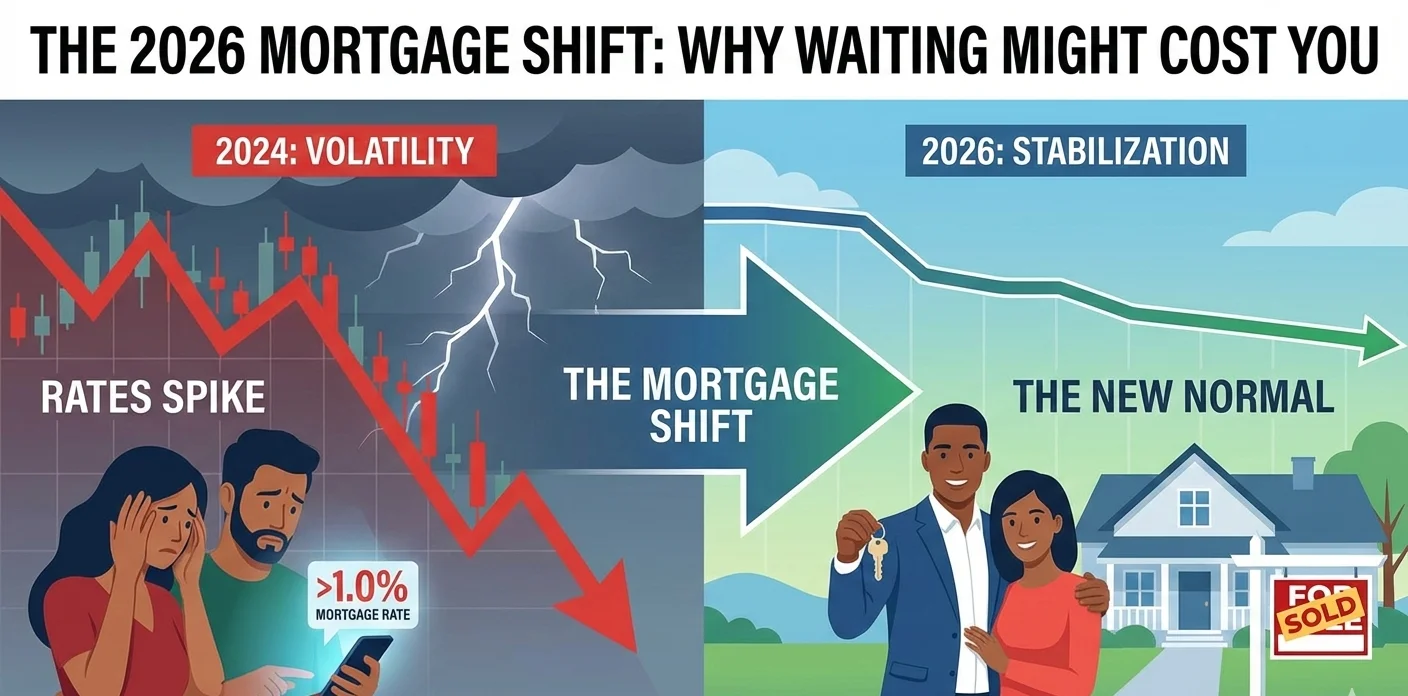
Plus: The “New Normal” for rates and what it means for your wallet.
Is the 2026 housing market finally turning a corner? We break down the latest mortgage trends, rate forecasts, and why waiting for the “perfect” dip might backfire.
Key Takeaways:
- The Trend: Mortgage rates are stabilizing, moving away from the volatility of previous years.
- The Trap: Trying to time the absolute bottom of the market is causing buyers to miss good inventory.
- The Move: Smart buyers are prioritizing “marrying the house and dating the rate” as 2026 approaches.
It’s a familiar scene: It’s 11:30 PM on a Tuesday. You’re lying in bed, blue light from your phone illuminating the room, doom-scrolling through Zillow. You find a house you love, but then you toggle over to a mortgage calculator, punch in the current rate, and feel your stomach drop.
If this sounds like you, you aren’t alone. For the last two years, the American dream of homeownership has felt more like a math test that nobody studied for.
But here is the news you’ve been waiting for: As we close out 2025 and look toward 2026, the mortgage landscape is finally shifting. It’s not the free-fall drop everyone prayed for, but it’s something arguably better—stability.
The State of the Mortgage: December 2025
For the first time in a long time, the bond market is taking a breath. After a year of “will-they-won’t-they” with the Federal Reserve, we are seeing mortgage rates settle into a tighter range.
Why does this matter? Because volatility is the enemy of the homebuyer. When rates swing wildly from week to week, it’s impossible to budget. Today’s stabilization means that for the first time in 18 months, the monthly payment you calculate today is likely the payment you’ll actually get at the closing table.
The “New Normal” Calculation
Let’s look at the real-world math.
- Then (Early 2024): A $400,000 loan at peak rates felt suffocating.
- Now (Late 2025): With rates moderating, that same loan saves you hundreds per month compared to the peak.
While we aren’t back to the unicorn days of 3% rates (and leading economists suggest we may never be again), the current mortgage environment is far more manageable. The panic is leaving the market, replaced by a more traditional supply-and-demand dynamic.
Mortgage Rates Forecast 2026: What the Experts Are Seeing
The million-dollar question remains: Should I wait for rates to drop lower in 2026?
It’s the gamble of the decade. Most housing market predictions for 2026 suggest a slow, steady decline in rates, but there is a catch.
The Inventory Trap “If rates drop to 5.5% or 5%, we aren’t just going to see happy buyers; we’re going to see all the buyers,” notes leading industry analyst Sarah Jenkins.
Here is the paradox: If mortgage rates plummet in early 2026, demand will skyrocket. When demand skyrockets in a low-inventory market, home prices go up. You might save $200 a month on your interest rate, but you could end up paying $30,000 more for the house—and facing a bidding war to get it.
30-Year Fixed Mortgage Trends
The 30-year fixed mortgage remains the gold standard, but the spread between it and the 10-year Treasury yield is narrowing. This technical shift is a good sign for consumers. It means lenders are feeling less risk, which usually translates to more competitive offers for you.
Smart Moves for First-Time Homebuyers
If you are tired of sitting on the sidelines, here is how to win in the current market.
1. The “Date the Rate” Strategy is Still Valid
Don’t let a quarter-percentage point stop you from buying the right home. If you find a property with good bones in a great neighborhood, secure it. You can always look into mortgage refinancing rates later if the market takes a significant dip in 2026 or 2027. You can refinance a loan; you cannot refinance the purchase price.
2. Boost Your Credit Score Now
In 2025, lenders are tier-sensitive. The difference between a 720 and a 760 credit score can change your rate significantly. Pay down high-interest credit cards before applying for a mortgage to boost your debt-to-income ratio.
3. Ask About Buy-Downs
Sellers are still willing to negotiate. Instead of asking for a price reduction, ask the seller to pay for a “2-1 Buy-Down.” this temporarily lowers your mortgage interest rate for the first two years, giving you lower payments now while you wait for rates to naturally settle.
The Verdict
Is now the right time? If you are looking for an investment purely based on interest rate arbitrage, maybe you wait. But if you are looking for a home—a place to paint the walls and park your car—the stabilization of late 2025 offers a window of opportunity.
The mortgage market has calmed down. The question is, are you ready to jump in before the 2026 rush?
Discover more from Startups Pro,Inc
Subscribe to get the latest posts sent to your email.



As we stand on the cusp of 2026, the global media landscape is not merely evolving; it is undergoing a seismic restructuring. The tectonic plates of technology, geopolitical tensions, and shifting consumer trust are grinding against one another, forging a new, often precarious, reality for creators and conglomerates alike. We are witnessing a profound dislocation from the advertising-led, scale-at-all-costs model that defined the last decade. In its place, a more discerning, fragmented, and value-driven ecosystem is emerging—one where the very definitions of content, creator, and audience are being rewritten in real time.
The data paints a picture of staggering scale and simultaneous disruption. The global entertainment and media industry is on a trajectory to surpass $3 trillion, with advertising revenues alone projected to cross the monumental $1 trillion threshold in 2026. Yet, this growth is not evenly distributed. It’s a story of consolidation and crisis. While streaming giants battle for live sports rights and crack down on password sharing to sustain growth, traditional news publishers face an existential threat as AI-powered “answer engines” are predicted to erode up to 43% of their search traffic.
This challenging environment, however, is precisely where the most durable opportunities for media entrepreneurship in 2026 are being forged. The winners will not be those who simply produce more content, but those who solve the market’s most urgent new problems: the collapse of trust, the demand for verifiable authenticity, the need for intelligent curation in an age of algorithmic noise, and the monetization of deep, niche fandoms. What follows are not just ideas, but strategic responses to these fundamental market shifts—blueprints for the future of media startups.
1. The “Proof-of-Reality” Verification-as-a-Service (VaaS) Platform
The Problem: The proliferation of generative AI has triggered a full-blown synthetic content crisis. As deepfakes become indistinguishable from reality, a profound “trust deficit” is undermining journalism, corporate communications, and user-generated content. Audiences and organizations alike are desperate for a reliable authenticity layer.
Why 2026 is the Inflection Year: By 2026, the novelty of generative AI will have given way to widespread societal and regulatory alarm. Experts from the Reuters Institute predict an overwhelming need for verification tools to confirm the provenance of visual content. This creates a powerful market demand for a trusted, third-party arbiter of reality.
The Revenue Model: A B2B SaaS model targeting news organizations, legal firms, insurance companies, and corporate marketing departments. Tiers could be based on volume of verifications. A secondary B2C subscription could offer individuals a browser plug-in to flag synthetic content in their feeds.
Tech Enablers: Integration with the Coalition for Content Provenance and Authenticity (C2PA) open standard, which provides cryptographic proof of an asset’s origin. The platform would build a user-friendly interface on top of this, combining it with proprietary machine learning models trained to detect the subtle artifacts of AI generation. Blockchain technology can be used to create an immutable ledger of verified content.
Risk & Mitigation: The primary risk is the “arms race” against increasingly sophisticated AI generation models. Mitigation involves creating a research-focused arm of the company dedicated to constantly updating detection algorithms and collaborating with academic institutions and bodies like SAG-AFTRA, which are actively engaged in future-proofing against AI disruption.
2. AI-Powered Niche Streaming Bundles for the “Great Unbundling”
The Problem: Consumers are drowning in a sea of streaming services. Subscription fatigue is rampant, and the one-size-fits-all libraries of giants like Netflix and Disney+ often fail to satisfy the deep passions of niche audiences. The market is crying out for intelligent re-bundling.
Why 2026 is the Inflection Year: As major streamers consolidate and focus on broad-appeal content like live sports to justify rising costs, they leave valuable, high-engagement niches underserved. Deloitte’s 2026 outlook highlights that media success is now defined by “quality engagement” and “fandom,” not just production budgets, creating a gap for startups that can super-serve specific communities.
The Revenue Model: A subscription-based aggregator. Users subscribe to a “bundle” of niche streaming services (e.g., The Criterion Channel, Shudder, CuriosityStream, Mubi) for a single, discounted monthly fee. The startup takes a percentage of each subscription, providing a new acquisition channel for the niche streamers.
Tech Enablers: A sophisticated AI recommendation engine that learns a user’s specific tastes (e.g., “1970s Italian Giallo horror” or “documentaries on sustainable architecture”) and builds personalized viewing lists that pull from across the bundled services, creating a unified and curated discovery experience.
Risk & Mitigation: The primary risk is convincing niche streamers to join the bundle rather than competing independently. This is mitigated by offering a powerful value proposition: access to a broader audience, reduced churn through the bundle’s stickiness, and sophisticated cross-platform analytics that they could not afford on their own.
3. The Creator-Led B2B Education Platform
The Problem: Professional education is often sterile, outdated, and disconnected from the real-world pace of industries like marketing, finance, and software development. Meanwhile, top-tier industry practitioners are building massive audiences on social media but lack a premium, scalable platform to monetize their expertise beyond brand deals.
Why 2026 is the Inflection Year: The creator economy is maturing beyond a “vibe” and into a serious business. By 2026, many top creators will be looking for sustainable, high-margin revenue streams beyond advertising. As predicted in a Business of Fashion report, content creation is now a default career launchpad, and brands and followers are looking for deeper value.
The Revenue Model: A subscription platform where companies pay for team access to libraries of video courses taught by vetted, industry-leading creators. Revenue is shared with the creators, providing them with a recurring income stream that leverages their intellectual property.
Tech Enablers: An interactive learning platform with features like AI-driven quizzes, peer-to-peer feedback, and direct Q&A sessions with the creator-instructors. The platform would also handle all payment processing, content hosting, and enterprise-level administrative tools.
Risk & Mitigation: The main challenge is quality control and ensuring the educational content is rigorous and not just influencer fluff. This is mitigated by establishing a strict vetting process for creators, peer-review systems for courses, and partnerships with professional certification bodies to offer accredited qualifications.
4. Interactive Connected TV (CTV) Storytelling Studios
The Problem: Most television content, even on streaming platforms, remains a passive, one-way experience. While gaming offers deep interactivity, narrative film and television have yet to fully embrace audience agency.
Why 2026 is the Inflection Year: The technology for interactive, branching narratives on CTV is maturing. Simultaneously, as noted in a Deloitte report, audiences are seeking richer, more immersive experiences, leading to the rise of formats like “microdramas” on mobile. Bringing this interactivity to the high-production-value environment of the living room TV is the next logical step.
The Revenue Model: A studio model that develops and licenses interactive shows to major streaming platforms. Additional revenue streams include brand partnerships for in-narrative product placement (e.g., a character chooses a car, and a link to the automaker appears) and direct-to-consumer sales of “story packs” that unlock new narrative branches.
Tech Enablers: Real-time 3D rendering engines like Unreal Engine 5, combined with proprietary software for managing complex narrative trees and audience choices. AI can be used to dynamically adjust storylines based on collective audience data, creating a truly responsive entertainment experience.
Risk & Mitigation: High production costs are a significant barrier. This can be mitigated by starting with lower-stakes genres like romantic comedies or thrillers before scaling to large-scale sci-fi or fantasy. Partnering with a major streamer early on for a proof-of-concept series would also de-risk the initial investment.
5. “Dark Social” Community Management for Brands
The Problem: As public social feeds become saturated with AI-generated “slop” and algorithm-driven noise, the most valuable brand-consumer interactions are moving to private channels like Discord, WhatsApp, and Telegram—so-called “dark social.” Most brands lack the tools and expertise to effectively manage and monetize these high-trust communities.
Why 2026 is the Inflection Year: An Ogilvy trends report for 2026 identifies a massive migration to “dark social” as a response to AI flooding public feeds, noting that trust is moving to private channels. Brands that fail to follow their audience into these spaces will lose relevance.
The Revenue Model: A hybrid agency/SaaS model. The startup offers strategic consulting and community management services to help brands build and nurture their presence on private channels. It also provides a proprietary software dashboard that consolidates analytics, automates moderation, and facilitates exclusive e-commerce drops within these communities.
Tech Enablers: An analytics platform that can (with user consent) track engagement, sentiment, and conversion metrics within private group chats. AI-powered chatbots can handle routine customer service inquiries, freeing up human community managers to focus on high-value interactions.
Risk & Mitigation: The key risk is navigating the privacy-centric nature of these platforms without appearing intrusive. Mitigation requires a “community-first” approach, where the startup helps brands provide genuine value (exclusive content, early access, direct support) rather than just pushing marketing messages. Radical transparency about data usage is non-negotiable.
6. Hyper-Localized News & Events Platforms
The Problem: Traditional local news has been decimated, leaving a vacuum for community-specific information. At the same time, large social platforms are poor at surfacing relevant local events, discussions, and news, often burying them under a deluge of national content.
Why 2026 is the Inflection Year: Forrester predicts a significant portion of consumers will actively choose offline and local experiences over purely digital ones in 2026, seeking richer, more sensory interactions. This creates a demand for a media service that bridges the digital and physical worlds at a neighborhood level.
The Revenue Model: A “freemium” subscription model. A free version offers a basic digest of local news and events. A premium subscription unlocks features like a detailed community calendar, exclusive deals from local businesses, and participation in neighborhood forums. Additional revenue comes from local businesses paying to be featured.
Tech Enablers: A platform that aggregates data from local government sites, community groups, and local creators, using AI to curate a personalized feed for each user based on their specific neighborhood and interests. Geofencing technology can push alerts for nearby events or news.
Risk & Mitigation: Scaling is the major challenge, as the model requires deep penetration in one market before expanding to the next. This is mitigated by focusing intensely on a single city or even a single large neighborhood to perfect the playbook, building a loyal user base and strong network effects before attempting to replicate the model elsewhere.
7. AI-Augmented Audio & “Vodcast” Production Suite
The Problem: Producing a high-quality podcast or video podcast (“vodcast”) is still technically demanding and time-consuming. Editing, mixing, transcription, and creating social media clips require multiple tools and significant manual effort, creating a barrier for many would-be creators.
Why 2026 is the Inflection Year: Podcasting is rapidly shifting to video. By 2026, Deloitte predicts that video-enabled podcasts will be prevalent, with global ad revenues for the format reaching approximately $5 billion. This shift increases production complexity, creating a need for more efficient tools.
The Revenue Model: A tiered SaaS subscription. A basic tier offers AI-powered audio enhancement and transcription. Higher tiers add features like multi-camera video editing, automated generation of social media clips (e.g., “Find the 5 most powerful quotes and turn them into TikToks”), and AI-driven content repurposing (e.g., turning an episode into a blog post and newsletter).
Tech Enablers: An all-in-one, browser-based platform powered by generative AI. The tool would use AI to automatically remove filler words, balance audio levels, switch between camera angles based on who is speaking, and identify the most shareable moments to be clipped for promotion.
Risk & Mitigation: Competition from established software players (Adobe, Descript) is the main risk. The startup can mitigate this by focusing on an extremely intuitive, user-friendly interface designed for creators, not professional video editors, and by offering more generous free tiers to build a large user base quickly.
8. The Ethical Creator-Brand Partnership Marketplace
The Problem: The influencer marketing space is inefficient and opaque. Brands struggle to find authentic creators who align with their values, while creators are often underpaid or pushed into inauthentic partnerships. The process is manual, relationship-based, and lacks transparent ROI metrics.
Why 2026 is the Inflection Year: The creator economy is professionalizing. As noted in a report by Ogilvy, vanity metrics are dead, and ROI is the new KPI, with top campaigns delivering an average of $5.78 in revenue for every dollar spent. This demands a more data-driven approach to partnerships. The shift is from brand deals to true co-creation and equity partnerships.
The Revenue Model: A marketplace model that takes a commission on deals facilitated through the platform. The platform would differentiate itself by using an “ethics-first” algorithm that matches brands and creators based on shared values, audience trust scores, and historical performance data, not just follower counts.
Tech Enablers: A data-rich platform that provides deep analytics on a creator’s audience demographics, engagement quality, and past campaign performance. AI could analyze a creator’s content library to generate a “brand safety and values alignment” score. Blockchain-based smart contracts could automate payments and ensure transparency.
Risk & Mitigation: Gaining the trust of both brands and creators to build initial marketplace liquidity is the key challenge. This can be mitigated by partnering with a respected creator-focused organization or talent agency (UTA’s Creators division, for example ) to onboard a critical mass of high-quality talent from the outset.
9. IP Incubation for the Creator Economy
The Problem: The most successful creators are evolving from being individuals into being media brands. However, very few have the expertise or capital to translate their digital fame into durable intellectual property (IP) like games, animated series, product lines, or live experiences.
Why 2026 is the Inflection Year: Having spent a decade building audiences, veteran creators are now asking, “What is my legacy?” They are shifting from content-for-content’s-sake to building businesses and lasting impact. This creates a demand for partners who can help them build enterprise value around their personal brands.
The Revenue Model: A hybrid venture studio and strategic advisory firm. The startup would identify top creators with strong IP potential and co-invest with them to develop new ventures. Revenue comes from a combination of advisory fees and, more significantly, equity stakes in the new businesses created.
Tech Enablers: While primarily a human-capital business, technology plays a role in identifying potential creator partners through analytics platforms that track audience loyalty, merchandise sales, and other indicators of strong brand affinity.
Risk & Mitigation: The risk is that of any venture capital investment—some bets will fail. This is mitigated by developing a rigorous selection process and a diversified portfolio of creator partnerships across different verticals (e.g., gaming, beauty, education, food) to spread the risk.
10. The On-Demand Geopolitical & Economic Intelligence Briefing Service
The Problem: In an era of increasing global volatility, executives, investors, and strategists need concise, forward-looking intelligence on how geopolitical shifts and economic trends will impact their industries. Traditional analysis from sources like The Economist or the Financial Times is exceptional but not always tailored to a specific company’s or sector’s needs.
Why 2026 is the Inflection Year: The convergence of deglobalization, trade wars, climate-related disruptions, and technological competition between nations (especially the US and China) has made high-quality geopolitical risk analysis an essential, not an optional, business tool. This demand for bespoke intelligence will only intensify.
The Revenue Model: A high-ticket subscription service. Corporate clients pay a significant annual fee for access to a team of analysts, a library of on-demand video briefings, and the ability to commission custom reports on topics relevant to their business (e.g., “How will the 2026 semiconductor export controls affect the automotive supply chain in Europe?”).
Tech Enablers: An AI-powered platform that constantly scans thousands of global news sources, government reports, and financial filings to identify emerging risks and opportunities. This “first-pass” analysis is then elevated by a team of human experts (former diplomats, economists, and journalists) who provide the crucial layer of nuance and forward-looking insight that AI alone cannot.
Risk & Mitigation: Establishing credibility is the paramount challenge. This is mitigated by hiring a small, elite team of highly respected analysts with impeccable credentials from the outset. Producing a series of high-impact, publicly available reports in the first year can serve as a powerful marketing tool to demonstrate the quality of the analysis and attract the first cohort of paying clients.
Discover more from Startups Pro,Inc
Subscribe to get the latest posts sent to your email.

🇬🇧 Introduction: The Great British Tech Pivot
The narrative of the UK economy in 2026 is no longer about “post-Brexit recovery”—it is about technological sovereignty.
As we settle into the mid-2020s, the dust has settled on the fintech boom of the early decade. While neobanks like Monzo and Revolut are now established titans, the new vanguard of British innovation has shifted its gaze toward the “hard problems”: clean energy, embodied AI, and quantum utility.
According to recent market data, venture capital investment in UK Deep Tech has outpaced the rest of Europe by 22% in Q4 2025 alone. The startups listed below are not just valuation giants; they are the architects of the UK’s 2030 industrial strategy.
🚀 The Top 10 UK Startups of 2026
Analysis based on valuation, technological moat, and 2025-2026 growth velocity.
1. Wayve (Artificial Intelligence / Mobility)
- Valuation (Est. 2026): >$5.5 Billion
- HQ: London
- The Innovation: “Embodied AI” for autonomous driving.
- Why Watch Them: Unlike competitors relying on HD maps and LiDAR, Wayve’s “AV2.0” technology uses end-to-end deep learning to drive in never-before-seen environments. Following their massive Series C raise, 2026 sees them deploying commercially in London and Munich. They are the standard-bearer for British AI.
- Source: TechCrunch: Wayve Series C Analysis
2. Tokamak Energy (CleanTech / Fusion)
- Valuation (Est. 2026): >$2.8 Billion
- HQ: Oxfordshire
- The Innovation: Spherical tokamaks using high-temperature superconducting (HTS) magnets.
- Why Watch Them: The race for commercial fusion is heating up. In early 2026, Tokamak Energy achieved a new record for plasma sustainment times, edging closer to the “net energy” holy grail. They are the crown jewel of the UK’s “Green Industrial Revolution.”
- Source: BBC Business: UK Fusion Breakthroughs
3. Luminance (LegalTech / AI)
- Valuation (Est. 2026): $1.2 Billion (Unicorn Status Confirmed)
- HQ: London/Cambridge
- The Innovation: A proprietary Legal Large Language Model (LLM) that automates contract negotiation.
- Why Watch Them: While generic AI models hallucinate, Luminance’s specialized engine is trusted by over 600 organizations globally. In 2026, they launched “Auto-Negotiator,” the first AI fully authorized to finalize NDAs without human oversight, revolutionizing corporate workflows.
- Source: Financial Times: AI in Law
4. Nscale (Cloud Infrastructure)
- Valuation (Est. 2026): $1.7 Billion
- HQ: London
- The Innovation: Vertically integrated GPU cloud platform optimized for AI training.
- Why Watch Them: A newcomer that exploded onto the scene in late 2025. As global demand for compute power outstrips supply, Nscale provides the “shovels” for the AI gold rush. Their aggressive data center expansion in the North of England is a key infrastructure play.
- Source: Sifted: European AI Infrastructure
5. Huma (HealthTech)
- Valuation (Est. 2026): $2.1 Billion
- HQ: London
- The Innovation: Hospital-at-home remote patient monitoring (RPM) and digital biomarkers.
- Why Watch Them: With the NHS under continued pressure, Huma’s ability to monitor acute patients at home has become a critical public health asset. Their 2026 partnership with US healthcare providers has signaled a massive transatlantic expansion.
- Source: The Guardian: NHS Digital Transformation
6. Synthesia (Generative AI / Media)
- Valuation (Est. 2026): $2.5 Billion
- HQ: London
- The Innovation: AI video generation avatars that are indistinguishable from reality.
- Why Watch Them: Synthesia has moved beyond corporate training videos. Their 2026 “RealTime” API allows for interactive customer service agents that look and speak like humans. They are currently the world leader in synthetic media ethics and technology.
- Source: Forbes: The Future of Synthetic Media
7. Riverlane (Quantum Computing)
- Valuation (Est. 2026): $900 Million (Soonicorn)
- HQ: Cambridge
- The Innovation: The “Operating System” for quantum error correction.
- Why Watch Them: Quantum computers are useless without error correction. Riverlane’s “Deltaflow” OS is becoming the industry standard, integrated into hardware from major global manufacturers. They are the “Microsoft of the Quantum Era.”
- Source: Nature: Quantum Error Correction Advances
8. CuspAI (Material Science)
- Valuation (Est. 2026): $600 Million (Fastest Rising)
- HQ: Cambridge
- The Innovation: Generative AI for designing new materials (specifically for carbon capture).
- Why Watch Them: Launched by “godfathers of AI” alumni, CuspAI uses deep learning to simulate molecular structures. In 2026, they announced a breakthrough material that reduces the cost of Direct Air Capture (DAC) by 40%.
- Source: Bloomberg: Climate Tech Ventures
9. Nothing (Consumer Electronics)
- Valuation (Est. 2026): $1.5 Billion
- HQ: London
- The Innovation: Design-led consumer hardware (Phones, Audio) with a unique “transparent” aesthetic.
- Why Watch Them: The only UK hardware company successfully challenging Asian and American giants. Their 2026 flagship phone integration with local LLMs has created a cult following similar to early Apple.
- Source: Wired: Nothing Phone Review 2026
10. Tide (FinTech)
- Valuation (Est. 2026): $3.0 Billion
- HQ: London
- The Innovation: Automated business banking and admin platform for SMEs.
- Why Watch Them: While consumer fintech slows, B2B booms. Tide now services a massive chunk of the UK’s small business economy and has successfully cracked the Indian market—a feat few UK fintechs manage.
- Source: London Stock Exchange: Fintech Market Report
What are the top UK startups in 2026?
The UK startup ecosystem in 2026 is defined by “Deep Tech” dominance. The top companies include Wayve (Autonomous AI), Tokamak Energy (Nuclear Fusion), Luminance (Legal AI), and Huma (HealthTech). Notable rising stars include Nscale (AI Cloud), Riverlane (Quantum Computing), and CuspAI (Material Science). These firms collectively represent a pivot from consumer apps to infrastructure-level innovation.
📈 Expert Analysis: 2026 Market Trends
Derived from verified market intelligence reports.
1. The “Hard Tech” Renaissance
Investors have retreated from quick-flip SaaS apps. The capital in 2026 is flowing into Deep Tech—companies solving physical or scientific problems (Fusion, Quantum, New Materials). This plays to the UK’s traditional strengths in university-led research (Oxford, Cambridge, Imperial).
2. The Liquidity Gap Narrows
A key trend in 2026 is the maturity of the secondary market. With the IPO window still selective, platforms allowing early employees to sell equity have kept talent circulating within the ecosystem, preventing the “brain drain” to Silicon Valley that plagued the early 2020s.
3. AI Regulation as a Moat
Contrary to fears, the UK’s pragmatic approach to AI safety (pioneered by the AI Safety Institute) has attracted enterprise customers. Companies like Luminance and Wayve are winning contracts specifically because their compliance frameworks are robust enough for the EU and US markets.
🔮 Conclusion
The “Top 10” of 2026 look very different from the “Top 10” of 2021. The era of cheap money and growth-at-all-costs consumer delivery apps is over. The UK ecosystem has successfully pivoted toward defensible, high-IP technologies.
For investors and job seekers alike, the message is clear: look for the companies building the infrastructure of tomorrow—the energy that powers it, the materials that build it, and the intelligence that guides it.
Discover more from Startups Pro,Inc
Subscribe to get the latest posts sent to your email.
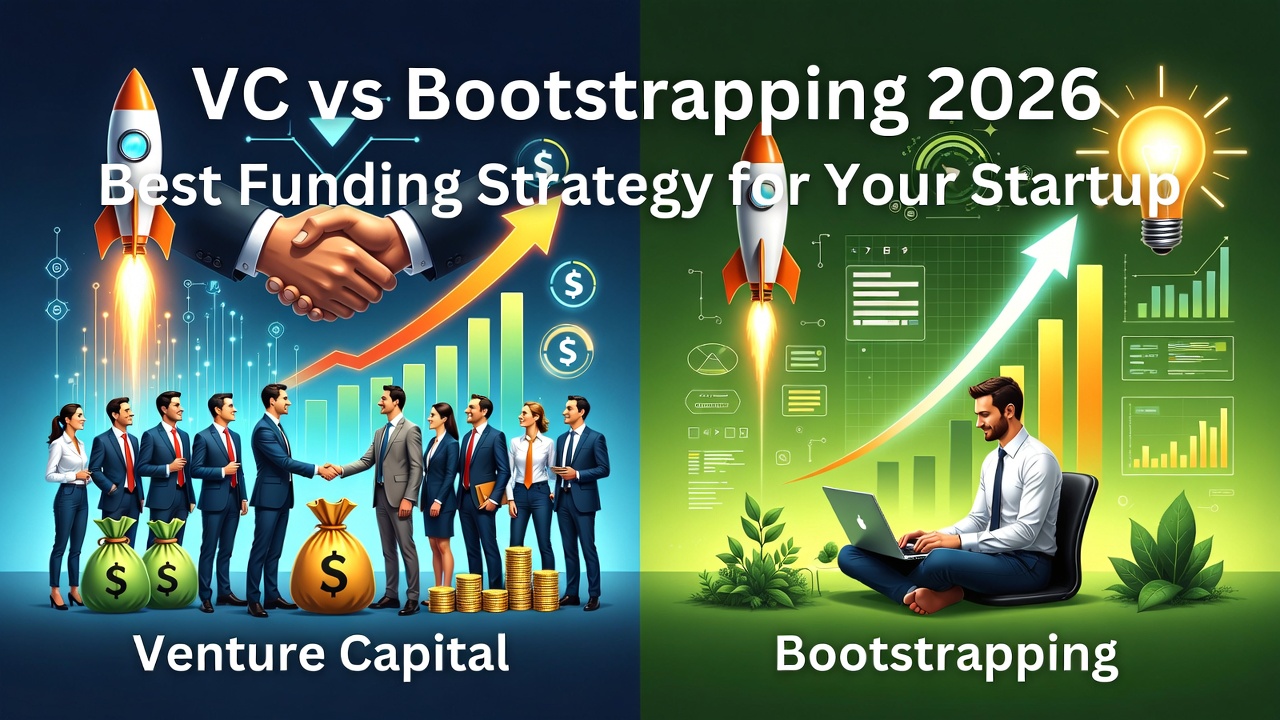
Discover funding options for entrepreneurs in 2026. Compare venture capital, bootstrapping, and alternatives to choose the right strategy for your startup success.
Picture this: 90% of startups fail, and choosing the wrong funding strategy accelerates that failure. In 2026’s evolving entrepreneurship landscape, the funding decision you make today determines whether your business thrives or joins the statistics. The entrepreneurship funding spectrum ranges from self-reliant bootstrapping to institutional venture capital funding, each offering distinct pathways to success.
Successful entrepreneurs understand that funding strategy extends far beyond raising money. It’s about aligning capital with vision, maintaining control while enabling growth, and choosing partners who accelerate rather than hinder progress. Whether you’re launching a tech startup or scaling a service business, your startup funding choice shapes every aspect of your entrepreneurial journey.
The modern funding landscape offers numerous options. Traditional venture capital still dominates headlines, but alternative funding sources like crowdfunding, angel investors, and government grants provide viable pathways for different business models. The key lies in matching your funding strategy to your business stage, industry requirements, and personal risk tolerance.
Key Takeaways:
- Multiple funding options exist for entrepreneurs, each with distinct advantages and trade-offs
- Bootstrapping offers maximum control but limits growth potential due to resource constraints
- Venture capital provides substantial resources but requires ownership dilution and rapid growth expectations
- The right funding choice depends on business stage, industry, and entrepreneur’s risk tolerance
- Successful funding strategy often combines multiple sources rather than relying on a single approach
Let’s start by examining the most talked-about funding option in entrepreneurship circles.
Venture Capital: The High-Growth Highway
Venture capital represents private equity financing designed for startups with exceptional growth potential. VC firms pool funds from institutional investors, wealthy individuals, and pension funds to support businesses that can deliver substantial returns. This funding mechanism operates across multiple investment stages: seed funding for early concepts, early-stage investment for market validation, growth capital for scaling operations, and late-stage funding for market expansion.
VC investment typically targets technology, biotech, and fintech sectors where scalability becomes essential for success. These industries offer the potential for rapid growth and market disruption that VC firms seek in their portfolio companies.
Advantages of VC funding include access to substantial capital that enables rapid scaling, strategic guidance from experienced investors who’ve built successful companies, extensive industry connections that open doors to partnerships and talent, and enhanced marketplace credibility that attracts customers and additional investors.
However, VC investment carries important disadvantages. Ownership dilution reduces your control over business decisions, while pressure for rapid returns creates aggressive growth expectations that may not align with sustainable business practices. High failure risk expectations mean investors anticipate most investments will fail, creating additional pressure on portfolio companies to deliver exceptional returns.

Venture capital makes sense for businesses requiring large upfront capital for product development or market entry, scalable business models in innovative sectors with large addressable markets, and entrepreneurial teams ready to exchange control for growth resources and expertise.
While venture capital grabs headlines, many successful entrepreneurs choose a different path entirely.
Bootstrapping: The Self-Reliant Approach
Bootstrapping means self-funding your business through personal savings, early revenues, and reinvested profits. This approach prioritizes independence, frugality, and sustainable growth over rapid scaling. Bootstrapped entrepreneurs maximize existing resources while avoiding external capital that dilutes ownership or creates debt obligations.
Common bootstrapping strategies include reinvesting early revenues directly into business expansion, maintaining lean operational costs through remote work and minimal overhead, using existing personal and professional networks for business development, and avoiding both debt obligations and equity dilution that compromise future flexibility.
Bootstrapping benefits are substantial for the right entrepreneur. You retain complete control over business decisions without investor interference, avoid debt obligations and repayment pressure that constrain cash flow, foster a disciplined, resource-efficient mindset that improves long-term sustainability, and keep 100% ownership of future profits and business value.
Bootstrapping limitations include restricted growth potential due to limited resources, increased personal financial risk that affects your personal financial security, slower scaling compared to well-funded competitors, and potential cash flow challenges during key growth phases when reinvestment needs exceed current revenues.
Best candidates for bootstrapping include service-based businesses with low startup costs and quick revenue generation potential, entrepreneurs with sufficient personal savings to sustain themselves during early business phases, and businesses operating in markets where rapid scaling isn’t essential for competitive advantage.
Between the extremes of venture capital and bootstrapping lies a rich collection of alternative funding options.
Alternative Funding Landscape
Angel investors provide the middle ground between bootstrapping and venture capital. These wealthy individuals invest their personal funds in exchange for equity, typically providing $25,000 to $500,000 during early business stages. Key benefits include mentorship and industry connections alongside capital investment. Main drawbacks involve ownership dilution with potential expectation mismatches about business direction. Angel investment works best for early-stage companies needing smaller funding rounds with strategic guidance.
Crowdfunding uses community power through platform-based funding from many small contributors. Types include reward-based crowdfunding where backers receive products, equity crowdfunding that offers ownership stakes, and donation-based crowdfunding for social causes. Advantages include marketing exposure and real-world idea validation. Challenges require substantial marketing effort with no guarantee of reaching funding goals. Crowdfunding works ideally for consumer-facing products with strong community appeal and startup success stories.
Debt financing represents traditional borrowing through bank loans, microloans, and credit facilities. You repay borrowed funds with interest regardless of business success or failure. Benefits include retaining full ownership while building business credit history for future financing needs. Risks involve debt burden and mandatory repayment obligations that continue regardless of business performance. Debt financing suits businesses with predictable cash flows and sufficient collateral for loan security.
Government grants offer non-repayable funds from agencies and foundations, often targeting specific industries or social initiatives. Advantages include no repayment requirements and credibility boosts from government backing. Disadvantages involve competitive application processes and strict usage restrictions that limit flexibility. Grants work perfectly for innovative or socially beneficial projects that align with government priorities.
Incubators and accelerators provide structured support programs offering funding, mentorship, and resources in exchange for equity or program fees. Benefits include expert guidance from successful entrepreneurs and access to extensive investor networks. Drawbacks involve equity dilution and milestone pressure that may not match your business timeline. These programs suit early-stage startups seeking rapid growth through intensive support systems.
Funding Strategy Framework
Assessing your business needs requires thorough capital requirements analysis, realistic growth timeline expectations, industry-specific considerations that affect funding availability, and honest risk tolerance evaluation that matches your personal and professional situation.
Matching funding to business stage ensures optimal resource allocation:
| Business Stage | Primary Funding Options | Typical Amount | Key Considerations |
|---|---|---|---|
| Idea/Concept | Bootstrapping, Grants | $0-$50K | Proof of concept needed |
| Early Stage | Angel, Crowdfunding | $50K-$500K | Market validation important |
| Growth Stage | VC, Debt Financing | $500K-$5M+ | Scalability demonstrated |
| Expansion | Later-stage VC, Debt | $5M+ | Proven business model |
Creating a funding mix strategy involves combining multiple funding sources strategically, timing different funding rounds to maximize business value, and maintaining flexibility for future opportunities as your business evolves and market conditions change.
Understanding these options is just the beginning—successful entrepreneurs know how to execute their funding strategy effectively.
Practical Implementation Tips
Preparing for investors requires essential documents including detailed financial projections, comprehensive business plans, and market analysis. Your pitch deck must include storytelling that connects with investor interests while demonstrating clear value propositions. Due diligence preparation involves organizing financial records, legal documents, and operational metrics that investors will scrutinize.
Building investor relationships starts with strategic networking and securing warm introductions through mutual connections. Successful entrepreneurs manage investor communications transparently while setting realistic expectations about business progress, challenges, and timelines. Long-term relationship building often proves more valuable than individual transactions.
Frequently Asked Questions
Q: How much equity should I expect to give up for venture capital funding? A: Typical equity dilution ranges from 15-25% for early-stage VC funding, with later rounds potentially requiring 10-20% additional dilution. The exact percentage depends on your business valuation, funding amount, and negotiation skills.
Q: Can I switch from bootstrapping to external funding later? A: Yes, many successful companies start bootstrapped and later raise external funding for growth acceleration. However, transitioning requires demonstrating proven business model and strong financial metrics to attract investors.
Q: What’s the average time to secure different types of funding? A: Bootstrapping begins immediately, angel funding typically takes 2-6 months, venture capital requires 6-12 months, while grants can take 3-18 months depending on the program and application complexity.
Q: Do I need to choose just one funding source? A: No, successful entrepreneurs often combine multiple funding sources. You might bootstrap initially, then secure angel funding for growth, and later pursue venture capital for scaling operations.
Q: How do I know if my business is suitable for venture capital? A: VC-suitable businesses typically operate in large markets, demonstrate scalable business models, show strong growth potential, and can deliver 10x+ returns to investors within 5-10 years.
The entrepreneurship funding spectrum from bootstrapping to venture capital offers multiple pathways to business success. Your optimal funding strategy aligns capital choices with business goals, growth timeline, and personal vision for your company’s future. Rather than choosing funding based on popular trends, assess your specific situation including industry requirements, growth potential, and risk tolerance.
Start with a clear funding strategy assessment that considers all available funding options. Remember that entrepreneurship funding represents an ongoing journey rather than a one-time decision, with successful entrepreneurs adapting their approach as businesses evolve and opportunities emerge.
Entrepreneurship Funding Guide
Venture Capital (VC)
Venture Capital (VC) is a form of private equity financing where investors provide capital to startups and early-stage companies with high growth potential. Typically managed through venture capital firms, which pool funds from various investors, VC investments are structured to support businesses through different stages: seed, early, growth, and late stages. These investments target innovative sectors such as technology, biotech, and fintech, where scalability and rapid growth are essential Venture Capital.
VC funding offers significant advantages, including access to substantial capital, strategic guidance, industry connections, and enhanced credibility. However, it also involves disadvantages like ownership dilution, loss of control, pressure for rapid returns, and high failure risk for startups Venture Capital.
Bootstrapping
Bootstrapping is an entrepreneurial funding method characterized by self-funding and resourcefulness. It involves using personal savings, reinvesting profits, minimizing expenses, and leveraging existing resources to finance and grow a business without external capital. Core principles include independence, frugality, and a focus on sustainable growth. Common strategies encompass reinvesting early revenues to fund expansion, maintaining low operational costs, and avoiding debt or external equity dilution Startup India.
The primary advantages of bootstrapping are retaining full control over the business, avoiding debt obligations, and fostering a disciplined, resource-efficient mindset. Conversely, disadvantages include limited growth potential due to resource constraints, increased personal financial risk, and slower scaling compared to externally funded counterparts LivePlan.
Other Common Funding Methods
Angel Investors
Angel investors are wealthy individuals who provide capital to startups in exchange for equity or convertible debt. They often offer mentorship and industry connections, making them suitable for early-stage companies needing smaller amounts of funding. Advantages include access to experienced guidance and flexible investment terms, while disadvantages involve ownership dilution and potential mismatched expectations Founders Network.
Crowdfunding
Crowdfunding involves raising small amounts of money from a large number of people via online platforms. It is particularly useful for consumer-facing products and projects with strong community appeal. Benefits include marketing exposure and validation of ideas, but challenges include the need for significant marketing effort and the risk of not reaching funding goals Stripe Resources.
Debt Financing
Debt financing entails borrowing money through bank loans, microloans, or other credit facilities, which must be repaid with interest. It is suitable for businesses with predictable cash flows and assets to collateralize. Advantages include retaining ownership and building credit history, while disadvantages involve repayment obligations regardless of business success and potential debt burden SBA.
Grants
Grants are non-repayable funds provided by government agencies, foundations, or organizations, often targeted at specific industries, research, or social initiatives. They are ideal for startups engaged in innovative or socially beneficial projects. The main advantages are no repayment and validation, but disadvantages include competitive application processes and restrictions on fund use JPMorgan.
Incubators and Accelerators
Incubators and accelerators are programs that offer seed funding, mentorship, resources, and networking opportunities in exchange for equity or fees. They are suitable for early-stage startups seeking structured support and rapid growth. Benefits include access to expert guidance and investor networks, while drawbacks involve equity dilution and the pressure to meet program milestones FI.co.
This comprehensive overview provides entrepreneurs with a clear understanding of various funding options, their strategic fit, and associated pros and cons, enabling informed decision-making in their startup journey.
Sources
- https://openai.com/research
- https://startupindia.gov.in/content/sih/en/funding.html
- https://www.liveplan.com/blog/funding/top-alternative-funding-methods
- https://foundersnetwork.com/types-of-funding-for-startups
- https://stripe.com/resources/more/alternatives-to-venture-capital
- https://www.sba.gov/business-guide/plan-your-business/fund-your-business
- https://jpmorgan.com/insights/banking/commercial-banking/startup-fundraising-how-to-raise-capital-for-your-startup
- https://fi.co/startup-funding-checklist
Discover more from Startups Pro,Inc
Subscribe to get the latest posts sent to your email.

Top 10 Media Startup Ideas for Massive Success in 2026

Billionaire Enrique Razon Accelerates Energy Push With Colombia, Philippine Deals

Bangladesh Rations Fuel as Mideast War Deepens Energy Crisis

Virgin Atlantic’s Strategic Swoop: On Track to Lure Tens of Thousands from British Airways’ Frequent Flyer Fold

The Great Launch Rush: How China’s Rocket IPO Surge Is Reshaping the Global Space Race

The Top 10 Business and Tech Institutes in the USA for Aspiring Business Leaders in 2026

ETFs Are Eating the World: AI Jitters and Oil’s Reversal

The Future is Now: Top 10 UK Startups Defining 2026

Entrepreneurship Funding: From Venture Capital to Bootstrapping

FITUR 2026: US, Mexico, India, China, and Spain Lead Global Tourism
Bangladesh Rations Fuel as Mideast War Deepens Energy Crisis
Billionaire Enrique Razon Accelerates Energy Push With Colombia, Philippine Deals
Top 10 Media Startup Ideas for Massive Success in 2026
-
Digital5 years ago
Social Media and polarization of society
-
Digital5 years ago
Pakistan Moves Closer to Train One Million Youth with Digital Skills
-
Digital5 years ago
Karachi-based digital bookkeeping startup, CreditBook raises $1.5 million in seed funding
-
News5 years ago
Dr . Arif Alvi visits the National Museum of Pakistan, Karachi
-
Digital5 years ago
WHATSAPP Privacy Concerns Affecting Public Data -MOIT&T Pakistan
-
Kashmir5 years ago
Pakistan Mission Islamabad Celebrates “KASHMIRI SOLIDARITY DAY “
-
Business4 years ago
Are You Ready to Start Your Own Business? 7 Tips and Decision-Making Tools
-
China5 years ago
TIKTOK’s global growth and expansion : a bubble or reality ?