
Opinion
Top 10 Smartwatches of 2024: The Ultimate Guide to Finding Your Perfect Wearable


As we step into the future of wearable technology, the smartwatch market continues to evolve at an exhilarating pace. With an abundance of options available, it can be challenging to discern which timepieces truly stand out. In this 3000-word exploration, we’ll delve into the top 10 smartwatches of 2024, providing a well-researched and analytical review of each device, along with captivating images to enhance your reading experience.
Here are the Top 10 Wearables of 2024
1. Apple Watch Series 9: The Gold Standard
The Apple Watch Series 9 remains the undisputed leader in the smartwatch market, offering a seamless integration with Apple’s ecosystem, a stunning display, and a wide array of health and fitness features. The Series 9 boasts a new S9 chip, improved battery life, and a sleeker design.

2. Samsung Galaxy Watch 6: The Android Powerhouse
The Samsung Galaxy Watch 6 is the go-to smartwatch for Android users, offering a robust set of features, a sleek design, and a long-lasting battery life. The Watch 6 features a new Exynos W920 chip, improved health tracking, and a variety of customizable watch faces.

3. Fitbit Sense 3: The Health-Focused Option
The Fitbit Sense 3 is a top choice for those seeking a smartwatch with a strong focus on health and wellness. The Sense 3 offers advanced heart rate monitoring, sleep tracking, and stress management features, along with a sleek design and a long-lasting battery life.

4. Garmin Fenix 7X: The Outdoor Adventurer’s Choice
The Garmin Fenix 7X is the ideal smartwatch for outdoor enthusiasts, offering a wide array of features designed for hiking, running, and other outdoor activities. The Fenix 7X features a rugged design, a long-lasting battery life, and advanced GPS capabilities.

5. Skagen Falster 5: The Stylish Option
The Skagen Falster 5 is a top choice for those seeking a smartwatch with a sleek and stylish design. The Falster 5 offers a variety of customizable watch faces, a long-lasting battery life, and a wide array of features designed for everyday use.

6. TicWatch Pro 5: The Value-Focused Option
The TicWatch Pro 5 is a top choice for those seeking a smartwatch with a strong set of features at an affordable price point. The Pro 5 offers a sleek design, a long-lasting battery life, and a wide array of features designed for everyday use.

7. Montblanc Summit 3: The Luxury Option
The Montblanc Summit 3 is a top choice for those seeking a smartwatch with a luxurious design and a wide array of features. The Summit 3 offers a sleek design, a long-lasting battery life, and a variety of customizable watch faces.

8. Casio Pro Trek WSD-F30: The Rugged Option
The Casio Pro Trek WSD-F30 is a top choice for those seeking a smartwatch with a rugged design and a wide array of features designed for outdoor activities. The Pro Trek WSD-F30 features a long-lasting battery life, advanced GPS capabilities, and a sleek design.

9. Mobvoi TicWatch E3: The Budget-Friendly Option
The Mobvoi TicWatch E3 is a top choice for those seeking a smartwatch with a strong set of features at an affordable price point. The E3 offers a sleek design, a long-lasting battery life, and a wide array of features designed for everyday use.

10. Garmin Venu 2 Plus: The Versatile Option
The Garmin Venu 2 Plus is a top choice for those seeking a versatile smartwatch with a wide array of features. The Venu 2 Plus offers advanced health and fitness tracking, a stunning AMOLED display, and a long-lasting battery life, making it an ideal companion for everyday use.

Conclusion
In conclusion, the smartwatch market of 2024 offers a diverse range of options, each catering to different needs and preferences. Whether you prioritize seamless integration with your smartphone, advanced health and fitness tracking, a stylish design, or rugged durability, there’s a smartwatch that’s perfect for you. By staying informed about the latest advancements in wearable technology, you can make an educated decision and find the ideal smartwatch to complement your lifestyle.
As we continue to witness rapid innovation in the smartwatch industry, it’s an exciting time to explore the possibilities that these wearable devices offer. Whether you’re a tech enthusiast, a fitness aficionado, or someone who simply appreciates the convenience of having a miniature computer on your wrist, the top 10 smartwatches of 2024 are sure to impress and inspire.
With their seamless blend of style, functionality, and cutting-edge technology, these smartwatches are more than just timepieces – they’re indispensable companions that empower you to lead a more connected and informed life.
So, as you embark on your journey to find the perfect smartwatch, consider the features that matter most to you, and let the top 10 smartwatches of 2024 guide you towards a future where innovation and style converge on your wrist.
Discover more from Startups Pro,Inc
Subscribe to get the latest posts sent to your email.


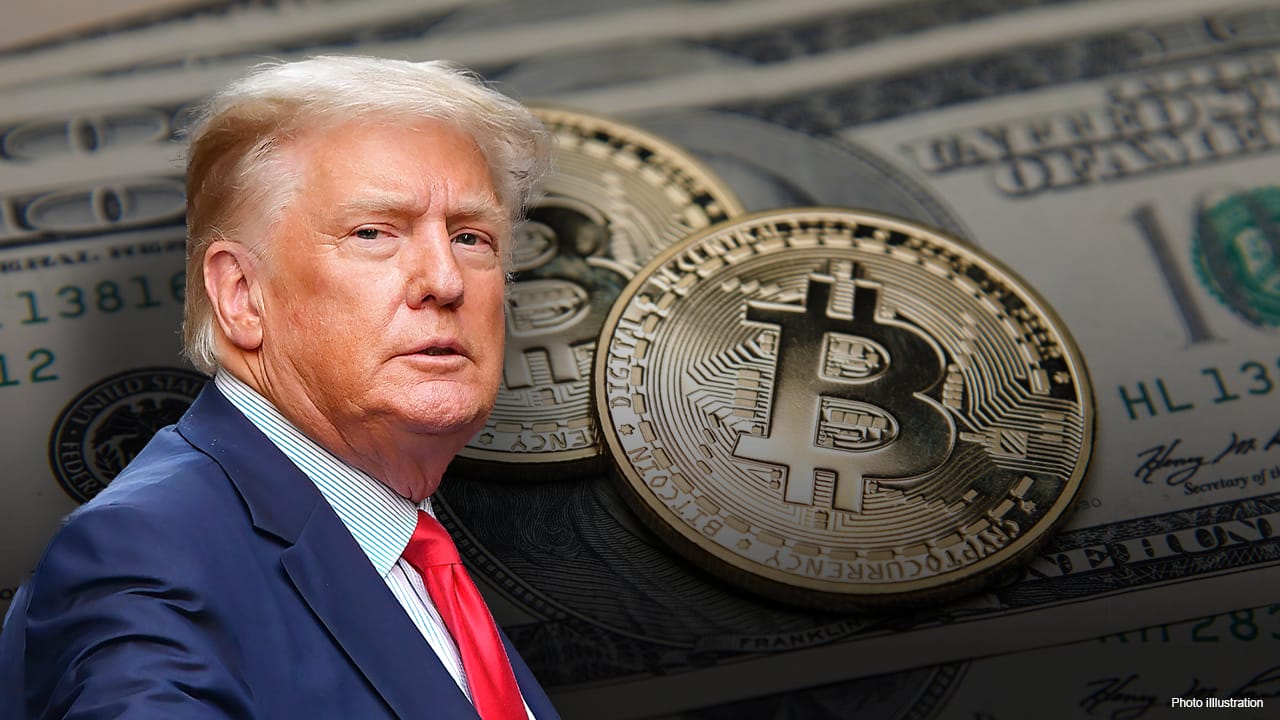
WASHINGTON — Newly disclosed federal financial records show that investment accounts belonging to President Donald Trump underwent an aggressive portfolio restructuring in July 2026, logging 1,156 individual securities transactions valued between $79 million and $270 million.
While headline attention has focused on multi-million-dollar sales of artificial intelligence and mega-cap tech leaders—including Microsoft, Amazon, and Meta Platforms—a comprehensive examination of the filings reveals a more complex strategy: a transition driven by automated index rebalancing, defensive fixed-income allocation, and concurrent dip-buying.
Executive Overview: July 2026 Disclosure Breakdown
According to analysis of official filings submitted to the U.S. Office of Government Ethics and reported by CNBC, total purchases across the eight managed accounts exceeded total sales.
| Category | Aggregate Value Range | Key Assets / Companies Involved |
| Total July Transactions | $79 Million – $270 Million | 1,156 total trades logged across 8 accounts |
| Total Purchases | $43.6 Million Minimum | Municipal bonds, short-term ETFs, Broadcom, Nvidia |
| Total Sales | $35.6 Million Minimum | Microsoft, Amazon, Oracle, Meta, Northrop Grumman |
| Primary Liquidation Event | July 20, 2026 | Multi-million dollar trims in $MSFT and$AMZN ($5M–$25M bracket each) |
| Quick Re-Entry Trades | July 23, 2026 | Modest buybacks in $MSFT ($100K–$250K) and$AMZN ($1K–$15K) |
Dissecting the Big Tech Trims: Algorithmic Rebalancing vs. Market Sentiment
The largest individual entries in the September filing occurred on July 20, 2026, when investment managers executed broad sell-offs in major cloud and AI infrastructure vendors.
As reported by Quartz, individual sell orders for Microsoft and Amazon each landed in the $5 million to $25 million filing bracket. Simultaneously, managers offloaded between $1 million and $5 million in Oracle stock, alongside position trims in Meta Platforms, Alphabet, and Nvidia.
However, reporting focused exclusively on liquidations misses the broader picture:
- Simultaneous Accumulation: On the very day managers sold Oracle, they added $500,000 to $1 million in Nvidia, while opening $1 million to $5 million positions in enterprise software giants like Salesforce, Intuit, and Marvell Technology.
- Immediate Re-entry: Just three days after the July 20 sell-off, the accounts repurchased positions in Microsoft ($100,001–$250,000 range) and Amazon ($1,001–$15,000 range).
- Fixed-Income Pivot: Significant capital was rotated into defensive yield assets, including the Vanguard Short-Term Bond Index ETF, State Street SPDR Bloomberg International Treasury Bond ETF, and local government bonds such as Miami-Dade County aviation paper.
Financial analysts noted in coverage by Livemint that these multi-directional trades mirror index-tracking models adjusting for market weightings rather than a deliberate directional bet on the tech sector.
White House Clarification: Automated Model Portfolios
Trading volume of this scale by a sitting U.S. president inevitably draws regulatory and public scrutiny. Addressing the disclosures, White House spokesperson Davis Ingle emphasized that the President maintains no personal involvement in daily trade execution.
“The President’s investment portfolio is managed by independent third-party financial institutions through automated model portfolios benchmarked to broad indices like the Schwab 1000,” White House officials stated. “Trading decisions are algorithmically executed without input, direction, or prior knowledge from the President or his family.”
Unlike past presidential administrations that placed assets into blind trusts or single-index mutual funds, the current arrangement relies on third-party wealth managers utilizing direct indexing models.
Regulatory Scrutiny and Geopolitical Overlap
Despite White House assurances, the timing of specific trades has drawn criticism from Capitol Hill.
On July 20, the same day managers sold $250,000 to $500,000 worth of defense contractor Northrop Grumman, President Trump signed an executive order tightening supply chain mandates for defense suppliers and restricting critical material sourcing from foreign nations.
According to government oversight documents cited by Bloomberg, congressional lawmakers—including Senator Elizabeth Warren—have submitted formal inquiries demanding full transparency regarding the identity of the third-party money managers overseeing the accounts to rule out insider conflicts of interest under U.S. Securities and Exchange Commission rules.
Key Takeaways for Market Observers
- Net Buyer Status: Despite headline sales in Big Tech, Trump’s accounts were overall net buyers in July, adding at least $43.6 million in assets.
- Broad Sector Diversification: Capital moved away from concentrated cloud computing mega-caps into short-duration fixed income, municipal bonds, and specialized semiconductor stocks.
- Systemic Model Management: The rapid buy-sell cycles (such as selling and repurchasing Microsoft within 72 hours) strongly align with algorithmic portfolio rebalancing rather than strategic macroeconomic forecasting.
Discover more from Startups Pro,Inc
Subscribe to get the latest posts sent to your email.
Analysis
Global Digital Trade Expo 2026: Dates, Schedule, Venue, Registration and Everything You Need to Know

The Global Digital Trade Expo (GDTE) 2026 is set to bring together technology companies, digital-trade businesses, investors, policymakers, buyers and international organizations in Hangzhou, China, as artificial intelligence increasingly reshapes the global economy.
The 5th Global Digital Trade Expo will take place from September 23 to 27, 2026, at the Hangzhou Grand Convention and Exhibition Center in Zhejiang Province. The event will place particular emphasis on AI, digital trade, cross-border e-commerce and emerging technologies.
With representatives from 121 countries and regions and 29 international organizations confirmed to attend, GDTE 2026 is expected to be one of the year’s major international gatherings focused on digital trade and technology.
Global Digital Trade Expo 2026: Quick Details
| Event | Details |
|---|---|
| Event | 5th Global Digital Trade Expo (GDTE) |
| Dates | September 23-27, 2026 |
| Venue | Hangzhou Grand Convention and Exhibition Center |
| Location | Hangzhou, Zhejiang, China |
| Theme | Digital Trade, Global Connectivity |
| Main Focus | AI, digital trade, cross-border e-commerce, emerging technologies |
| Exhibition Area | About 170,000 square meters |
| International Participation | 121 countries and regions |
| International Organizations | 29 |
| Public Access | From 1:00 p.m. on September 24 |
| Official Website |
The expo is jointly hosted by the Ministry of Commerce of the People’s Republic of China and the People’s Government of Zhejiang Province, with Hangzhou and relevant commerce authorities serving as organizers.
When Is the Global Digital Trade Expo 2026?
The fifth GDTE is scheduled for:
September 23-27, 2026
The main exhibition will be held at the Hangzhou Grand Convention and Exhibition Center.
Public access is scheduled to begin at 1:00 p.m. on September 24, giving members of the public an opportunity to experience the technology demonstrations and interactive exhibitions.
GDTE 2026 Schedule at a Glance
September 23, 2026
Opening activities and professional/exhibition programming begin.
September 24, 2026
Public access begins from 1:00 p.m., with visitors able to explore exhibitions, technology demonstrations and interactive experiences.
September 25-26, 2026
The expo’s business, industry, investment and technology activities continue, including thematic forums, matchmaking and specialist events.
September 27, 2026
Final day of the fifth Global Digital Trade Expo.
Because individual forums and business-matching sessions may have separate schedules and registration requirements, visitors should check the official GDTE website before travelling.
What Is the Global Digital Trade Expo?
The Global Digital Trade Expo is China’s national-level international professional exhibition dedicated specifically to digital trade.
The event was created as a platform for displaying emerging digital technologies, products and business ecosystems while encouraging international cooperation, investment, technology exchange and trade.
Unlike a conventional technology exhibition, GDTE connects technology development with international commerce.
That makes the event particularly relevant to:
- Technology companies
- AI companies
- Software developers
- E-commerce businesses
- Exporters and importers
- Digital-service providers
- Fintech companies
- Investors
- Startups
- Government agencies
- Research institutions
- International buyers
- Trade associations
- Business delegations
AI Takes Center Stage at GDTE 2026
Artificial intelligence is expected to be one of the defining themes of this year’s expo.
More than one-third of exhibitors are expected to showcase AI-related products and technologies, highlighting the transition of AI from experimental technology toward practical commercial applications.
The exhibition will cover areas including:
- Artificial intelligence
- AI models
- Computing power
- Quantum technology
- Robotics
- Smart mobility
- Digital healthcare
- Cross-border e-commerce
- Digital entertainment
- Smart spaces
- Spatial intelligence
- Emerging digital services
The expo will also feature a new token globalization zone, focusing on the intersection of AI models, computing power and electricity.
Major Exhibition Zones
GDTE 2026 follows an expanded exhibition structure featuring a flagship digital-trade exhibition, specialized industry zones and an innovation-focused area.
1. Silk Road E-Commerce Zone
The Silk Road E-Commerce Zone will focus on cross-border digital commerce and international trade.
It is particularly relevant for businesses looking to expand internationally through digital platforms, AI-powered trade tools and e-commerce ecosystems.
Officials say nearly 30 AI tools for cross-border trade will be showcased in the zone.
2. Artificial Intelligence Zone
The AI zone will showcase developments involving:
- AI models
- Computing chips
- Quantum technologies
- AI applications
- Intelligent systems
3. Smart Mobility Zone
This section will highlight next-generation transportation technologies, including eVTOL aircraft and other advanced mobility solutions.
4. Digital Culture & Entertainment Zone
Digital media, XR, generative AI and entertainment technologies will be among the major themes.
The exhibition is expected to demonstrate how AI and immersive technologies are transforming entertainment and cultural industries.
5. Digital Healthcare Zone
This zone will highlight technologies such as:
- Surgical robots
- Exoskeletons
- Brain-computer interfaces
- AI-assisted healthcare
- Digital medicine
6. Smart Spaces Zone
The smart-spaces section will focus on areas such as:
- Smart cities
- Spatial intelligence
- Digital platforms
- Smart building management
- Low-carbon buildings
Global Business and Investment Opportunities
GDTE is not simply a technology showcase.
A major objective is to connect companies and international buyers with potential commercial, investment and technology partners.
The 2026 programme includes:
- 12 themed events
- 13 industry events
- Four investment and trade-promotion events
- 21 competitions and other frontier activities
Among the major events are expected to be the BRICS Special Economic Zones Hangzhou Dialogue, Silk Road E-Commerce Day and Digital Trade Africa Day.
The expo will also release the Global Digital Trade Development Report 2026 and China Digital Trade Development Report 2026. The United Nations is also expected to officially publish a global report during the event.
Who Should Attend GDTE 2026?
The event is especially relevant to professionals working in:
Technology
AI, cloud computing, software, robotics, quantum computing and emerging technology companies can use GDTE to identify potential partners and customers.
E-Commerce
Cross-border sellers, marketplaces, logistics providers and digital-payment companies can explore international business opportunities.
Finance and Fintech
Fintech companies and financial institutions can examine developments in digital payments, AI and digital financial services.
Startups
For startups, the expo can provide access to investors, technology partners, international buyers and potential distributors.
Investors
Investors can use the event to monitor emerging technology sectors and meet companies developing commercial applications of AI and other technologies.
Governments and Trade Organizations
Government agencies and trade-promotion organizations can explore new approaches to digital trade governance and international cooperation.
How to Register for Global Digital Trade Expo 2026
Registration requirements can vary depending on whether you are attending as a professional visitor, exhibitor, buyer, media representative or member of a business delegation.
The safest option is to begin through the official GDTE website:
The official website has historically provided professional-audience registration through its online channels.
Important Registration Advice
Before completing registration:
- Visit the official GDTE website.
- Select the appropriate visitor or professional registration option.
- Provide accurate personal and organizational information.
- Check whether your category requires registration review.
- Complete any identity or business verification requested.
- Save your confirmation or registration information.
- Check the final badge/entry instructions before travelling to Hangzhou.
For business delegations and specialized events, registration may be handled separately by participating organizations.
For example, the American Chamber of Commerce in Shanghai states that participation in its GDTE-related programme is subject to registration review and confirmation, while visitors seeking a GDTE badge may need to use the expo’s independent registration channel.
Is GDTE 2026 Free?
The exhibition itself is promoted as a professional event, but registration requirements can differ depending on the category of participation.
Some third-party event listings describe visitor admission as complimentary, while professional applications may be subject to review.
Visitors should therefore verify the latest admission and registration conditions directly through the official GDTE registration system rather than relying on third-party ticket websites.
Where Is the Global Digital Trade Expo Held?
The 2026 event will be held at:
Hangzhou Grand Convention and Exhibition Center
Hangzhou, Zhejiang Province, China
The venue is located in Hangzhou’s Xiaoshan District.
Hangzhou is particularly significant for GDTE because the city is one of China’s major technology and digital-commerce centers and has developed a strong ecosystem around e-commerce, fintech, cloud computing and artificial intelligence.
Why GDTE 2026 Matters for Global Digital Trade
The timing of the fifth GDTE is significant.
Digital trade is moving beyond conventional e-commerce. AI is increasingly influencing:
- Product discovery
- Digital advertising
- International payments
- Customer service
- Supply-chain management
- Trade documentation
- Translation
- Market research
- Business matching
- Logistics
- Cybersecurity
- Cross-border commerce
GDTE 2026 therefore provides a window into how these technologies could change the way companies conduct international business.
The event’s emphasis on AI also reflects a broader shift from simply demonstrating AI capabilities toward deploying AI in real commercial and industrial environments.
What Happened at the Previous GDTE?
The scale of GDTE has expanded considerably.
The fourth Global Digital Trade Expo in 2025 concluded with 102 major outcomes, while investment and trade-intent agreements reportedly reached 161.98 billion yuan, approximately US$22.7 billion at the reported exchange rate.
The 2026 edition is expected to build on that momentum with a larger exhibition footprint and broader international participation.
Global Digital Trade Expo 2026: Key Takeaways
For companies and professionals interested in international technology markets, the fifth GDTE offers several important opportunities:
For entrepreneurs: access to potential partners and customers.
For investors: exposure to emerging AI and digital-trade businesses.
For exporters: opportunities in cross-border e-commerce.
For technology companies: a platform to demonstrate products to international buyers.
For policymakers: discussions around digital-trade governance and international rules.
For researchers: access to emerging developments in AI, digital commerce and technology.
Final Word
The Global Digital Trade Expo 2026 is shaping up to be an important international event at the intersection of artificial intelligence, technology and global commerce.
Taking place in Hangzhou from September 23-27, 2026, the fifth edition will feature approximately 170,000 square meters of exhibition space, participation from 121 countries and regions, and representatives from 29 international organizations.
With AI expected to dominate the exhibition, the event will offer businesses and professionals an opportunity to see how emerging technologies are moving from laboratories and demonstrations into practical applications in international trade.
For prospective visitors, exhibitors and business delegates, the most important step is to verify the latest registration requirements directly through the official before making travel arrangements.
Event: 5th Global Digital Trade Expo
Dates: September 23-27, 2026
Venue: Hangzhou Grand Convention and Exhibition Center, Hangzhou, China
Focus: AI, digital trade, cross-border e-commerce and emerging technologies
Official Website:
Discover more from Startups Pro,Inc
Subscribe to get the latest posts sent to your email.

Key Takeaways
- Sony has preliminarily agreed to a $7.85 million antitrust settlement in Caccuri v. Sony Interactive Entertainment, covering roughly 4.4 million eligible US PlayStation Network accounts.
- Individual payouts will range from an estimated $0.91 to $33.66 in PlayStation Store credit, depending on qualifying purchase history.
- No claim form is required — eligible accounts were identified automatically, and credit will be deposited directly into PSN wallets after final court approval.
- The final fairness hearing is scheduled for October 15, 2026 before Judge Araceli Martínez-Olguín in the US District Court for the Northern District of California.
- The case centers on Sony’s 2019 decision to stop allowing third-party retailers like Amazon, Best Buy, and GameStop to sell digital PlayStation game vouchers.
If you’ve bought digital games through the PlayStation Store over the past several years, you may be one of roughly 4.4 million account holders in line for a small but real payout from Sony. The settlement, formally titled Caccuri v. Sony Interactive Entertainment LLC, has received preliminary court approval and is headed toward a final fairness hearing on October 15, 2026. Here’s exactly what happened, who qualifies, and how much you can realistically expect.
What the Lawsuit Alleged
The case, filed in May 2021 in the US District Court for the Northern District of California by plaintiff Agustin Caccuri, alleges that Sony violated the Sherman Antitrust Act and the Clayton Act by monopolizing the market for digital PlayStation games. Before April 1, 2019, consumers could buy game-specific digital download vouchers from third-party retailers — Amazon, Best Buy, and GameStop among them — often at discounted prices that undercut Sony’s own PlayStation Store pricing.
On that date, Sony stopped allowing outside retailers to sell those vouchers. Plaintiffs argue this eliminated meaningful price competition, forcing consumers toward the PlayStation Store exclusively and, they contend, leading to higher digital game prices than would have existed in a competitive market. Specifically, eligible games are those where the post-discount PS Store price increased by at least 50 cents when comparing the period before April 1, 2019, to the period between April 1, 2019, and December 31, 2023.
Sony has not admitted wrongdoing. The company maintains it did not violate federal or state antitrust laws, and the court has not ruled on the underlying merits — this is a negotiated settlement, not a verdict.
A Rocky Road to Approval
This settlement wasn’t a straight line. An earlier version, originally announced in December 2024 and finalized in March 2025, was rejected by Judge Martínez-Olguín, who found it lacked clarity and didn’t meet Northern District of California guidelines for class-action settlement approval. Plaintiffs’ counsel were given 30 days to remedy the deficiencies, which led to the revised $7.85 million structure now headed to final approval.
Who Is Eligible
You may be eligible for compensation if you are a US-based PlayStation Network user who purchased one or more qualifying digital games through the PlayStation Store between April 1, 2019, and December 31, 2023, where:
- A game-specific voucher for that title was available at retail before April 1, 2019
- At least 200 game-specific voucher redemptions occurred prior to April 1, 2019
- The post-discount PS Store price rose by at least 50 cents in the post-2019 period compared to before
A full list of qualifying titles is available on the official settlement website. Crucially, eligible accounts were identified automatically through Sony’s own purchase records — there is no claim form to submit for most users.
How Much Will You Actually Get?
This is the detail generating the most online buzz — and the most misunderstanding. The $7.85 million headline figure is not what gets distributed to consumers. Under the settlement terms:
- Attorneys may request fees of up to 25% of the total ($7.85 million), plus expenses
- $30,000 in service awards go to the three named plaintiffs
- Administration costs are deducted before consumer distribution
After those deductions, roughly $5.89 million is expected to be spread across the identified pool of 4,407,533 accounts. Lead counsel Michael Buchanan has stated that individual recoveries should range from $0.91 to $33.66 in PlayStation Store credit, depending on the number and value of each account’s qualifying purchases.
| Settlement Component | Amount |
|---|---|
| Total settlement value | $7.85 million |
| Estimated attorneys’ fees (up to 25%) | ~$1.96 million |
| Named plaintiff service awards | $30,000 |
| Estimated remaining consumer pool | ~$5.89 million |
| Eligible accounts identified | ~4.4 million |
| Individual payout range | $0.91 – $33.66 |
How and When You’ll Get Paid
Compensation will be distributed automatically as PlayStation Network wallet credit — you do not need to file a claim. If your PSN account has since been deactivated, you can apply for a cash payment instead by contacting the settlement administrator directly.
Payment cannot occur until the court grants final approval at the October 15, 2026 fairness hearing. If approval is granted without a successful appeal, credits should follow in the weeks after. The opt-out deadline — for anyone who wants to preserve their right to sue Sony separately instead of accepting the settlement credit — has already passed as of July 2, 2026.
Why This Case Matters Beyond the Payout
Individual amounts here are modest — a few dollars in most cases — but the case sits within a broader pattern of antitrust scrutiny aimed at digital storefront monopolies across the tech industry. Google settled its own Play Store antitrust dispute with Epic Games in late 2025, and Apple has opened iOS to rival app stores in select markets under regulatory pressure. Sony’s settlement adds console gaming to that list, and comes at an awkward moment for the company: Sony recently announced plans to discontinue physical game production by 2028, a decision critics have already linked to this settlement as part of a broader “anti-consumer” narrative around digital game pricing and ownership.
Frequently Asked Questions
Do I need to file a claim to get PlayStation settlement money?
No. Eligible accounts were identified automatically based on Sony’s purchase records. If you qualify, credit will be deposited directly into your PSN wallet after final court approval — no claim form is required.
How much money will I actually receive from the Sony settlement?
Individual payouts are estimated to range from $0.91 to $33.66 in PlayStation Store credit, depending on how many qualifying digital games you purchased and their post-discount price increases.
When will the PlayStation settlement money be paid out?
Payment depends on final court approval at the fairness hearing scheduled for October 15, 2026, before Judge Araceli Martínez-Olguín. Credits are expected to follow in the weeks after approval, assuming no appeal is filed.
Discover more from Startups Pro,Inc
Subscribe to get the latest posts sent to your email.

PM Invites US-Based Pakistani Business Community to Invest in Pakistan as Investment Opportunities Expand

Trump Accounts Reshuffle Tens of Millions in Big Tech & AI Holdings

NIC Islamabad Launches Exclusive Acceleration Program with Up to PKR 5 Million Equity-Free Grant Support

World School Summit 2026 Malaysia: 41st Edition

Global Digital Trade Expo 2026: Dates, Schedule, Venue, Registration and Everything You Need to Know

How to Claim Your Sony PlayStation Store Credit Settlement (Up to $33.66)

CES 2027 Las Vegas: Registration Details, Dates and Venue [Ultimate Guide]

IPhone 18 Pro Specifications, Pricing, and Thermal Architecture Leaks Analyzed

Pre-IPO Investing Strategies: How Institutional Money is Approaching Anthropic

Smash Bros Ultimate 13.0.5 Patch Notes: What Actually Changed
NIC Islamabad Launches Exclusive Acceleration Program with Up to PKR 5 Million Equity-Free Grant Support
World School Summit 2026 Malaysia: 41st Edition
Trump Accounts Reshuffle Tens of Millions in Big Tech & AI Holdings
PM Invites US-Based Pakistani Business Community to Invest in Pakistan as Investment Opportunities Expand
-
Digital5 years ago
Social Media and polarization of society
-
Digital6 years ago
Pakistan Moves Closer to Train One Million Youth with Digital Skills
-
Digital5 years ago
Karachi-based digital bookkeeping startup, CreditBook raises $1.5 million in seed funding
-
Kashmir6 years ago
Pakistan Mission Islamabad Celebrates “KASHMIRI SOLIDARITY DAY “
-
Digital6 years ago
WHATSAPP Privacy Concerns Affecting Public Data -MOIT&T Pakistan
-
News6 years ago
Dr . Arif Alvi visits the National Museum of Pakistan, Karachi
-
China5 years ago
TIKTOK’s global growth and expansion : a bubble or reality ?
-
Business5 years ago
Are You Ready to Start Your Own Business? 7 Tips and Decision-Making Tools