
Analysis
X (Twitter) Privacy Updates 2026 & The Best VPNs to Protect Your Data

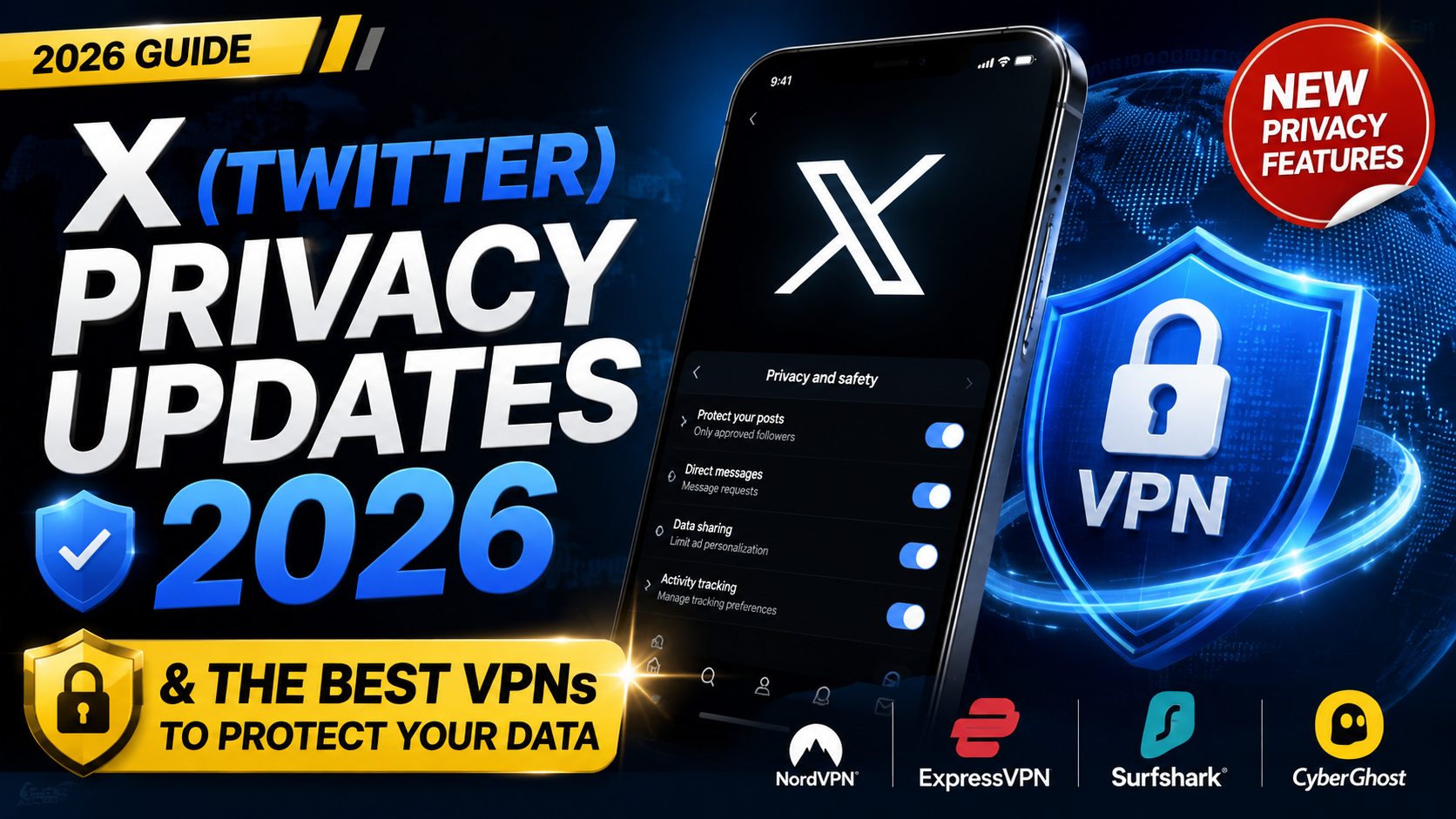
X’s latest round of privacy policy and data-handling updates has reignited a familiar question for millions of users: how much of your activity on the platform is actually private, and what can you realistically do about it? Between expanded data usage for AI model training, updated location and ad-targeting permissions, and changes to direct message encryption, the platform’s privacy posture in 2026 looks meaningfully different than it did even two years ago. For users who care about limiting exposure — journalists, businesses, or just privacy-conscious individuals — understanding these changes and pairing them with the right tools, including a quality VPN, has become more important than ever.
This guide breaks down what actually changed in X’s privacy settings this year, what data is being collected and how it’s used, and which VPN services offer the best real-world protection for social media privacy in 2026. If you’ve been putting off a proper privacy audit of your social accounts, this is the moment to do it.Privacy
What Changed in X’s 2026 Privacy Policy
The most significant shift has been around AI training data usage — X has expanded how user posts, interactions, and in some cases direct messages can be used to train its AI systems, with opt-out mechanisms that are available but not always prominently surfaced in account settings. Location data handling has also been updated, with more granular ad-targeting permissions tied to device-level location history rather than just IP-based approximation. For users who haven’t reviewed their privacy settings recently, several previously off default toggles have shifted to opt-in by default with updates, which is a common pattern across social platforms and one worth checking manually rather than assuming your old preferences carried over.
It’s worth noting that policy language and actual enforcement don’t always move in lockstep — several privacy researchers have flagged gaps between what X’s policy states and what’s technically observable in data flows, which is part of why relying solely on in-app settings isn’t a complete privacy strategy.
Why a VPN Still Matters, Even With Platform-Level Privacy Settings
A VPN doesn’t change what X itself collects once you’re logged in and posting — that’s governed entirely by the platform’s own data policy. What a VPN does protect is everything happening around your X usage: your real IP address and approximate location being visible to the platform and to your internet service provider, your traffic being visible on public Wi-Fi networks, and third-party trackers embedded across the web being able to correlate your browsing activity outside of X with your identity there.
What a VPN Actually Protects Against
- IP-based location tracking – Masks your real IP address so location isn’t inferred from your connection
- ISP-level monitoring – Prevents your internet provider from logging which sites and platforms you access
- Public Wi-Fi vulnerabilities – Encrypts your traffic on unsecured networks like cafes, airports, and hotels
- Cross-site tracking correlation – Makes it harder for advertisers to link your activity across multiple platforms
- Regional content and access restrictions – Allows access to X in regions where it may face throttling or restrictions
Best VPNs for Social Media Privacy in 2026
Not all VPNs are built equally, and for social media privacy specifically, you want a provider with a verified no-logs policy, strong encryption standards, and fast enough speeds to not disrupt real-time browsing and video content.
Top VPN Picks for 2026
- ProtonVPN – Strong privacy-first reputation, based in Switzerland’s strict data protection jurisdiction, solid free tier
- Mullvad – No email or personal information required to sign up, anonymous account number system, excellent for maximum anonymity
- NordVPN – Best balance of speed and privacy features, independently audited no-logs policy, large server network
- ExpressVPN – Consistently fast speeds, strong for streaming and social media use without lag, audited security practices
- Surfshark – Budget-friendly with unlimited simultaneous device connections, solid for households or small teams
VPN Comparison Table
| VPN | No-Logs Audit | Best For | Approx. Monthly Cost |
|---|---|---|---|
| ProtonVPN | Yes | Privacy-first users | $5 – $10 |
| Mullvad | Yes | Maximum anonymity | ~$5 flat rate |
| NordVPN | Yes | Speed + privacy balance | $4 – $12 |
| ExpressVPN | Yes | Streaming + social media | $6 – $13 |
| Surfshark | Yes | Multi-device households | $2 – $8 |
A Quick Privacy Checklist for X Users
- Review your data-sharing and AI training opt-out settings directly in X’s privacy dashboard, not just the initial prompt
- Turn off precise location sharing unless it’s actively needed for a specific feature
- Use a VPN consistently, not just occasionally, since intermittent use still exposes your real IP most of the time
- Enable two-factor authentication using an authenticator app rather than SMS, which is more vulnerable to interception
- Periodically review connected third-party apps with access to your X account and revoke anything unused
Mobile vs Desktop Privacy Considerations
Privacy exposure isn’t identical across devices, and it’s worth treating your mobile X usage as a separate consideration from desktop browsing. Mobile apps often request additional permissions — precise location, contact list access, camera and microphone — that a browser-based session simply doesn’t have access to, meaning your phone’s app-level permissions matter as much as any VPN or in-app privacy setting. Most reputable VPN providers now offer dedicated mobile apps that encrypt your device’s traffic system-wide rather than just within a single browser, which is important since a browser-only VPN extension won’t protect traffic from the native X app. Reviewing your phone’s app permission settings for X directly, alongside your VPN and in-platform privacy settings, closes a gap that many privacy-conscious users overlook by focusing exclusively on browser-based protections.
Frequently Asked Questions
Does a VPN make me completely anonymous on X?
No — a VPN protects your IP address and network-level traffic, but you’re still identifiable through your account login, posting patterns, and any personal information in your profile or content. True anonymity requires a combination of measures well beyond just a VPN, including careful account hygiene and avoiding identifying details in your posts.
Can X detect that I’m using a VPN?
Some platforms can detect VPN usage through IP reputation databases, and in rare cases this can trigger additional verification steps or regional content restrictions. Reputable VPN providers with large, frequently rotated server networks generally minimize this friction better than smaller or free VPN services.
Is a free VPN good enough for social media privacy?
Generally not recommended for anything beyond casual use. Free VPNs often monetize through data logging or ad injection, which directly undermines the privacy goal you’re trying to achieve, and their server networks and speeds are typically far more limited than paid, audited providers.
Do I need a VPN if I’ve already adjusted all my X privacy settings?
Yes, because privacy settings and a VPN protect different things. In-app settings control what X itself does with your data and how visible your content is to other users, while a VPN protects your network-level identity and traffic from your ISP and other third parties outside the platform entirely.
Final Thoughts
X’s 2026 privacy updates reflect a broader industry trend — platforms are collecting and using more data, particularly for AI training, while opt-out mechanisms remain technically available but not always easy to find. Pairing a manual review of your in-app privacy settings with a reliable, audited VPN gives you meaningfully better protection than relying on either approach alone. As with most digital privacy decisions, the goal isn’t perfect anonymity — it’s closing the easiest and most common gaps that most users leave open by default.
Have you gone through and adjusted your X privacy settings since the latest update, or are you still running on old defaults? Let us know what you found in the comments.
Discover more from Startups Pro,Inc
Subscribe to get the latest posts sent to your email.


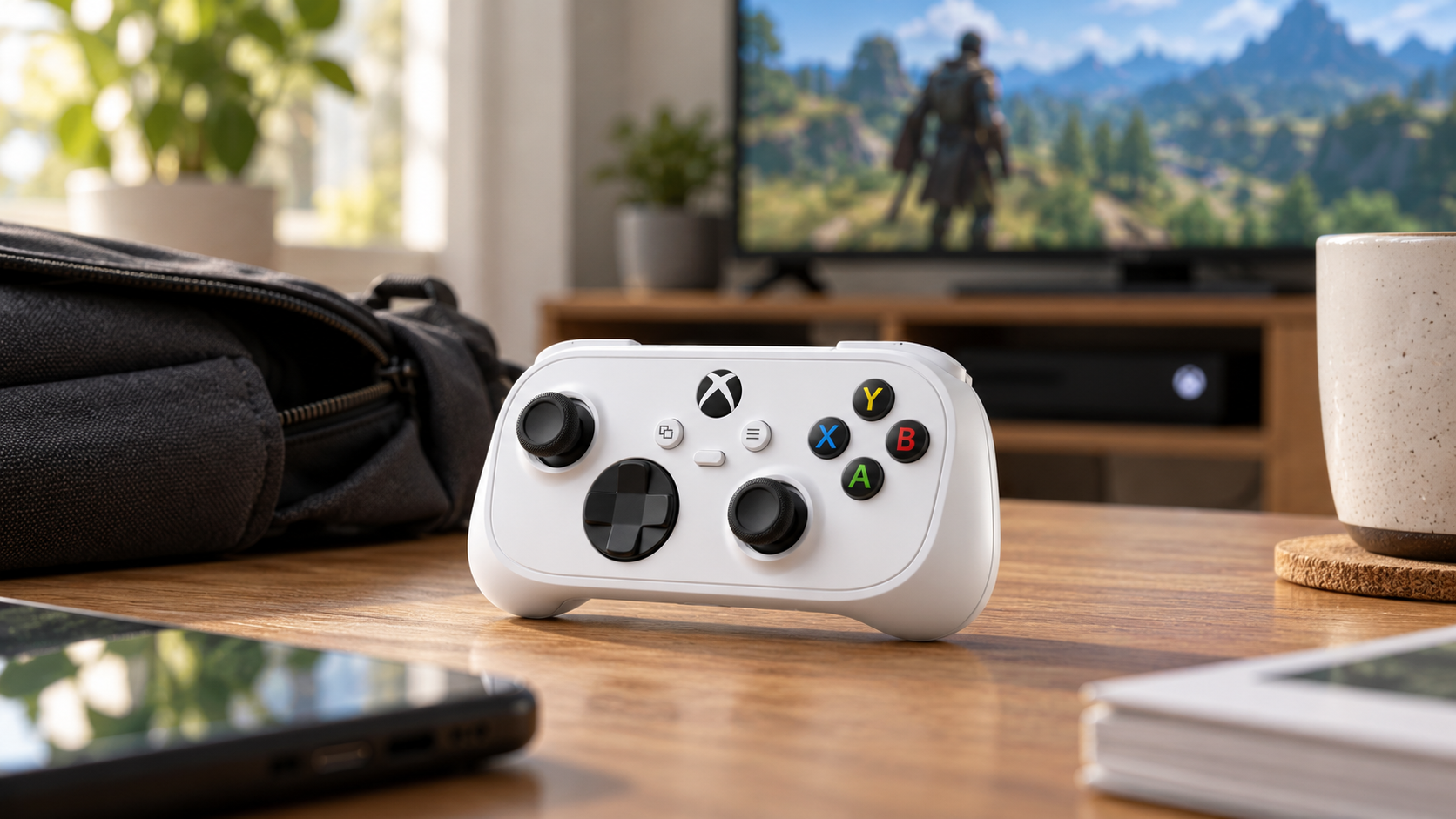
Microsoft officially introduced the Xbox Nano Controller on October 14, 2026. The compact controller is priced at $49.99 in the United States and is intended for people who want a lighter device, including users with smaller hands and players who carry a controller between locations. The company states it includes the standard 18 gameplay inputs, rechargeable battery, programmable Action Button, Xbox Wireless and Bluetooth connectivity.
A November 2026 launch is listed on Microsoft’s retail page. These are manufacturer specifications; independent comfort, latency and battery-life reviews still matter for a buying decision. For primary-source background, consult Xbox Wire official announcement; Xbox official specification page; Microsoft Store US. In a fast-moving topic, publication time and information cutoff matter: subsequent events may require updating the figures or legal status, not merely changing the date in the footer.
What Microsoft actually announced
The Xbox Wire announcement places the controller at a little over five inches long and approximately 3.5 ounces. Microsoft says it retains 18 standard gameplay inputs despite the smaller chassis. Its list price is $49.99 USD, though local prices and availability differ. It also reports a rechargeable internal battery and a programmable Action Button for tasks such as capturing screenshots or gameplay. This is a real official product launch, not a rumor based on leaked images. Product listings and availability should be checked for the buyer’s country.
Who benefits from a smaller controller
Small-hand ergonomics may be useful for some adults and younger players, but one size does not fit everyone. Grip diameter, shoulder-button reach, thumbstick placement and hand fatigue can matter more than weight alone. A tiny controller may be convenient in a bag but less comfortable during extended sessions for some users. A good review therefore evaluates real people with different hand sizes rather than calling compactness universally better. For parents, compatibility with age-appropriate games and device setup is part of the purchase decision. A low sticker price does not remove the need for usability testing.
Microsoft officially introduced the Xbox Nano Controller on October 14, 2026.
Wireless support and device compatibility
Microsoft says the Nano supports Xbox Wireless with compatible consoles and Bluetooth with supported PCs, mobile devices, tablets and smart TVs. That does not mean every game on every device is compatible. Operating-system support, cloud-play subscription availability and game-specific controller input differ. Players should inspect Microsoft’s compatibility notes before purchase, particularly for smart TVs or mobile games that require touch input. The internal battery uses USB-C charging, but the product page notes that the charging cable may be sold separately. Such minor accessories are relevant to total cost and should be visible in product comparisons.
Battery, Action Button and trade-offs
A built-in rechargeable battery changes ownership convenience compared with controllers that use replaceable cells, but it does not guarantee a particular play time. Battery duration depends on wireless mode, features and conditions. Microsoft has not established every real-world endurance result in the launch announcement, so editors should wait for independent testing before making precise claims. The programmable Action Button could reduce menu navigation for popular tasks, but users should verify exactly which shortcuts are available in supported software. Standard inputs may preserve familiar gameplay while smaller thumbstick travel or grip could affect precision; these are review questions, not proven flaws.
Is $49.99 good value?
Value depends on the buyer’s existing devices, preferred games and ergonomics. Someone who already owns a comfortable full-size controller may gain portability without needing to replace their main controller. A family seeking a second or third controller may prioritize price and consistent wireless pairing. A competitive player might instead favor adjustable controls, wired latency or premium hardware that the Nano does not claim to provide. Compare after-sales warranty, charging accessory costs, import taxes, local support and return rules. The launch is best understood as a compact mainstream option, not a universal upgrade from every other Xbox controller.
Worked example: how to interpret a difficult headline
Two buyers can reach different conclusions at the same price: a traveler wanting a lightweight Bluetooth controller may value the smaller form factor, while someone who plays long racing sessions on a console may prefer a larger grip. A useful review explains this trade-off rather than ranking products solely by price or feature count. Check a local store’s return policy in case the fit is unsuitable. This is a deliberately illustrative comparison unless explicit documented numbers are identified. It should not be mistaken for a real person’s financial circumstances, an unverified event, or a guaranteed forecast. Its purpose is to show how a reader can apply the underlying principle and identify which information still needs to be checked.
Three concepts that are often confused
| Concept | What it actually establishes |
|---|---|
| Official Xbox Nano | Small, $49.99 list price, rechargeable and portable. |
| Full-size standard controller | Potentially different hand fit and battery arrangements. |
| Premium controller | May add advanced customization at a higher price. |
These distinctions are more than technical niceties. They change the answer to the reader’s question. An estimate does not carry the same evidentiary weight as a final rule; an announcement does not have the same practical consequence as a completed transaction; and a provisional interpretation should not be presented as a confirmed event. Wherever a live source supplies a new fact, the editor should check whether the old text still describes the right stage of the process.
A reader’s verification workflow
Start by recording the precise claim and the date it was allegedly true. Open the primary announcement or filing rather than a social-media screenshot. Ask whether the source has an incentive to present only the most favorable interpretation, and corroborate material facts with reputable independent reporting where available. For numerical claims, note the denominator, timeframe and whether the number is a stock, a flow, a forecast or a realized result. For legal claims, note the court, agency, stage of proceedings and exact published document.
Next, separate information useful for immediate decisions from context that merely explains the headline. A person may need to act on a deadline even when the long-run political debate remains unresolved. Someone evaluating a security may need financing details, while a customer comparing technology products needs a tested specification and local warranty terms. The same headline can matter for different reasons; the article should therefore provide an actionable answer without implying that every reader faces the same circumstances.
Indicators and developments worth monitoring
- November 2026 retail availability and regional pricing.
- Independent battery-life and ergonomic testing.
- Compatibility changes via software updates.
- Store returns, warranty and accessory requirements.
Avoid treating these signals as a checklist that mechanically predicts the future. Some are leading indications and others are lagging measurements. A change becomes significant only after its magnitude, source and comparison period are understood. If two reputable sources disagree, explain the source of the difference—definitions, timing, jurisdiction, measurement or uncertainty—instead of selecting whichever number makes the strongest headline. That practice strengthens both reader trust and the article’s usefulness in search features that surface isolated paragraphs.
The specific information advantage of this article
Specifications make the Nano controller appealing, but personal hand fit, device compatibility, charging accessories, and return policy determine its value. The editorial differentiator is a use-case comparison rather than a copied feature list or an unsupported claim about measured latency.
Frequently asked questions
What is the Xbox Nano price?
Microsoft lists $49.99 USD before location-specific taxes and differences. For individual decisions, consult the primary institution or product provider, and use the exact relevant date.
When does Xbox Nano launch?
Microsoft describes November 2026 availability, with a specific November 4 date on its US store listing. For individual decisions, consult the primary institution or product provider, and use the exact relevant date.
Does it have all the standard buttons?
Microsoft says it includes 18 standard gameplay inputs. For individual decisions, consult the primary institution or product provider, and use the exact relevant date.
Does it work on PC and phones?
It supports Bluetooth on compatible devices; verify software and game compatibility. For individual decisions, consult the primary institution or product provider, and use the exact relevant date.
Microsoft officially introduced the Xbox Nano Controller on October 14, 2026. The compact controller is priced at $49.99 in the United States and is intended for people who want a lighter device, including users with smaller hands and players who carry a controller between locations. The company states it includes the standard 18 gameplay inputs, rechargeable battery, programmable Action Button, Xbox Wireless and Bluetooth connectivity.
A November 2026 launch is listed on Microsoft’s retail page. These are manufacturer specifications; independent comfort, latency and battery-life reviews still matter for a buying decision. The best next step is to identify which of the monitored developments could change this answer and use a current, authenticated record before acting. Clear distinctions between confirmed facts, estimates, proposals and contested claims are more valuable than dramatic certainty.
Discover more from Startups Pro,Inc
Subscribe to get the latest posts sent to your email.
WASHINGTON — Newly disclosed federal financial records show that investment accounts belonging to President Donald Trump underwent an aggressive portfolio restructuring in July 2026, logging 1,156 individual securities transactions valued between $79 million and $270 million.
While headline attention has focused on multi-million-dollar sales of artificial intelligence and mega-cap tech leaders—including Microsoft, Amazon, and Meta Platforms—a comprehensive examination of the filings reveals a more complex strategy: a transition driven by automated index rebalancing, defensive fixed-income allocation, and concurrent dip-buying.
Executive Overview: July 2026 Disclosure Breakdown
According to analysis of official filings submitted to the U.S. Office of Government Ethics and reported by CNBC, total purchases across the eight managed accounts exceeded total sales.
| Category | Aggregate Value Range | Key Assets / Companies Involved |
| Total July Transactions | $79 Million – $270 Million | 1,156 total trades logged across 8 accounts |
| Total Purchases | $43.6 Million Minimum | Municipal bonds, short-term ETFs, Broadcom, Nvidia |
| Total Sales | $35.6 Million Minimum | Microsoft, Amazon, Oracle, Meta, Northrop Grumman |
| Primary Liquidation Event | July 20, 2026 | Multi-million dollar trims in $MSFT and$AMZN ($5M–$25M bracket each) |
| Quick Re-Entry Trades | July 23, 2026 | Modest buybacks in $MSFT ($100K–$250K) and$AMZN ($1K–$15K) |
Dissecting the Big Tech Trims: Algorithmic Rebalancing vs. Market Sentiment
The largest individual entries in the September filing occurred on July 20, 2026, when investment managers executed broad sell-offs in major cloud and AI infrastructure vendors.
As reported by Quartz, individual sell orders for Microsoft and Amazon each landed in the $5 million to $25 million filing bracket. Simultaneously, managers offloaded between $1 million and $5 million in Oracle stock, alongside position trims in Meta Platforms, Alphabet, and Nvidia.
However, reporting focused exclusively on liquidations misses the broader picture:
- Simultaneous Accumulation: On the very day managers sold Oracle, they added $500,000 to $1 million in Nvidia, while opening $1 million to $5 million positions in enterprise software giants like Salesforce, Intuit, and Marvell Technology.
- Immediate Re-entry: Just three days after the July 20 sell-off, the accounts repurchased positions in Microsoft ($100,001–$250,000 range) and Amazon ($1,001–$15,000 range).
- Fixed-Income Pivot: Significant capital was rotated into defensive yield assets, including the Vanguard Short-Term Bond Index ETF, State Street SPDR Bloomberg International Treasury Bond ETF, and local government bonds such as Miami-Dade County aviation paper.
Financial analysts noted in coverage by Livemint that these multi-directional trades mirror index-tracking models adjusting for market weightings rather than a deliberate directional bet on the tech sector.
White House Clarification: Automated Model Portfolios
Trading volume of this scale by a sitting U.S. president inevitably draws regulatory and public scrutiny. Addressing the disclosures, White House spokesperson Davis Ingle emphasized that the President maintains no personal involvement in daily trade execution.
“The President’s investment portfolio is managed by independent third-party financial institutions through automated model portfolios benchmarked to broad indices like the Schwab 1000,” White House officials stated. “Trading decisions are algorithmically executed without input, direction, or prior knowledge from the President or his family.”
Unlike past presidential administrations that placed assets into blind trusts or single-index mutual funds, the current arrangement relies on third-party wealth managers utilizing direct indexing models.
Regulatory Scrutiny and Geopolitical Overlap
Despite White House assurances, the timing of specific trades has drawn criticism from Capitol Hill.
On July 20, the same day managers sold $250,000 to $500,000 worth of defense contractor Northrop Grumman, President Trump signed an executive order tightening supply chain mandates for defense suppliers and restricting critical material sourcing from foreign nations.
According to government oversight documents cited by Bloomberg, congressional lawmakers—including Senator Elizabeth Warren—have submitted formal inquiries demanding full transparency regarding the identity of the third-party money managers overseeing the accounts to rule out insider conflicts of interest under U.S. Securities and Exchange Commission rules.
Key Takeaways for Market Observers
- Net Buyer Status: Despite headline sales in Big Tech, Trump’s accounts were overall net buyers in July, adding at least $43.6 million in assets.
- Broad Sector Diversification: Capital moved away from concentrated cloud computing mega-caps into short-duration fixed income, municipal bonds, and specialized semiconductor stocks.
- Systemic Model Management: The rapid buy-sell cycles (such as selling and repurchasing Microsoft within 72 hours) strongly align with algorithmic portfolio rebalancing rather than strategic macroeconomic forecasting.
Discover more from Startups Pro,Inc
Subscribe to get the latest posts sent to your email.
Analysis
Global Digital Trade Expo 2026: Dates, Schedule, Venue, Registration and Everything You Need to Know

The Global Digital Trade Expo (GDTE) 2026 is set to bring together technology companies, digital-trade businesses, investors, policymakers, buyers and international organizations in Hangzhou, China, as artificial intelligence increasingly reshapes the global economy.
The 5th Global Digital Trade Expo will take place from September 23 to 27, 2026, at the Hangzhou Grand Convention and Exhibition Center in Zhejiang Province. The event will place particular emphasis on AI, digital trade, cross-border e-commerce and emerging technologies.
With representatives from 121 countries and regions and 29 international organizations confirmed to attend, GDTE 2026 is expected to be one of the year’s major international gatherings focused on digital trade and technology.
Global Digital Trade Expo 2026: Quick Details
| Event | Details |
|---|---|
| Event | 5th Global Digital Trade Expo (GDTE) |
| Dates | September 23-27, 2026 |
| Venue | Hangzhou Grand Convention and Exhibition Center |
| Location | Hangzhou, Zhejiang, China |
| Theme | Digital Trade, Global Connectivity |
| Main Focus | AI, digital trade, cross-border e-commerce, emerging technologies |
| Exhibition Area | About 170,000 square meters |
| International Participation | 121 countries and regions |
| International Organizations | 29 |
| Public Access | From 1:00 p.m. on September 24 |
| Official Website |
The expo is jointly hosted by the Ministry of Commerce of the People’s Republic of China and the People’s Government of Zhejiang Province, with Hangzhou and relevant commerce authorities serving as organizers.
When Is the Global Digital Trade Expo 2026?
The fifth GDTE is scheduled for:
September 23-27, 2026
The main exhibition will be held at the Hangzhou Grand Convention and Exhibition Center.
Public access is scheduled to begin at 1:00 p.m. on September 24, giving members of the public an opportunity to experience the technology demonstrations and interactive exhibitions.
GDTE 2026 Schedule at a Glance
September 23, 2026
Opening activities and professional/exhibition programming begin.
September 24, 2026
Public access begins from 1:00 p.m., with visitors able to explore exhibitions, technology demonstrations and interactive experiences.
September 25-26, 2026
The expo’s business, industry, investment and technology activities continue, including thematic forums, matchmaking and specialist events.
September 27, 2026
Final day of the fifth Global Digital Trade Expo.
Because individual forums and business-matching sessions may have separate schedules and registration requirements, visitors should check the official GDTE website before travelling.
What Is the Global Digital Trade Expo?
The Global Digital Trade Expo is China’s national-level international professional exhibition dedicated specifically to digital trade.
The event was created as a platform for displaying emerging digital technologies, products and business ecosystems while encouraging international cooperation, investment, technology exchange and trade.
Unlike a conventional technology exhibition, GDTE connects technology development with international commerce.
That makes the event particularly relevant to:
- Technology companies
- AI companies
- Software developers
- E-commerce businesses
- Exporters and importers
- Digital-service providers
- Fintech companies
- Investors
- Startups
- Government agencies
- Research institutions
- International buyers
- Trade associations
- Business delegations
AI Takes Center Stage at GDTE 2026
Artificial intelligence is expected to be one of the defining themes of this year’s expo.
More than one-third of exhibitors are expected to showcase AI-related products and technologies, highlighting the transition of AI from experimental technology toward practical commercial applications.
The exhibition will cover areas including:
- Artificial intelligence
- AI models
- Computing power
- Quantum technology
- Robotics
- Smart mobility
- Digital healthcare
- Cross-border e-commerce
- Digital entertainment
- Smart spaces
- Spatial intelligence
- Emerging digital services
The expo will also feature a new token globalization zone, focusing on the intersection of AI models, computing power and electricity.
Major Exhibition Zones
GDTE 2026 follows an expanded exhibition structure featuring a flagship digital-trade exhibition, specialized industry zones and an innovation-focused area.
1. Silk Road E-Commerce Zone
The Silk Road E-Commerce Zone will focus on cross-border digital commerce and international trade.
It is particularly relevant for businesses looking to expand internationally through digital platforms, AI-powered trade tools and e-commerce ecosystems.
Officials say nearly 30 AI tools for cross-border trade will be showcased in the zone.
2. Artificial Intelligence Zone
The AI zone will showcase developments involving:
- AI models
- Computing chips
- Quantum technologies
- AI applications
- Intelligent systems
3. Smart Mobility Zone
This section will highlight next-generation transportation technologies, including eVTOL aircraft and other advanced mobility solutions.
4. Digital Culture & Entertainment Zone
Digital media, XR, generative AI and entertainment technologies will be among the major themes.
The exhibition is expected to demonstrate how AI and immersive technologies are transforming entertainment and cultural industries.
5. Digital Healthcare Zone
This zone will highlight technologies such as:
- Surgical robots
- Exoskeletons
- Brain-computer interfaces
- AI-assisted healthcare
- Digital medicine
6. Smart Spaces Zone
The smart-spaces section will focus on areas such as:
- Smart cities
- Spatial intelligence
- Digital platforms
- Smart building management
- Low-carbon buildings
Global Business and Investment Opportunities
GDTE is not simply a technology showcase.
A major objective is to connect companies and international buyers with potential commercial, investment and technology partners.
The 2026 programme includes:
- 12 themed events
- 13 industry events
- Four investment and trade-promotion events
- 21 competitions and other frontier activities
Among the major events are expected to be the BRICS Special Economic Zones Hangzhou Dialogue, Silk Road E-Commerce Day and Digital Trade Africa Day.
The expo will also release the Global Digital Trade Development Report 2026 and China Digital Trade Development Report 2026. The United Nations is also expected to officially publish a global report during the event.
Who Should Attend GDTE 2026?
The event is especially relevant to professionals working in:
Technology
AI, cloud computing, software, robotics, quantum computing and emerging technology companies can use GDTE to identify potential partners and customers.
E-Commerce
Cross-border sellers, marketplaces, logistics providers and digital-payment companies can explore international business opportunities.
Finance and Fintech
Fintech companies and financial institutions can examine developments in digital payments, AI and digital financial services.
Startups
For startups, the expo can provide access to investors, technology partners, international buyers and potential distributors.
Investors
Investors can use the event to monitor emerging technology sectors and meet companies developing commercial applications of AI and other technologies.
Governments and Trade Organizations
Government agencies and trade-promotion organizations can explore new approaches to digital trade governance and international cooperation.
How to Register for Global Digital Trade Expo 2026
Registration requirements can vary depending on whether you are attending as a professional visitor, exhibitor, buyer, media representative or member of a business delegation.
The safest option is to begin through the official GDTE website:
The official website has historically provided professional-audience registration through its online channels.
Important Registration Advice
Before completing registration:
- Visit the official GDTE website.
- Select the appropriate visitor or professional registration option.
- Provide accurate personal and organizational information.
- Check whether your category requires registration review.
- Complete any identity or business verification requested.
- Save your confirmation or registration information.
- Check the final badge/entry instructions before travelling to Hangzhou.
For business delegations and specialized events, registration may be handled separately by participating organizations.
For example, the American Chamber of Commerce in Shanghai states that participation in its GDTE-related programme is subject to registration review and confirmation, while visitors seeking a GDTE badge may need to use the expo’s independent registration channel.
Is GDTE 2026 Free?
The exhibition itself is promoted as a professional event, but registration requirements can differ depending on the category of participation.
Some third-party event listings describe visitor admission as complimentary, while professional applications may be subject to review.
Visitors should therefore verify the latest admission and registration conditions directly through the official GDTE registration system rather than relying on third-party ticket websites.
Where Is the Global Digital Trade Expo Held?
The 2026 event will be held at:
Hangzhou Grand Convention and Exhibition Center
Hangzhou, Zhejiang Province, China
The venue is located in Hangzhou’s Xiaoshan District.
Hangzhou is particularly significant for GDTE because the city is one of China’s major technology and digital-commerce centers and has developed a strong ecosystem around e-commerce, fintech, cloud computing and artificial intelligence.
Why GDTE 2026 Matters for Global Digital Trade
The timing of the fifth GDTE is significant.
Digital trade is moving beyond conventional e-commerce. AI is increasingly influencing:
- Product discovery
- Digital advertising
- International payments
- Customer service
- Supply-chain management
- Trade documentation
- Translation
- Market research
- Business matching
- Logistics
- Cybersecurity
- Cross-border commerce
GDTE 2026 therefore provides a window into how these technologies could change the way companies conduct international business.
The event’s emphasis on AI also reflects a broader shift from simply demonstrating AI capabilities toward deploying AI in real commercial and industrial environments.
What Happened at the Previous GDTE?
The scale of GDTE has expanded considerably.
The fourth Global Digital Trade Expo in 2025 concluded with 102 major outcomes, while investment and trade-intent agreements reportedly reached 161.98 billion yuan, approximately US$22.7 billion at the reported exchange rate.
The 2026 edition is expected to build on that momentum with a larger exhibition footprint and broader international participation.
Global Digital Trade Expo 2026: Key Takeaways
For companies and professionals interested in international technology markets, the fifth GDTE offers several important opportunities:
For entrepreneurs: access to potential partners and customers.
For investors: exposure to emerging AI and digital-trade businesses.
For exporters: opportunities in cross-border e-commerce.
For technology companies: a platform to demonstrate products to international buyers.
For policymakers: discussions around digital-trade governance and international rules.
For researchers: access to emerging developments in AI, digital commerce and technology.
Final Word
The Global Digital Trade Expo 2026 is shaping up to be an important international event at the intersection of artificial intelligence, technology and global commerce.
Taking place in Hangzhou from September 23-27, 2026, the fifth edition will feature approximately 170,000 square meters of exhibition space, participation from 121 countries and regions, and representatives from 29 international organizations.
With AI expected to dominate the exhibition, the event will offer businesses and professionals an opportunity to see how emerging technologies are moving from laboratories and demonstrations into practical applications in international trade.
For prospective visitors, exhibitors and business delegates, the most important step is to verify the latest registration requirements directly through the official before making travel arrangements.
Event: 5th Global Digital Trade Expo
Dates: September 23-27, 2026
Venue: Hangzhou Grand Convention and Exhibition Center, Hangzhou, China
Focus: AI, digital trade, cross-border e-commerce and emerging technologies
Official Website:
Discover more from Startups Pro,Inc
Subscribe to get the latest posts sent to your email.

Xbox Nano Controller 2026: $49.99 Price, Features, November Release

PM Invites US-Based Pakistani Business Community to Invest in Pakistan as Investment Opportunities Expand

Trump Accounts Reshuffle Tens of Millions in Big Tech & AI Holdings

NIC Islamabad Launches Exclusive Acceleration Program with Up to PKR 5 Million Equity-Free Grant Support

World School Summit 2026 Malaysia: 41st Edition

Global Digital Trade Expo 2026: Dates, Schedule, Venue, Registration and Everything You Need to Know

How to Claim Your Sony PlayStation Store Credit Settlement (Up to $33.66)

CES 2027 Las Vegas: Registration Details, Dates and Venue [Ultimate Guide]

IPhone 18 Pro Specifications, Pricing, and Thermal Architecture Leaks Analyzed

Pre-IPO Investing Strategies: How Institutional Money is Approaching Anthropic
PM Invites US-Based Pakistani Business Community to Invest in Pakistan as Investment Opportunities Expand
Trump Accounts Reshuffle Tens of Millions in Big Tech & AI Holdings
Xbox Nano Controller 2026: $49.99 Price, Features, November Release
-
Digital5 years ago
Social Media and polarization of society
-
Digital6 years ago
Pakistan Moves Closer to Train One Million Youth with Digital Skills
-
Digital5 years ago
Karachi-based digital bookkeeping startup, CreditBook raises $1.5 million in seed funding
-
Kashmir6 years ago
Pakistan Mission Islamabad Celebrates “KASHMIRI SOLIDARITY DAY “
-
Digital6 years ago
WHATSAPP Privacy Concerns Affecting Public Data -MOIT&T Pakistan
-
News6 years ago
Dr . Arif Alvi visits the National Museum of Pakistan, Karachi
-
China5 years ago
TIKTOK’s global growth and expansion : a bubble or reality ?
-
Business5 years ago
Are You Ready to Start Your Own Business? 7 Tips and Decision-Making Tools