
Business
10 Biggest Universities in the United Kingdom


Introduction
The United Kingdom has long been a hub for academic excellence, boasting some of the finest higher education institutions in the world. With a rich history, state-of-the-art facilities, and exceptional faculty, these universities attract students from all corners of the globe. In this blog post, we will delve into the ten biggest universities in the United Kingdom, highlighting their key features and contributions to the realm of education.
1. University of London

As one of the largest and most renowned institutions in the world, the University of London comprises a federation of colleges, each with its own unique identity and specialization. With more than 120,000 students, it offers a diverse range of courses across various disciplines, including the humanities, sciences, social sciences, and business.
2. University of Manchester

Located in the bustling city of Manchester, the University of Manchester stands as one of the largest universities in the UK. Renowned for its cutting-edge research and global reputation, this institution offers a wide array of programs, covering subjects such as engineering, medicine, humanities, and social sciences.
3. University of Birmingham

With a student population exceeding 30,000, the University of Birmingham is a leading educational institution in the heart of England. It prides itself on its exceptional research facilities and offers a diverse range of programs, including medicine, law, engineering, and business management.
4. University of Edinburgh

Nestled amidst the stunning landscapes of Scotland’s capital, the University of Edinburgh ranks among the most prestigious universities globally. With over 40,000 students, it offers a broad spectrum of courses, including arts, sciences, humanities, and business administration.
5. University of Glasgow

Situated in the vibrant city of Glasgow, the University of Glasgow has a rich history dating back to the fifteenth century. Today, it is recognized as one of the largest universities in Scotland, with a focus on excellence in research and teaching across various disciplines.
6. University of Leeds

The University of Leeds is one of the largest universities in the UK, attracting students from all over the world. With a strong emphasis on research and innovation, it offers an extensive range of undergraduate and postgraduate programs, spanning arts and humanities, sciences, engineering, and social sciences.
7. University of Sheffield

Known for its reputation in research and teaching, the University of Sheffield is a prestigious institution with a student population exceeding 30,000. It provides a wide range of courses, including but not limited to engineering, business management, social sciences, and arts and humanities.
8. University of Bristol

Renowned for its innovative research and academic achievements, the University of Bristol continues to attract students globally. With a strong commitment to multidisciplinary learning, it offers programs in fields such as science, engineering, arts, humanities, and social sciences.
9. University of Nottingham

Located across two campuses in Nottinghamshire, the University of Nottingham prides itself on its international outlook and exceptional research opportunities. It offers a diverse range of programs across various disciplines, including medicine, business, engineering, and social sciences.
10. University of Southampton

Closing our list is the University of Southampton, one of the largest universities on the south coast of England. With a focus on research and a strong reputation for innovation, it offers a range of courses in subjects such as engineering, health sciences, humanities, and social sciences.
Conclusion
The United Kingdom is home to numerous prestigious and academically enriching universities. This blog post has provided an overview of the ten biggest universities in the country, highlighting their contributions to research, teaching, and global education. From University College London to the University of Southampton, each institution has its unique traditions, strengths, and focus areas.
Discover more from Startups Pro,Inc
Subscribe to get the latest posts sent to your email.


AI
PM Invites US-Based Pakistani Business Community to Invest in Pakistan as Investment Opportunities Expand

NEW YORK, September 24, 2026 — Prime Minister Muhammad Shehbaz Sharif has invited Pakistani business leaders and professionals based in the United States to invest in Pakistan, highlighting government measures aimed at improving the business environment and encouraging investment.
The invitation came during meetings with Pakistani-American business personalities and professionals working across information technology, artificial intelligence, automobiles, energy, construction and other sectors.
According to the Associated Press of Pakistan (APP), the prime minister said the government was working to create a conducive environment for investment and business activity. He also pointed to reforms at the Federal Board of Revenue (FBR) and measures intended to promote innovation in agriculture.
But the latest appeal to the Pakistani-American business community comes against a broader backdrop: Pakistan is seeking to attract more private investment, expand exports and turn improving macroeconomic conditions into sustained economic activity.
Why Pakistani-American Investors Are Being Targeted
The Pakistani diaspora represents an important source of capital, business expertise and international commercial connections.
Pakistan’s remittance flows demonstrate the economic significance of its overseas population. World Bank data show that Pakistan received approximately $40.48 billion in personal remittances in 2025, equivalent to around 9.9% of GDP.
The State Bank of Pakistan also reported workers’ remittances of approximately $3.66 billion in August 2026, with the monthly series showing substantial inflows throughout 2026.
Investment, however, differs from remittances: it involves deploying capital into businesses, projects or financial assets with the expectation of returns. That distinction makes the government’s effort to attract diaspora entrepreneurs particularly relevant.
IT and AI Among the Sectors in Focus
The technology sector is one of the most significant areas highlighted by the government.
The September 24 meeting included Pakistani-American professionals associated with IT and artificial intelligence, alongside representatives from traditional sectors such as automobiles, energy and construction.
Pakistan’s broader investment framework identifies services, including IT and telecommunications, as areas open to foreign investment. The Board of Investment says Pakistan maintains a liberal investment regime and has mechanisms designed to facilitate local and foreign investors.
For Pakistani-American technology entrepreneurs, potential areas include:
- Software and SaaS businesses
- Artificial intelligence
- IT-enabled services
- Fintech
- Digital infrastructure
- Business-process outsourcing
- Export-oriented technology companies
- Technology startups and venture investment
The attraction for diaspora entrepreneurs is not necessarily limited to providing capital. Entrepreneurs with operations in the United States can potentially bring technology, management expertise, international customers, investment networks and access to global markets.
Agriculture Is Another Priority
Agriculture was also specifically mentioned during the prime minister’s meetings.
APP reported that Shehbaz Sharif said the government was taking measures to promote innovation in agriculture.
That creates potential investment themes around:
- Agri-processing
- Agricultural technology
- Cold-chain infrastructure
- Food processing
- Irrigation technology
- Storage and logistics
- Export-oriented agriculture
- Livestock and dairy
- Farm mechanization
For investors, the distinction between producing agricultural commodities and investing in higher-value processing and supply-chain infrastructure can be particularly important because value-added businesses can connect domestic production with international markets.
What Pakistan’s Investment Framework Offers Foreign Investors
Pakistan’s Board of Investment states that the country follows a liberal investment regime and that its mandate includes promoting, encouraging and facilitating both local and foreign investment.
The Board’s investment information also states that foreign investors can have 100% equity ownership in many areas, although restrictions or specific rules apply to certain sectors.
The government’s Investment Policy 2023 also emphasizes investor protection, investment promotion and expanding Pakistan’s investment-promotion presence abroad, including in the United States.
That policy framework provides important context for the prime minister’s latest appeal to Pakistani-American businesses.
Pakistan Has Also Introduced a New Long-Term Residency Route for Investors
Another development relevant to international investors is Pakistan’s Long-Term Residency (LTR) framework.
According to the Board of Investment, the Foreigners (Long Term Residency) Order, 2025 created a residency-by-investment framework offering five-, seven- and ten-year residency options, subject to eligibility and investment requirements. The BOI says the minimum investment requirement is $50,000, to be materialized within one year through authorized banking channels.
The scheme is separate from the government’s broader investment-promotion policies, but it illustrates the effort to create additional mechanisms for attracting international capital and entrepreneurs.
The U.S.-Pakistan Economic Relationship Adds Another Layer
The appeal to Pakistani-American businesses also comes while economic engagement between Pakistan and the United States remains an important part of Pakistan’s external economic strategy.
In July 2026, Reuters reported that Pakistan had requested a proposed $10 billion U.S. exchange stabilization facility, while discussions were also taking place with U.S. financial institutions including the Export-Import Bank and the U.S. International Development Finance Corporation.
More recently, Reuters reported that Pakistan expected a decision from the United States on the proposed facility while continuing discussions with U.S. EXIM Bank and the Development Finance Corporation on potential projects.
These developments concern government-to-government and institutional financing rather than Pakistani-American private investment, but together they illustrate the wider economic relationship in which the latest business-community outreach is taking place.
What the Government Says About Investment Facilitation
Pakistan’s Board of Investment describes itself as the interface between international and domestic investors and the public and private sectors. Its investment regime information highlights measures intended to reduce the cost and procedural burden of doing business and to facilitate investment.
The government has also continued promoting the Special Investment Facilitation Council and other mechanisms intended to streamline investment processes.
For an investor considering Pakistan, however, the existence of an investment framework does not remove the need for sector-specific due diligence, regulatory approvals, taxation analysis, foreign-exchange considerations and commercial risk assessment.
What Pakistani-American Investors Should Examine Before Investing
The prime minister’s invitation is a political and economic call for greater investment, but prospective investors still need to evaluate individual opportunities on their own merits.
Key issues include:
1. Regulatory requirements
Investment rules differ according to the sector. The BOI notes that some industries are subject to specific restrictions or approvals.
2. Ownership structure
Foreign ownership can reach 100% in many sectors, but exceptions exist, making a sector-specific review necessary before establishing a company.
3. Profit and capital repatriation
Pakistan’s investment framework provides mechanisms for foreign investors to repatriate eligible profits, dividends and investment proceeds, subject to applicable foreign-exchange procedures.
4. Taxation
Investors should examine federal and provincial taxes, withholding obligations, customs duties and sector-specific incentives before committing capital.
5. Infrastructure and operating costs
An attractive investment proposition depends not only on headline incentives but also on electricity, logistics, labor, financing, connectivity and supply-chain costs.
6. Exit strategy
Investors should establish how capital can be repatriated, shares transferred and profits distributed before entering the market.
Pakistan’s Investment Push Extends Beyond the United States
The latest initiative is part of a wider effort to attract overseas Pakistani capital.
Earlier in September 2026, Economic Affairs Minister Ahad Cheema directed officials to develop a structured mechanism through which overseas Pakistanis could participate in viable infrastructure projects, including potential opportunities involving railways, highways, power, civic infrastructure and airports.
In July, Planning Minister Ahsan Iqbal also invited Pakistani-American entrepreneurs, technologists and financiers in Chicago to bring capital, expertise and global networks to Pakistan’s economic development.
This indicates that the September 24 appeal is not an isolated announcement but part of a broader government effort to engage overseas Pakistanis and international investors.
The Bigger Question: Can Investment Follow the Outreach?
The government’s challenge is to convert investment invitations into bankable projects and completed investments.
That requires more than announcements. Investors typically assess regulatory predictability, taxation, currency convertibility, infrastructure, security, financing costs, market size, contract enforcement and the ability to repatriate returns.
The U.S. State Department’s investment-climate assessment has previously identified challenges in Pakistan including regulatory complexity, intellectual-property concerns, changing taxation policies and security-related investor concerns. At the same time, it noted that U.S. companies operate profitably in several Pakistani sectors and that there are no restrictions specifically targeting U.S. investors.
That combination—investment opportunity alongside identifiable investment risks—is important context when assessing the latest government outreach.
What Comes Next for Pakistani-American Investment
Prime Minister Shehbaz Sharif’s September 24 appeal places Pakistani-American businesses at the center of Pakistan’s effort to attract additional investment.
The sectors discussed—AI, IT, energy, automobiles, construction and agriculture—cover both emerging technologies and established parts of the economy.
Pakistan’s investment framework, expanding diaspora-focused initiatives and continuing U.S.-Pakistan economic engagement could provide additional channels for investment. However, the eventual impact will depend on whether proposed opportunities develop into commercially viable projects and whether investors find the regulatory and economic environment sufficiently predictable.
For Pakistani-American entrepreneurs, the latest message from Islamabad is therefore straightforward: the government wants greater diaspora participation not only through remittances, but also through entrepreneurship, capital, technology and long-term investment.
Discover more from Startups Pro,Inc
Subscribe to get the latest posts sent to your email.
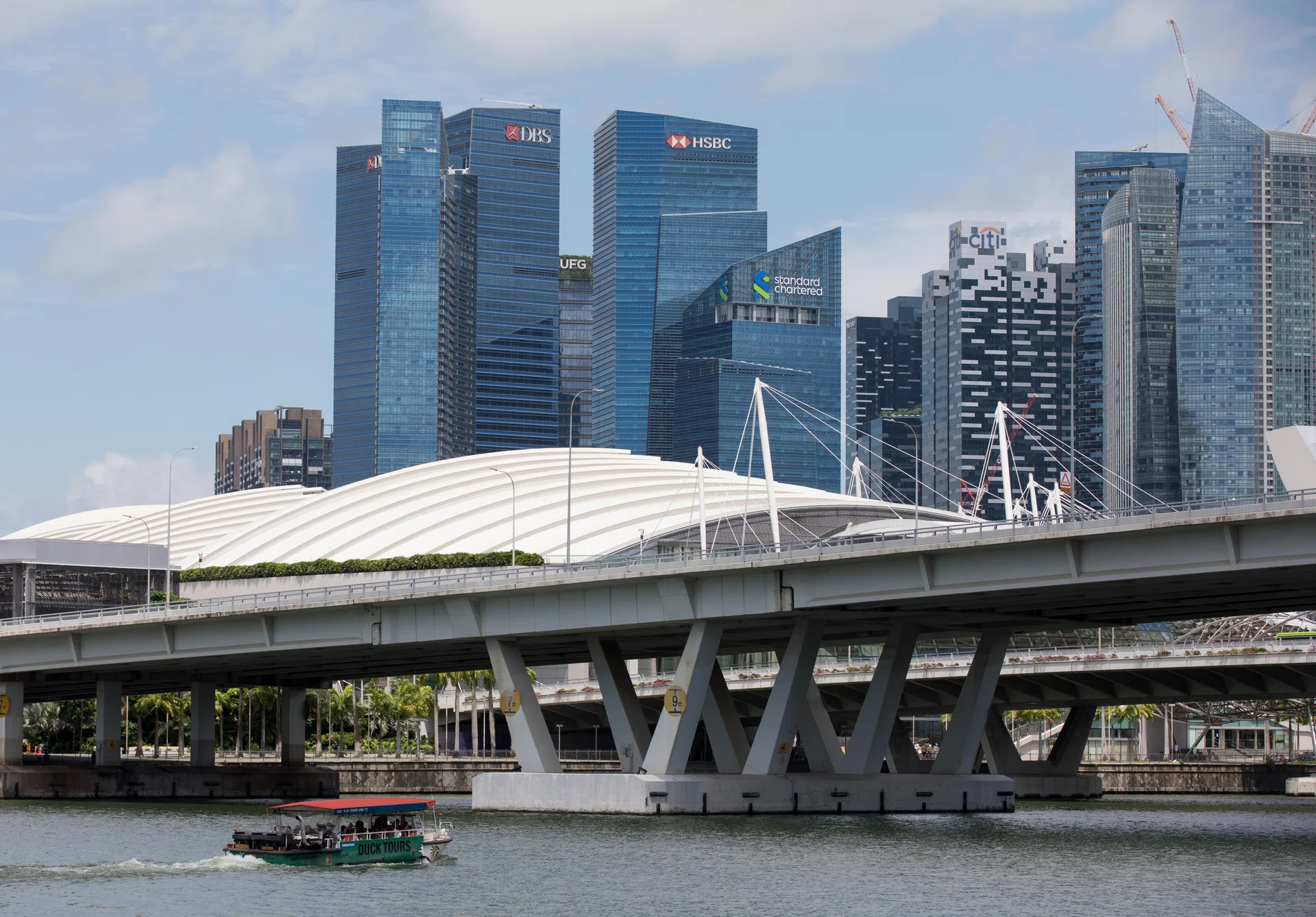
Singapore’s economy delivered a genuine surprise heading into the second half of 2026: Q1 GDP growth came in at 6.0% year-on-year, comfortably beating flash estimates of 4.6% and marking the strongest quarterly growth since Q3 2024 (Joey Choy Newsletter). That’s a substantial beat — not a rounding error — and it deserves more scrutiny than the celebratory framing it’s mostly received.
What Actually Drove the Beat
The growth was broad-based rather than concentrated in a single sector, which is itself a meaningfully positive signal. Construction output picked up, the services sector expanded faster than expected — led specifically by wholesale and retail trade, accommodation, and finance and insurance — while manufacturing held up reasonably well despite slower underlying momentum (Joey Choy Newsletter).
The Curious Gap Nobody’s Fully Explaining
Here’s the detail that deserves far more scrutiny than it’s getting: despite this substantial first-quarter beat, Singapore’s Ministry of Trade and Industry has maintained its full-year 2026 GDP growth forecast at a relatively modest 2.0% to 4.0% range (Singstat / Business Times, cited in Joey Choy Newsletter).
That’s a genuinely unusual pattern. A 6.0% first-quarter print against a full-year forecast ceiling of 4.0% implies MTI is either expecting a meaningfully sharp deceleration through the remaining three quarters, or is being deliberately conservative in its official guidance — perhaps to preserve policy flexibility given ongoing global trade uncertainty, tariff risk, and the broader geopolitical volatility still working through the Middle East conflict’s aftermath. Coverage celebrating the Q1 beat has largely glossed over this tension rather than interrogating it, which is precisely the kind of gap a sharper competitive analysis piece should fill.
The Economic Strategy Review: Singapore’s Long-Game Positioning
Running alongside the growth numbers, Singapore released the Final Report of its Economic Strategy Review, offering more detailed proposals for the country’s longer-term economic direction (Business Times, cited in Joey Choy Newsletter). While the specific policy contents of that review extend beyond what’s captured in available reporting, its timing alongside a growth beat and unchanged full-year guidance suggests Singapore’s policymakers are focused on structural, multi-year positioning rather than reacting to any single quarter’s data — consistent with the country’s historical approach to economic planning.
Singapore Airlines: A Microcosm of the Broader Margin Story
One specific corporate data point illustrates a pattern worth watching across Singapore’s broader economy: Singapore Airlines reported full-year FY2026 revenue of S$20.5 billion, up 5.0% from the prior year and beating analyst revenue estimates by 2.2%, with earnings per share surpassing estimates by 9.4%. Yet net income declined 57% to S$1.18 billion, driven by higher expenses, and profit margin fell sharply to 5.8% from 14% in FY2025 (Joey Choy Newsletter).
That’s a genuinely instructive pattern: revenue growth remaining resilient while margins compress sharply due to elevated costs — plausibly linked to the same energy price volatility and broader input-cost pressures affecting economies globally through 2026. Despite the profit decline, SIA still declared a final dividend of S$0.29 per share, covered at a 70% payout ratio on earnings and a 36% cash payout ratio, translating to a dividend yield of approximately 5.8% — a signal that management retains confidence in the underlying cash generation capacity of the business even amid margin pressure.
Why This Matters Beyond Singapore’s Borders
Singapore’s economic performance functions as a genuinely useful bellwether for the broader Southeast Asian and global trade environment, given the city-state’s outsized role as a regional financial hub, trade entrepôt, and — as detailed in the parallel Johor-Singapore Special Economic Zone story — an increasingly important node in the global AI infrastructure buildout through its role funneling data centre investment into neighboring Johor.
A services-led, broad-based Q1 growth beat, occurring even as the Middle East conflict’s energy price volatility and US tariff uncertainty weighed on global sentiment, suggests underlying Southeast Asian demand may be more resilient than headline global risk narratives suggest — though the unusually cautious full-year MTI forecast is a meaningful counter-signal worth taking seriously rather than dismissing.
What Investors and Businesses Should Watch Next
The practical signals worth tracking through the remainder of 2026: whether Q2 and Q3 GDP prints show the sharp deceleration implicit in MTI’s unchanged full-year forecast range, or whether the ministry revises its guidance upward as subsequent quarters confirm the Q1 strength wasn’t a one-off; whether services-sector momentum (wholesale/retail trade, finance and insurance specifically) proves durable or was partly boosted by one-off factors; and whether corporate margin compression, visible clearly in Singapore Airlines’ results, is broadening across other Singapore-listed companies as a signal of economy-wide cost pressure rather than an airline-specific story tied to fuel costs.
The Bottom Line
Singapore’s 6.0% Q1 GDP print is a genuine, broad-based positive surprise that deserves recognition — but the striking gap between that result and the Ministry of Trade and Industry’s unchanged, far more conservative full-year forecast is the more interesting and underexplored story. Either Singapore’s policymakers are bracing for a meaningful slowdown through the rest of 2026 that hasn’t been fully explained publicly, or official guidance is running deliberately behind the data as a hedge against global uncertainty. Investors and businesses positioning around Singapore’s growth trajectory should watch which of those two explanations proves correct over the next two quarters, rather than extrapolating the Q1 beat forward uncritically.
Discover more from Startups Pro,Inc
Subscribe to get the latest posts sent to your email.

The geopolitical gravity of the global technology sector has decisively shifted eastward. For over a decade, Silicon Valley operated under the comfortable assumption that Eastern markets were highly efficient assembly lines or aggressive imitators, structurally incapable of zero-to-one innovation. That era is definitively over. As we survey the top Asian startups 2026, the narrative is no longer about geographic arbitrage or cheap engineering talent. It is about foundational intellectual property. A new cohort of deep-tech originators is bypassing incremental software updates in favour of planetary-scale infrastructure, quantum-level engineering, and generative artificial intelligence. These are not derivative applications attempting to capture fleeting consumer attention. They are structural monopolies in the making, engineered to solve fundamental physical and computational bottlenecks.
To understand the sheer velocity of this transition, one must look at the reallocation of global capital over the past 24 months. Institutional investors and sovereign wealth funds are quietly divesting from saturated Western consumer applications and aggressively pivoting toward Asian deep technology. According to the International Monetary Fund’s recent economic outlook [1], emerging and developing Asia is projected to command the overwhelming majority of global growth this year, driven largely by state-backed technology investments and highly concentrated private capital deployment. This is not merely a cyclical boom triggered by lower regional interest rates. It is a permanent structural realignment of the global technological supply chain.
The macroeconomic environment—characterised by persistently high capital costs in the United States and heavily fragmented European supply chains—has forced Eastern enterprises to innovate out of sheer necessity. They are building capital-efficient, exceptionally high-margin businesses that solve existential bottlenecks in computing power, climate resilience, and healthcare delivery. Recent venture capital trends in Southeast Asia indicate a rapid maturation of the funding ecosystem; capital has consolidated into fewer, considerably more defensive assets. The result is a hyper-competitive landscape where only mathematically proven or biologically transformative business models survive the transition from seed funding to commercial deployment.
The Core Development: Hardware and Infrastructure Bedrock
The defining characteristic of the most critical tech startups to watch Asia is their absolute focus on physical infrastructure and hard engineering. We are witnessing an aggressive, industry-wide move away from pure-play software as a service toward businesses that manipulate atoms, photons, and electrons. This hardware-software convergence is creating formidable economic moats that cannot be easily replicated by Western competitors, who remain constrained by significantly higher manufacturing costs, unionised labour forces, and labyrinthine regulatory environments.
Consider the physical infrastructure required to power the current global artificial intelligence boom. The primary bottleneck is no longer algorithmic design or software architecture; it is energy availability, compute density, and thermal dynamics. Here, Asian upstarts are capturing staggering enterprise value. DayOne, a massive AI data centre spin-off operating across Singapore and China, recently initiated proceedings for a $5 billion dual public listing. They are not merely hosting server racks. Their engineering teams have fundamentally redesigned liquid cooling protocols and local power grid integrations to accommodate next-generation AI workloads at a fraction of the traditional carbon and financial cost. By resolving the thermal limitations of advanced graphics processing units, they have positioned themselves as the landlords of the Asian artificial intelligence economy.
Similarly, Singapore’s Transcelestial is directly attacking the physical bandwidth constraints that plague global telecommunications networks. As documented in Fast Company’s 2026 innovation index [1, 2], Transcelestial has successfully commercialised wireless laser technology capable of transmitting optical-fibre-grade internet directly through the atmosphere. This technology bypasses the multi-billion-dollar capital expenditure requirements and bureaucratic nightmares of laying physical subterranean cables in emerging markets or dense urban topographies. It is a fundamental rewiring of internet infrastructure, deployed at astonishing speed and at a fraction of historical costs. By early 2026, their optical nodes were already establishing high-fidelity connections across port infrastructure and banking districts throughout Southeast Asia.
Then there is the physical manifestation of artificial intelligence in the manufacturing sector. Linkerbot, a highly secretive Chinese-Taiwanese robotics enterprise, has quietly captured an estimated 80% of the global market for high-dexterity robotic end-effectors—the mechanical hands required for humanoid robots. Recently valued at nearly $6 billion following an investment from Ant Group, the company has effectively solved the Moravec paradox. This paradox states that high-level reasoning requires little computation, but low-level sensorimotor skills—like grasping a fragile object—require enormous computational resources. By mastering tactile feedback algorithms and edge computing, Linkerbot is supplying the foundational hardware layer for the impending wave of industrial humanoid robotics. These firms represent the best tech companies in Asia right now: organisations building the subterranean architecture of the future global economy.
Analytical Layer: Enterprise AI and Disruptive Medical Hardware
The evolution of the Asian ecosystem reveals a highly sophisticated divergence from the traditional Silicon Valley playbook. Where Western venture capital often prioritises consumer-facing platforms that rely heavily on fragile network effects, the emerging startups Asia 2026 are heavily skewed toward B2B enterprise solutions and state-aligned strategic technologies. This is a deliberate, mathematically calculated structural shift. By focusing intensely on enterprise large language models and advanced medical hardware, these firms embed themselves directly into the core operational frameworks of global multinationals, creating extraordinarily sticky revenue streams that resist macroeconomic turbulence.
Upstage, a premier South Korean artificial intelligence laboratory, perfectly exemplifies this strategy of strategic insertion. While Western giants battle expensively for consumer mindshare and the philosophical pursuit of artificial general intelligence, Upstage has precision-engineered Solar Pro 2. This is an enterprise-grade language model specifically trained for highly regulated corporate, legal, and financial environments. It does not attempt to write creative poetry or generate deep-fake imagery. Instead, it synthesises terabytes of proprietary corporate data with near-zero hallucination risk, explicitly designed to run locally on corporate servers. This ensures absolute data sovereignty for risk-averse financial institutions. This pragmatic, utility-driven approach is quietly capturing significant institutional market share from Western generalist models that demand cloud-based data transmission.
In the consumer healthcare hardware sector, the strategic approach is equally calculated: attack high-margin, historically stagnant medical device monopolies using AI-driven price deflation. Shenzhen-based Elehear has systematically dismantled the traditional global audiology cartel. By integrating advanced machine learning chips that dynamically isolate and amplify human voices in high-noise environments, they have brought clinical-grade, direct-to-consumer hearing aids to market at roughly a tenth of the cost of incumbent European and American manufacturers. It is a textbook example of disruptive innovation, executed with terrifying Chinese manufacturing velocity and precision algorithmic engineering.
Which Asian country has the most tech startups in 2026?
China continues to hold the absolute highest volume of tech startups and unicorns in Asia, driven by immense domestic scale and state support. However, Singapore has emerged as the premier jurisdiction for deep-tech headquarters, offering unparalleled regulatory clarity and access to global capital for pan-Asian expansion.
The rapid commercial success of firms like Upstage and Elehear is absolutely not accidental. It is the direct result of a highly integrated economic ecosystem where government industrial policy, sovereign wealth funds, and private enterprise act in calculated concert. They are ruthlessly exploiting the regulatory paralysis, antitrust anxieties, and inflated cost structures currently hobbling Western technology conglomerates.
Implications & Second-Order Effects: Solving Existential Crises
The downstream consequences of this technological maturation are economically and politically profound. We are rapidly transitioning from an era of unipolar American technological dominance to a highly fractured, multipolar reality. For global policymakers, asset managers, and multinational corporate boards, this necessitates a radical reassessment of supply chain dependencies and strategic partnerships. The fastest growing startups Asia are no longer optional, high-risk additions to a globally diversified portfolio; they are mandatory operational hedges against Western technological stagnation and inflationary pressures.
Nowhere is this dynamic more evident or critical than in the global climate technology sector. The geopolitical mandate to decarbonise industrial supply chains has violently collided with the stark reality of raw industrial economics. Western climate solutions have frequently proven far too expensive and capital-intensive for adoption across the global south. Varaha, a pioneering Indian climate-tech enterprise, has engineered a radically different economic model that solves this exact bottleneck. By financially incentivising hundreds of thousands of smallholder farmers across South Asia to convert agricultural waste into biochar—a stable, highly porous material that sequesters carbon for centuries—they have created a massively scalable, scientifically verifiable carbon removal mechanism. Their recent, highly publicised procurement partnerships with American technology monopolies demonstrate a vital geopolitical shift: Asian deep-tech startups are now actively exporting climate compliance to Western corporations. As explicitly noted in a recent World Bank climate finance brief, rapidly scaling such verifiable nature-based solutions is an absolute mathematical requirement for meeting the rapidly approaching 2030 Paris Agreement targets.
Equally disruptive is the radical democratisation of advanced medical diagnostics. Kozhnosys, another extraordinary Indian pioneer operating at the intersection of hardware and biology, is entirely redefining the health economics of oncology. Their proprietary CanScan device utilises advanced spectrometry to perform breath-based volatile organic compound analysis, detecting early-stage breast cancer without the need for radiation, painful compression, or complex hospital infrastructure. This fundamentally alters the epidemiological trajectory of the developing world. By entirely removing the strict requirement for multi-million-dollar MRI machines and highly trained, scarce radiologists, Kozhnosys is transforming a highly capital-intensive medical procedure into a cheap, deployable, edge-computed screening tool that can operate in rural community centres.
These companies are actively dictating the future terms of global technology deployment. They are forcing legacy Western institutions to adapt to new, deflationary pricing models, exponentially faster product iteration cycles, and entirely different paradigms of intellectual property generation. The long-term implication for global markets is brutally clear: the cost curve for deep technology—whether in atmospheric carbon sequestration, oncological screening, or artificial intelligence infrastructure—is being permanently and aggressively bent downward by Asian innovation.
Competing Perspectives: The Structural Bottlenecks
Yet, a structurally sound and objective analysis must absolutely acknowledge the severe macroeconomic and geopolitical vulnerabilities that threaten to derail this Asian technological renaissance. Skeptics, particularly within Western intelligence and financial circles, argue that the current multi-billion-dollar valuations of these deep-tech ventures are artificially inflated by a momentary, unsustainable surge in global AI infrastructure spending. They suggest this liquidity masks deeper, highly systemic frailties within the Asian economic model.
The primary and most immediate constraint is the intensifying geopolitical balkanisation of global semiconductor supply chains. The United States Department of Commerce’s aggressively expanded export controls on extreme ultraviolet lithography machines and advanced AI accelerator chips severely limit the baseline compute capacity available to Chinese, and by extension, broader Asian research hubs. A comprehensive report by the Brookings Institution clearly highlights this strategic vulnerability: while Asian engineering firms excel at edge computing, hardware manufacturing, and application deployment, they remain acutely dependent on Western-controlled technological chokepoints for foundational algorithmic model training and high-end silicon fabrication. If access to the next generation of American and Dutch semiconductor technology is entirely severed, the innovation velocity of firms relying on heavy compute will violently decelerate.
Furthermore, there is the persistent, unavoidable issue of capital flight and demographic contraction. Japan, South Korea, and increasingly China are facing unprecedented demographic headwinds that threaten to entirely hollow out their domestic engineering talent pools over the next decade. A shrinking tax base and a rapidly aging workforce present a mathematical limit to indefinite, state-subsidised technological expansion. Meanwhile, the financial exit environment remains highly precarious. Despite Singapore’s clear regulatory advantages and deep capital pools, the broader Asian initial public offering market has not consistently demonstrated the deep liquidity or the premium valuation multiples historically offered by the Nasdaq or the New York Stock Exchange. If these top-tier startups cannot achieve lucrative public exits or secure unfettered access to the most advanced global silicon, their rapid trajectory from regional champions to true global monopolies will inevitably stall. They risk becoming highly profitable but geographically confined entities, fundamentally unable to scale their deep-tech solutions across an increasingly protectionist and fractured global landscape.
Closing Synthesis
The defining tension of the global economy over the next decade will be the friction between immense, localised Asian innovation and increasingly fractured, protectionist global supply chains. The seven companies profiled here—Varaha, Upstage, Transcelestial, DayOne, Elehear, Linkerbot, and Kozhnosys—represent a fundamental, qualitative evolution in Eastern entrepreneurship. They are no longer engaged in simple regulatory arbitrage, software cloning, or cheap labour exploitation; they are solving highly complex physics, biology, and advanced engineering problems at a scale and velocity that Western capital markets can no longer afford to ignore.
The structural monopolies that will dominate the global economy in 2030 will not be built on ephemeral advertising algorithms, consumer delivery applications, or fleeting social media trends. They will be firmly built on scalable carbon sequestration, wireless optical internet, sovereign enterprise artificial intelligence, and edge-computed medical diagnostics. The technological centre of gravity has already decisively shifted. The only meaningful question remaining for global investors and policymakers is how quickly, and how painfully, the rest of the world will be forced to adjust to this new, irreversible reality.
Discover more from Startups Pro,Inc
Subscribe to get the latest posts sent to your email.

PM Invites US-Based Pakistani Business Community to Invest in Pakistan as Investment Opportunities Expand

Trump Accounts Reshuffle Tens of Millions in Big Tech & AI Holdings

NIC Islamabad Launches Exclusive Acceleration Program with Up to PKR 5 Million Equity-Free Grant Support

World School Summit 2026 Malaysia: 41st Edition

Global Digital Trade Expo 2026: Dates, Schedule, Venue, Registration and Everything You Need to Know

How to Claim Your Sony PlayStation Store Credit Settlement (Up to $33.66)

CES 2027 Las Vegas: Registration Details, Dates and Venue [Ultimate Guide]

IPhone 18 Pro Specifications, Pricing, and Thermal Architecture Leaks Analyzed

Pre-IPO Investing Strategies: How Institutional Money is Approaching Anthropic

Smash Bros Ultimate 13.0.5 Patch Notes: What Actually Changed
NIC Islamabad Launches Exclusive Acceleration Program with Up to PKR 5 Million Equity-Free Grant Support
World School Summit 2026 Malaysia: 41st Edition
Trump Accounts Reshuffle Tens of Millions in Big Tech & AI Holdings
PM Invites US-Based Pakistani Business Community to Invest in Pakistan as Investment Opportunities Expand
-
Digital5 years ago
Social Media and polarization of society
-
Digital6 years ago
Pakistan Moves Closer to Train One Million Youth with Digital Skills
-
Digital5 years ago
Karachi-based digital bookkeeping startup, CreditBook raises $1.5 million in seed funding
-
Kashmir6 years ago
Pakistan Mission Islamabad Celebrates “KASHMIRI SOLIDARITY DAY “
-
Digital6 years ago
WHATSAPP Privacy Concerns Affecting Public Data -MOIT&T Pakistan
-
News6 years ago
Dr . Arif Alvi visits the National Museum of Pakistan, Karachi
-
China5 years ago
TIKTOK’s global growth and expansion : a bubble or reality ?
-
Business5 years ago
Are You Ready to Start Your Own Business? 7 Tips and Decision-Making Tools