
GDP
Singapore GDP Q1 2026: The 6% Beat MTI Won’t Fully Explain

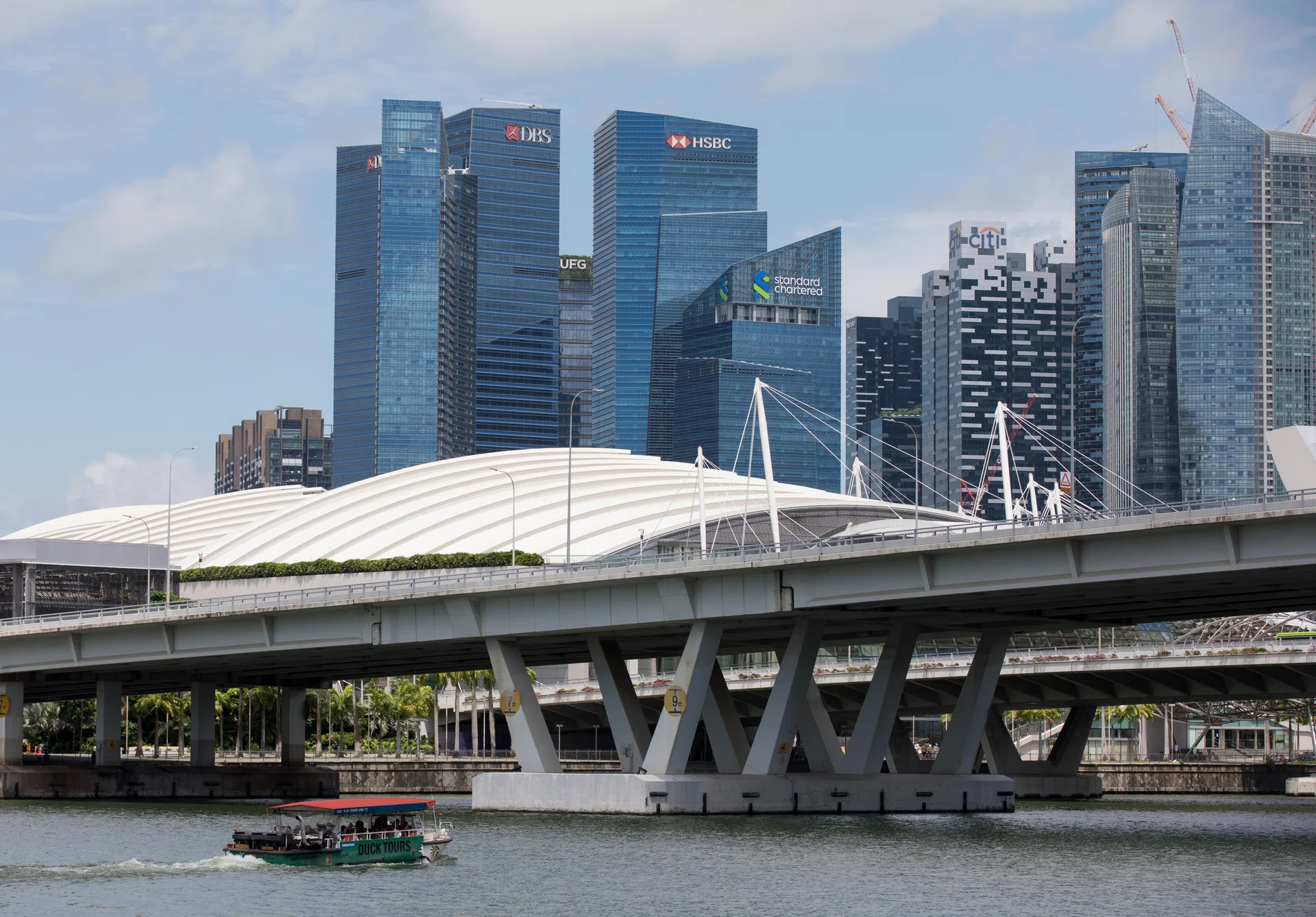
Singapore’s economy delivered a genuine surprise heading into the second half of 2026: Q1 GDP growth came in at 6.0% year-on-year, comfortably beating flash estimates of 4.6% and marking the strongest quarterly growth since Q3 2024 (Joey Choy Newsletter). That’s a substantial beat — not a rounding error — and it deserves more scrutiny than the celebratory framing it’s mostly received.
What Actually Drove the Beat
The growth was broad-based rather than concentrated in a single sector, which is itself a meaningfully positive signal. Construction output picked up, the services sector expanded faster than expected — led specifically by wholesale and retail trade, accommodation, and finance and insurance — while manufacturing held up reasonably well despite slower underlying momentum (Joey Choy Newsletter).
The Curious Gap Nobody’s Fully Explaining
Here’s the detail that deserves far more scrutiny than it’s getting: despite this substantial first-quarter beat, Singapore’s Ministry of Trade and Industry has maintained its full-year 2026 GDP growth forecast at a relatively modest 2.0% to 4.0% range (Singstat / Business Times, cited in Joey Choy Newsletter).
That’s a genuinely unusual pattern. A 6.0% first-quarter print against a full-year forecast ceiling of 4.0% implies MTI is either expecting a meaningfully sharp deceleration through the remaining three quarters, or is being deliberately conservative in its official guidance — perhaps to preserve policy flexibility given ongoing global trade uncertainty, tariff risk, and the broader geopolitical volatility still working through the Middle East conflict’s aftermath. Coverage celebrating the Q1 beat has largely glossed over this tension rather than interrogating it, which is precisely the kind of gap a sharper competitive analysis piece should fill.
The Economic Strategy Review: Singapore’s Long-Game Positioning
Running alongside the growth numbers, Singapore released the Final Report of its Economic Strategy Review, offering more detailed proposals for the country’s longer-term economic direction (Business Times, cited in Joey Choy Newsletter). While the specific policy contents of that review extend beyond what’s captured in available reporting, its timing alongside a growth beat and unchanged full-year guidance suggests Singapore’s policymakers are focused on structural, multi-year positioning rather than reacting to any single quarter’s data — consistent with the country’s historical approach to economic planning.
Singapore Airlines: A Microcosm of the Broader Margin Story
One specific corporate data point illustrates a pattern worth watching across Singapore’s broader economy: Singapore Airlines reported full-year FY2026 revenue of S$20.5 billion, up 5.0% from the prior year and beating analyst revenue estimates by 2.2%, with earnings per share surpassing estimates by 9.4%. Yet net income declined 57% to S$1.18 billion, driven by higher expenses, and profit margin fell sharply to 5.8% from 14% in FY2025 (Joey Choy Newsletter).
That’s a genuinely instructive pattern: revenue growth remaining resilient while margins compress sharply due to elevated costs — plausibly linked to the same energy price volatility and broader input-cost pressures affecting economies globally through 2026. Despite the profit decline, SIA still declared a final dividend of S$0.29 per share, covered at a 70% payout ratio on earnings and a 36% cash payout ratio, translating to a dividend yield of approximately 5.8% — a signal that management retains confidence in the underlying cash generation capacity of the business even amid margin pressure.
Why This Matters Beyond Singapore’s Borders
Singapore’s economic performance functions as a genuinely useful bellwether for the broader Southeast Asian and global trade environment, given the city-state’s outsized role as a regional financial hub, trade entrepôt, and — as detailed in the parallel Johor-Singapore Special Economic Zone story — an increasingly important node in the global AI infrastructure buildout through its role funneling data centre investment into neighboring Johor.
A services-led, broad-based Q1 growth beat, occurring even as the Middle East conflict’s energy price volatility and US tariff uncertainty weighed on global sentiment, suggests underlying Southeast Asian demand may be more resilient than headline global risk narratives suggest — though the unusually cautious full-year MTI forecast is a meaningful counter-signal worth taking seriously rather than dismissing.
What Investors and Businesses Should Watch Next
The practical signals worth tracking through the remainder of 2026: whether Q2 and Q3 GDP prints show the sharp deceleration implicit in MTI’s unchanged full-year forecast range, or whether the ministry revises its guidance upward as subsequent quarters confirm the Q1 strength wasn’t a one-off; whether services-sector momentum (wholesale/retail trade, finance and insurance specifically) proves durable or was partly boosted by one-off factors; and whether corporate margin compression, visible clearly in Singapore Airlines’ results, is broadening across other Singapore-listed companies as a signal of economy-wide cost pressure rather than an airline-specific story tied to fuel costs.
The Bottom Line
Singapore’s 6.0% Q1 GDP print is a genuine, broad-based positive surprise that deserves recognition — but the striking gap between that result and the Ministry of Trade and Industry’s unchanged, far more conservative full-year forecast is the more interesting and underexplored story. Either Singapore’s policymakers are bracing for a meaningful slowdown through the rest of 2026 that hasn’t been fully explained publicly, or official guidance is running deliberately behind the data as a hedge against global uncertainty. Investors and businesses positioning around Singapore’s growth trajectory should watch which of those two explanations proves correct over the next two quarters, rather than extrapolating the Q1 beat forward uncritically.
Discover more from Startups Pro,Inc
Subscribe to get the latest posts sent to your email.


Xbox Nano Controller 2026: $49.99 Price, Features, November Release

PM Invites US-Based Pakistani Business Community to Invest in Pakistan as Investment Opportunities Expand

Trump Accounts Reshuffle Tens of Millions in Big Tech & AI Holdings

NIC Islamabad Launches Exclusive Acceleration Program with Up to PKR 5 Million Equity-Free Grant Support

World School Summit 2026 Malaysia: 41st Edition

Global Digital Trade Expo 2026: Dates, Schedule, Venue, Registration and Everything You Need to Know

How to Claim Your Sony PlayStation Store Credit Settlement (Up to $33.66)

CES 2027 Las Vegas: Registration Details, Dates and Venue [Ultimate Guide]

IPhone 18 Pro Specifications, Pricing, and Thermal Architecture Leaks Analyzed

Pre-IPO Investing Strategies: How Institutional Money is Approaching Anthropic
PM Invites US-Based Pakistani Business Community to Invest in Pakistan as Investment Opportunities Expand
Trump Accounts Reshuffle Tens of Millions in Big Tech & AI Holdings
Xbox Nano Controller 2026: $49.99 Price, Features, November Release
-
Digital5 years ago
Social Media and polarization of society
-
Digital6 years ago
Pakistan Moves Closer to Train One Million Youth with Digital Skills
-
Digital5 years ago
Karachi-based digital bookkeeping startup, CreditBook raises $1.5 million in seed funding
-
Kashmir6 years ago
Pakistan Mission Islamabad Celebrates “KASHMIRI SOLIDARITY DAY “
-
Digital6 years ago
WHATSAPP Privacy Concerns Affecting Public Data -MOIT&T Pakistan
-
News6 years ago
Dr . Arif Alvi visits the National Museum of Pakistan, Karachi
-
China5 years ago
TIKTOK’s global growth and expansion : a bubble or reality ?
-
Business5 years ago
Are You Ready to Start Your Own Business? 7 Tips and Decision-Making Tools