
Investment
Building Cyber Resilience for KSA’s Vision 2030: Empowering Human Capital


Introduction
Building cyber resilience is a top priority for Saudi Arabia as it works towards achieving its Vision 2030. The Kingdom’s ambitious plan to transform its economy and society requires a secure and stable digital infrastructure that can withstand cyber threats. The enablement of human capital is at the heart of these efforts, as it is vital to empower individuals with the knowledge, tools, and support they need to stay ahead of the curve.

The Vision 2030 blueprint outlines a comprehensive strategy for the country’s economic, social, and political development, with a focus on diversification, innovation, and sustainability. The plan recognizes the importance of technology and digital transformation in achieving these goals, but also acknowledges the risks and challenges associated with the digital age. Cybersecurity is identified as a key area of concern, and the plan calls for the establishment of a national cybersecurity authority to oversee the country’s cybersecurity strategy.
To achieve cyber resilience, Saudi Arabia needs to address the human factor in cybersecurity. The enablement of human capital is essential to building a culture of cybersecurity that is proactive, vigilant, and resilient. This requires investing in cybersecurity education and training programs, promoting cybersecurity awareness and best practices, and fostering a cybersecurity mindset across all sectors of society. By empowering individuals with the knowledge, tools, and support they need to stay ahead of cyber threats, Saudi Arabia can build a cyber-resilient society that can thrive in the digital age.
Key Takeaways
- Saudi Arabia’s Vision 2030 requires a secure and stable digital infrastructure that can withstand cyber threats.
- The enablement of human capital is essential to building a culture of cybersecurity that is proactive, vigilant, and resilient.
- By investing in cybersecurity education and training programs, promoting cybersecurity awareness and best practices, and fostering a cybersecurity mindset across all sectors of society, Saudi Arabia can build a cyber-resilient society that can thrive in the digital age.
Vision 2030 and Cyber Resilience

Strategic Importance of Cyber Resilience
Building cyber resilience is crucial for achieving the goals of Vision 2030 in Saudi Arabia. The country is rapidly transforming into a knowledge-based economy, and the success of this transformation depends on the ability to protect critical information infrastructure from cyber threats. Cyber resilience is essential to ensure that the government, businesses, and individuals can operate in a secure and reliable digital environment.
The enablement of human capital lies at the heart of the efforts towards cyber resilience. It is essential to empower individuals with the knowledge, tools, and support they need to stay ahead of the curve. This requires a comprehensive approach that includes training, awareness programs, and the development of a robust cybersecurity ecosystem.
Alignment with Vision 2030 Objectives
The Vision 2030 plan aims to transform Saudi Arabia into a diversified, knowledge-based economy that is less dependent on oil. The plan includes several strategic objectives, such as promoting innovation, improving the quality of life, and enhancing the business environment. Building cyber resilience is critical to achieving these objectives, as it enables the secure and reliable operation of digital infrastructure that underpins the economy.
Moreover, Vision 2030 recognizes the importance of human capital development in achieving the plan’s goals. Building cyber resilience requires a skilled workforce that can handle the evolving cyber threats. Therefore, the government has launched several initiatives to develop the skills of its citizens in cybersecurity. These initiatives include training programs, scholarships, and partnerships with leading international cybersecurity organizations.
In conclusion, building cyber resilience is essential for realizing the goals of Vision 2030 in Saudi Arabia. The government and businesses must invest in developing a robust cybersecurity ecosystem that empowers individuals with the knowledge, tools, and support they need to stay ahead of the curve. By doing so, Saudi Arabia can achieve its vision of becoming a diversified, knowledge-based economy that is less dependent on oil.
Human Capital Enablement in Cybersecurity

To achieve the goals of KSA’s Vision 2030, building cyber resilience is essential. The enablement of human capital lies at the heart of the efforts towards cyber resilience. Empowering individuals with the right knowledge, tools, and support systems is vital to stay ahead of the curve.
Empowering Individuals
Empowering individuals is a critical aspect of building cyber resilience. This involves providing training programs to employees to help them understand the latest threats and vulnerabilities. By doing so, employees can become more aware of the risks and take proactive measures to mitigate them. Additionally, it is essential to encourage a culture of cybersecurity within organizations. This can be done by promoting best practices and rewarding employees who follow them.
Knowledge and Tool Provision
Providing employees with the right knowledge and tools is crucial to building cyber resilience. This includes training programs, access to the latest cybersecurity technologies, and regular updates on the latest threats. By doing so, employees can become more proficient in identifying and mitigating risks. Additionally, organizations can invest in cybersecurity technologies such as firewalls, intrusion detection systems, and antivirus software to protect their networks.
Support Systems for Cyber Resilience
Support systems play a critical role in building cyber resilience. This includes having a robust incident response plan in place to address cyber threats. Organizations should also have a disaster recovery plan to ensure business continuity in the event of a cyber attack. Additionally, organizations can partner with cybersecurity experts to provide ongoing support and guidance. This can help organizations stay up to date on the latest threats and vulnerabilities and take proactive measures to mitigate them.
In conclusion, building cyber resilience is essential to achieving KSA’s Vision 2030. The enablement of human capital is critical to achieving this goal. Empowering individuals with the right knowledge, tools, and support systems is vital to stay ahead of the curve. By doing so, organizations can mitigate risks and protect their networks from cyber threats.
Staying Ahead of Cyber Threats

Continuous Education
To stay ahead of cyber threats, continuous education is essential. Cybersecurity threats are ever-evolving, and it is crucial to keep up with the latest trends and techniques to combat them. Regular training sessions and workshops can help individuals to stay updated with the latest cybersecurity threats and provide them with the necessary skills to protect their organizations from such threats.
Organizations should encourage their employees to attend cybersecurity training programs regularly. These programs should cover various aspects of cybersecurity, including threat intelligence, risk management, incident response, and security awareness. By providing continuous education, organizations can ensure that their employees are well-equipped to handle cybersecurity threats.
Adaptive Cybersecurity Strategies
Adaptive cybersecurity strategies are essential to stay ahead of cyber threats. Cybercriminals are continuously evolving their techniques, and traditional cybersecurity strategies may not be enough to protect against them. Adaptive cybersecurity strategies are designed to identify and respond to new threats quickly.
Organizations should adopt a proactive approach to cybersecurity by implementing adaptive cybersecurity strategies. These strategies should include threat hunting, threat intelligence, and security analytics. By continuously monitoring the network and identifying potential threats, organizations can respond quickly and effectively to cyber threats.
In conclusion, staying ahead of cyber threats requires continuous education and adaptive cybersecurity strategies. Organizations should invest in regular training programs and workshops to keep their employees updated with the latest cybersecurity threats and techniques. They should also adopt proactive cybersecurity strategies to identify and respond to new threats quickly. By doing so, organizations can ensure that they are well-prepared to face any cyber threats that may come their way.
Frequently Asked Questions

How does the KSA cybersecurity strategy align with Vision 2030 goals?
The KSA cybersecurity strategy is an essential component of the Vision 2030 plan, which aims to transform the Kingdom into a vibrant society and a thriving economy. The cybersecurity strategy aligns with Vision 2030 goals by focusing on the development of a secure and resilient digital infrastructure that can support the growth of the digital economy and enhance the quality of life for citizens.
What are the key components of a strong national cybersecurity strategy?
A strong national cybersecurity strategy should have several key components, including a comprehensive legal framework, effective risk management, robust incident response capabilities, and a skilled workforce. It should also focus on building partnerships between the public and private sectors to foster collaboration and information sharing.
In what ways does human capital development contribute to cyber resilience?
Human capital development is essential to building cyber resilience. By empowering individuals with the knowledge, tools, and support they need to stay ahead of emerging threats, organizations can create a culture of security that permeates throughout the entire enterprise. This, in turn, helps to reduce the risk of cyber attacks and minimize the impact of any incidents that do occur.
What measures are being taken to improve cybersecurity awareness and education in KSA?
KSA has taken several measures to improve cybersecurity awareness and education, including the establishment of the National Cybersecurity Authority (NCA) and the implementation of cybersecurity awareness campaigns. The NCA is responsible for developing policies and regulations related to cybersecurity, while the awareness campaigns aim to educate citizens and organizations about the importance of cybersecurity best practices.
Why is cybersecurity considered critical for the economic growth of a nation?
Cybersecurity is critical for the economic growth of a nation because it helps to create a secure and resilient digital infrastructure that can support the growth of the digital economy. A secure digital infrastructure is essential for businesses to operate safely and securely in the digital environment, which, in turn, helps to attract investment and drive economic growth.
How does fostering cyber resilience support the sustainability and security of national infrastructure?
Fostering cyber resilience supports the sustainability and security of national infrastructure by reducing the risk of cyber attacks and minimizing the impact of any incidents that do occur. This, in turn, helps to ensure the continuity of critical services and infrastructure, such as healthcare, transportation, and energy, which are essential for the well-being and prosperity of citizens.
Discover more from Startups Pro,Inc
Subscribe to get the latest posts sent to your email.


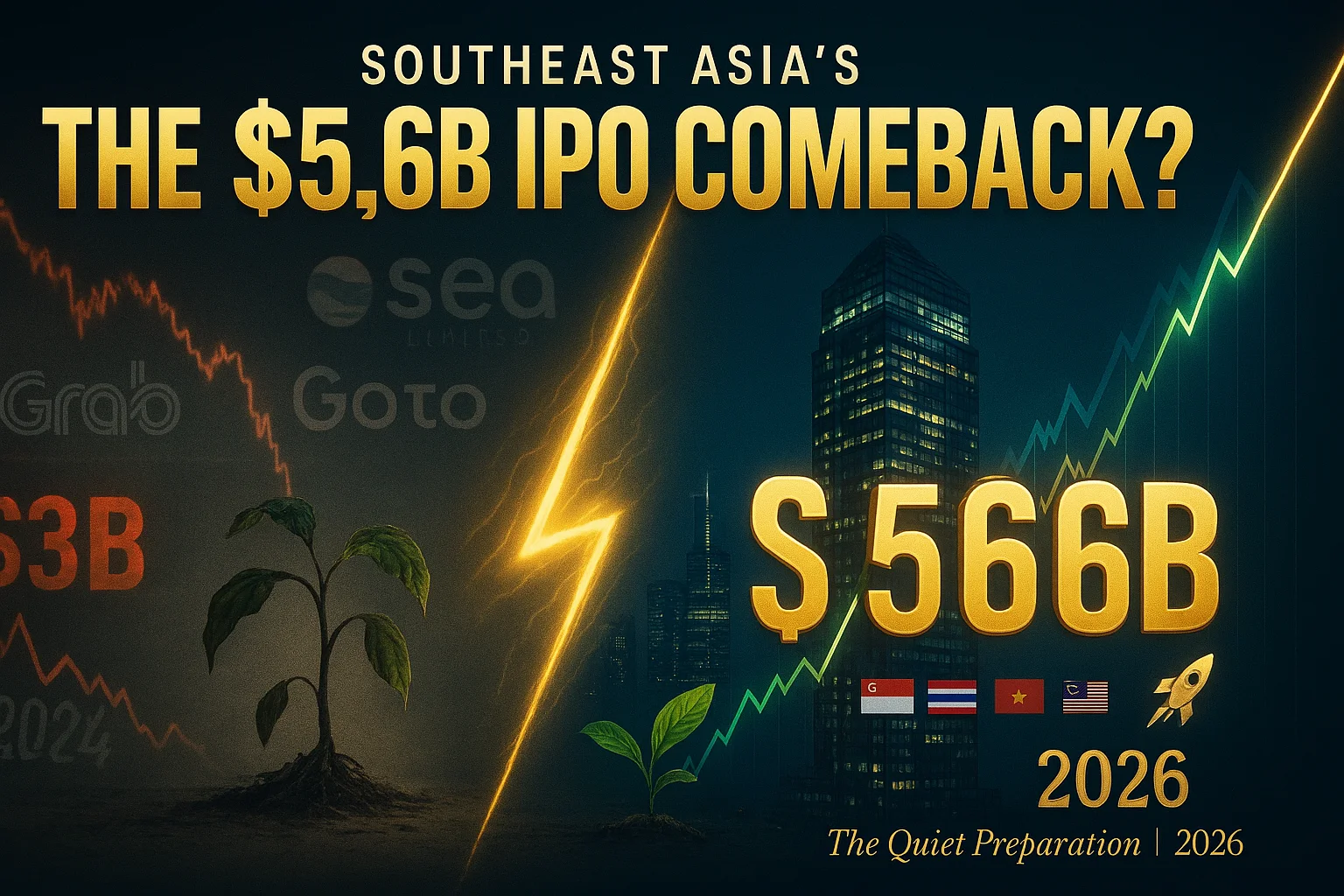
Southeast Asia tech startups are quietly strengthening corporate governance and cleaning their books for a major IPO comeback in 2026. Explore the data, trends, and strategic shifts reshaping the region’s capital markets.
In the hushed corridors of Singapore’s financial district and Jakarta’s tech hubs, something remarkable is unfolding. While headlines trumpet AI breakthroughs and cryptocurrency swings, Southeast Asia’s tech startups are conducting a different kind of transformation—one that happens behind closed boardroom doors, in audit committee meetings, and through painstaking restructuring of corporate governance frameworks. After weathering a brutal funding winter that saw IPO activity plunge to its lowest level in nearly a decade in 2024, with only $3.0 billion raised across 122 IPOs, the region’s most ambitious companies are now methodically preparing for what many believe will be a defining moment: the 2026 IPO revival.
This isn’t the frenzied SPAC-era optimism of 2021. This is something more deliberate, more strategic—and potentially more sustainable.
The Harsh Reality Check: Southeast Asia’s IPO Winter
The numbers tell a sobering story. In 2024, Southeast Asia’s IPO markets raised approximately $3.0 billion across 122 listings in the first 10.5 months—the lowest capital raised in nine years, down from $5.8 billion across 163 IPOs in 2023. Even more striking, only one IPO in 2024 raised over $500 million, compared to four such blockbuster listings the previous year.
For context, this represents a dramatic reversal from the pandemic-era boom when Southeast Asian tech companies commanded eye-watering valuations and international investors couldn’t deploy capital fast enough. The e-Conomy SEA report had projected the region’s digital economy would reach $363 billion by 2025, but the path to monetizing that growth through public listings proved far more treacherous than anticipated.
What happened? The perfect storm arrived with force.
High interest rates across ASEAN economies constrained corporate borrowing, dampening IPO activity as companies opted to delay public listings, explained Tay Hwee Ling, Capital Markets Services Leader at Deloitte Southeast Asia. Add to that mix currency fluctuations, geopolitical tensions affecting trade, and market volatility among major trade partners like China that impacted investor confidence, and you have an environment where even the most promising tech companies chose to stay private.
The venture capital funding landscape mirrored this decline. Southeast Asian VC funding hit rock bottom in Q4 2024, with startups mustering only 116 equity capital rounds raising $1.2 billion—the lowest quarterly deal volume in more than six years. Late-stage fundraising took a particularly severe hit, with funding plunging by 64% and deal value dropping by 72%.
For Southeast Asia’s tech unicorns and aspiring public companies, the message was clear: the old playbook was broken.
The Turning Tide: Why 2026 Looks Different
Yet amid this apparent gloom, a remarkable transformation is taking shape. In the first 10.5 months of 2025, Southeast Asia’s IPO capital markets showed a rebound, with 102 IPOs raising approximately $5.6 billion—a 53% increase in total proceeds despite fewer listings than 2024. The average deal size more than doubled, rising from $27 million in 2024 to $55 million in 2025, driven by larger, higher-quality offerings.
This isn’t just a cyclical uptick. Multiple structural factors are converging to create what could be the region’s most favorable IPO environment in five years.
Macroeconomic Tailwinds Gathering Strength
The macroeconomic backdrop is stabilizing in ways that matter for capital markets. Expected interest rate cuts alongside easing inflation are creating a more favorable environment for IPOs in the years ahead, according to Deloitte’s regional analysis.
The IMF projects ASEAN to grow at 4.3% in both 2025 and 2026, while the Asian Development Bank forecasts developing Asia’s growth at 4.9% in 2025 and 4.7% in 2026. Though these figures fall short of historical averages, they represent stable, predictable growth—exactly what public market investors crave after years of volatility.
More critically, the digital economy component of this growth is accelerating. Thailand’s digital economy, estimated to contribute around 6% of GDP, is the second largest in the ASEAN region, with financial services, digital payments, and fintech seeing some of the fastest rates of job creation. By 2030, ASEAN’s digital economy is expected to more than double to $560 billion, driving jobs and innovation across the region.
This creates a powerful narrative for IPO candidates: they’re not just individual companies going public, but representatives of the fastest-growing segment of the world’s fourth-largest economy.
Regulatory Evolution: The Singapore Catalyst
Perhaps nothing signals the changing IPO landscape more clearly than Singapore’s aggressive regulatory reforms. The Monetary Authority of Singapore convened a review group to assess and enhance the country’s IPO ecosystem, with recommendations aiming to advance Singapore toward a more disclosure-based regulatory regime aligned with major developed markets.
The $5 billion Equity Market Development Programme represents more than just capital—it’s a statement of intent. Singapore is positioning itself as the natural listing destination for Southeast Asian tech companies that might have previously eyed New York or Hong Kong.
Several SaaS and fintech firms are said to be preparing to list in late 2025 or 2026, encouraged by the success of dual-listed companies and growing institutional interest in digital transformation themes. The successful debut of NTT Data Centre REIT, Singapore’s biggest IPO in four years, has injected renewed confidence into the market.
This regulatory evolution addresses a critical pain point. In the past, Southeast Asian companies often felt they had to choose between staying local with limited liquidity or going international with regulatory complexity. Singapore’s reforms aim to offer the best of both worlds: international standards with regional understanding.
Private Equity’s Patient Capital Creates IPO Pipeline
Another crucial development is private equity’s evolving role in the ecosystem. A total of 35 secondary exits were completed in 2025, marking the highest annual count since 2020, as sponsors adjusted expectations around timing, pricing, and structure.
This might seem counterintuitive—more secondary sales could mean fewer IPOs—but it actually creates a healthier pipeline. PE-backed companies that go through secondary transactions often emerge stronger, with cleaned-up cap tables and more realistic valuations. PE-backed IPOs in Southeast Asia in 2025 marked a clear departure from the previous cycle, with no single sector dominating as issuance shifted toward execution-driven offerings sized to clear the market.
Golden Gate Ventures and INSEAD estimate 700 exits, including IPOs and trade sales, between 2023 and 2025, driven by regional tech leaders and late-stage capital injections. These aren’t distressed sales—they’re strategic repositioning ahead of more favorable public market windows.
The Quiet Preparation: Inside the Corporate Governance Transformation
Here’s where the story gets truly interesting. Behind the IPO statistics and macroeconomic forecasts, Southeast Asia’s tech companies are undergoing a fundamental transformation in how they operate, govern themselves, and present their financials to the world.
Cleaning the Books: From Growth-at-All-Costs to Unit Economics
The phrase “cleaning the books” has become shorthand for a comprehensive financial overhaul that goes far beyond simple accounting adjustments. Companies preparing for 2026 IPOs are fundamentally rethinking how they measure and present success.
Take GoTo Group, Indonesia’s largest tech company formed from the merger of Gojek and Tokopedia. After years of negative earnings and billion-dollar write-downs, GoTo is inching closer to profitability, with net revenue 14% higher than the previous year and losses shrinking from IDR 4.5 trillion ($269 million) to about IDR 1 trillion ($60 million) in the first nine months of 2025.
This transformation involved painful but necessary changes: tighter control of incentive spending, pricing scheme adjustments, and a bigger role for their finance division in driving revenue. Cash from operations showed steady improvement, with deficits falling to around IDR 160 billion ($10 million) by the third quarter—roughly one-tenth of the negative operating cash flow at the same point in 2024.
The shift represents a broader industry reckoning. Companies are moving away from adjusted EBITDA metrics that exclude “non-recurring” expenses that somehow recur every quarter, toward genuine GAAP profitability or clear paths to it. Revenue recognition is being standardized to match international accounting standards. Related-party transactions—once common in family-controlled Asian conglomerates—are being eliminated or made fully transparent.
As one venture capital partner told me off the record: “In 2021, you could go public burning $100 million a quarter if your growth rate was impressive. In 2026, investors want to see that you can turn a profit within 12-18 months of listing, or at minimum, that your path to profitability doesn’t depend on hoping for better market conditions.”
Governance Overhaul: Building Boards That Command Respect
The governance transformation is equally dramatic. Building strong corporate governance is essential, including installing professional management, establishing a strong board of directors and commissioners, and forming key committees, noted Silva Halim, Chief Capital Market Officer of Mandiri Sekuritas.
What does this look like in practice? Companies are:
Professionalizing leadership structures: Founder-CEOs are surrounding themselves with experienced CFOs who have taken companies public before, often recruited from established listed companies or Big Four accounting firms.
Adding independent directors with relevant expertise: Boards are being expanded to include former executives from similar-stage companies, regulatory experts, and representatives from institutional investors. The days of boards comprising only founders, early investors, and friendly advisors are ending.
Establishing robust committee structures: Audit committees with genuinely independent chairs, compensation committees that tie executive pay to performance metrics investors care about, and risk management committees that don’t just exist on paper.
Implementing ESG frameworks: Environmental, Social, and Governance considerations are no longer nice-to-haves. They’re table stakes for institutional investors, particularly those based in Europe and increasingly Asia.
Three of Southeast Asia’s five newest unicorns—Carro, GCash, and others—are actively preparing for IPOs, which forces them to clean up governance and meet public-market expectations. Carro, the automotive marketplace, expects a potential US IPO in late 2025 or early 2026 and has been systematically strengthening its governance framework in preparation.
The Capital Structure Simplification
Perhaps the most complex aspect of IPO preparation is unwinding the convoluted capital structures many Southeast Asian tech companies accumulated during their private funding years.
Multiple share classes with different voting rights, convertible notes from emergency funding rounds, preferred shares with liquidation preferences that give early investors disproportionate exit returns—all of these need to be rationalized before a successful public listing.
The process requires delicate negotiation. Early-stage investors who took risks when a company was worth $10 million don’t want to be diluted to meaninglessness now that it’s valued at $1 billion. Founders want to maintain enough control to execute their vision. Public market investors want governance structures that protect minority shareholders.
Finding the balance is as much art as science, and it’s one reason the IPO preparation process now takes 18-24 months rather than the 6-12 months that was common in the SPAC era.
Sector Spotlight: Who’s Best Positioned for 2026?
Not all sectors are created equal in the coming IPO revival. The data reveals clear winners based on both investor appetite and operational readiness.
Fintech: The Perennial Favorite with New Maturity
FinTech continued to lead as the top-funded industry in Southeast Asia, attracting $821 million across 78 deals in the first nine months of 2024, despite year-over-year declines. The sector’s dominance reflects both its market maturity and the improving unit economics of regional fintech players.
GCash, the Philippines’ leading digital wallet, stands out. New funding from Ayala and MUFG in 2024 boosted GCash’s valuation and positioned the company for an IPO in 2025, which would mark a major milestone for the Philippine startup scene. The company has moved beyond pure payments to offer a full suite of financial services—loans, insurance, investment products—creating multiple revenue streams that public market investors value.
Thunes, which became a unicorn in early 2025 after a $150 million Series D, exemplifies the infrastructure play that resonates with institutional investors. Rather than competing in crowded consumer spaces, it provides the rails that enable cross-border payments, a B2B model with stronger margins and more predictable revenue.
Infrastructure and Logistics: The Unsexy Winners
While consumer tech grabbed headlines during the pandemic boom, infrastructure and logistics companies are emerging as IPO favorites precisely because they’re less glamorous. They have real assets, predictable cash flows, and business models that make sense without squinting.
Data centers, in particular, are hot. Singapore’s successful listing of NTT Data Centre REIT validated the thesis that digital infrastructure can be packaged as stable, income-producing assets. As AI adoption accelerates and cloud migration continues, the demand for data center capacity in Southeast Asia is outpacing supply.
Logistics networks built by e-commerce giants and delivery platforms have also matured to the point where they could be spun off as standalone entities. These networks have tangible value: warehouses, last-mile delivery fleets, sophisticated routing algorithms, and established relationships with millions of merchants and consumers.
Automotive and Mobility: The Vertical Integration Play
Carro started as a used car platform but has evolved into a multi-service mobility business, integrating financing, insurance, after-sales service, AI-led vehicle inspections and logistics. This vertical integration strategy represents a sophisticated understanding of what public market investors want to see: control over the entire value chain creates both competitive moats and opportunities to capture margin at multiple points.
The automotive sector in Southeast Asia remains fragmented and under-digitized, creating genuine opportunities for tech-enabled consolidation. Whoever controls both the data and the distribution wins—and that thesis is compelling enough to attract IPO investors willing to bet on multi-year transformations.
The Risk Factors: What Could Derail the Revival
For all the optimism, significant risks loom over Southeast Asia’s IPO renaissance.
Global Recession Fears and Trade Policy Uncertainty
Meanwhile, US President-elect Donald Trump’s return to the White House represents a wild card for many markets, including IPOs, with the revival of “America First” trade policies potentially upending Southeast Asia’s IPO ambitions.
The return of protectionist trade policies could disrupt the export-dependent growth models of many Southeast Asian economies. If tariffs on Chinese goods lead to a broader trade war, and if Southeast Asian countries get caught in the crossfire as production shifts out of China, the macroeconomic stability necessary for robust IPO markets could evaporate quickly.
China Economic Slowdown Spillover
A worse-than-expected deterioration in China’s property market could disrupt prospects across Asia, the IMF warned in its regional outlook. China remains Southeast Asia’s largest trading partner and a major source of tourism revenue. An economic hard landing in China would reduce demand for Southeast Asian exports and potentially trigger capital flight from regional markets.
Currency Volatility and Capital Controls
Exchange rate instability remains a perennial concern. Companies that earn revenue in Indonesian rupiah, Thai baht, or Vietnamese dong but report in US dollars face constant translation risks. Sharp currency depreciations can turn profitable quarters into losses on paper, spooking investors.
More concerning is the possibility of capital controls if regional currencies come under sustained pressure. Malaysia’s experience with capital controls during the Asian Financial Crisis remains a cautionary tale that international investors remember.
Regulatory Unpredictability
Despite Singapore’s positive reforms, regulatory uncertainty persists across the region. Data localization requirements in Indonesia and Vietnam can force costly infrastructure changes. Cross-border payment regulations vary wildly between countries. Competition authorities are increasingly scrutinizing dominant platforms.
For companies hoping to list in 2026, the challenge is preparing for an IPO while remaining nimble enough to adapt to regulatory changes that could fundamentally alter their business models.
Post-IPO Performance Anxiety
Perhaps the biggest risk is the memory of previous disappointments. Grab’s post-SPAC performance—trading well below its initial valuation—haunts the sector. Sea Limited’s rollercoaster ride from pandemic darling to value destruction and back has made investors wary of Southeast Asian tech valuations.
New IPO candidates need to deliver not just successful listings but sustained post-IPO performance. One or two high-profile flameouts in 2026 could shut the window for everyone else.
Investment Implications: Reading the Tea Leaves
For institutional investors, the 2026 Southeast Asia IPO pipeline presents both opportunities and obligations to conduct rigorous due diligence.
Valuation Frameworks for a New Era
The valuation multiples of 2021—when companies could command 20x forward revenue—are gone. Today’s IPO candidates should expect 5-8x revenue multiples for profitable companies, 3-5x for those with clear paths to profitability within 18 months.
The shift means companies need much larger revenue bases to achieve the same market capitalizations. A company targeting a $5 billion valuation needs at least $800 million in revenue, not the $250 million that might have sufficed in 2021.
For growth-stage investors and late-stage VCs, this creates both challenges and opportunities. Entry valuations must be disciplined enough to allow for successful exits even at more modest public market multiples. But for those who invested in 2022-2023 at trough valuations, the returns could be substantial.
Geographic Focus: Not All Markets Are Equal
Singapore will continue to dominate Southeast Asian tech IPOs in 2026, but Indonesia and Vietnam are increasingly viable alternatives for companies with strong domestic market positions.
Indonesia’s market offers scale—270 million people, rapidly growing middle class, improving digital infrastructure. Companies that can demonstrate market leadership in Indonesia, even if they’re not yet regional champions, can make compelling IPO cases.
Vietnam presents a different opportunity: manufacturing and export-oriented plays that benefit from China-plus-one strategies. Tech-enabled manufacturing, logistics, and supply chain companies based in Vietnam may find receptive public markets.
Sectoral Selectivity
Within sectors, investors should prioritize:
In fintech: Companies with lending and asset management products, not just payment facilitation. The former have better unit economics and more defensible moats.
In e-commerce: Vertical specialists (automotive, luxury, B2B) rather than horizontal generalists competing with Sea Limited and Lazada.
In SaaS: Companies with strong presence in multiple Southeast Asian markets and demonstrated ability to expand upmarket to enterprise customers.
In logistics: Asset-light models leveraging technology to coordinate third-party capacity, rather than capital-intensive approaches requiring continuous fundraising.
Policy Recommendations: Enabling Sustainable Growth
For Southeast Asian governments and regulators hoping to support vibrant public markets, several policy priorities emerge.
Harmonize Listing Requirements
The fragmentation of listing requirements across ASEAN exchanges creates unnecessary complexity. A startup that meets SGX listing requirements should be able to list on the Indonesia Stock Exchange or Stock Exchange of Thailand with minimal additional compliance burden.
Progress on the ASEAN Digital Economy Framework Agreement could provide a template for similar harmonization in capital markets regulation. The goal isn’t identical rules—each market has unique characteristics—but mutual recognition and reduced friction.
Strengthen Market Infrastructure
Retail investor participation in IPOs remains limited in most Southeast Asian markets outside Singapore. Improving digital brokerage infrastructure, reducing transaction costs, and educating retail investors about public markets would broaden the investor base and improve post-IPO liquidity.
Malaysia and Thailand have made progress on digital brokerage adoption, but Indonesia, Vietnam, and the Philippines lag behind. Governments could accelerate adoption through tax incentives for small investors and regulatory sandboxes for innovative brokerage models.
Develop Institutional Investor Base
Southeast Asia needs more domestic institutional capital to reduce dependence on foreign portfolio flows that can reverse quickly during global risk-off episodes.
Pension reforms to allow higher equity allocations, insurance regulation that doesn’t penalize public equity investments, and sovereign wealth fund strategies that include domestic tech exposure would all help develop a more stable institutional investor base.
Address Short-Termism in Corporate Governance Codes
Many Asian corporate governance codes emphasize quarterly reporting and short-term performance metrics. While transparency is valuable, this can discourage the long-term investments in R&D, market expansion, and talent development that tech companies need.
Reforms could include longer protected periods for newly listed companies before they face takeover attempts, allowing founders to maintain dual-class voting structures for defined periods, and encouraging long-term incentive compensation tied to multi-year milestones.
Strategic Advice: Navigating the Path to Public Markets
For founders and CFOs contemplating 2026 IPOs, several strategic imperatives stand out.
Start Earlier Than You Think
IPO preparation isn’t something you begin six months before filing. The companies most likely to succeed in 2026 began their preparations in 2024 or earlier.
This means installing audit committees now, conducting pre-IPO audits of financial controls, identifying and fixing revenue recognition issues before underwriters spot them, and beginning the process of board professionalization well before you need those independent directors’ signatures on registration statements.
Choose Your Market Thoughtfully
The question “Where should we list?” requires sophisticated analysis of where your customers are, where comparable companies trade, and where you can maintain liquidity post-IPO.
For truly regional companies, dual listings merit consideration. The complexity and cost are substantial, but accessing both Asian and Western capital pools can be worth it. For companies with clear geographic anchors, listing close to your customer base makes sense even if valuations are somewhat lower—the understanding and long-term support from local institutional investors often outweighs pure valuation optimization.
Build Your Equity Story Deliberately
Companies need a compelling equity story and investment thesis that will resonate with public investors, with long-term goals focused on positive market reception and sustained aftermarket performance, advised Pol de Win, SGX Group’s Senior Managing Director.
This equity story needs to be more sophisticated than “We’re the X of Southeast Asia.” Public market investors want to understand your unit economics at a granular level, see evidence of defensible competitive advantages, understand how you’ll allocate capital, and have confidence in your management team’s ability to execute through market cycles.
Testing this story with pre-IPO investors through structured investor education—think non-deal roadshows conducted 12-18 months before listing—can reveal weaknesses in your narrative and give you time to address them.
Manage Expectations Conservatively
One of the biggest mistakes of the SPAC era was over-promising on growth and profitability trajectories. Companies projected hockey-stick growth that never materialized, destroying credibility and shareholder value.
The companies that will succeed in 2026 will be those that guide conservatively and consistently beat their own projections. Sandbagging should be avoided—investors can spot it and penalize you for it—but realistic planning that accounts for macroeconomic headwinds and competitive challenges will serve you better than blue-sky scenarios.
Looking Forward: Southeast Asia’s Moment
If 2021 was the frothy champagne era and 2024 was the sobering hangover, then 2026 represents something different—maturity, discipline, and the genuine transformation of Southeast Asian tech companies from venture-backed startups to sustainable public companies.
The region’s fundamental strengths remain intact: Southeast Asia’s strong consumer base, growing middle class, and strategic importance in sectors like real estate, healthcare, and renewable energy remain attractive to investors. ASEAN has already delivered a five-fold expansion in economic output this century, and the digital transformation is still in relatively early innings.
What’s changed is the understanding of what it takes to succeed as a public company. The discipline being instilled through the current IPO preparation process—the governance overhauls, the financial rigor, the strategic clarity—will serve these companies well beyond their listing dates.
Will 2026 mark the revival of Southeast Asia’s IPO hopefuls? The data suggests yes, but with an important caveat: it won’t be a revival of the 2021 model. It will be the emergence of something better—more sustainable, more honest about challenges, more realistic about valuations, and more committed to delivering long-term value rather than short-term excitement.
For investors who can navigate this landscape with sophistication, who can distinguish between genuinely transformative companies and those merely riding a cyclical upturn, the opportunities could be substantial. For the broader Southeast Asian tech ecosystem, this moment represents a coming-of-age—the transition from a region of promising startups to a mature market of public technology companies that can compete on the global stage.
The quiet preparation happening now in boardrooms and audit committees across Southeast Asia matters more than any single IPO. It represents the infrastructure—not physical infrastructure, but the governance, financial discipline, and strategic clarity—upon which decades of public market success can be built.
2026 won’t be the end of Southeast Asia’s IPO story. If the preparation is done right, it will be the beginning of a much longer and more sustainable chapter.
Sources Cited:
- Deloitte Southeast Asia (2024, 2025). “Southeast Asian IPO Market Reports”
- Asian Development Bank (2025). “Asian Development Outlook”
- International Monetary Fund (2025). “ASEAN Regional Economic Outlook”
- MAGNiTT (2024). “Southeast Asia Venture Capital Landscape”
- DealStreetAsia (2024, 2025). “DATA VANTAGE Reports”
- World Bank (2025). “Thailand Economic Monitor”
- East Ventures (2025). “Building a Vibrant IPO Ecosystem in Southeast Asia”
- PwC (2024). “Global IPO Trends”
- Golden Gate Ventures & INSEAD (2024). “Southeast Asia Exit Report”
- Tech Collective (2025). Various industry analyses
- World Economic Forum (2025). “ASEAN Digital Economy Report”
- GSMA Intelligence (2025). “Digital Nations 2025: ASEAN Connectivity”
Discover more from Startups Pro,Inc
Subscribe to get the latest posts sent to your email.
AI
Amazon, OpenAI, and the $10 Billion AI Power Shift: How a New Wave of Investment Is Rewriting the Future of Tech
A deep dive into Amazon, OpenAI, and the $10B AI investment wave reshaping startups, big tech competition, and the future of artificial intelligence.
The AI Investment Earthquake No One Can Ignore
Every few years, the tech world experiences a moment that permanently shifts the landscape — a moment when capital, innovation, and ambition collide so forcefully that the ripple effects reshape entire industries.
2025 delivered one of those moments. 2026 is where the aftershocks begin.
Between Amazon’s aggressive AI expansion, OpenAI’s escalating influence, and a global surge of $10 billion‑plus investments into next‑gen artificial intelligence, the world is witnessing a new kind of tech arms race. Not the cloud wars. Not the mobile wars. Not even the social media wars.
This is the AI supremacy war — and the stakes are higher than ever.
For startups, founders, investors, and operators, this isn’t just “ai news.” This is the blueprint for the next decade of opportunity.
And if you’re building anything in tech, this story matters more than you think.
The New AI Power Triangle: Amazon, OpenAI, and the Capital Flood
Amazon’s AI Ambition: From Cloud King to Intelligence Empire
Amazon has always played the long game. AWS dominated cloud. Prime dominated logistics. Alexa dominated voice.
But 2026 marks a new chapter: Amazon wants to dominate intelligence itself.
The company’s recent multi‑billion‑dollar AI investments — including infrastructure, model training, and strategic partnerships — signal a clear message:
Amazon doesn’t just want to compete with OpenAI. Amazon wants to become the operating system of AI.
From custom silicon to foundation models to enterprise AI tools, Amazon is building a vertically integrated AI stack that startups will rely on for years.
Why this matters for startups
- Cheaper, faster AI compute
- More accessible model‑training tools
- Enterprise‑grade AI infrastructure
- A growing ecosystem of AI‑native services
If AWS shaped the last decade of startups, Amazon’s AI stack will shape the next one.
OpenAI: The Relentless Pace‑Setter
OpenAI remains the gravitational center of the AI universe. Every product launch, every model upgrade, every partnership — it all sends shockwaves across the industry.
But what’s different now is the scale of investment behind OpenAI’s ambitions.
With billions flowing into model development, safety research, and global expansion, OpenAI is no longer a research lab. It’s a geopolitical force.

OpenAI’s influence in 2026
- Sets the pace for AI innovation
- Shapes global regulation conversations
- Defines the capabilities startups build on
- Drives the evolution of AI‑powered work
Whether you’re building a SaaS tool, a marketplace, a fintech product, or a consumer app, OpenAI’s roadmap affects your roadmap.
The $10 Billion Dollar Question: Why Is AI Attracting Record Investment?
The number isn’t symbolic. It’s strategic.
Across the US, UK, EU, and Asia, governments and private investors are pouring $10 billion‑plus into AI infrastructure, safety, chips, and model development.
The drivers behind the investment wave
- AI is becoming a national security priority
- Big tech is racing to build proprietary models
- Startups are proving AI monetization is real
- Enterprise adoption is accelerating
- AI infrastructure is the new oil
This isn’t hype. This is the industrialization of intelligence.
The Market Impact: A New Era of Tech Investment
1. AI Is Becoming the Default Layer of Every Startup
In 2010, every startup needed a website. In 2015, every startup needed an app. In 2020, every startup needed a cloud strategy.
In 2026?
Every startup needs an AI strategy — or it won’t survive.
AI is no longer a feature. It’s the foundation.
Examples of AI‑first startup models
- AI‑powered legal assistants
- Autonomous customer support
- Predictive analytics for finance
- AI‑generated content engines
- Automated supply chain optimization
- Personalized learning platforms
The startups winning funding today are the ones treating AI as the core engine, not the add‑on.
2. Big Tech Competition Is Fueling Innovation
Amazon, Google, Microsoft, Meta, and OpenAI are locked in a race that benefits one group more than anyone else:
Founders.
Competition drives:
- Lower compute costs
- Faster model improvements
- More developer tools
- More open‑source innovation
- More funding opportunities
When giants fight, startups grow.
3. AI Infrastructure Is the New Gold Rush
Investors aren’t just funding apps. They’re funding the picks and shovels.
High‑growth investment areas
- AI chips
- Data centers
- Model training platforms
- Vector databases
- AI security
- Synthetic data generation
If you’re building anything that helps companies train, deploy, or scale AI — you’re in the hottest market of 2026.
Why This Matters for Startups: The Opportunity Map
1. The Barriers to Entry Are Falling
Thanks to Amazon, OpenAI, and open‑source communities, startups can now:
- Build AI products without massive capital
- Train models without specialized hardware
- Deploy AI features in days, not months
- Access enterprise‑grade tools at startup‑friendly prices
This levels the playing field in a way we haven’t seen since the early cloud era.
2. Investors Are Prioritizing AI‑Native Startups
VCs aren’t just “interested” in AI. They’re restructuring their entire portfolios around it.
What investors want in 2026
- AI‑native business models
- Clear data advantages
- Strong defensibility
- Real‑world use cases
- Scalable infrastructure
If you’re raising capital, aligning your pitch with the AI investment wave is no longer optional.
3. AI Is Creating New Categories of Startups
Entire industries are being rewritten.
Emerging AI‑driven sectors
- Autonomous commerce
- AI‑powered healthcare diagnostics
- AI‑driven logistics
- Intelligent cybersecurity
- AI‑enhanced education
- Synthetic media and entertainment
The next unicorns will come from categories that didn’t exist five years ago.
The Competitive Landscape: Who Wins the AI Race?
Amazon’s Strengths
- Massive cloud dominance
- Custom AI chips
- Global distribution
- Enterprise trust
OpenAI’s Strengths
- Fastest innovation cycles
- Best‑in‑class models
- Strong developer ecosystem
- Cultural influence
Startups’ Strengths
- Speed
- Focus
- Agility
- Ability to innovate without bureaucracy
The real winners? Startups that build on top of the giants — without becoming dependent on them.
Future Predictions: What 2026–2030 Will Look Like
1. AI Will Become a Regulated Industry
Expect global standards, safety protocols, and compliance frameworks.
2. AI‑powered work will replace traditional workflows
Not jobs — workflows. Humans will supervise, not execute.
3. AI infrastructure will become a trillion‑dollar market
Chips, data centers, and training platforms will explode in value.
4. The next wave of unicorns will be AI‑native
Not AI‑enabled — AI‑native.
5. The UK will become a major AI hub
Thanks to government support, talent density, and startup momentum.
FAQ (Optimized for Google’s Answer Engine)
1. Why are companies investing $10 billion in AI?
Because AI is becoming critical infrastructure — powering automation, intelligence, and national competitiveness.
2. How does Amazon’s AI strategy affect startups?
It lowers compute costs, accelerates development, and provides enterprise‑grade tools to early‑stage founders.
3. Is OpenAI still leading the AI race?
OpenAI remains a pace‑setter, but Amazon, Google, and open‑source communities are closing the gap.
4. What AI sectors will grow the fastest by 2030?
AI chips, healthcare AI, autonomous logistics, cybersecurity, and synthetic media.
5. Should startups pivot to AI‑native models?
Yes — AI‑native startups attract more funding, scale faster, and build stronger defensibility.
Conclusion: The Future Belongs to the Builders
The AI revolution isn’t coming. It’s here — funded, accelerated, and industrialized.
Amazon is building the infrastructure. OpenAI is building the intelligence. Investors are pouring billions into the ecosystem.
The only question left is: What will you build on top of it?
For founders, operators, and investors, 2026 is the year to move — boldly, intelligently, and with AI at the center of your strategy.
Because the next decade of innovation belongs to those who understand one truth:
AI isn’t the future of tech. AI is tech.
Discover more from Startups Pro,Inc
Subscribe to get the latest posts sent to your email.

Introduction
Dubai is one of the fastest-growing business hubs in the world. The city has been a centre of attraction for investors around the globe for several years now. With the vision of becoming a leading international financial hub in the MEASA region, Dubai has been making significant progress in achieving its targets. Dubai has announced several initiatives and projects to make the city an attractive investment destination for investors.

In 2024, Dubai is expected to witness a surge in investment opportunities across various sectors. The city has been investing heavily in real estate development projects, technological innovations, retail and e-commerce growth, and transportation and infrastructure investments. Investors can expect to see a significant shift in the investment landscape in Dubai as the city continues to grow and expand.
Key Takeaways
- Dubai is rapidly becoming a leading international financial hub in the MEASA region, making it an attractive investment destination for investors.
- The city has been investing heavily in real estate development projects, technological innovations, retail and e-commerce growth, and transportation and infrastructure investments.
- Dubai is expected to witness a surge in investment opportunities across various sectors in 2024.
Real Estate Development Projects

Dubai’s real estate market is one of the most attractive investment opportunities in the world, with a wide range of projects catering to different investors’ preferences. Here are some of the top real estate development projects in Dubai that are expected to provide significant returns on investment in 2024.
Luxury Residential Properties
Dubai has a reputation for building some of the most luxurious residential properties in the world, and this trend is expected to continue in 2024. Some of the most prominent luxury residential projects in Dubai include The Royal Atlantis Resort & Residences, One Palm, and Bulgari Residences. These projects offer a range of amenities, including private beaches, concierge services, and high-end restaurants, making them attractive to high-net-worth individuals.
Commercial Real Estate Expansion
Dubai’s commercial real estate sector is expected to grow significantly in 2024, with several large-scale projects in the pipeline. One of the most notable projects is the Dubai Creek Harbour, which is set to become the largest commercial district in the city. The project will include a range of commercial properties, including office buildings, retail spaces, and hotels. Another significant project is the Dubai South Business Park, which is expected to attract a range of businesses looking to establish a presence in Dubai.
Hospitality and Tourism Ventures
Dubai is one of the world’s top tourist destinations, and the hospitality and tourism sector is expected to continue to grow in 2024. The city is home to several iconic hotels, including the Burj Al Arab and the Atlantis, The Palm, and several new hotels are set to open in the coming years. One of the most significant projects is the Marsa Al Arab development, which will include two new islands, several hotels, and a range of entertainment and leisure facilities.
Investors looking for opportunities in Dubai’s real estate market have a wide range of projects to choose from, catering to different investment preferences. Whether it’s luxury residential properties, commercial real estate, or hospitality and tourism ventures, Dubai’s real estate market is expected to provide significant returns on investment in 2024.
Technological Innovations

Dubai is well known for its technological advancements and innovative ideas. In 2024, there are several investment opportunities in Dubai’s technology sector that are worth considering.
Fintech Startups
Fintech startups are gaining popularity in Dubai due to the city’s growing economy and increasing demand for digital financial services. Dubai’s government has been actively promoting the growth of the fintech industry, and as a result, many startups have emerged in the city. These startups offer a range of services, including mobile banking, digital wallets, and blockchain-based solutions. Investors can consider investing in these startups as they have the potential to grow rapidly in the coming years.
Healthtech Advancements
Dubai’s healthcare sector is undergoing a transformation with the adoption of new technologies. The city is investing heavily in healthtech advancements, which are aimed at improving the quality of healthcare services. Some of the key areas of focus in healthtech include telemedicine, artificial intelligence, and medical wearables. Investors can explore opportunities in healthtech startups that are developing innovative solutions to improve healthcare services in Dubai.
Green Energy Initiatives
Dubai is committed to reducing its carbon footprint and has set ambitious targets for the adoption of renewable energy. The city has launched several initiatives to promote the use of green energy, including the Dubai Clean Energy Strategy 2050. Investors can consider investing in green energy startups that are developing innovative solutions for renewable energy generation and storage. These startups have the potential to benefit from the growing demand for renewable energy solutions in Dubai.
In summary, Dubai’s technology sector offers several investment opportunities in 2024, including fintech startups, healthtech advancements, and green energy initiatives. Investors can explore these opportunities and benefit from the city’s commitment to innovation and technological advancements.
Retail and E-commerce Growth

Dubai’s retail and e-commerce sector is expected to continue its growth trajectory in 2024. The city’s strategic location, advanced infrastructure, and favorable business environment make it an attractive destination for retailers and e-commerce companies.
According to the Dubai Chamber of Commerce and Industry, the e-commerce sector in Dubai is projected to reach AED 24 billion by 2022, up from AED 16 billion in 2019. This growth is driven by the increasing adoption of digital technologies and the rising demand for online shopping.
Dubai’s retail sector is also expected to benefit from the city’s growing population and increasing tourism. The Dubai government’s efforts to diversify the economy and promote entrepreneurship are also expected to create new opportunities for retailers and e-commerce companies.
The city’s retail and e-commerce ecosystem is supported by a range of initiatives and programs, including the Dubai CommerCity, a free zone dedicated to e-commerce companies, and the Dubai Future Accelerators program, which supports startups and entrepreneurs in developing innovative solutions for the retail sector.
In summary, Dubai’s retail and e-commerce sector is poised for continued growth in 2024, driven by the city’s favorable business environment, advanced infrastructure, and strategic location. The increasing adoption of digital technologies and the government’s efforts to promote entrepreneurship are expected to create new opportunities for retailers and e-commerce companies.
Transportation and Infrastructure Investments

Dubai is constantly expanding its transportation infrastructure to accommodate its growing population and increasing tourism. The emirate has allocated a significant portion of its budget to transportation and infrastructure investments. In 2024, Dubai is expected to continue to offer a range of investment opportunities in this sector.
One of the most notable transportation projects underway is the Dubai Metro expansion. The expansion includes the construction of a new line connecting the Dubai International Airport and the Expo 2020 site. The Expo 2020 site is expected to attract millions of visitors, making this project a lucrative investment opportunity.
In addition to the Dubai Metro expansion, there are also several road and bridge projects in progress. These include the Dubai Creek Harbour Bridge, which will connect the Creek Harbour development to the mainland, and the Sheikh Rashid bin Saeed Crossing, which will connect the Dubai-Al Ain Road to the Sheikh Zayed bin Hamdan Al Nahyan Road.
Dubai is also investing in smart transportation infrastructure, including the use of autonomous vehicles and the implementation of smart traffic management systems. These investments are expected to improve traffic flow and reduce congestion, making Dubai an even more attractive destination for businesses and tourists.
Investors interested in transportation and infrastructure investments in Dubai can take advantage of the emirate’s investor-friendly policies and attractive tax incentives. With its strategic location and growing economy, Dubai is poised to offer significant returns on investment in this sector.
Frequently Asked Questions

What are the most promising real estate areas for investment in Dubai this year?
Dubai is known for its thriving real estate market, and several areas are expected to offer promising investment opportunities in 2024. According to Emerald Insight, some of the most promising areas for real estate investment in Dubai this year include the Downtown Dubai, Dubai Marina, and Palm Jumeirah areas.
Which sectors in Dubai are currently experiencing rapid growth?
Dubai’s economy is diversified, with several sectors experiencing rapid growth in recent years. According to Taylor & Francis Online, some of the sectors that are currently experiencing rapid growth in Dubai include technology, healthcare, and tourism.
What are the top investment opportunities for small-scale investors in Dubai?
Dubai offers several investment opportunities for small-scale investors. According to Wiley Online Library, some of the top investment opportunities for small-scale investors in Dubai include real estate, tourism, and technology startups.
How is the technology industry in Dubai shaping investment trends in 2024?
Dubai’s technology industry is rapidly growing and is expected to shape investment trends in 2024. According to Emerald Insight, the technology industry in Dubai is expected to create several investment opportunities in areas such as fintech, e-commerce, and artificial intelligence.
What are the projections for Dubai’s tourism sector and its investment potential?
Dubai’s tourism sector is expected to continue growing and offers several investment opportunities. According to Emerald Insight, projections for Dubai’s tourism sector are positive, with the city expected to attract over 20 million visitors by 2024. Investment opportunities in the tourism sector include hotels, resorts, and theme parks.
How can foreign investors best capitalize on Dubai’s economic landscape?
Foreign investors can best capitalize on Dubai’s economic landscape by conducting thorough research and seeking the advice of local experts. According to SAGE Journals, it is important for foreign investors to understand the cultural and legal landscape in Dubai, as well as to network with local business leaders. Additionally, foreign investors should consider partnering with local companies to take advantage of their expertise and knowledge of the local market.
Discover more from Startups Pro,Inc
Subscribe to get the latest posts sent to your email.

Top 10 Media Startup Ideas for Massive Success in 2026

Billionaire Enrique Razon Accelerates Energy Push With Colombia, Philippine Deals

Bangladesh Rations Fuel as Mideast War Deepens Energy Crisis

Virgin Atlantic’s Strategic Swoop: On Track to Lure Tens of Thousands from British Airways’ Frequent Flyer Fold

The Great Launch Rush: How China’s Rocket IPO Surge Is Reshaping the Global Space Race

The Top 10 Business and Tech Institutes in the USA for Aspiring Business Leaders in 2026

ETFs Are Eating the World: AI Jitters and Oil’s Reversal

The Future is Now: Top 10 UK Startups Defining 2026

Entrepreneurship Funding: From Venture Capital to Bootstrapping

FITUR 2026: US, Mexico, India, China, and Spain Lead Global Tourism
Bangladesh Rations Fuel as Mideast War Deepens Energy Crisis
Billionaire Enrique Razon Accelerates Energy Push With Colombia, Philippine Deals
Top 10 Media Startup Ideas for Massive Success in 2026
-
Digital5 years ago
Social Media and polarization of society
-
Digital5 years ago
Pakistan Moves Closer to Train One Million Youth with Digital Skills
-
Digital5 years ago
Karachi-based digital bookkeeping startup, CreditBook raises $1.5 million in seed funding
-
News5 years ago
Dr . Arif Alvi visits the National Museum of Pakistan, Karachi
-
Digital5 years ago
WHATSAPP Privacy Concerns Affecting Public Data -MOIT&T Pakistan
-
Kashmir5 years ago
Pakistan Mission Islamabad Celebrates “KASHMIRI SOLIDARITY DAY “
-
Business4 years ago
Are You Ready to Start Your Own Business? 7 Tips and Decision-Making Tools
-
China5 years ago
TIKTOK’s global growth and expansion : a bubble or reality ?