
Exclusive
The AI Gambit: Why CEO Innovation Strategies Will Define the Next Decade

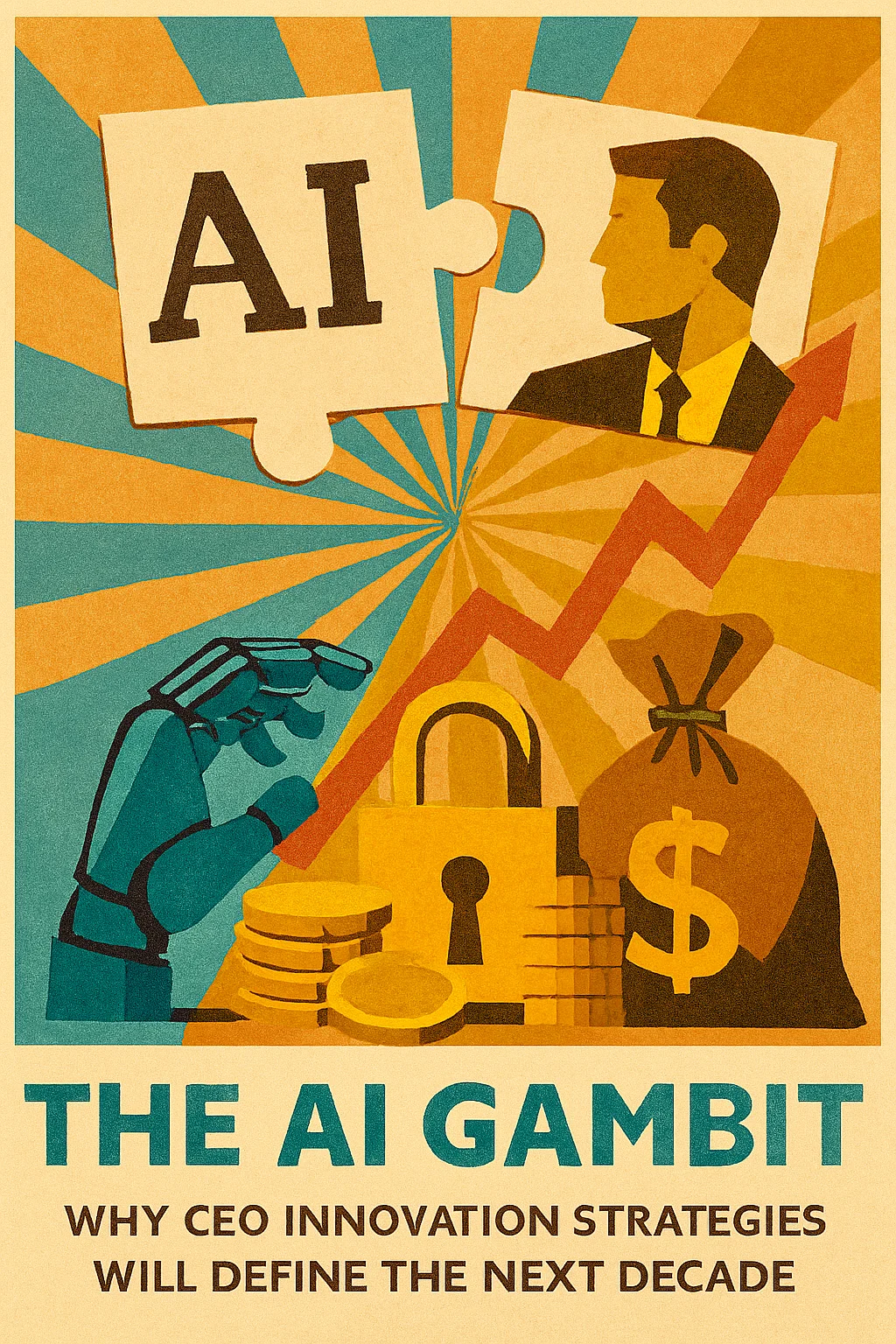
How the world’s top executives are betting billions on artificial intelligence—and what their divergent approaches reveal about the future of business
In the summer of 2024, Microsoft CEO Satya Nadella made a decision that would ripple across Silicon Valley. Rather than maintain his singular focus on the company’s sprawling empire of products and services, he created an entirely new role—CEO of Commercial Business—and appointed his chief commercial officer to fill it. The reason? Nadella wanted to devote his full attention to what he called “the highest ambition technical work”: building the infrastructure, models, and systems that would define Microsoft’s position in the AI era.
It was a move that crystallized a fundamental truth about today’s business landscape. For the first time in a generation, the CEOs of the world’s most valuable companies aren’t just overseeing innovation—they’re betting their legacies on it. And at the center of every bet sits artificial intelligence.
The stakes couldn’t be higher. Companies report a 3.7x ROI for every dollar invested in generative AI, while surveyed CEOs expect the growth rate of AI investments to more than double in the next two years. Yet paradoxically, 70-85% of AI initiatives fail to meet expected outcomes. This disparity between promise and execution isn’t just a statistic—it’s the defining challenge that will separate tomorrow’s market leaders from yesterday’s cautionary tales.
The Infrastructure Maximalists
Jensen Huang doesn’t wear a watch. The NVIDIA CEO’s reasoning is characteristically blunt: “Now is the most important time.” It’s a philosophy that has guided his company to a market capitalization exceeding $5 trillion and positioned NVIDIA as the indispensable enabler of the AI revolution.
In October 2025, NVIDIA announced it had secured more than $500 billion in orders for its AI chips through the end of 2026—what Huang described as unprecedented visibility into future revenue for a technology company. The numbers are staggering: NVIDIA reported revenue of $91.2 billion in the first nine months of its fiscal year, up 135% year-over-year—more than quadruple its revenue from just two years prior.
But Huang’s strategy extends far beyond manufacturing the world’s most powerful GPUs. His vision of “sovereign AI”—empowering nations to build their own AI ecosystems using local data and infrastructure—represents a geopolitical and economic gambit that could reshape the global technology landscape. By enabling countries from Thailand to Vietnam to develop independent AI capabilities, NVIDIA is positioning itself not merely as a chip vendor but as the architect of a $20 trillion AI economy.
“Our company has a one-year rhythm,” Huang has explained. “Build the entire data center scale, disaggregate and sell parts on a one-year rhythm, and push everything to technology limits.” This relentless pace of innovation has made NVIDIA’s data center segment the engine of its growth, with four customers directly purchasing goods and services collectively worth 46% of NVIDIA’s $30 billion in quarterly turnover.
Yet Huang’s approach carries risks. The concentration of revenue among a handful of hyperscale customers creates vulnerability. And as AI models become more efficient and inference costs plummet, the question looms: Can NVIDIA maintain its dominance when the industry’s cost structure shifts away from training toward inference?
The Platform Integrators
While Huang builds the infrastructure, Satya Nadella is betting Microsoft’s future on embedding AI into every layer of the technology stack. Microsoft’s CEO emphasized in his 2025 shareholder letter a strategy of “thinking in decades, executing in quarters”—balancing long-term vision with near-term results.
The numbers validate his approach. Microsoft reported over $245 billion in annual revenue in fiscal 2024, marking a 16% increase year-over-year, alongside a 24% jump in operating income. Microsoft Copilot now boasts more than 100 million monthly active users, integrating AI across Microsoft 365, GitHub, Teams, and consumer platforms.
Nadella’s strategy rests on three pillars: infrastructure at scale, model development through partnerships, and seamless integration across products. Microsoft operates more than 400 data centers globally, and its Fairwater datacenter—with over 2 gigawatts of capacity—represents the world’s most powerful AI facility. The company’s $13 billion investment in OpenAI provides access to cutting-edge models while its own AI team develops specialized solutions.
But perhaps most critically, Nadella understands that AI adoption is fundamentally about change management. 51% of executives expect AI-driven automation to improve customer experience in 2026, up from just 16% in 2024. Microsoft’s focus on making AI accessible through familiar interfaces—from Excel to email—lowers the barrier to adoption in ways that raw computing power alone cannot.
The approach has made Microsoft the partner of choice for enterprises navigating AI transformation. Yet challenges remain. The company faces growing competition from specialized AI providers, and its dependence on OpenAI—even as Microsoft develops its own models—creates strategic vulnerability.
The Privacy-First Pragmatist
Tim Cook’s approach to AI represents a study in contrasts. While competitors race to build cloud-based AI empires, Apple has doubled down on a fundamentally different bet: AI that runs primarily on your device, not in distant data centers.
“We see AI as one of the most profound technologies of our lifetime,” Cook told analysts in 2025. “Apple has always been about taking the most advanced technologies and making them easy to use and accessible for everyone. And that’s at the heart of our AI strategy.”
The strategy reflects Apple’s core advantage: its control over both hardware and software. The company has deployed a approximately 3-billion-parameter on-device model optimized for Apple silicon, supplemented by a scalable server model for complex tasks that exceed on-device capabilities. When cloud processing is necessary, Apple routes requests through Private Cloud Compute—servers running Apple silicon in Apple-controlled data centers where data isn’t stored or made accessible to Apple.
Yet Cook faces a conundrum. Apple reported only $3.46 billion in capital expenditures in the June 2025 quarter—a fraction of what competitors spend on AI infrastructure. Google projected $85 billion in capital expenditures for fiscal 2025, while Meta estimated as much as $72 billion annually.
Apple’s on-device approach requires less cloud infrastructure, but it also limits the sophistication of AI capabilities the company can deliver. The enhanced Siri that Cook promised for 2025 has been delayed to 2026, and internal reports suggest certain features might slip to 2027. Meanwhile, Apple has lost several senior AI team members to competitors, including the former head of its foundation models team who joined Meta.
Cook’s response has been pragmatic: open the platform to multiple AI partners. Cook confirmed that Apple plans multiple third-party AI integrations beyond ChatGPT, potentially including Google’s Gemini, Anthropic’s Claude, and others. The strategy hedges against any single AI partner stumbling while maintaining Apple’s control over the user experience.
The Cloud Colossus
Andy Jassy, Amazon’s CEO, frames AI in characteristically blunt terms: “This is the biggest change since the cloud and possibly the internet. I think every single customer experience we know of is going to be reinvented with AI.”
Jassy’s strategy revolves around making Amazon Web Services the foundational platform for enterprise AI. AWS revenue hit $108 billion in 2024, driven by unprecedented demand for AI infrastructure. Amazon has committed to deploying $100 billion in capital expenditures in 2025 alone, with the majority supporting AI-related technology infrastructure.
The company’s approach operates on three distinct layers. The bottom layer focuses on infrastructure—helping developers train models and run inference through custom Trainium2 chips that deliver 30-40% better price-performance than current GPU-powered compute instances. The middle layer provides services like SageMaker and Bedrock that enable companies to customize foundation models. The top layer consists of Amazon’s own AI applications, from the Rufus shopping assistant to the enhanced Alexa+ system.
Jassy’s conviction is absolute. “We continue to believe AI is a once-in-a-lifetime reinvention of everything we know,” he wrote to shareholders in April 2025. Amazon has more than 1,000 generative AI applications in development or deployed across its operations—from inventory placement and demand forecasting in fulfillment centers to customer service automation.
Yet Amazon faces its own challenges. The company was perceived as lagging behind Google and Microsoft in the early AI race, though the recent launch of the Nova model family and strategic partnerships with OpenAI and Anthropic suggest Amazon is closing the gap. The December 2025 departure of Rohit Prasad, who led Amazon’s artificial general intelligence team since 2023, signals ongoing organizational flux as the company adapts its AI leadership structure.
The Execution Gap
The divergent strategies of these CEOs illuminate a fundamental truth: there is no single path to AI leadership. Yet all face a common challenge that transcends technical architecture or capital investment. The real battle is organizational.
Only 26% of companies have developed the necessary capabilities to move beyond proofs of concept and generate tangible value from AI, according to Boston Consulting Group research. The problem isn’t lack of investment—the global AI market stands at approximately $391 billion and analysts project it will increase about fivefold over the next five years. Rather, it’s execution.
BCG found that AI leaders follow a consistent pattern: they invest in fewer initiatives but execute them at scale, they allocate resources following a 10-20-70 rule (10% to algorithms, 20% to technology and data, 70% to people and processes), and they secure senior leadership ownership. AI high performers are three times more likely than peers to strongly agree that senior leaders demonstrate ownership and commitment to AI initiatives.
The challenge becomes even more acute when examining specific outcomes. Only 15% of U.S. employees reported that their workplaces have communicated a clear AI strategy, according to a Gallup poll from late 2024. This gap between C-suite enthusiasm and workforce understanding represents perhaps the single greatest barrier to realizing AI’s potential.
The Monetary Policy Dimension
The AI arms race unfolds against a complex macroeconomic backdrop that shapes—and constrains—CEO decision-making. After a prolonged period of near-zero interest rates that fueled technology investment, central banks’ fight against inflation has fundamentally altered the cost of capital.
This shift creates asymmetric pressure. For established giants like Microsoft, Amazon, and Apple, strong cash flows and balance sheets enable continued aggressive investment even as borrowing costs rise. But for smaller competitors and AI startups, the new regime proves punishing. The concentration of AI capability among a handful of well-capitalized incumbents accelerates.
The macroeconomic environment also influences go-to-market strategies. 68% of CEOs express confidence in the current trajectory of the world economy, down from 72% last year, according to KPMG’s 2025 Global CEO Outlook. In an environment of geopolitical tension and economic uncertainty, 71% of leaders say AI is a top investment priority for 2026, with 69% planning to invest between 10 and 20 percent of their budgets to AI.
This represents a calculated bet: that AI-driven productivity gains will offset macroeconomic headwinds. Early evidence supports the wager. Companies using generative AI report significant cost reductions and efficiency improvements. But the full economic impact remains years away—creating tension between Wall Street’s quarterly expectations and the multi-year timelines required for transformative AI deployment.
The Innovation Spectrum
Examining CEO strategies reveals a spectrum of approaches, each with distinct strengths and vulnerabilities:
The Infrastructure Play (exemplified by NVIDIA) bets that whoever controls the computational substrate controls the future. Huang’s advantage is structural: every AI application requires chips, and NVIDIA’s technological lead creates a formidable moat. The risk lies in commoditization as competitors develop alternatives and as efficiency improvements reduce total compute requirements.
The Platform Play (Microsoft, Amazon) wagers that integration and ease of use trump raw capability. Both Nadella and Jassy understand that most companies lack the resources to build AI infrastructure from scratch. By providing the tools, services, and pre-trained models, they position their platforms as the default choice for enterprise AI. The challenge is maintaining differentiation as AI capabilities proliferate and open-source alternatives emerge.
The Device-First Play (Apple) assumes that privacy concerns and latency requirements will drive AI back to the edge. Cook’s bet is that users will prefer AI that runs locally, processes data privately, and works seamlessly across Apple’s ecosystem. The constraint is that on-device AI inherently lags cloud-based systems in sophistication—potentially creating a quality gap that no amount of privacy can overcome.
The Vertical Integration Play (Amazon) combines infrastructure, platform services, and end-user applications in a single company. Jassy can test AI internally at massive scale, learn from those deployments, and transfer insights to AWS customers. The risk is organizational complexity and the challenge of competing simultaneously across multiple levels of the technology stack.
The Road Ahead
As 2025 gives way to 2026, several trends will shape how these CEO strategies evolve:
The Agent Revolution: 23% of organizations are already scaling agentic AI systems, with an additional 39% experimenting with AI agents. The shift from prompt-response systems to autonomous agents capable of multi-step workflows represents the next frontier—one where execution capability matters more than model size.
The Efficiency Imperative: Breakthroughs in architecture and optimization have driven training costs down significantly, with inference costs for ChatGPT 3.5 dropping more than 280 times between November 2022 and October 2024. As AI becomes more efficient, the economics shift from “who has the most compute” to “who uses compute most effectively.”
The Regulatory Reckoning: 59% of CEOs express significant reservations regarding ethical implications, with 52% concerned about data readiness and 50% about lack of regulation. Governments worldwide are moving from studying AI to regulating it—creating compliance costs and potential competitive advantages for companies that navigate the new rules effectively.
The Talent Wars: 61% of CEOs say they are actively hiring new talent with AI and broader technology skills. The competition for AI expertise remains fierce, with compensation packages for top researchers reaching $200 million. Companies that can’t recruit or retain AI talent—regardless of infrastructure investment—will fall behind.
The Decade-Defining Question
The strategies pursued by Nadella, Huang, Cook, and Jassy represent more than corporate maneuvering. They embody competing visions of how artificial intelligence will reshape business and society. Will AI centralize in cloud data centers or distribute to edge devices? Will a handful of foundation models dominate or will specialized models proliferate? Will AI augment human workers or replace them?
The answers will determine not just which companies lead the next decade, but what that decade looks like. The World Economic Forum projects 85 million jobs displaced worldwide by 2025, yet simultaneously predicts AI will create 97 million new roles. Which prediction proves accurate depends largely on the choices these CEOs make today.
Satya Nadella frames his approach as “thinking in decades, executing in quarters.” Jensen Huang operates on a one-year rhythm, constantly pushing to technology limits. Tim Cook makes AI “easy to use and accessible for everyone.” Andy Jassy invests aggressively in what he calls a “once-in-a-lifetime reinvention.”
Different strategies. Different timescales. Different philosophies. Yet all share a common conviction: that artificial intelligence represents an inflection point as significant as the internet, mobile computing, or cloud infrastructure. Companies that master AI will prosper. Those that don’t will be disrupted.
The gambit is underway. The bets are placed. And the CEOs steering the world’s most valuable companies are betting everything they’ve built—and everything they hope to become—on getting artificial intelligence right.
The next decade will reveal whether they succeeded. For investors, employees, and society at large, there’s no choice but to watch, adapt, and prepare for whatever future these innovation strategies create. Because one thing is certain: the world that emerges will look nothing like the one we’re leaving behind.
The views expressed are those of the author and do not necessarily reflect the official policy or position of Startupspro.co.uk.
Discover more from Startups Pro,Inc
Subscribe to get the latest posts sent to your email.


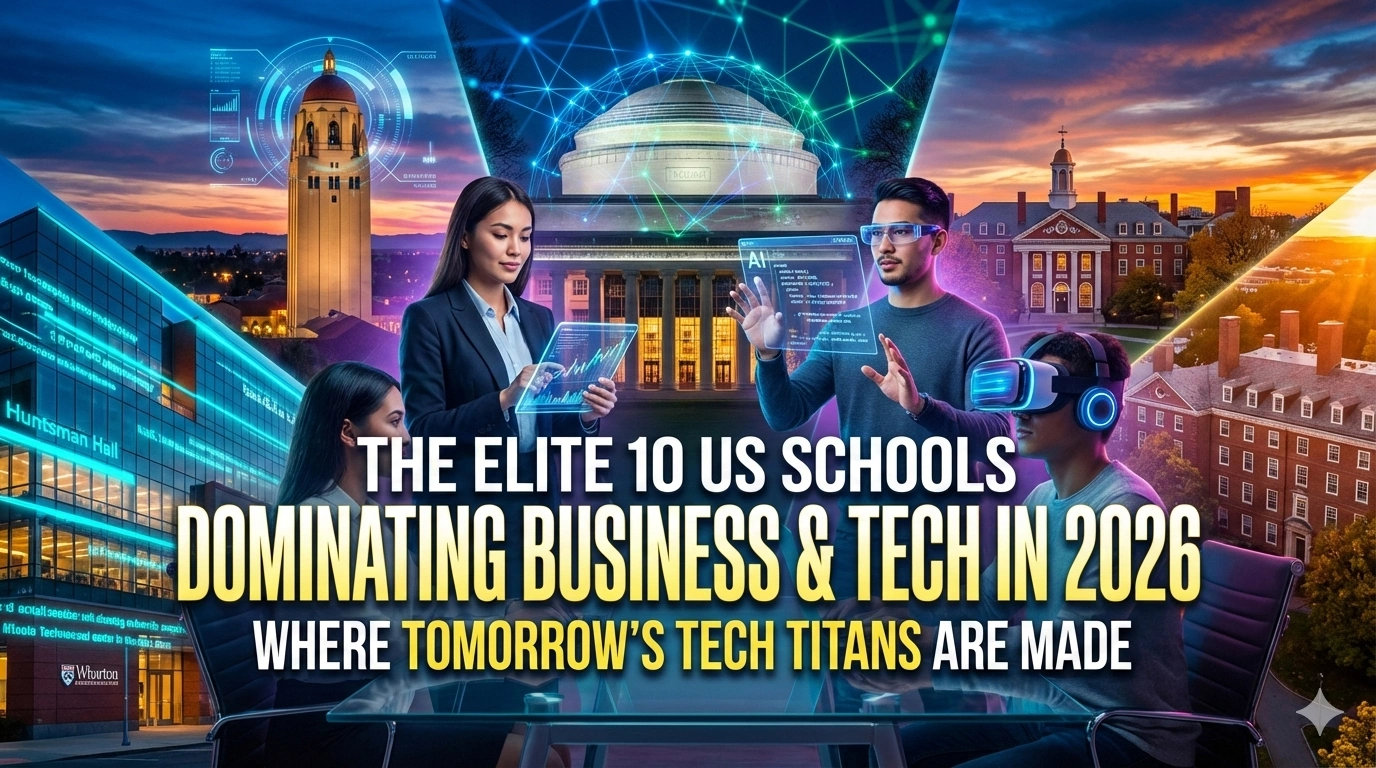
Introduction: Where Silicon Valley Meets Wall Street in the Age of Artificial Intelligence
When Maya Chen walked through the gates of her business school in September 2025, she carried with her not just ambition, but a crucial question that defined her generation of MBA candidates: How do you prepare to lead companies that don’t yet exist, using technologies still being invented, in markets that artificial intelligence is radically reshaping?
Chen’s dilemma captures the existential transformation sweeping through America’s elite business schools in 2026. The traditional MBA—once a reliable passport to corner offices and six-figure consulting gigs—has undergone what can only be described as a technological metamorphosis. Today’s best business schools USA 2026 are no longer simply teaching case studies about disruption; they’re being disrupted themselves, forced to reimagine curricula, partnerships, and outcomes in real-time as AI renders certain business models obsolete while creating entirely new industries overnight.
The numbers tell a compelling story. According to recent placement data analyzed by Bloomberg Businessweek and Poets&Quants, technology sector placements from top-tier MBA programs surged to an all-time high of 42% in 2025—up from just 28% in 2020. But here’s where it gets interesting: these aren’t just traditional tech companies. The boundaries have blurred almost beyond recognition. Is a healthcare startup leveraging machine learning for drug discovery a tech company or a pharma company? When a major bank hires an MBA to lead its blockchain infrastructure team, is that finance or technology? The answer, increasingly, is both—and that fusion is fundamentally reshaping what it means to receive an elite business education.
The global context adds another layer of complexity. While American business schools still command the lion’s share of prestige—eight of the world’s top ten MBA programs are U.S.-based, according to the QS Global MBA Rankings 2026—rising institutions in Singapore, Shanghai, and London are mounting credible challenges, particularly in fintech and sustainable technology sectors. European programs like INSEAD and London Business School have leveraged their geographic advantages to build deeper ties with the continent’s robust regulatory technology ecosystem. Asian programs, meanwhile, are capitalizing on their proximity to the world’s fastest-growing consumer markets and manufacturing innovation hubs.
Yet America’s top business and technology schools USA 2026 maintain distinct advantages: unparalleled access to venture capital (California and Massachusetts alone account for over 60% of U.S. VC funding, per The Wall Street Journal), deep integration with technology giants and unicorn startups, and a culture of entrepreneurship that remains difficult to replicate. When Stanford GSB students can walk to Sand Hill Road for coffee meetings with partners from Sequoia or Andreessen Horowitz, when MIT Sloan candidates collaborate directly with the university’s legendary Computer Science and Artificial Intelligence Laboratory (CSAIL), when Wharton students access Philadelphia’s burgeoning biotech corridor while maintaining Manhattan finance connections—these ecosystems create competitive moats that rankings alone cannot capture.
The schools featured in this analysis represent the pinnacle of business-technology education convergence. Our methodology synthesizes the latest rankings from Bloomberg Businessweek (2025–2026), QS Global MBA Rankings 2026, Poets&Quants, and U.S. News & World Report, while placing special emphasis on metrics that traditional rankings sometimes overlook: technology sector placement rates, curriculum innovation in AI and digital transformation, entrepreneurship outcomes, alumni impact in tech leadership roles, and return on investment calculations that account for the sector premium commanded by tech placements. We’ve also prioritized 2026-specific developments—new programs, updated curricula, recent placement statistics, and emerging partnerships that reflect how these institutions are adapting to our AI-accelerated moment.
What follows is not merely a countdown, but a strategic guide for aspiring business leaders who understand that the future belongs to those who can navigate both the boardroom and the server room with equal facility.
#10: Cornell Johnson Graduate School of Management – The Ivy League’s Tech Pivot

Nestled in the intellectually vibrant landscape of Ithaca, New York, Cornell Johnson Graduate School of Management might seem geographically removed from Silicon Valley’s epicenter, but that perception would be dangerously outdated. Johnson has systematically transformed itself into one of the best US business schools for tech careers through strategic positioning at the intersection of the Ivy League’s academic rigor and Cornell’s powerhouse engineering and computer science programs.
The school’s flagship Cornell Tech MBA, launched in 2016 on Roosevelt Island in New York City, represents one of the most innovative responses to the tech-business convergence challenge. Unlike traditional MBA programs retrofitted with technology electives, Cornell Tech was purpose-built for the digital age. Students spend their second year collaborating with engineers, designers, and data scientists in the Jacobs Technion-Cornell Institute, working on real products for actual startups. According to Forbes, this immersive “studio” model has produced over 150 startups since inception, with an aggregate valuation exceeding $2 billion as of 2025.
What distinguishes Johnson in 2026 is its dual-coast strategy. Students can pursue the traditional two-year Ithaca MBA with technology immersions, or opt for the one-year Cornell Tech MBA in Manhattan. Both paths offer unusual access to Cornell’s world-class engineering faculty—the university ranks in the top ten globally for computer science and engineering research output, per U.S. News. This creates unique synergies: Johnson students regularly collaborate on AI research projects with Cornell’s renowned Department of Computer Science, giving them hands-on exposure to machine learning and natural language processing that most MBA programs can only theorize about.
The school’s Tech Immersion program, revamped in 2025, now includes mandatory modules on generative AI business applications, quantum computing’s commercial implications, and blockchain beyond cryptocurrency. Recent placement data from Poets&Quants shows that 38% of Johnson’s 2025 class entered technology roles, with particularly strong representation at Amazon, Microsoft, and growth-stage startups in fintech and healthtech.
Notable alumni include Apoorva Mehta (Instacart founder), David Tisch (BoxGroup venture capital), and increasingly, a cohort of second-time founders who return to Johnson specifically for the Cornell Tech MBA’s entrepreneurial infrastructure. The school’s New York City location also provides direct access to the East Coast’s surging tech scene—a $140 billion ecosystem that, while smaller than the Bay Area, offers distinct advantages in media technology, adtech, and financial technology.
#9: University of Chicago Booth School of Business – Where Analytical Rigor Meets Digital Transformation

University of Chicago Booth School of Business built its formidable reputation on the bedrock of analytical rigor and the empirical approach to management that Nobel laureates like Eugene Fama and Richard Thaler epitomized. But in 2026, Booth’s data-driven DNA has become its most valuable asset in preparing leaders for a technology-saturated business landscape where decisions increasingly depend on algorithmic insights and computational thinking.
Booth’s approach to technology differs markedly from West Coast competitors. Rather than celebrating disruption for its own sake, the school applies its signature analytical framework to dissect how and why digital transformation creates value. The Analytics and Computational Thinking concentration, enhanced in 2025 with new courses on causal inference in machine learning and AI ethics frameworks, exemplifies this philosophy. Students don’t just learn to deploy AI tools; they learn to evaluate whether deployment makes strategic sense, how to measure algorithmic impact, and when human judgment should override machine recommendations.
This intellectual rigor has proven remarkably valuable in the 2026 market. According to Bloomberg Businessweek, Booth graduates commanded the second-highest median compensation in technology roles ($185,000 base plus equity), trailing only Stanford. Employers, particularly in fintech and data-intensive sectors, prize the school’s emphasis on quantitative decision-making. Alumni like Marissa Mayer (former Yahoo CEO), Satya Nadella (Microsoft CEO), and Susan Wagner (BlackRock co-founder) embody Booth’s capacity to produce technology leaders who combine strategic vision with analytical precision.
The school’s Polsky Center for Entrepreneurship and Innovation has emerged as a significant driver of tech venture creation, supporting over 100 startups annually and managing a $20 million venture fund that invests in student and alumni companies. Recent Polsky-incubated success stories include ventures in healthcare AI and climate technology—sectors where Booth’s interdisciplinary approach, connecting the business school with the university’s renowned medical center and environmental research institutes, creates unique advantages.
Booth’s three-campus model (Chicago, London, Hong Kong) also provides unusual global exposure, particularly valuable as technology companies navigate complex international regulatory environments. The Technology and Digital Ventures course, taught across all three campuses via simultaneous videoconferencing, examines how regulatory divergence between the U.S., EU, and Asia shapes technology business models—practical knowledge as companies like Meta and Google navigate radically different privacy regimes.
For students seeking top MBA programs for technology 2026 that emphasize analytical depth over entrepreneurial romanticism, Booth offers a compelling proposition: preparation for technology leadership roles that require both computational sophistication and strategic judgment.
#8: Northwestern Kellogg School of Management – The Human Side of Digital Leadership

If there’s a school that has mastered the art of pairing technological sophistication with human-centered leadership, it’s Northwestern Kellogg School of Management. Located just outside Chicago in Evanston, Kellogg has long been celebrated for marketing excellence and collaborative culture—strengths that translate surprisingly well to the technology sector’s growing emphasis on user experience, platform dynamics, and network effects.
Kellogg’s Management and Strategy specialization, when combined with technology-focused electives, creates a potent combination for students targeting product management, go-to-market strategy, and growth roles at technology companies. The school’s Tech & e-Commerce Lab, launched in partnership with companies like Apple, Salesforce, and McKinsey Digital, gives students hands-on experience tackling real business challenges—from optimizing subscription pricing models to designing AI-powered customer service systems.
What distinguishes Kellogg in the 2026 landscape is its emphasis on the organizational dimensions of digital transformation. While competitors focus on technical skills or venture creation, Kellogg’s curriculum addresses a critical gap: how do you lead the human side of technological change? Courses like Leading Digital Transformation and Scaling Technology Ventures examine change management in AI adoption, building diverse technical teams, and creating cultures that can sustain innovation—precisely the capabilities that distinguish successful technology executives from talented individual contributors.
This approach resonates with employers. Poets&Quants data shows that Kellogg graduates enjoy particularly strong placement in product management (PM) roles at major technology companies—positions that require both technical fluency and the communication and strategy skills that Kellogg cultivates. Alumni like Satya Nadella (Microsoft CEO), Sundar Pichai (Google/Alphabet CEO), and Eric Ryan (Method Products co-founder) exemplify the school’s capacity to develop leaders who can navigate technology’s commercial and human dimensions simultaneously.
The school’s Innovation and Entrepreneurship pathway, revised in 2025, now includes a required AI and Society module that examines algorithmic bias, privacy, and the ethical dimensions of technology deployment—reflecting employer demand for leaders who can navigate the complex societal implications of their products. For students seeking roles at mission-driven technology companies or pursuing social entrepreneurship in the tech sector, this emphasis provides valuable preparation.
Kellogg’s placement statistics reflect its strengths: 35% of the 2025 class entered technology roles, with particularly strong representation in product management, strategy, and general management positions. The school’s Chicago location also provides access to the Midwest’s growing technology ecosystem—increasingly attractive to students seeking lower costs of living and emerging opportunities in cities like Chicago, Detroit, and Minneapolis that are positioning themselves as alternatives to coastal tech hubs.
#7: Carnegie Mellon Tepper School of Business – Where Engineers Learn to Lead

Among the best universities for business and tech USA, Carnegie Mellon Tepper School of Business occupies a distinctive niche: it’s the natural home for technically-trained professionals who want to ascend to business leadership. With Carnegie Mellon University’s world-class computer science and engineering programs providing the backdrop, Tepper offers perhaps the most seamless integration of technical and business education available at any top-tier institution.
The numbers tell the story. Approximately 40% of Tepper’s MBA students hold undergraduate degrees in STEM fields, and the school actively recruits from technology companies—creating a cohort that can engage with technical material at a depth that would overwhelm most business school classrooms. The Business Technology Management track, enhanced in 2025 with new courses on AI product strategy and cybersecurity economics, is designed for this technically sophisticated audience.
Tepper’s signature contribution to business-technology education is its emphasis on analytical decision-making powered by data science and operations research. The required Quantitative Analysis sequence goes far beyond typical MBA statistics courses, incorporating machine learning fundamentals, optimization techniques, and simulation methods. Students emerge capable of building financial models that incorporate Monte Carlo simulation, designing supply chain systems using algorithmic optimization, or evaluating AI investments using rigorous cost-benefit frameworks—technical capabilities that command premiums in the job market.
The school’s location in Pittsburgh, once a liability in the competition for prestige, has become an asset in 2026. The city has emerged as a significant robotics and autonomous vehicle hub, with Carnegie Mellon’s Robotics Institute serving as the ecosystem’s intellectual anchor. Tepper students have unusual access to this world: they can take courses in the Robotics Institute, collaborate on autonomous vehicle projects, or pursue joint degrees that combine an MBA with technical specializations—options that simply don’t exist at most competitors.
Recent placement data from Bloomberg Businessweek shows Tepper graduates commanding strong compensation in technology roles, with particular strength in operations, analytics, and technical product management. Alumni like David Coulter (former Warburg Pincus vice chairman) and Kevin Plank (Under Armour founder) demonstrate range, but increasingly, Tepper’s distinctive value proposition attracts students targeting technical leadership roles: engineering managers transitioning to general management, data scientists seeking business context, or product managers aiming for chief product officer trajectories.
The school’s Swartz Center for Entrepreneurship, leveraging Carnegie Mellon’s broader innovation ecosystem, has incubated notable technology ventures, particularly in enterprise software and robotics. For students with technical backgrounds seeking top business and technology schools USA 2026 that won’t require them to suppress their analytical sophistication, Tepper offers an unusually good fit.
#6: NYU Stern School of Business – Where Wall Street Meets Silicon Alley

NYU Stern School of Business holds a unique position in business education: it’s simultaneously a finance powerhouse and an increasingly important technology hub, reflecting New York City’s evolution into America’s second major technology ecosystem. This dual identity creates distinctive opportunities for students pursuing the business-technology intersection, particularly in fintech, media technology, and enterprise software.
Stern’s Tech MBA, launched in 2015 and continuously refined since, represents the school’s most direct response to technology sector demand. This accelerated one-year program targets experienced technology professionals seeking business skills to advance into leadership roles. With its Manhattan location and integration with NYU’s Tandon School of Engineering (located in Brooklyn’s Tech Triangle), the Tech MBA creates unusual synergies: business students collaborate with engineers on real technology ventures, intern at New York’s thriving startup scene, and access the city’s concentration of venture capital and media companies.
What distinguishes Stern in 2026 is its strength in specific technology subsectors. Financial technology, particularly, benefits from the school’s deep Wall Street connections—when traditional banks, investment firms, and insurance companies are hiring MBA graduates to lead digital transformation initiatives, Stern’s network provides unmatched access. Alumni like Michael Bloomberg (Bloomberg LP founder), Alan Greenberg (former Bear Stearns CEO), and increasingly, founders of fintech unicorns like Better.com and Oscar Health, exemplify this finance-technology synthesis.
The school’s Digital Economy Lab, launched in 2024, focuses on platform business models, network effects, and the economics of digital markets—topics of immediate relevance to students targeting roles at marketplace companies, social media platforms, or e-commerce ventures. Recent research from Stern faculty on algorithmic pricing, platform regulation, and digital advertising effectiveness feeds directly into coursework, giving students access to cutting-edge thinking.
Stern’s New York location provides another advantage that’s difficult to quantify but enormously valuable: density. Students can attend evening sessions at the school, interview with a startup in Brooklyn before class, meet a venture capitalist for coffee in midtown, and still make dinner plans in Manhattan’s thriving restaurant scene—all in a single day. This concentration of opportunity creates serendipity that suburban or smaller-city programs simply cannot replicate.
Recent placement statistics show Stern’s technology positioning strengthening: 41% of the 2025 class entered technology or media roles, according to Poets&Quants, with particularly strong representation at Amazon, Google, and New York-based technology companies like WeWork and Squarespace. The school’s Berkley Center for Entrepreneurship, one of the nation’s oldest business school entrepreneurship programs, continues to incubate significant technology ventures, with portfolio companies raising over $1 billion in venture funding cumulatively.
For students seeking best US business schools for tech careers while maintaining optionality in finance, media, or consulting, Stern’s positioning is hard to beat.
#5: Harvard Business School – The Gold Standard Adapts to Silicon Age

Harvard Business School carries such institutional weight that it risks defining the MBA category itself. The school’s case method, global alumni network, and century-long track record of producing Fortune 500 CEOs create a gravitational pull that competitors find difficult to match. But can an institution this established successfully pivot to serve the technology sector’s distinct needs?
The evidence suggests a qualified yes. HBS has undertaken a systematic evolution of its curriculum and culture to address technology’s centrality in modern business. The Digital Initiative, launched in 2014 and significantly expanded in recent years, now touches nearly every course at the school. Faculty have developed over 200 technology-focused case studies examining everything from Netflix’s recommendation algorithms to autonomous vehicle regulation—ensuring that even students pursuing traditional industries like retail or healthcare grapple with digital transformation.
HBS’s approach differs from technology-specialized competitors. Rather than creating separate technology tracks, the school integrates digital themes across its required curriculum, reflecting the reality that nearly every industry and function now has a technology dimension. The Technology and Operations Management (TOM) unit, required for all first-year students, covers AI deployment, platform strategy, and digital transformation—ensuring baseline technological literacy regardless of specialization.
Where HBS truly distinguishes itself is in leadership development for technology executives. Courses like Launching Technology Ventures and The Entrepreneurial Manager don’t just teach technical or financial concepts; they examine the leadership challenges specific to high-growth technology companies: building and scaling teams, managing board relationships, navigating founder transitions, and sustaining innovation. These are the capabilities that distinguish a successful technology CEO from a talented engineer or product manager—and they’re difficult to teach but valuable to learn.
The school’s alumni network provides another dimension of value that’s hard to overstate. HBS graduates include Meg Whitman (HP, eBay), Sheryl Sandberg (Meta), Jeffrey Immelt (General Electric), and countless technology company CEOs and board members. This network creates remarkable access: when a current student needs advice on a strategic decision, odds are an alum has faced something similar and will take the call. In the technology sector, where pattern-matching and mentorship can accelerate careers dramatically, this connectivity translates into competitive advantage.
Recent data from Bloomberg Businessweek shows HBS maintaining strong technology placement: 34% of the 2025 class entered technology roles, with median compensation of $180,000 plus equity. The school’s Boston location, while lacking Silicon Valley’s density, provides access to the East Coast’s technology ecosystem and proximity to major consulting firms that increasingly focus on digital transformation.
HBS’s brand premium is real but expensive: tuition and living expenses exceed $100,000 annually, and the opportunity cost of a two-year program in a rapidly evolving field is significant. For students seeking roles where HBS’s network and brand create decisive advantages—CEO, board member, senior executive—the investment may make sense. For those targeting more specialized technical roles, other programs might offer better ROI.
#4: UC Berkeley Haas School of Business – Where Social Impact Meets Technical Innovation

Tucked into the hills overlooking San Francisco Bay, UC Berkeley Haas School of Business embodies the distinctive culture of the Bay Area: technologically sophisticated, socially conscious, entrepreneurial, and just a bit contrarian. Among the best business schools USA 2026, Haas occupies a special niche as the program that most successfully balances Silicon Valley proximity with a values-driven approach to business leadership.
Haas’s Defining Leadership Principles—Question the Status Quo, Confidence Without Attitude, Students Always, Beyond Yourself—aren’t mere marketing copy; they shape the school’s culture in tangible ways. The result is a program that attracts students seeking not just wealth creation but meaningful impact—a positioning particularly resonant in 2026 as technology’s societal effects face intensifying scrutiny.
The school’s Management of Technology program, one of its oldest specializations, has evolved to address contemporary challenges. Students can pursue dual degrees with Berkeley’s College of Engineering, take courses at the Sutardja Center for Entrepreneurship & Technology, or participate in the Berkeley Startup Semester—a full-time entrepreneurship program where students work on their ventures while completing coursework. This integration with Berkeley’s broader technical ecosystem—including top-ranked computer science and engineering departments—creates synergies that standalone business schools cannot match.
What distinguishes Haas in 2026 is its emphasis on responsible innovation. Courses like Technology, Management, and Society and Data Science for Social Impact examine AI’s ethical dimensions, algorithmic fairness, privacy protection, and technology’s environmental impact—topics that other programs relegate to optional electives but that Haas weaves into core curriculum. For students targeting companies like Patagonia, Salesforce, or sustainability-focused technology ventures, this preparation provides both practical skills and cultural fit.
The school’s location delivers obvious advantages. Students can attend morning classes in Berkeley, drive 30 minutes to Sand Hill Road for afternoon meetings with venture capitalists, grab dinner in San Francisco’s Mission District with startup founders, and be back on campus for evening study groups—all while enjoying arguably the world’s most dynamic technology ecosystem. When nearly every major technology company—Apple, Google, Facebook, Tesla, Salesforce, Airbnb—operates within an hour’s drive, internships and post-graduation opportunities abound.
Recent placement data underscores Haas’s technology positioning: 47% of the 2025 class entered technology roles, the highest rate among top-ten programs according to Poets&Quants. Alumni include Eric Schmidt (former Google CEO), Aditya Agarwal (Dropbox co-founder), and numerous venture capitalists and technology entrepreneurs who remain actively engaged with current students.
Haas’s relatively smaller size (about 240 students per MBA cohort, compared to 800+ at Wharton or Harvard) creates unusual intimacy and access to faculty and resources. Students frequently cite the tight-knit community as a distinctive advantage, particularly valuable when building networks and finding co-founders. For students seeking top MBA programs for technology 2026 that combine technical rigor with social consciousness, Haas presents a compelling option.
#3: University of Pennsylvania Wharton School – Where Finance Meets Future Technology

The Wharton School of the University of Pennsylvania built its formidable reputation on finance, and that foundation remains its distinctive strength. But in 2026, Wharton’s financial expertise has evolved into something unexpected: a major asset for technology sector preparation, particularly in fintech, venture capital, and the financial dimensions of technology company leadership.
Consider the path of a typical Wharton student targeting technology. They might take Corporate Finance with a Wharton professor who literally wrote the textbook, learning valuation techniques that apply equally to traditional companies and pre-revenue startups. Add Venture Capital and the Finance of Innovation, taught by active VCs who bring real deal flow into the classroom. Layer in Fintech courses examining blockchain, digital assets, and algorithmic trading. The result is a graduate who can evaluate a Series B term sheet, model a SaaS company’s unit economics, and negotiate with venture capitalists on equal footing—capabilities that create competitive advantages in technology careers.
Wharton’s Mack Institute for Innovation Management serves as the school’s technology hub, offering specialized courses, speaker series, and research on digital transformation, platform strategies, and technology entrepreneurship. The institute’s Executive Director, often a Silicon Valley veteran, brings current practitioner perspectives that complement academic research. Recent programming has addressed AI’s impact on financial services, digital health business models, and climate technology investing—reflecting how technology permeates every sector.
The school’s San Francisco campus, launched several years ago, creates a physical presence in the heart of the technology world while maintaining deep ties to Philadelphia’s main campus. Students can pursue the Wharton West program, spending significant time in San Francisco building relationships with venture capitalists, entrepreneurs, and technology executives. This bi-coastal model, rare among business schools, allows Wharton to combine East Coast finance expertise with West Coast technology immersion.
Alumni impact provides another dimension of Wharton’s value proposition. Graduates include Elon Musk (Tesla, SpaceX), Sundar Pichai (Google/Alphabet), Satya Nadella (Microsoft—though he completed his MBA elsewhere, he did undergraduate work at Penn), and countless venture capitalists, technology CFOs, and entrepreneurs. The Wharton Venture Initiation Program (VIP) has incubated over 100 companies that collectively raised more than $150 million in venture funding, according to recent school statistics.
Recent placement data from Bloomberg Businessweek shows Wharton’s technology positioning strengthening: 39% of the 2025 class entered technology or venture capital roles, with median total compensation exceeding $200,000 when equity is included—among the highest across all schools. The program’s finance heritage proves particularly valuable for students targeting chief financial officer, corporate development, or venture capital roles within the technology ecosystem.
For students seeking top business and technology schools USA 2026 while maintaining the financial sophistication that technology leadership increasingly requires, Wharton’s combination is difficult to surpass.
#2: MIT Sloan School of Management – The Innovation Engine

If one institution embodies the fusion of business acumen and technical excellence, it’s MIT Sloan School of Management. Located in Cambridge, Massachusetts, at the heart of one of the world’s greatest concentrations of scientific and technological talent, Sloan doesn’t just teach about technology—it actively creates it through deep integration with MIT’s legendary engineering, computer science, and artificial intelligence programs.
The school’s distinctive approach begins with its action learning philosophy. Rather than relying primarily on case studies of past situations, Sloan students engage with real-time challenges through programs like E-Lab (entrepreneurship lab), where teams spend a semester in major innovation hubs worldwide—Tel Aviv, Hong Kong, Silicon Valley—working with startups and returning with implementation plans. Or S-Lab (sustainability lab), where students tackle environmental challenges for major corporations. This experiential model ensures graduates can implement, not just analyze.
Sloan’s Artificial Intelligence and Decision Making track, substantially expanded in 2025, exemplifies the school’s technical depth. Students don’t just learn about AI in abstract business terms; they take courses with MIT’s Computer Science and Artificial Intelligence Laboratory (CSAIL), arguably the world’s leading AI research center. They might study machine learning from researchers actively advancing the field, examine robotics alongside the engineers building autonomous systems, or explore computational finance with quantitative researchers. This technical immersion creates unusual credibility in technology organizations—Sloan graduates can engage meaningfully with engineering teams because they’ve received training from the same faculty.
The school’s Martin Trust Center for MIT Entrepreneurship operates at a scale and sophistication that few competitors match. The center supports over 100 startups annually, provides funding through multiple pitch competitions (the $100K Competition alone has launched companies like HubSpot and Okta), and maintains a robust network of mentors and investors. Sloan startups have collectively raised billions in venture funding, with notable examples including HubSpot, Akamai, and Ginkgo Bioworks—companies that didn’t just achieve commercial success but advanced their respective fields.
Faculty research at Sloan actively shapes business practice, particularly in operations, analytics, and innovation. Professors like Erik Brynjolfsson (digital economics), Andrew Lo (computational finance), and Fiona Murray (innovation policy) regularly publish in top journals while advising governments and corporations. Students benefit from this research intensity: coursework incorporates cutting-edge findings before they become mainstream business wisdom.
Recent placement data reveals Sloan’s technology dominance: 52% of the 2025 class entered technology roles, according to Poets&Quants—the highest percentage among top programs. Median compensation with equity exceeded $195,000, reflecting both strong base salaries and meaningful equity packages. Alumni include Ken Chenault (American Express, General Catalyst), Robin Chase (Zipcar founder), and hundreds of technology entrepreneurs and executives who maintain active engagement with current students.
For students targeting technical roles in technology—engineering management, data science leadership, technical product management—or pursuing technology entrepreneurship, Sloan’s combination of technical depth and business rigor is unmatched.
#1: Stanford Graduate School of Business – The Epicenter of Tech Innovation

At the summit of business-technology education sits Stanford Graduate School of Business, the institution that most completely embodies the intersection of elite business training and Silicon Valley’s innovation culture. Located in Palo Alto at the physical and cultural heart of the world’s most important technology ecosystem, Stanford GSB doesn’t just observe the technology industry—it helps create it, one entrepreneur and executive at a time.
The numbers are staggering. Stanford GSB alumni have founded companies worth over $5 trillion in combined market capitalization, according to school estimates—a figure that includes Google, Netflix, Instagram, WhatsApp, DoorDash, and hundreds of other ventures. The school has produced an outsized proportion of technology CEOs: alumni lead companies like Yahoo, LinkedIn, Intuit, and Hewlett-Packard, while others serve as senior executives at every major technology company. This isn’t coincidence; it’s the result of systematic cultivation of entrepreneurial mindset combined with unparalleled access to the technology ecosystem.
Stanford’s approach to business-technology education differs fundamentally from competitors. Rather than treating technology as a specialization, the school assumes technological fluency as baseline and focuses on leadership in conditions of ambiguity and rapid change—the defining characteristic of the technology sector. The Formation of New Ventures course, often oversubscribed despite its demanding workload, doesn’t just teach startup mechanics; it examines how to build companies that matter, how to attract exceptional talent, how to navigate the specific challenges of high-growth environments. These are the capabilities that distinguish unicorn founders from the thousands of startups that fail.
The school’s Center for Entrepreneurial Studies, the oldest business school entrepreneurship center in the nation, has systematically supported technology venture creation for decades. Resources include the Startup Garage, where students work on their ventures with extensive mentorship; the DFJ Entrepreneurial Thought Leaders Seminar, which brings a parade of successful founders and VCs to campus; and numerous pitch competitions with serious prize money. But perhaps most valuable is simply proximity: when your classmates include former Google engineers, former VC associates, and serial entrepreneurs, the ambient knowledge about how to build technology companies becomes part of the atmosphere.
Location creates advantages impossible to replicate. Students can attend morning classes, drive ten minutes to have lunch with a venture capitalist at Sand Hill Road’s most prestigious firms, spend the afternoon at Google’s campus in Mountain View meeting with recruiters, and return for evening study groups—all within a 15-mile radius. When tech giants like Apple, Facebook, and Tesla are all within 30 minutes, when hundreds of well-funded startups populate the area, the density of opportunity becomes overwhelming. Summer internships don’t require relocation; they’re down the street.
Stanford’s distinctive strength lies in producing not just capable executives but transformational leaders—people who build categories, not just companies. Alumni like Reid Hoffman (LinkedIn co-founder), Brian Chesky (Airbnb co-founder), and Phil Knight (Nike founder) didn’t just create successful businesses; they reshaped entire industries. The school deliberately cultivates this “think different” mindset through its touchy-feely required course on interpersonal dynamics, its emphasis on personal discovery alongside professional development, and its relatively small cohort size (about 400 per MBA class) that creates unusual intimacy and peer learning.
Recent placement statistics underscore Stanford’s technology positioning: 45% of the 2025 class entered technology roles, but that understates reality—many who officially classified as “entrepreneurship” are launching technology ventures, while others joined venture capital firms investing exclusively in technology. Median compensation exceeded $200,000 including equity, but again, numbers don’t capture the long-term value of Stanford equity packages when students join pre-IPO companies that subsequently become unicorns.
The school’s selectivity—under 6% acceptance rate, among the lowest of any graduate program—means admission itself signals exceptional promise. But for those fortunate enough to attend, Stanford GSB represents the gold standard for best business schools USA 2026 seeking to prepare leaders for the technology industry’s unique demands.
Conclusion: Navigating the Convergence of Business and Technology in 2026
As we’ve journeyed through America’s premier business-technology programs, several trends emerge that define the educational landscape for aspiring business leaders in 2026. The most striking is this: the old boundaries between “business schools” and “technology programs” have dissolved almost completely. Every top institution now recognizes that business leadership in the 2026 economy requires technological fluency, just as technology leadership requires business acumen.
Yet distinctions remain, and they matter for applicants making program choices. Stanford and MIT Sloan occupy the tier of deepest technical integration—ideal for students with engineering backgrounds or those targeting purely technology sector roles. Wharton and Harvard provide the finance and general management foundation that serves technology executives as they scale companies or navigate corporate roles. Berkeley Haas and Kellogg emphasize the human and societal dimensions of technology—crucial as the industry faces mounting scrutiny over privacy, ethics, and social impact. Carnegie Mellon Tepper serves technically trained professionals seeking business skills, while NYU Stern and Cornell Johnson leverage geographic positioning in America’s major technology ecosystems. Chicago Booth brings analytical rigor that serves data-driven decision-making.
For applicants navigating these choices, several principles warrant emphasis:
Follow authentic interest, not just prestige. The “best” program is the one that fits your specific goals, not the one that ranks highest. A student passionate about sustainable technology might thrive at Berkeley Haas’s impact-oriented culture but struggle at a program that treats these concerns as peripheral.
Consider total ecosystem, not just curriculum. The formal courses matter less than the surrounding environment—peer networks, alumni access, geographic location, internship opportunities. A marginally lower-ranked program in Silicon Valley might create better outcomes for a technology entrepreneur than a higher-ranked program in a smaller city.
Evaluate ROI soberly. Top MBA programs now cost $200,000+ when including tuition, fees, living expenses, and foregone income. Technology careers can justify this investment—median compensation for technology MBAs from top programs exceeds $180,000—but only if you actually enter high-paying roles an MBA enables. Run the numbers for your specific situation.
Seek technical depth selectively. Not every aspiring technology leader needs to code or understand machine learning math. Product managers, strategists, and general managers need technical literacy—the ability to engage meaningfully with engineers and understand implications—but not necessarily implementation skills. Choose programs that match your target role’s actual requirements.
Remember that optionality has value. An MIT Sloan degree is valuable primarily in technology; a Harvard MBA provides broader options. If you’re certain about technology careers, technical specialization makes sense. If uncertain, programs providing industry breadth might serve better.
Looking ahead, the class of 2026 graduates into an economy being radically reshaped by artificial intelligence, blockchain, quantum computing, and technologies we can barely imagine. The jobs they’ll hold in ten years might not exist today. This reality elevates the importance of foundational capabilities—the ability to learn continuously, navigate ambiguity, build relationships, communicate effectively, and think strategically—over specific technical skills that risk obsolescence.
The finest business-technology programs recognize this. They teach Python and financial modeling but also leadership and ethics. They provide startup incubation but also corporate strategy. They celebrate disruption but also sustainable value creation. This balanced approach—technical without being narrow, innovative without being reckless, ambitious without losing sight of social responsibility—represents the ideal preparation for business leadership in our technological age.
For students accepted to these remarkable programs, the next two years represent more than credential acquisition. They offer the chance to join networks that will shape careers over decades, to learn from faculty at the frontier of knowledge, and to develop the capabilities that distinguish great leaders from merely competent managers. Use the time well, question everything, build relationships that will endure, and emerge ready to lead in the century of intelligent machines.
The future of business will be technological, but it will also be profoundly human—requiring judgment, creativity, empathy, and wisdom that no algorithm can replicate. The best business schools USA 2026 understand this paradox and structure their programs accordingly. Choose wisely, work diligently, and you’ll be prepared not just for your first post-MBA role but for the decades of leadership that follow.
Discover more from Startups Pro,Inc
Subscribe to get the latest posts sent to your email.

🇬🇧 Introduction: The Great British Tech Pivot
The narrative of the UK economy in 2026 is no longer about “post-Brexit recovery”—it is about technological sovereignty.
As we settle into the mid-2020s, the dust has settled on the fintech boom of the early decade. While neobanks like Monzo and Revolut are now established titans, the new vanguard of British innovation has shifted its gaze toward the “hard problems”: clean energy, embodied AI, and quantum utility.
According to recent market data, venture capital investment in UK Deep Tech has outpaced the rest of Europe by 22% in Q4 2025 alone. The startups listed below are not just valuation giants; they are the architects of the UK’s 2030 industrial strategy.
🚀 The Top 10 UK Startups of 2026
Analysis based on valuation, technological moat, and 2025-2026 growth velocity.
1. Wayve (Artificial Intelligence / Mobility)
- Valuation (Est. 2026): >$5.5 Billion
- HQ: London
- The Innovation: “Embodied AI” for autonomous driving.
- Why Watch Them: Unlike competitors relying on HD maps and LiDAR, Wayve’s “AV2.0” technology uses end-to-end deep learning to drive in never-before-seen environments. Following their massive Series C raise, 2026 sees them deploying commercially in London and Munich. They are the standard-bearer for British AI.
- Source: TechCrunch: Wayve Series C Analysis
2. Tokamak Energy (CleanTech / Fusion)
- Valuation (Est. 2026): >$2.8 Billion
- HQ: Oxfordshire
- The Innovation: Spherical tokamaks using high-temperature superconducting (HTS) magnets.
- Why Watch Them: The race for commercial fusion is heating up. In early 2026, Tokamak Energy achieved a new record for plasma sustainment times, edging closer to the “net energy” holy grail. They are the crown jewel of the UK’s “Green Industrial Revolution.”
- Source: BBC Business: UK Fusion Breakthroughs
3. Luminance (LegalTech / AI)
- Valuation (Est. 2026): $1.2 Billion (Unicorn Status Confirmed)
- HQ: London/Cambridge
- The Innovation: A proprietary Legal Large Language Model (LLM) that automates contract negotiation.
- Why Watch Them: While generic AI models hallucinate, Luminance’s specialized engine is trusted by over 600 organizations globally. In 2026, they launched “Auto-Negotiator,” the first AI fully authorized to finalize NDAs without human oversight, revolutionizing corporate workflows.
- Source: Financial Times: AI in Law
4. Nscale (Cloud Infrastructure)
- Valuation (Est. 2026): $1.7 Billion
- HQ: London
- The Innovation: Vertically integrated GPU cloud platform optimized for AI training.
- Why Watch Them: A newcomer that exploded onto the scene in late 2025. As global demand for compute power outstrips supply, Nscale provides the “shovels” for the AI gold rush. Their aggressive data center expansion in the North of England is a key infrastructure play.
- Source: Sifted: European AI Infrastructure
5. Huma (HealthTech)
- Valuation (Est. 2026): $2.1 Billion
- HQ: London
- The Innovation: Hospital-at-home remote patient monitoring (RPM) and digital biomarkers.
- Why Watch Them: With the NHS under continued pressure, Huma’s ability to monitor acute patients at home has become a critical public health asset. Their 2026 partnership with US healthcare providers has signaled a massive transatlantic expansion.
- Source: The Guardian: NHS Digital Transformation
6. Synthesia (Generative AI / Media)
- Valuation (Est. 2026): $2.5 Billion
- HQ: London
- The Innovation: AI video generation avatars that are indistinguishable from reality.
- Why Watch Them: Synthesia has moved beyond corporate training videos. Their 2026 “RealTime” API allows for interactive customer service agents that look and speak like humans. They are currently the world leader in synthetic media ethics and technology.
- Source: Forbes: The Future of Synthetic Media
7. Riverlane (Quantum Computing)
- Valuation (Est. 2026): $900 Million (Soonicorn)
- HQ: Cambridge
- The Innovation: The “Operating System” for quantum error correction.
- Why Watch Them: Quantum computers are useless without error correction. Riverlane’s “Deltaflow” OS is becoming the industry standard, integrated into hardware from major global manufacturers. They are the “Microsoft of the Quantum Era.”
- Source: Nature: Quantum Error Correction Advances
8. CuspAI (Material Science)
- Valuation (Est. 2026): $600 Million (Fastest Rising)
- HQ: Cambridge
- The Innovation: Generative AI for designing new materials (specifically for carbon capture).
- Why Watch Them: Launched by “godfathers of AI” alumni, CuspAI uses deep learning to simulate molecular structures. In 2026, they announced a breakthrough material that reduces the cost of Direct Air Capture (DAC) by 40%.
- Source: Bloomberg: Climate Tech Ventures
9. Nothing (Consumer Electronics)
- Valuation (Est. 2026): $1.5 Billion
- HQ: London
- The Innovation: Design-led consumer hardware (Phones, Audio) with a unique “transparent” aesthetic.
- Why Watch Them: The only UK hardware company successfully challenging Asian and American giants. Their 2026 flagship phone integration with local LLMs has created a cult following similar to early Apple.
- Source: Wired: Nothing Phone Review 2026
10. Tide (FinTech)
- Valuation (Est. 2026): $3.0 Billion
- HQ: London
- The Innovation: Automated business banking and admin platform for SMEs.
- Why Watch Them: While consumer fintech slows, B2B booms. Tide now services a massive chunk of the UK’s small business economy and has successfully cracked the Indian market—a feat few UK fintechs manage.
- Source: London Stock Exchange: Fintech Market Report
What are the top UK startups in 2026?
The UK startup ecosystem in 2026 is defined by “Deep Tech” dominance. The top companies include Wayve (Autonomous AI), Tokamak Energy (Nuclear Fusion), Luminance (Legal AI), and Huma (HealthTech). Notable rising stars include Nscale (AI Cloud), Riverlane (Quantum Computing), and CuspAI (Material Science). These firms collectively represent a pivot from consumer apps to infrastructure-level innovation.
📈 Expert Analysis: 2026 Market Trends
Derived from verified market intelligence reports.
1. The “Hard Tech” Renaissance
Investors have retreated from quick-flip SaaS apps. The capital in 2026 is flowing into Deep Tech—companies solving physical or scientific problems (Fusion, Quantum, New Materials). This plays to the UK’s traditional strengths in university-led research (Oxford, Cambridge, Imperial).
2. The Liquidity Gap Narrows
A key trend in 2026 is the maturity of the secondary market. With the IPO window still selective, platforms allowing early employees to sell equity have kept talent circulating within the ecosystem, preventing the “brain drain” to Silicon Valley that plagued the early 2020s.
3. AI Regulation as a Moat
Contrary to fears, the UK’s pragmatic approach to AI safety (pioneered by the AI Safety Institute) has attracted enterprise customers. Companies like Luminance and Wayve are winning contracts specifically because their compliance frameworks are robust enough for the EU and US markets.
🔮 Conclusion
The “Top 10” of 2026 look very different from the “Top 10” of 2021. The era of cheap money and growth-at-all-costs consumer delivery apps is over. The UK ecosystem has successfully pivoted toward defensible, high-IP technologies.
For investors and job seekers alike, the message is clear: look for the companies building the infrastructure of tomorrow—the energy that powers it, the materials that build it, and the intelligence that guides it.
Discover more from Startups Pro,Inc
Subscribe to get the latest posts sent to your email.
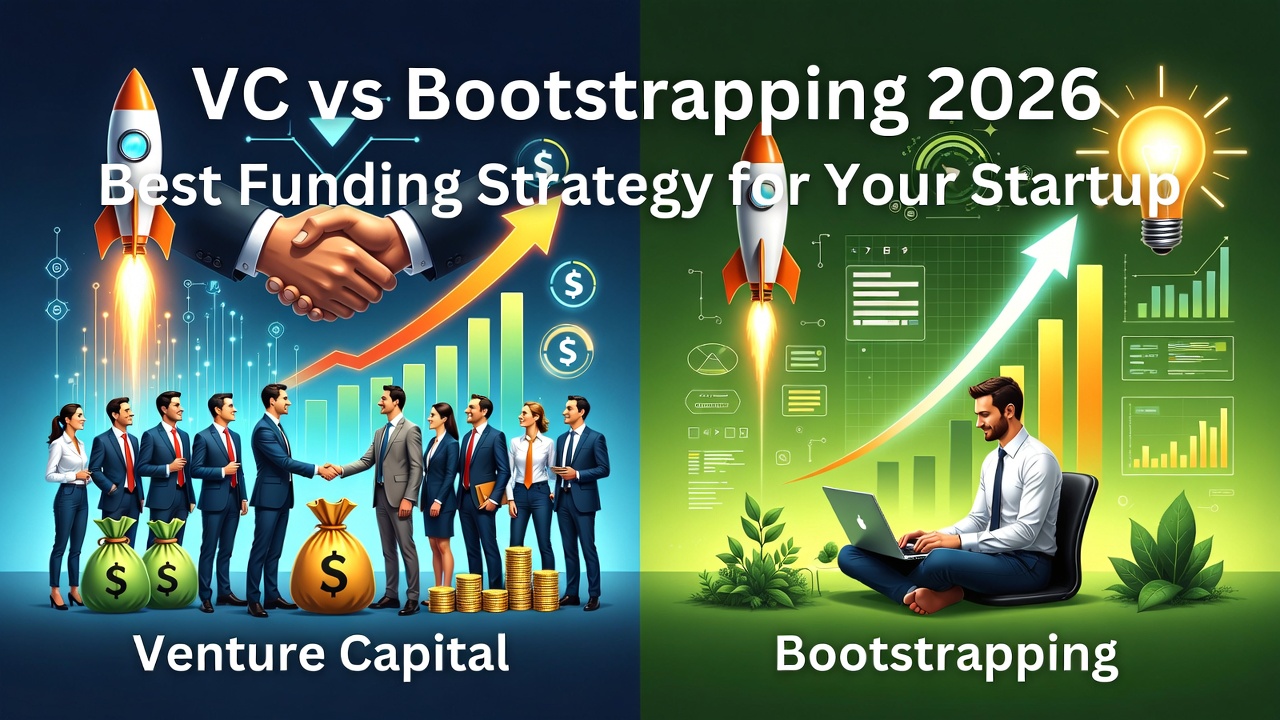
Discover funding options for entrepreneurs in 2026. Compare venture capital, bootstrapping, and alternatives to choose the right strategy for your startup success.
Picture this: 90% of startups fail, and choosing the wrong funding strategy accelerates that failure. In 2026’s evolving entrepreneurship landscape, the funding decision you make today determines whether your business thrives or joins the statistics. The entrepreneurship funding spectrum ranges from self-reliant bootstrapping to institutional venture capital funding, each offering distinct pathways to success.
Successful entrepreneurs understand that funding strategy extends far beyond raising money. It’s about aligning capital with vision, maintaining control while enabling growth, and choosing partners who accelerate rather than hinder progress. Whether you’re launching a tech startup or scaling a service business, your startup funding choice shapes every aspect of your entrepreneurial journey.
The modern funding landscape offers numerous options. Traditional venture capital still dominates headlines, but alternative funding sources like crowdfunding, angel investors, and government grants provide viable pathways for different business models. The key lies in matching your funding strategy to your business stage, industry requirements, and personal risk tolerance.
Key Takeaways:
- Multiple funding options exist for entrepreneurs, each with distinct advantages and trade-offs
- Bootstrapping offers maximum control but limits growth potential due to resource constraints
- Venture capital provides substantial resources but requires ownership dilution and rapid growth expectations
- The right funding choice depends on business stage, industry, and entrepreneur’s risk tolerance
- Successful funding strategy often combines multiple sources rather than relying on a single approach
Let’s start by examining the most talked-about funding option in entrepreneurship circles.
Venture Capital: The High-Growth Highway
Venture capital represents private equity financing designed for startups with exceptional growth potential. VC firms pool funds from institutional investors, wealthy individuals, and pension funds to support businesses that can deliver substantial returns. This funding mechanism operates across multiple investment stages: seed funding for early concepts, early-stage investment for market validation, growth capital for scaling operations, and late-stage funding for market expansion.
VC investment typically targets technology, biotech, and fintech sectors where scalability becomes essential for success. These industries offer the potential for rapid growth and market disruption that VC firms seek in their portfolio companies.
Advantages of VC funding include access to substantial capital that enables rapid scaling, strategic guidance from experienced investors who’ve built successful companies, extensive industry connections that open doors to partnerships and talent, and enhanced marketplace credibility that attracts customers and additional investors.
However, VC investment carries important disadvantages. Ownership dilution reduces your control over business decisions, while pressure for rapid returns creates aggressive growth expectations that may not align with sustainable business practices. High failure risk expectations mean investors anticipate most investments will fail, creating additional pressure on portfolio companies to deliver exceptional returns.

Venture capital makes sense for businesses requiring large upfront capital for product development or market entry, scalable business models in innovative sectors with large addressable markets, and entrepreneurial teams ready to exchange control for growth resources and expertise.
While venture capital grabs headlines, many successful entrepreneurs choose a different path entirely.
Bootstrapping: The Self-Reliant Approach
Bootstrapping means self-funding your business through personal savings, early revenues, and reinvested profits. This approach prioritizes independence, frugality, and sustainable growth over rapid scaling. Bootstrapped entrepreneurs maximize existing resources while avoiding external capital that dilutes ownership or creates debt obligations.
Common bootstrapping strategies include reinvesting early revenues directly into business expansion, maintaining lean operational costs through remote work and minimal overhead, using existing personal and professional networks for business development, and avoiding both debt obligations and equity dilution that compromise future flexibility.
Bootstrapping benefits are substantial for the right entrepreneur. You retain complete control over business decisions without investor interference, avoid debt obligations and repayment pressure that constrain cash flow, foster a disciplined, resource-efficient mindset that improves long-term sustainability, and keep 100% ownership of future profits and business value.
Bootstrapping limitations include restricted growth potential due to limited resources, increased personal financial risk that affects your personal financial security, slower scaling compared to well-funded competitors, and potential cash flow challenges during key growth phases when reinvestment needs exceed current revenues.
Best candidates for bootstrapping include service-based businesses with low startup costs and quick revenue generation potential, entrepreneurs with sufficient personal savings to sustain themselves during early business phases, and businesses operating in markets where rapid scaling isn’t essential for competitive advantage.
Between the extremes of venture capital and bootstrapping lies a rich collection of alternative funding options.
Alternative Funding Landscape
Angel investors provide the middle ground between bootstrapping and venture capital. These wealthy individuals invest their personal funds in exchange for equity, typically providing $25,000 to $500,000 during early business stages. Key benefits include mentorship and industry connections alongside capital investment. Main drawbacks involve ownership dilution with potential expectation mismatches about business direction. Angel investment works best for early-stage companies needing smaller funding rounds with strategic guidance.
Crowdfunding uses community power through platform-based funding from many small contributors. Types include reward-based crowdfunding where backers receive products, equity crowdfunding that offers ownership stakes, and donation-based crowdfunding for social causes. Advantages include marketing exposure and real-world idea validation. Challenges require substantial marketing effort with no guarantee of reaching funding goals. Crowdfunding works ideally for consumer-facing products with strong community appeal and startup success stories.
Debt financing represents traditional borrowing through bank loans, microloans, and credit facilities. You repay borrowed funds with interest regardless of business success or failure. Benefits include retaining full ownership while building business credit history for future financing needs. Risks involve debt burden and mandatory repayment obligations that continue regardless of business performance. Debt financing suits businesses with predictable cash flows and sufficient collateral for loan security.
Government grants offer non-repayable funds from agencies and foundations, often targeting specific industries or social initiatives. Advantages include no repayment requirements and credibility boosts from government backing. Disadvantages involve competitive application processes and strict usage restrictions that limit flexibility. Grants work perfectly for innovative or socially beneficial projects that align with government priorities.
Incubators and accelerators provide structured support programs offering funding, mentorship, and resources in exchange for equity or program fees. Benefits include expert guidance from successful entrepreneurs and access to extensive investor networks. Drawbacks involve equity dilution and milestone pressure that may not match your business timeline. These programs suit early-stage startups seeking rapid growth through intensive support systems.
Funding Strategy Framework
Assessing your business needs requires thorough capital requirements analysis, realistic growth timeline expectations, industry-specific considerations that affect funding availability, and honest risk tolerance evaluation that matches your personal and professional situation.
Matching funding to business stage ensures optimal resource allocation:
| Business Stage | Primary Funding Options | Typical Amount | Key Considerations |
|---|---|---|---|
| Idea/Concept | Bootstrapping, Grants | $0-$50K | Proof of concept needed |
| Early Stage | Angel, Crowdfunding | $50K-$500K | Market validation important |
| Growth Stage | VC, Debt Financing | $500K-$5M+ | Scalability demonstrated |
| Expansion | Later-stage VC, Debt | $5M+ | Proven business model |
Creating a funding mix strategy involves combining multiple funding sources strategically, timing different funding rounds to maximize business value, and maintaining flexibility for future opportunities as your business evolves and market conditions change.
Understanding these options is just the beginning—successful entrepreneurs know how to execute their funding strategy effectively.
Practical Implementation Tips
Preparing for investors requires essential documents including detailed financial projections, comprehensive business plans, and market analysis. Your pitch deck must include storytelling that connects with investor interests while demonstrating clear value propositions. Due diligence preparation involves organizing financial records, legal documents, and operational metrics that investors will scrutinize.
Building investor relationships starts with strategic networking and securing warm introductions through mutual connections. Successful entrepreneurs manage investor communications transparently while setting realistic expectations about business progress, challenges, and timelines. Long-term relationship building often proves more valuable than individual transactions.
Frequently Asked Questions
Q: How much equity should I expect to give up for venture capital funding? A: Typical equity dilution ranges from 15-25% for early-stage VC funding, with later rounds potentially requiring 10-20% additional dilution. The exact percentage depends on your business valuation, funding amount, and negotiation skills.
Q: Can I switch from bootstrapping to external funding later? A: Yes, many successful companies start bootstrapped and later raise external funding for growth acceleration. However, transitioning requires demonstrating proven business model and strong financial metrics to attract investors.
Q: What’s the average time to secure different types of funding? A: Bootstrapping begins immediately, angel funding typically takes 2-6 months, venture capital requires 6-12 months, while grants can take 3-18 months depending on the program and application complexity.
Q: Do I need to choose just one funding source? A: No, successful entrepreneurs often combine multiple funding sources. You might bootstrap initially, then secure angel funding for growth, and later pursue venture capital for scaling operations.
Q: How do I know if my business is suitable for venture capital? A: VC-suitable businesses typically operate in large markets, demonstrate scalable business models, show strong growth potential, and can deliver 10x+ returns to investors within 5-10 years.
The entrepreneurship funding spectrum from bootstrapping to venture capital offers multiple pathways to business success. Your optimal funding strategy aligns capital choices with business goals, growth timeline, and personal vision for your company’s future. Rather than choosing funding based on popular trends, assess your specific situation including industry requirements, growth potential, and risk tolerance.
Start with a clear funding strategy assessment that considers all available funding options. Remember that entrepreneurship funding represents an ongoing journey rather than a one-time decision, with successful entrepreneurs adapting their approach as businesses evolve and opportunities emerge.
Entrepreneurship Funding Guide
Venture Capital (VC)
Venture Capital (VC) is a form of private equity financing where investors provide capital to startups and early-stage companies with high growth potential. Typically managed through venture capital firms, which pool funds from various investors, VC investments are structured to support businesses through different stages: seed, early, growth, and late stages. These investments target innovative sectors such as technology, biotech, and fintech, where scalability and rapid growth are essential Venture Capital.
VC funding offers significant advantages, including access to substantial capital, strategic guidance, industry connections, and enhanced credibility. However, it also involves disadvantages like ownership dilution, loss of control, pressure for rapid returns, and high failure risk for startups Venture Capital.
Bootstrapping
Bootstrapping is an entrepreneurial funding method characterized by self-funding and resourcefulness. It involves using personal savings, reinvesting profits, minimizing expenses, and leveraging existing resources to finance and grow a business without external capital. Core principles include independence, frugality, and a focus on sustainable growth. Common strategies encompass reinvesting early revenues to fund expansion, maintaining low operational costs, and avoiding debt or external equity dilution Startup India.
The primary advantages of bootstrapping are retaining full control over the business, avoiding debt obligations, and fostering a disciplined, resource-efficient mindset. Conversely, disadvantages include limited growth potential due to resource constraints, increased personal financial risk, and slower scaling compared to externally funded counterparts LivePlan.
Other Common Funding Methods
Angel Investors
Angel investors are wealthy individuals who provide capital to startups in exchange for equity or convertible debt. They often offer mentorship and industry connections, making them suitable for early-stage companies needing smaller amounts of funding. Advantages include access to experienced guidance and flexible investment terms, while disadvantages involve ownership dilution and potential mismatched expectations Founders Network.
Crowdfunding
Crowdfunding involves raising small amounts of money from a large number of people via online platforms. It is particularly useful for consumer-facing products and projects with strong community appeal. Benefits include marketing exposure and validation of ideas, but challenges include the need for significant marketing effort and the risk of not reaching funding goals Stripe Resources.
Debt Financing
Debt financing entails borrowing money through bank loans, microloans, or other credit facilities, which must be repaid with interest. It is suitable for businesses with predictable cash flows and assets to collateralize. Advantages include retaining ownership and building credit history, while disadvantages involve repayment obligations regardless of business success and potential debt burden SBA.
Grants
Grants are non-repayable funds provided by government agencies, foundations, or organizations, often targeted at specific industries, research, or social initiatives. They are ideal for startups engaged in innovative or socially beneficial projects. The main advantages are no repayment and validation, but disadvantages include competitive application processes and restrictions on fund use JPMorgan.
Incubators and Accelerators
Incubators and accelerators are programs that offer seed funding, mentorship, resources, and networking opportunities in exchange for equity or fees. They are suitable for early-stage startups seeking structured support and rapid growth. Benefits include access to expert guidance and investor networks, while drawbacks involve equity dilution and the pressure to meet program milestones FI.co.
This comprehensive overview provides entrepreneurs with a clear understanding of various funding options, their strategic fit, and associated pros and cons, enabling informed decision-making in their startup journey.
Sources
- https://openai.com/research
- https://startupindia.gov.in/content/sih/en/funding.html
- https://www.liveplan.com/blog/funding/top-alternative-funding-methods
- https://foundersnetwork.com/types-of-funding-for-startups
- https://stripe.com/resources/more/alternatives-to-venture-capital
- https://www.sba.gov/business-guide/plan-your-business/fund-your-business
- https://jpmorgan.com/insights/banking/commercial-banking/startup-fundraising-how-to-raise-capital-for-your-startup
- https://fi.co/startup-funding-checklist
Discover more from Startups Pro,Inc
Subscribe to get the latest posts sent to your email.

Top 10 Media Startup Ideas for Massive Success in 2026

Billionaire Enrique Razon Accelerates Energy Push With Colombia, Philippine Deals

Bangladesh Rations Fuel as Mideast War Deepens Energy Crisis

Virgin Atlantic’s Strategic Swoop: On Track to Lure Tens of Thousands from British Airways’ Frequent Flyer Fold

The Great Launch Rush: How China’s Rocket IPO Surge Is Reshaping the Global Space Race

The Top 10 Business and Tech Institutes in the USA for Aspiring Business Leaders in 2026

ETFs Are Eating the World: AI Jitters and Oil’s Reversal

The Future is Now: Top 10 UK Startups Defining 2026

Entrepreneurship Funding: From Venture Capital to Bootstrapping

FITUR 2026: US, Mexico, India, China, and Spain Lead Global Tourism
Bangladesh Rations Fuel as Mideast War Deepens Energy Crisis
Billionaire Enrique Razon Accelerates Energy Push With Colombia, Philippine Deals
Top 10 Media Startup Ideas for Massive Success in 2026
-
Digital5 years ago
Social Media and polarization of society
-
Digital5 years ago
Pakistan Moves Closer to Train One Million Youth with Digital Skills
-
Digital5 years ago
Karachi-based digital bookkeeping startup, CreditBook raises $1.5 million in seed funding
-
News5 years ago
Dr . Arif Alvi visits the National Museum of Pakistan, Karachi
-
Digital5 years ago
WHATSAPP Privacy Concerns Affecting Public Data -MOIT&T Pakistan
-
Kashmir5 years ago
Pakistan Mission Islamabad Celebrates “KASHMIRI SOLIDARITY DAY “
-
Business4 years ago
Are You Ready to Start Your Own Business? 7 Tips and Decision-Making Tools
-
China5 years ago
TIKTOK’s global growth and expansion : a bubble or reality ?