
Finance
The Impact of the Russia-Ukraine Conflict on Global Financial Markets

Since the outbreak of the Russia-Ukraine war, the global capital markets had experienced the initial plunge on February 24, and then stabilized and rebounded in the second trading day on February 25. The three major U.S. stock indexes closed up collectively, with the Dow Jones industrial average, the S&P 500, and the Nasdaq up 2.51%, 2.24%, and 1.64% respectively.
European stocks also rallied, with Russia’s RTS index up 26.12% after tumbling more than 50% during the previous session, while the UK’s FTSE 100, France’s CAC 40, and Germany’s DAX all rose more than 3%. The prices of gold, crude oil, and other safe-haven commodities all fell sharply and gave up their sharp gains from the first trading day. Taken as a whole, this implies that the impact of the Russia-Ukraine conflict on global capital markets is relatively limited for now.
Judging from the reflection of the capital market, the initial impact of the Russia-Ukraine crisis on the financial market was not too drastic. This may have something to do with the intensity of the war, as well as the influence of the countries involved in the capital markets. If the war is limited in scale, it will not cause a systemic crisis like the COVID-19 pandemic.
However, in terms of its long-term development, researchers at ANBOUND believe that the evolution of geopolitical conflict patterns brought about by the Russia-Ukraine crisis will inevitably affect global investment decisions and capital flows. These effects will be gradual and profound, indicating that global financial markets will evolve with geopolitical changes.
Russia, which started the war, will be hit hardest. On the one hand, the war itself, as an escalation of the Russia-Ukraine crisis, will not end soon. On the other hand, even if Russia wins an overwhelming military victory, there will still be a long period of instability in Ukraine, a situation that investors would not want to see. Moreover, as the crisis escalated, both the United States and the European Union have imposed economic and financial sanctions against Russia.
The latest information shows that Europe and the U.S. have decided to exclude some Russian financial institutions from the SWIFT system. SWIFT sanctions will have a significant negative impact on Russia’s economy, foreign trade, and various financial transactions. The U.S. and Europe also threatening sanctions on Russia’s central bank’s USD 600 billion-worth of foreign reserves. The expulsion of most Russian banks from the SWIFT system has left Russia isolated in international financial markets, meaning it will pay a huge price for this, regardless of whether it wins in the conflict or not.
For the EU, since it is not at the heart of the conflict, its direct losses are small. However, the financial markets in Europe will be in a state of instability due to the geopolitical impact of the war that is geographically near the region, which will not only hit the financial markets in Europe, but will also drag down the euro. Europe, which has close economic ties with Russia, will also suffer from the sanctions against Russia. European banks are heavily exposed to Russian corporate and financial debt, and any rise in risk could destabilize the global financial system.
The U.S. has little to lose from relevant geopolitical conflicts, and the fact that much of the capital withdrawn from Europe is expected to flow back to the U.S. is undoubtedly beneficial to the relatively stable U.S. capital markets. The continued rise in energy prices will likewise further push up the level of inflation in the U.S., posing long-term risks for its financial market. This will further increase the difficulty of the Federal Reserve’s monetary policy implementation, and the policy risk of the Fed’s “hindsight” will further intensify, bringing instability to the U.S. capital market.
In terms of the impact on China, ANBOUND noted that the USD/RMB exchange rate rose again recently. On February 26, both the onshore and offshore USD/RMB exchange rate traded around the 6.30 mark. Data showed the RMB’s correlation with global market volatility fell to a three-year low early last week, underscoring the currency’s safe-haven ability.
In fact, this means that international capital is seeking new safe-haven, bringing incremental international capital to China’s domestic capital market, making China’s financial market one of the beneficiaries of the crisis. However, China’s ability to maintain the stability of its surrounding environment remains a major consideration for international capital flows in the face of growing geopolitical competition and conflict.
However, the war between Russia and Ukraine will have an impact on energy prices such as oil and natural gas, as well as food and commodity prices. The economic and financial sanctions imposed by the U.S. and Europe will also exacerbate Russia’s recession. Nonetheless, Russia can still utilize its energy resources for its geopolitical interest. Russia is said to have substantially raised natural gas prices.
European natural gas prices have soared 41%. In addition, nearly 35% of palladium, an important element used in the U.S. semiconductor industry, was imported from Russia. Once Russia stops supplying palladium to the United States, the shortage of chips in the U.S. will be exacerbated. At the same time, 90% of neon, another element used in the U.S. semiconductor industry, was imported from Ukraine.
A sharp increase in the price of neon as a result of the war could also have some impact on the U.S. semiconductor industry. Some market institutions have analyzed that crude oil prices may once again exceed the USD 140 mark, which will benefit Russia, a major energy exporter, enough to compensate for the losses caused by rising financial settlement costs. Changes in supply and demand in areas such as energy and commodities will undoubtedly exacerbate global inflationary pressures.
Financial markets have conventionally been one of the most globalized areas, and as geopolitical conflict intensifies, this change will have implications for the long-term evolution of global financial capital markets. In particular, Europe and the United States, which have advantages in the financial field, have imposed financial sanctions on Russia, exposing the global financial market to geopolitical hazards, as well as increasing financial transaction costs and risks. These policy and market changes arising from the Russia-Ukraine conflict will indicate an increase in risk for global capital.
Discover more from Startups Pro,Inc
Subscribe to get the latest posts sent to your email.


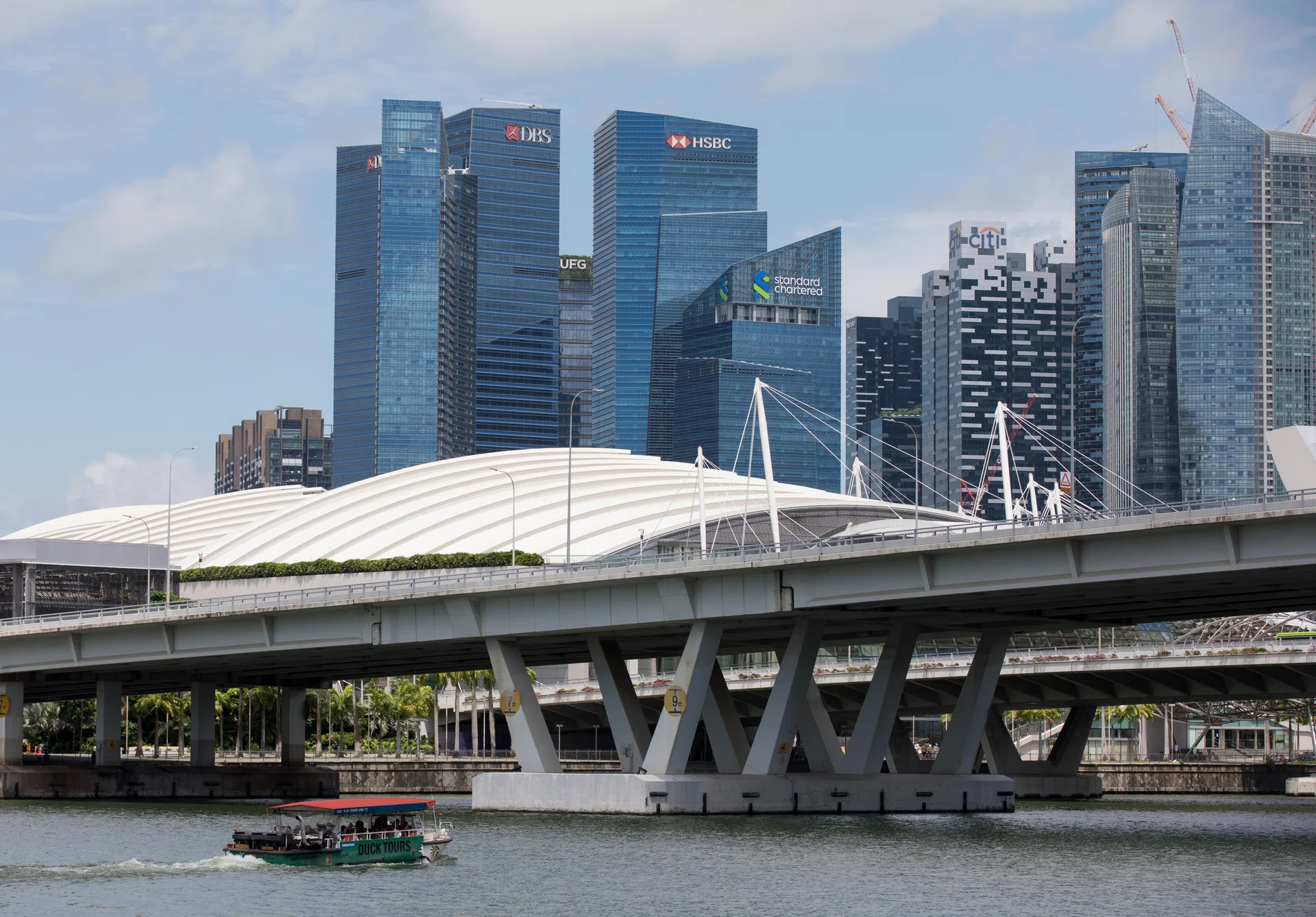
Singapore’s economy delivered a genuine surprise heading into the second half of 2026: Q1 GDP growth came in at 6.0% year-on-year, comfortably beating flash estimates of 4.6% and marking the strongest quarterly growth since Q3 2024 (Joey Choy Newsletter). That’s a substantial beat — not a rounding error — and it deserves more scrutiny than the celebratory framing it’s mostly received.
What Actually Drove the Beat
The growth was broad-based rather than concentrated in a single sector, which is itself a meaningfully positive signal. Construction output picked up, the services sector expanded faster than expected — led specifically by wholesale and retail trade, accommodation, and finance and insurance — while manufacturing held up reasonably well despite slower underlying momentum (Joey Choy Newsletter).
The Curious Gap Nobody’s Fully Explaining
Here’s the detail that deserves far more scrutiny than it’s getting: despite this substantial first-quarter beat, Singapore’s Ministry of Trade and Industry has maintained its full-year 2026 GDP growth forecast at a relatively modest 2.0% to 4.0% range (Singstat / Business Times, cited in Joey Choy Newsletter).
That’s a genuinely unusual pattern. A 6.0% first-quarter print against a full-year forecast ceiling of 4.0% implies MTI is either expecting a meaningfully sharp deceleration through the remaining three quarters, or is being deliberately conservative in its official guidance — perhaps to preserve policy flexibility given ongoing global trade uncertainty, tariff risk, and the broader geopolitical volatility still working through the Middle East conflict’s aftermath. Coverage celebrating the Q1 beat has largely glossed over this tension rather than interrogating it, which is precisely the kind of gap a sharper competitive analysis piece should fill.
The Economic Strategy Review: Singapore’s Long-Game Positioning
Running alongside the growth numbers, Singapore released the Final Report of its Economic Strategy Review, offering more detailed proposals for the country’s longer-term economic direction (Business Times, cited in Joey Choy Newsletter). While the specific policy contents of that review extend beyond what’s captured in available reporting, its timing alongside a growth beat and unchanged full-year guidance suggests Singapore’s policymakers are focused on structural, multi-year positioning rather than reacting to any single quarter’s data — consistent with the country’s historical approach to economic planning.
Singapore Airlines: A Microcosm of the Broader Margin Story
One specific corporate data point illustrates a pattern worth watching across Singapore’s broader economy: Singapore Airlines reported full-year FY2026 revenue of S$20.5 billion, up 5.0% from the prior year and beating analyst revenue estimates by 2.2%, with earnings per share surpassing estimates by 9.4%. Yet net income declined 57% to S$1.18 billion, driven by higher expenses, and profit margin fell sharply to 5.8% from 14% in FY2025 (Joey Choy Newsletter).
That’s a genuinely instructive pattern: revenue growth remaining resilient while margins compress sharply due to elevated costs — plausibly linked to the same energy price volatility and broader input-cost pressures affecting economies globally through 2026. Despite the profit decline, SIA still declared a final dividend of S$0.29 per share, covered at a 70% payout ratio on earnings and a 36% cash payout ratio, translating to a dividend yield of approximately 5.8% — a signal that management retains confidence in the underlying cash generation capacity of the business even amid margin pressure.
Why This Matters Beyond Singapore’s Borders
Singapore’s economic performance functions as a genuinely useful bellwether for the broader Southeast Asian and global trade environment, given the city-state’s outsized role as a regional financial hub, trade entrepôt, and — as detailed in the parallel Johor-Singapore Special Economic Zone story — an increasingly important node in the global AI infrastructure buildout through its role funneling data centre investment into neighboring Johor.
A services-led, broad-based Q1 growth beat, occurring even as the Middle East conflict’s energy price volatility and US tariff uncertainty weighed on global sentiment, suggests underlying Southeast Asian demand may be more resilient than headline global risk narratives suggest — though the unusually cautious full-year MTI forecast is a meaningful counter-signal worth taking seriously rather than dismissing.
What Investors and Businesses Should Watch Next
The practical signals worth tracking through the remainder of 2026: whether Q2 and Q3 GDP prints show the sharp deceleration implicit in MTI’s unchanged full-year forecast range, or whether the ministry revises its guidance upward as subsequent quarters confirm the Q1 strength wasn’t a one-off; whether services-sector momentum (wholesale/retail trade, finance and insurance specifically) proves durable or was partly boosted by one-off factors; and whether corporate margin compression, visible clearly in Singapore Airlines’ results, is broadening across other Singapore-listed companies as a signal of economy-wide cost pressure rather than an airline-specific story tied to fuel costs.
The Bottom Line
Singapore’s 6.0% Q1 GDP print is a genuine, broad-based positive surprise that deserves recognition — but the striking gap between that result and the Ministry of Trade and Industry’s unchanged, far more conservative full-year forecast is the more interesting and underexplored story. Either Singapore’s policymakers are bracing for a meaningful slowdown through the rest of 2026 that hasn’t been fully explained publicly, or official guidance is running deliberately behind the data as a hedge against global uncertainty. Investors and businesses positioning around Singapore’s growth trajectory should watch which of those two explanations proves correct over the next two quarters, rather than extrapolating the Q1 beat forward uncritically.
Discover more from Startups Pro,Inc
Subscribe to get the latest posts sent to your email.
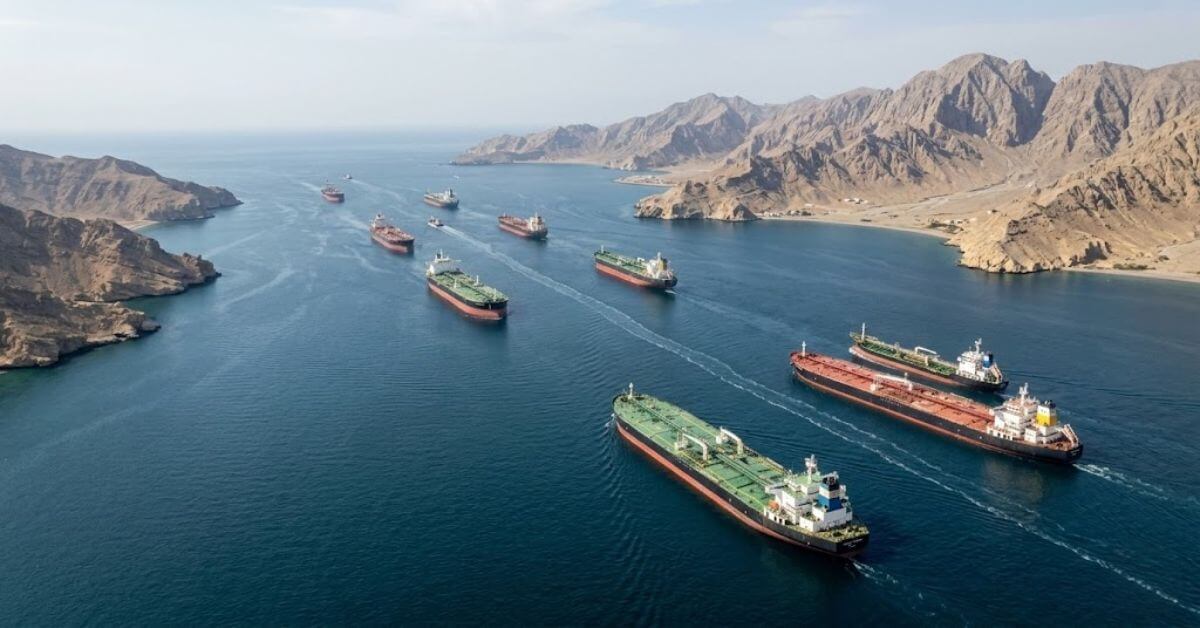
Four months after Iran’s near-total closure of the Strait of Hormuz cut an estimated 14 million barrels a day from global oil supply, the waterway is reopening under a preliminary US-Iran peace pact, yet energy analysts warn markets are pricing in an unrealistically smooth recovery that ignores real logistical and geopolitical risk still ahead, according to Al Jazeera’s coverage of the deal.
History’s Largest Oil Supply Shock
The scale of what markets are recovering from is difficult to overstate. Before the war began on February 28, roughly 25% of the world’s seaborne oil trade and 20% of global liquefied natural gas passed through the Strait of Hormuz, according to background compiled in a Wikipedia timeline of the crisis drawing on Reuters, the Guardian, and NBC News reporting. The Bank for International Settlements has separately described the closure as a larger disruption than either the 1973 oil embargo or the 1979 Iranian revolution, underscoring just how significant the four-month blockade has been for global energy security.
The mechanics of the closure were severe. The Islamic Revolutionary Guard Corps boarded and attacked merchant ships, laid sea mines, and by late March had declared the strait closed to any vessel traveling to or from ports belonging to the US, Israel, or their allies. Tanker traffic dropped to almost nothing in the weeks that followed, and by April 21, the International Maritime Organization reported roughly 20,000 mariners and 2,000 ships stranded in the Persian Gulf as a direct consequence of the blockade.
Why “Reopening” Doesn’t Mean “Resolved”
The preliminary agreement, expected to be formally signed in Switzerland, would see Iran end its closure of the strait in exchange for the US lifting its blockade of Iranian ports, though the fate of Tehran’s nuclear program remains subject to further negotiation, per Al Jazeera’s reporting, which cited a source identified only as Hari warning that “the market is front-running the prospective reopening of the Strait of Hormuz and likely pricing in the best-case scenario for the normalisation of flows,” a dynamic that leaves potential logistics hiccups and renewed geopolitical tensions inadequately reflected in current prices.
That caution looks well-founded given the deal’s fragility to date. Iran’s foreign minister declared the strait open to all shipping on April 17, only for the situation to deteriorate again within weeks: Iran seized the oil tanker Ocean Koi in the Gulf of Oman on May 8, an Indian cargo ship sank after a drone strike near Oman on May 14, and the IMO halted a Strait of Hormuz shipping exodus after an Evergreen container ship was attacked as recently as June 25, according to the Wikipedia timeline’s compilation of contemporaneous reporting. In May, the IRGC Navy further complicated the picture by redefining the strait as a broader “operational area” extending well beyond its traditional geographic boundaries.
Who Actually Depends on This Waterway
The concentration of exposure matters enormously for understanding who bears the greatest risk from any renewed disruption. As of 2024, an estimated 84% of crude oil and condensate shipments through the strait were destined for Asian markets, with China alone receiving a third of its oil supply via the corridor, according to the Wikipedia compilation. Europe draws 12% to 14% of its LNG from Qatar through the same chokepoint, and the broader Persian Gulf region accounts for roughly 30% to 35% of global urea exports and 20% to 30% of ammonia exports, meaning up to 30% of internationally traded fertilizer normally transits the strait as well, a dimension of the crisis with direct implications for global food security and agricultural input costs, including the Kharif planting season concerns already flagged in Pakistan’s IMF program review.
The Market’s Immediate Reaction
Financial markets moved decisively on news of the preliminary deal. Gold prices, which had been under pressure since the war’s onset in late February as oil-driven inflation risk strengthened expectations for higher-for-longer interest rates, rose more than 1% and hit a near one-week high, according to CNBC’s coverage. UBS analyst Giovanni Staunovo attributed the move directly to shifting rate expectations, telling CNBC that “market participants are pricing out rate hikes due to lower oil prices, which is lifting the yellow metal,” while cautioning that near-term consolidation was likely pending further clarity from the Federal Reserve. The US dollar fell to a 10-day low on the news, making dollar-priced bullion more affordable for holders of other currencies, while oil prices slipped to an over three-month low.
The Slow-Motion Aftershock Still Working Through the System
Even as headline oil prices have retreated from their conflict-era peaks, the disruption’s second-order effects continue propagating through the global economy on a lag. The UK’s RSM economic outlook notes that high global oil inventories provided a crucial buffer during the closure but are being drawn down at a record rate and could reach critical levels by September if the peace deal proves fragile. Malaysia’s central bank has similarly cautioned that shortages in intermediate input and petrochemical products triggered by the disruption are only beginning to emerge in global supply chains, a delayed transmission pattern that means the economic consequences of the Strait of Hormuz crisis will likely continue surfacing in inflation and trade data well into the second half of 2026, regardless of how durable the current ceasefire proves.
Discover more from Startups Pro,Inc
Subscribe to get the latest posts sent to your email.

Unlock the power of IRAs! Learn the latest IRA contribution limits for 2026, master the Roth IRA vs Traditional IRA debate, and find out how high earners use the backdoor Roth strategy. Start saving smarter today.
📈 Retirement Revolution: Why IRAs Are Your Most Powerful Financial Tool
If you’re serious about financial freedom, you need to understand the IRA (Individual Retirement Arrangement). Far more than just a savings account, IRAs are legally established, tax-advantaged investment vehicles designed to help you build a massive, protected nest egg.
Whether you’re a young professional just starting your career or a high earner looking to legally bypass income caps, mastering the nuances of the Traditional IRA and the Roth IRA is the foundation of retirement success.
This definitive guide breaks down the essential rules, the most current IRA contribution limits 2026, and advanced strategies to ensure you beat the competition and secure your tax-free future.
The Core: Defining the IRA Landscape
An IRA is simply a trust or custodial account set up solely to hold assets for your retirement, offering powerful tax benefits. The IRS provides these benefits as a massive incentive to save, but they come with strict rules regarding contributions, eligibility, and withdrawals.
The central decision you face is choosing between a Traditional IRA and a Roth IRA. This choice hinges entirely on when you prefer to pay taxes: now or later.
1. The Great Showdown: Roth IRA vs Traditional IRA
| Metric | Roth IRA | Traditional IRA |
| Tax Treatment (Contribution) | After-Tax. Contributions are not tax-deductible. | Pre-Tax. Contributions may be tax-deductible in the current year. |
| Tax Treatment (Withdrawal) | Tax-Free. Qualified withdrawals in retirement are never taxed. | Taxable. Withdrawals in retirement are taxed as ordinary income. |
| Income Limits | Yes. Eligibility is phased out above certain Modified Adjusted Gross Income (MAGI) levels (e.g., $168,000 for singles in 2026). | No. Anyone with earned income can contribute, but deductibility phases out if covered by a workplace plan. |
| Required Minimum Distributions (RMDs) | No. RMDs are not required during the original owner’s lifetime. | Yes. RMDs must begin at age 73 (for most). |
| Best User Profile | Those who expect to be in a higher tax bracket in retirement than they are now (e.g., young professionals, high-growth careers). | Those who need an immediate tax break now and expect to be in a lower tax bracket in retirement. |
2. The Contribution Blueprint: Limits and Eligibility for 2026
The IRS has adjusted the limits for 2026, making it easier to save more than ever. Leveraging these limits is the most effective way to grow your retirement savings.
IRA Contribution Limits 2026 (Roth and Traditional combined)
| Age Bracket | Annual Limit |
| Under Age 50 | $7,500 |
| Age 50 and Older (Catch-Up) | $8,600 ($7,500 + $1,100 catch-up) |
Important Rule: Regardless of the limit, your contribution cannot exceed your earned income for the year.
IRA Eligibility Rules
While the contribution limits are the same for both accounts, eligibility is the major difference:
- Traditional IRA: Anyone with earned income can contribute. However, your ability to deduct the contribution is limited if you (or your spouse) are covered by a workplace retirement plan (like a 401(k)) and your income exceeds certain Modified Adjusted Gross Income (MAGI) thresholds.
- Roth IRA: Eligibility is strictly based on your MAGI, regardless of whether you have a workplace plan.
| Roth IRA Eligibility MAGI Thresholds (2026) | Full Contribution | Partial Contribution | No Contribution |
| Single Filers | $\le \$153,000$ | Between $\$153,000$ and $\$168,000$ | $\ge \$168,000$ |
| Married, Filing Jointly | $\le \$242,000$ | Between $\$242,000$ and $\$252,000$ | $\ge \$252,000$ |
Advanced IRA Tactics for High-Earners
If your income places you outside the direct Roth IRA eligibility window, don’t despair. Savvy financial planning allows high-income earners to utilize the backdoor Roth strategy.
The Backdoor Roth Strategy
The backdoor Roth is not an official account type but a legal two-step process used to bypass the income limit and convert non-deductible Traditional IRA contributions into a Roth IRA.
- Step 1: Non-Deductible Contribution: Contribute the annual maximum ($7,500 in 2026) to a Traditional IRA with after-tax dollars. Since your income is high, this contribution is not tax-deductible.
- Step 2: Roth Conversion: Immediately convert the entire Traditional IRA balance into a Roth IRA. Since the money was contributed with after-tax dollars, the conversion is generally tax-free (assuming no earnings accrue between steps).
⚠️ The Pro-Rata Rule Warning: If you already hold pre-tax dollars in any Traditional, SEP, or SIMPLE IRA (e.g., from a past 401(k) rollover), the conversion will be subject to the pro-rata rule. This rule dictates that a portion of your conversion will be taxable, potentially wiping out the benefit. The clean path requires having zero pre-tax IRA dollars.
The Rollover IRA: Unifying Your Retirement Funds
A rollover IRA is simply a Traditional IRA designated to receive money from a former employer’s retirement plan (like a 401(k)). This account serves several vital functions:
- Consolidation: Simplifies your portfolio by merging old work accounts into one place.
- Wider Investment Choice: Provides access to investment options far beyond the typical limited 401(k) lineup.
- Backdoor Strategy Prep: Rolling old pre-tax IRAs into a current 401(k) (if the 401(k) plan allows it) is the most common way to “clean up” your existing IRA balances to avoid the pro-rata rule when executing a backdoor Roth.
Specialized Accounts: SEP IRA and SIMPLE IRA
For the self-employed, small business owners, and gig workers, the standard IRA limits often aren’t enough. The IRS provides two key alternatives to allow for much higher contributions.
💼 SEP IRA for Self-Employed
The Simplified Employee Pension (SEP) IRA is the ideal choice for solo entrepreneurs or businesses with fluctuating cash flow.
- Key Feature: Only the employer (i.e., you, the self-employed individual) can contribute. Employee contributions are not allowed.
- Contribution Limits: You can contribute up to 25% of an employee’s compensation (or 20% of your net self-employment income) up to a maximum limit (which is $\approx \$72,000$ for 2026).
- Flexibility: Contributions are entirely discretionary. You can contribute 20% one year and 0% the next, which is excellent for unpredictable revenue streams.
SIMPLE IRA
The Savings Incentive Match Plan for Employees (SIMPLE) IRA is designed for small businesses with 100 or fewer employees.
- Key Feature: Allows both employee salary deferrals and employer contributions (matching or non-elective).
- Contribution Limits (2026): Employees can defer up to $\approx \$17,000$, plus a catch-up contribution for those 50 and older.
- Requirement: The employer is required to contribute every year, either a dollar-for-dollar match up to 3% of compensation or a non-elective contribution of 2% of compensation for all eligible employees.
Protecting Your Future: Smart IRA Withdrawal Rules
The power of tax-advantaged growth is protected by a penalty: the 10% additional tax (often called the early withdrawal penalty) on distributions taken before age 59½.
When Can I Withdraw from an IRA Without Penalty?
While the general rule is to wait until 59½, the IRS allows several penalty exceptions for both Traditional and Roth IRAs:
- First-Time Home Purchase: Up to $\$10,000$ for the purchase of a first home.
- Higher Education Expenses: For you, your spouse, children, or grandchildren.
- Unreimbursed Medical Expenses: If they exceed a certain percentage of your Adjusted Gross Income (AGI).
- Permanent Disability: If you become totally and permanently disabled.
- Substantially Equal Periodic Payments (SEPPs): A strategy for early retirees to take penalty-free distributions.
Roth IRA Specific Withdrawal Advantage
- Contributions Come First: Since you paid tax on your Roth IRA contributions already, you can withdraw your contributed principal at any time, for any reason, tax- and penalty-free. Only earnings are subject to the penalty and five-year holding rule.
Traditional IRA Specific Rule
- Required Minimum Distributions (RMDs): Unlike the Roth IRA, you must begin taking RMDs from your Traditional IRA at age 73 (for most individuals born after 1950). This forces you to pay income tax on your tax-deferred savings.
Conclusion: Your Next Steps to Retirement Success
Mastering IRAs is the single best step you can take toward a secure retirement. By understanding the updated IRA contribution limits 2026 and strategically selecting between the Roth IRA vs Traditional IRA, you control your tax burden—now or in the future.
If your income limits your options or you have complex accounts (like a mix of pre-tax and after-tax IRAs), consulting with a Certified Financial Planner (CFP) is the wisest move. Don’t leave tax efficiency on the table.
Would you like a side-by-side comparison of the tax implications for a specific income level using a Roth vs. Traditional IRA?
Discover more from Startups Pro,Inc
Subscribe to get the latest posts sent to your email.

PM Invites US-Based Pakistani Business Community to Invest in Pakistan as Investment Opportunities Expand

Trump Accounts Reshuffle Tens of Millions in Big Tech & AI Holdings

NIC Islamabad Launches Exclusive Acceleration Program with Up to PKR 5 Million Equity-Free Grant Support

World School Summit 2026 Malaysia: 41st Edition

Global Digital Trade Expo 2026: Dates, Schedule, Venue, Registration and Everything You Need to Know

How to Claim Your Sony PlayStation Store Credit Settlement (Up to $33.66)

CES 2027 Las Vegas: Registration Details, Dates and Venue [Ultimate Guide]

IPhone 18 Pro Specifications, Pricing, and Thermal Architecture Leaks Analyzed

Pre-IPO Investing Strategies: How Institutional Money is Approaching Anthropic

Smash Bros Ultimate 13.0.5 Patch Notes: What Actually Changed
NIC Islamabad Launches Exclusive Acceleration Program with Up to PKR 5 Million Equity-Free Grant Support
World School Summit 2026 Malaysia: 41st Edition
Trump Accounts Reshuffle Tens of Millions in Big Tech & AI Holdings
PM Invites US-Based Pakistani Business Community to Invest in Pakistan as Investment Opportunities Expand
-
Digital5 years ago
Social Media and polarization of society
-
Digital6 years ago
Pakistan Moves Closer to Train One Million Youth with Digital Skills
-
Digital5 years ago
Karachi-based digital bookkeeping startup, CreditBook raises $1.5 million in seed funding
-
Kashmir6 years ago
Pakistan Mission Islamabad Celebrates “KASHMIRI SOLIDARITY DAY “
-
Digital6 years ago
WHATSAPP Privacy Concerns Affecting Public Data -MOIT&T Pakistan
-
News6 years ago
Dr . Arif Alvi visits the National Museum of Pakistan, Karachi
-
China5 years ago
TIKTOK’s global growth and expansion : a bubble or reality ?
-
Business5 years ago
Are You Ready to Start Your Own Business? 7 Tips and Decision-Making Tools