
Startups
The Last Stand of the Quarter-Pounder: Why Burger Chains are Dying?


The data points are no longer scattered anomalies; they are coalescing into a bleak, unmistakable pattern. A thousand stores here, three hundred there—the cumulative count of recent hamburger chain restaurant closures across the American landscape now resembles the casualty tally of a protracted, ill-advised war. This is not the typical cyclical contraction of the casual dining sector, nor can it be dismissed as a mere post-pandemic hangover. What we are witnessing is a seismic cultural shift, a profound and perhaps permanent re-evaluation of the entire fast-food premise by a newly discerning, financially strained, and digitally native public. The golden arches are dimming, the King’s castle is crumbling, and the clown is packing his oversized shoes. The foundational promise of speed, ubiquity, and uniform cheapness that powered this industry for seventy years is now the very liability driving its demise. This is not an economic adjustment; it is a cultural reckoning, signalling nothing less than the End of fast food as We Know It.
The Economic Cracks: A Debt-Ridden Colossus Topples
To understand the industry’s fall, one must first appreciate the inherent, almost hubristic, flaws in its architecture. The financial crisis unfolding now has its roots in decades of aggressive, often reckless, expansion fueled by an unsustainable debt model. Major fast-food corporations—often structured as heavily franchised entities—encouraged, if not mandated, an ever-increasing physical footprint. This strategy was predicated on perpetually cheap capital and a perpetually compliant consumer base. As a result, the industry became a stretched rubber band that finally snapped under the weight of modern economic reality.
Rising operating costs have intensified this pressure to an intolerable degree. The price of essential ingredients—meat, produce, oil—has become volatile and persistently high, squeezing margins already razor-thin at the traditional $5 meal mark. Simultaneously, the unavoidable necessity of raising labour wages, even marginally, has chipped away at the core economic logic of the model, which was built on the premise of low-skill, low-cost human labor. The simple math of 1970 no longer computes in 2025.
Adding insult to this financial injury is the self-inflicted wound of menu fatigue. In a desperate, often nonsensical, bid to recapture declining traffic, chains have introduced a dizzying, often contradictory array of limited-time offers and peripheral items. From specialty dipping sauces to bizarre international collaborations, the relentless pursuit of novelty has diluted the core value proposition. Does the consumer truly want a spicy barbecue bacon sourdough melt from a place famous for a simple patty and bun? This constant churn of inventory and preparation complexity strains kitchen operations, slows service, and ultimately confuses the customer, eroding the reliable, comforting simplicity that was once the industry’s hallmark. The debt is no longer serviceable, the product is no longer essential, and the operating environment is actively hostile. The system is structurally compromised.
The Cultural Reckoning: Premiumisation and the Liability of the Storefront
The most significant accelerant for these sweeping closures is the profound shift in consumer priorities. The modern diner, regardless of income bracket, is increasingly hostile to the industrial, factory-line approach to food preparation. The days when convenience and rock-bottom price trumped all other considerations are drawing to a close. Consumers are now demanding premiumization: better quality ingredients, transparency in sourcing, and, crucially, a product that feels crafted rather than assembled. This preference has empowered the “better burger” movement—local, regional, and speciality chains that charge two or three times the price of the legacy product but deliver a demonstrably superior experience. Why settle for a machine-pressed patty when, for a few dollars more, one can have hand-smashed beef on a brioche bun?
This cultural pivot has rendered the traditional fast-food dining experience—or the stark absence of one—a major liability. The plastic booths, the glaring fluorescent lights, the perfunctory service—it all screams of an anachronism. The act of eating a quick meal in a brightly lit box has lost its relevance. If the food is merely fuel, the environment is irrelevant. But if the food is an experience, the environment is everything. As a result, the vast, expensive real estate holdings of these chains—the drive-thrus, the ample parking lots, the indoor seating—are no longer assets generating return. They are millstones, dragging down balance sheets.
The true revolutionary factor is the digital migration. The pandemic accelerated the adoption of delivery and takeaway to such an extent that the physical shopfront’s primary function shifted from being a destination to a preparation hub. This shift has given rise to the phenomenon of ghost kitchens and virtual brands. These highly efficient, low-overhead operations—unburdened by real estate taxes, dining room staffing, or exterior aesthetics—can compete aggressively on price and speed, specialising in delivery-only models. Are the traditional chains not, in essence, just expensive, inefficient ghost kitchens with customer seating? The rise of the virtual kitchen exposes the exorbitant cost and redundancy of the legacy, brick-and-mortar operation. The market is teaching us that the most valuable part of a hamburger chain is the recipe and the logistics, not the building on the corner.
Conclusion and Future Forecast: The End of Fast Food’s Monolithic Era
The current wave of hamburger chain restaurant closures is a powerful, undeniable sign that the old covenant between corporate America and the casual diner has been broken. The illusion that a mediocre product, sold ubiquitously, could sustain an ever-expanding, debt-laden empire has finally shattered. The seismic cultural shift away from cheapness at all costs is permanent, driven by a simultaneous desire for better food and a better consumer experience, be that at a local artisanal spot or through a frictionless, digital transaction.
The chains that survive this reckoning will bear little resemblance to the monolithic empires of their heyday. They must confront their unsustainable debt model and radically shrink their physical presence. The future of the successful ‘fast-food’ entity will be defined by hyper-efficiency and hyper-specialisation. We are likely to see a proliferation of small-format, highly automated, delivery-focused outlets—essentially converting the existing brand into a sophisticated, national network of ghost kitchens and drive-thru-only express lanes. Technology, once a tool for convenience, will become a survival imperative, minimising the expensive human element while maximising delivery logistics.
The future of the hamburger is binary: either it is a high-craft, local indulgence defined by premiumization and a genuine dining experience, or it is a highly standardised, algorithmically managed virtual product delivered to your door. The comfortable, middle-ground mediocrity that sustained the giants is now a zone of extinction. The era of the giant, identical fast-food box on every highway exit is fading. The market has spoken: the consumer values quality and convenience delivered on their terms, not on the terms dictated by the corporations’ quarterly earnings reports. The fast-food industry, as we have always known it—a symbol of mid-century industrial efficiency and mass-market uniformity—is over. Its legacy is now merely a cautionary tale about the perils of believing that perpetual growth is an entitlement, rather than an achievement.
Discover more from Startups Pro,Inc
Subscribe to get the latest posts sent to your email.


Startups
NIC Islamabad Launches Exclusive Acceleration Program with Up to PKR 5 Million Equity-Free Grant Support

Building initial traction is a major milestone for any startup—it proves market demand, validates your product-market fit, and sets the stage for real business value. However, transitioning from early traction to rapid scaling is often where Pakistani startups face their toughest hurdles: securing non-dilutive capital, opening doors to enterprise clients, and preparing for institutional investment rounds.
To bridge this crucial gap, NIC Islamabad (National Incubation Center) has officially launched its Acceleration Program, designed specifically for growth-stage ventures ready to expand operations, enter new markets, and dominate their sector.
What Makes the Acceleration Program Different?
Unlike early-stage incubation that focuses on ideation and prototype development, the NIC Islamabad Acceleration Program is hyper-focused on execution, revenue growth, and capital deployment.

Here is a breakdown of what accepted growth-stage startups gain:
1. Up to PKR 5 Million in Equity-Free Grant Support
Dilution at the growth stage can prove costly for founders. Through this program, eligible startups receive up to PKR 5,000,000 in equity-free grant funding. This non-dilutive capital allows founders to extend their runway, invest in talent acquisition, optimize product infrastructure, or launch targeted marketing campaigns without giving up equity.
2. Global Mentorship Network
Scale-up challenges require guidance from seasoned founders and operators who have navigated similar growth curves. Program participants gain direct access to global industry leaders, domain experts, and international tech mentors who provide one-on-one strategic direction.
3. Market Access & Enterprise Connections
Scaling requires commercial traction. The acceleration framework facilitates warm introductions to enterprise clients, corporate partners, and regulatory bodies across Pakistan and international jurisdictions.
4. Investor Readiness & Fundraising Support
Moving toward Seed or Series A rounds demands structured financial models, airtight data rooms, and compelling pitch narratives. The program offers intensive pitch polishing, financial modeling advisory, and direct matchmaking with regional venture capital funds and angel investor syndicates.
Program Core Pillars at a Glance
| Pillar | Value Delivered | Target Outcome |
| Capital Support | Up to PKR 5M Equity-Free Grant | Runway extension & scale deployment |
| Global Mentorship | Industry veterans & domain experts | Execution strategy & operational efficiency |
| Commercial Access | Enterprise B2B linkages & market integration | Pipeline expansion & enterprise deals |
| Investor Readiness | Financial modeling, data room prep, & VC demos | Seed / Series A funding closure |
Who Is Eligible?
To maintain a high-density, peer-driven growth environment, this acceleration cohort is strictly tailored for high-potential ventures:
- Ignite-Funded Startups Exclusively: The program is open to startups that have received funding support through Ignite National Technology Fund.
- Proven Traction: Startup must demonstrate initial customer adoption, recurring revenue, or measurable user engagement.
- Scalable Business Model: Clear pathway to regional or global expansion with an addressable market.
Why Equity-Free Funding at the Growth Stage is a Game-Changer
“Preserving founder equity while accelerating growth is the ultimate advantage for early-stage teams.”
For growth-stage founders, capital strategy is just as vital as product strategy. Securing up to PKR 5 Million without surrendering equity gives founders the flexibility to hit critical growth KPIs, increasing company valuation before entering their next equity funding round.
How to Apply
Applications are currently LIVE, but slots are limited to ensure personalized support for each selected startup.
- Visit the Portal: Head over to NIC Islamabad Official Portal.
- Submit Your Application: Present your traction metrics, product roadmaps, and growth objectives.
- Screening & Pitching: Shortlisted ventures will be invited for evaluation by the acceleration committee.
👉 Ready to take your startup to its next stage? Apply now at nicislamabad.com.
Discover more from Startups Pro,Inc
Subscribe to get the latest posts sent to your email.
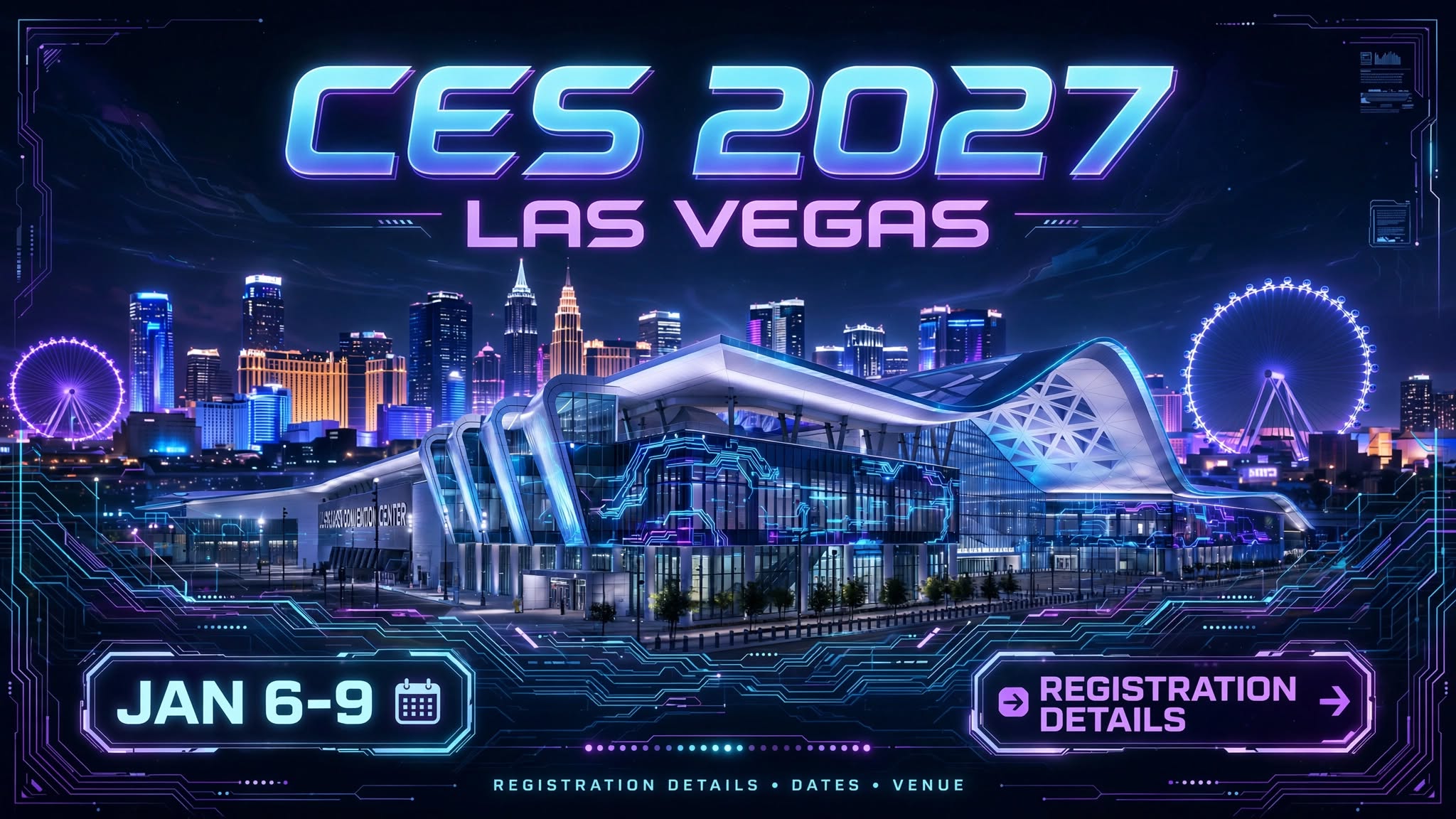
CES is back. The most powerful tech event in the world is returning to Las Vegas to set the agenda for AI, mobility, digital health, and sustainability for the next decade. If you are planning to attend, exhibit, or cover CES 2027, this guide covers everything you need to know.
What is CES 2027?
Organized and produced by the Consumer Technology Association (CTA), CES 2027 is the flagship global stage for innovation. The Consumer Electronics Show (CES) 2027 has been officially scheduled from Wednesday, January 6 through Saturday, January 9, 2027. Expect 130,000+ attendees, 4,000+ exhibitors, and keynotes from the world’s biggest tech brands.
CES 2027 will take place January 6-9, 2027 in Las Vegas. The primary venue is the Las Vegas Convention Center (LVCC), with additional official venues including Venetian Expo and ARIA. Registration is not yet open but you can sign up for notification on CES.tech. It opens in September 2026.
CES 2027 Dates and Official Schedule
Official dates confirmed by CTA: Jan 6-9, 2027.
| Date | Phase | Access |
|---|---|---|
| Jan 3-4, 2027 | Media Days & Pre-Show Keynotes | Media Only |
| Jan 5, 2027 | Opening Day & Eureka Park Preview | All Registered |
| Jan 6-9, 2027 | Main Exhibits & Conference Program | All Registered |
| Jan 9, 2027 | Closing Day | All Registered |
Media events and preview programs begin several days before the main exhibition opens.
CES 2027 Venue: Where is it Held?
CES is a city-wide event. You cannot do it in one hall.
1. Las Vegas Convention Center (LVCC) – The Main Hub
The primary hub for CES 2027 will be the Las Vegas Convention Center. This is where you will find Automotive, AI, Robotics, Smart Cities, Enterprise Tech, and the big keynote stage.
Address: 3150 Paradise Rd, Las Vegas, NV 89109
2. Venetian Expo (Formerly Sands Expo)
Traditionally hosts Eureka Park (home to 1,400+ startups), Digital Health, Smart Home, Wearables, and Lifestyle tech.
3. Additional Official Campuses
As with previous editions, CES 2027 will extend beyond a single venue and span more than 12 official locations including ARIA Resort & Casino, Wynn, Fontainebleau, and Venetian conference venues.
Pro Tip: Use the Las Vegas Monorail. It is often the most reliable transportation option during CES week and avoids heavy Strip traffic.
CES 2027 Registration Details: How to Register
Is Registration Open?
Not yet. Registration for CES 2027 isn’t open yet – it’s expected to open around September 2026. The official place to check is ces.tech. You can already sign up for registration notifications via the official CES website.
Official Registration Link: https://www.ces.tech/attend/registration-notification/
WARNING – Scam Alert: The Consumer Technology Association has designated Maritz as the ONLY official registration vendor of CES 2027. Do not buy from third-party sites offering “free CES passes”.
How to Register – Step by Step
- Go to CES.tech
- Create a CES attendee profile with your corporate email
- Select your attendance type: Industry Attendee, Media, Exhibitor, etc.
- Upload proof of industry affiliation (see below)
- Choose your pass and pay securely via Maritz
- Receive approval – applications are reviewed by organizers before approval
Who Can Attend? Is CES Open to Public?
No. CES is not open to the general public. It is a trade-only event. You must qualify.
Eligible:
- Technology professionals, manufacturers, retail buyers
- Investors, analysts, startups, marketing professionals
- Media representatives with published work
Required documents may include company ID, business card, professional website profile, corporate email, or industry credentials.
CES 2027 Pass Types & Ticket Price
CES follows a tiered pricing structure:
1. Exhibits Pass: Access to exhibit halls and show floor
2. Exhibits Plus Pass: Exhibit access plus select conference content
3. Deluxe Conference Pass: Full conference access, keynotes, and premium sessions
Pricing (Estimated based on CES 2026):
Official 2027 pricing is TBA. Based on last year:
- Early Bird Exhibits Pass: ∼$149 – $350
- Standard: $350 – $599
- Exhibits Plus: $649 – $899
- Deluxe: $1,400 – $1,800
Prices increase significantly closer to the event. Registering early is the best way to secure lower pricing.
Why You Must Attend CES 2027 – Key Themes
- Artificial Intelligence: Generative AI, Edge AI, AI hardware
- Advanced Mobility & Vehicle Tech
- Digital Health & Wearables
- Robotics & Manufacturing
- Sustainability & Energy
- Gaming, Cybersecurity, and Smart Home
Travel, Hotels & Survival Tips
- Book Hotels Now: Official CES hotel blocks sell out by October. Venetian, Wynn, and LVCC-area hotels go first.
- Wear Comfortable Shoes: Many attendees walk 15,000–25,000+ steps daily.
- Plan Your Schedule: It is impossible to see everything. Prioritize must-see exhibitors.
- Stay Hydrated & Power Up: Bring reusable water bottle and portable charger.
FAQs – CES 2027 Las Vegas
Q1: What are the exact dates for CES 2027?
A: Wednesday, January 6 to Saturday, January 9, 2027 in Las Vegas.
Q2: Where is CES 2027 venue?
A: Las Vegas Convention Center is the main hub, plus Venetian Expo and 10+ official hotels across the Strip.
Q3: When does CES 2027 registration open?
A: Expected September 2026. Sign up for alerts on CES.tech.
Q4: How much does a CES ticket cost?
A: Official pricing TBA. Early bird Exhibits Pass typically starts around $149-$350.
Q5: Can anyone attend CES?
A: No, it is trade-only. You need industry credentials to get approved.
Note : Do you want to showcase or feature your event on Startupspro.co.uk Email your event Details to : events@whiril.com
Discover more from Startups Pro,Inc
Subscribe to get the latest posts sent to your email.

Walk into almost any major tech campus today and you’ll find something that looks less like a break room and more like a boutique fitness studio — full gyms, on-site physical therapists, subsidized wearable devices, and mental health coaching bundled into the benefits package. This isn’t a perk trend confined to Silicon Valley anymore; it’s a calculated financial strategy. Corporate fitness investment among large tech employers has surged in 2026, and the reasoning behind it has as much to do with healthcare cost containment and talent retention as it does with employee wellbeing.
This article breaks down exactly why tech companies are treating fitness benefits as a core business investment rather than a nice-to-have, what the ROI actually looks like, and what this trend signals for corporate wellness programs across other industries. If you’re in HR, corporate finance, or simply curious why your employer suddenly added a wellness stipend, this is the context you need.
The Real Financial Case Behind Corporate Fitness Spending
The headline driver is healthcare cost containment. Large self-insured employers — which most major tech companies are — bear the direct financial cost of employee health claims, meaning a healthier workforce translates directly to lower group health insurance spending. Chronic conditions linked to sedentary lifestyles, including cardiovascular disease and type 2 diabetes, remain among the most expensive categories of employer healthcare spend, and fitness program investment is one of the few levers companies can pull that plausibly reduces those costs over a multi-year horizon.
There’s also a productivity and absenteeism angle that finance teams have gotten much better at quantifying. Internal studies at several large employers have linked consistent fitness program participation to measurably lower sick-day usage and higher self-reported focus and energy — data that increasingly shows up in board-level wellness program justifications, not just HR newsletters.
Talent Retention in a Competitive Labor Market
Beyond the healthcare math, corporate fitness programs have become a genuine differentiator in tech recruiting. As remote and hybrid work options have become table stakes rather than a differentiator, companies have shifted competitive benefits spending toward things employees can’t easily replicate on their own — including premium fitness facilities, corporate rates with boutique studios, and fully subsidized wearable devices tied into company wellness platforms.
What Modern Corporate Fitness Benefits Actually Include
- On-site or subsidized gym access – Full facilities at HQ campuses, or reimbursed memberships for remote employees
- Wearable device subsidies – Companies increasingly cover Whoop, Oura, or Apple Watch costs, often tied to wellness program participation
- Mental health and fitness integration – Combined physical and mental wellness stipends rather than siloed benefits
- Incentivized activity challenges – Points-based programs tied to insurance premium discounts or bonus PTO
- On-demand fitness content partnerships – Corporate licenses with platforms like Peloton or Calm bundled into benefits packages
The Data Layer: Wearables and Insurance Are Converging
One of the more significant shifts in 2026 is how tightly fitness tracking data is being integrated with corporate health insurance plans. Several major employers now offer premium discounts tied directly to wearable-verified activity levels, effectively creating a usage-based insurance model inside the corporate benefits structure. This mirrors what’s happening in the broader health insurance market, where fitness app and wearable integration is becoming standard rather than experimental.
Corporate Fitness Investment: A Cost-Benefit Snapshot
| Investment Area | Estimated Annual Cost per Employee | Primary ROI Driver |
|---|---|---|
| On-site gym facilities | $800 – $1,500 | Retention, reduced healthcare claims |
| Wearable device subsidy | $200 – $400 | Engagement data, insurance discount programs |
| Corporate fitness class partnerships | $150 – $500 | Employee satisfaction, recruiting differentiation |
| Mental health + fitness bundles | $300 – $700 | Absenteeism reduction, burnout mitigation |
| Wellness incentive/rewards programs | $100 – $300 | Sustained long-term engagement |
Does the ROI Actually Hold Up?
Skeptics reasonably point out that fitness program ROI is notoriously difficult to isolate from other variables — a healthier, better-compensated workforce may simply be healthier for reasons unrelated to a company gym. That said, the sustained and growing investment from finance-disciplined tech companies suggests internal data is showing enough of a return to justify continued spending, even if the exact ROI multiple is hard to pin down externally. What’s clearer is the recruiting and retention effect: in competitive talent markets, robust wellness benefits consistently show up as a top-three factor in employee satisfaction surveys at large tech employers.
Signs a Company’s Fitness Program Is More Than a PR Move
- Fitness benefits are integrated with the company’s actual health insurance plan design, not offered as an isolated perk
- Leadership visibly participates in wellness programs rather than treating them as lower-level employee benefits
- The company tracks and reports internal engagement metrics, not just enrollment numbers
- Benefits extend meaningfully to remote employees, not just those at flagship campuses
What Other Industries Are Learning From Tech’s Approach
As the data supporting corporate fitness investment matures, other industries with high-value talent pools — finance, consulting, and increasingly healthcare and biotech — have begun adopting similar benefit structures, though often at a smaller scale than the flagship tech campuses that pioneered the approach. What’s transferring most directly isn’t necessarily the on-site gym itself, but the underlying philosophy: treating wellness benefits as measurable investments integrated with health plan design, rather than isolated perks disconnected from the company’s actual healthcare cost strategy. Expect this cross-industry adoption to accelerate as wearable data integration becomes cheaper and more standardized, lowering the barrier for mid-sized employers to build credible, data-backed wellness programs without needing tech-company-scale budgets to get meaningful participation and engagement data.
Frequently Asked Questions
Do smaller companies benefit from offering fitness programs, or is this only viable for big tech?
Smaller companies can see proportionally similar benefits, though the scale of investment obviously looks different. Even modest fitness stipends or partnerships with local gyms can meaningfully affect retention and healthcare cost trends for small and mid-sized self-insured employers, without requiring a full on-site facility.
How do employers measure the ROI of fitness benefits if results take years to show up in healthcare costs?
Many companies track leading indicators rather than waiting for lagging healthcare cost data — participation rates, engagement with wearable programs, self-reported wellness survey results, and short-term absenteeism trends all provide earlier signals before multi-year healthcare cost trends fully materialize.
Are employees required to share their fitness or wearable data with their employer to participate?
This varies by program design, but most reputable corporate wellness programs use third-party aggregation platforms that share only summary-level engagement data with employers, not granular personal health data. Employees should review their specific program’s data-sharing policy before enrolling, since practices differ across employers.
Is corporate fitness spending actually reducing healthcare premiums for employees? Indirectly, in many self-insured plans — lower aggregate claims costs across the employee population can help moderate premium growth over time, though this isn’t a guaranteed or immediate effect for any individual employee. It’s best understood as one input among several that influence a company’s overall healthcare cost trajectory.
Final Thoughts
Corporate fitness spending among tech giants in 2026 reflects a broader shift in how large employers think about healthcare costs, productivity, and talent retention — treating physical wellbeing as a financial lever rather than a soft benefit. As wearable data and insurance integration deepen, expect this trend to accelerate further, with fitness program participation increasingly tied directly to both individual and company-wide healthcare cost outcomes.
Does your employer offer fitness or wellness benefits tied to your health insurance, and have you actually used them? We’d love to hear what’s working — or what feels more like marketing than substance — in the comments.
Discover more from Startups Pro,Inc
Subscribe to get the latest posts sent to your email.

PM Invites US-Based Pakistani Business Community to Invest in Pakistan as Investment Opportunities Expand

Trump Accounts Reshuffle Tens of Millions in Big Tech & AI Holdings

NIC Islamabad Launches Exclusive Acceleration Program with Up to PKR 5 Million Equity-Free Grant Support

World School Summit 2026 Malaysia: 41st Edition

Global Digital Trade Expo 2026: Dates, Schedule, Venue, Registration and Everything You Need to Know

How to Claim Your Sony PlayStation Store Credit Settlement (Up to $33.66)

CES 2027 Las Vegas: Registration Details, Dates and Venue [Ultimate Guide]

IPhone 18 Pro Specifications, Pricing, and Thermal Architecture Leaks Analyzed

Pre-IPO Investing Strategies: How Institutional Money is Approaching Anthropic

Smash Bros Ultimate 13.0.5 Patch Notes: What Actually Changed
NIC Islamabad Launches Exclusive Acceleration Program with Up to PKR 5 Million Equity-Free Grant Support
World School Summit 2026 Malaysia: 41st Edition
Trump Accounts Reshuffle Tens of Millions in Big Tech & AI Holdings
PM Invites US-Based Pakistani Business Community to Invest in Pakistan as Investment Opportunities Expand
-
Digital5 years ago
Social Media and polarization of society
-
Digital6 years ago
Pakistan Moves Closer to Train One Million Youth with Digital Skills
-
Digital5 years ago
Karachi-based digital bookkeeping startup, CreditBook raises $1.5 million in seed funding
-
Kashmir6 years ago
Pakistan Mission Islamabad Celebrates “KASHMIRI SOLIDARITY DAY “
-
Digital6 years ago
WHATSAPP Privacy Concerns Affecting Public Data -MOIT&T Pakistan
-
News6 years ago
Dr . Arif Alvi visits the National Museum of Pakistan, Karachi
-
China5 years ago
TIKTOK’s global growth and expansion : a bubble or reality ?
-
Business5 years ago
Are You Ready to Start Your Own Business? 7 Tips and Decision-Making Tools