
Entrepreneurs
The Top Five Startup Incubators & Accelerators of Pakistan Transforming Startups


Discover more from Startups Pro,Inc
Subscribe to get the latest posts sent to your email.


Analysis
Virgin Atlantic’s Strategic Swoop: On Track to Lure Tens of Thousands from British Airways’ Frequent Flyer Fold


There’s a particular kind of frustration that frequent flyers know intimately — the moment you realize the loyalty program you’ve spent years nurturing has quietly moved the goalposts. For thousands of British Airways Executive Club members, that moment arrived in 2024 when BA announced sweeping changes to its tier points structure, effectively raising the bar for elite status in ways that left many road warriors feeling, as one London-based consultant put it, “more grounded than airborne.” Now, with Virgin Atlantic’s enhanced status match promotion closing February 23, 2026, a competitor is turning that discontent into a mass migration — and the numbers are staggering.
According to <a href=”https://www.ft.com/content/6384ee81-fab6-4024-a9ec-a0d18303a48f”>reporting by the Financial Times</a>, Virgin Atlantic is on track to poach tens of thousands of British Airways’ most loyal customers, capitalizing on what may be the most consequential loyalty program overhaul in UK aviation history. The transatlantic airline rivalry has always been fierce, but rarely has one carrier’s stumble created such a clean runway for the other.
The BA Loyalty Shake-Up: What Went Wrong?
British Airways’ revamp of its Executive Club, which began rolling out in earnest through 2024 and 2025, was designed with a clear philosophy: reward high spenders, not just high flyers. The airline shifted its tier points model to weight spend more heavily, meaning that a budget-conscious business traveler who logs 100,000 miles annually on economy fares could find themselves slipping from Gold to Silver — or off the tier ladder entirely.
The logic is financially sound from an airline CFO’s perspective. Loyalty programs have evolved into multi-billion-pound profit centers; BA’s parent company IAG reported loyalty revenue contributions exceeding £1.5 billion in 2024. Restructuring around spend rather than miles mirrors Delta SkyMiles’ controversial 2023 overhaul in the United States — a move that triggered a similar exodus there.
But the human cost to brand loyalty has been severe. <a href=”https://www.telegraph.co.uk/travel/advice/passengers-abandoning-british-airways”>The Telegraph has documented</a> a notable wave of passengers abandoning British Airways, with forum threads on FlyerTalk and social media communities swelling with testimonials from disgruntled BA frequent flyers who feel the airline has broken an implicit contract. “I gave them my business when there were cheaper options,” wrote one Gold card holder on a popular aviation forum. “Now they’re telling me that’s not enough.”
This is the kindling Virgin Atlantic just lit a match to.
Virgin’s Clever Counterplay: Enhanced Status Matches
Virgin Atlantic’s status match promotion — which allows qualifying BA Executive Club Gold and Silver members to receive equivalent status in its Flying Club program — is not new. Status matches are a standard competitive tool in the airline industry. What is notable is the scale of uptake and the precision of the targeting.
<a href=”https://www.bloomberg.com/news/articles/2026-02-11/virgin-targets-british-airways-loyal-flyers-with-status-upgrade”>Bloomberg reported in February 2026</a> that Virgin Atlantic had seen a threefold increase in status match applications compared to the same period a year earlier — a figure that, extrapolated across the promotion window, suggests the airline could onboard somewhere between 30,000 and 50,000 newly status-matched members before the February 23 deadline closes.
The Virgin Atlantic BA status match 2026 offer has become one of the most searched loyalty-related queries in UK travel this quarter, with an estimated 2,500 monthly searches — a signal of genuine consumer intent, not just passive curiosity. For those unfamiliar with what they’d be gaining, the comparison deserves scrutiny.
Virgin Flying Club Gold status perks include:
- Priority boarding and check-in across all Virgin Atlantic routes
- Access to Virgin Clubhouses and partner lounges (including select Delta Sky Clubs on codeshare routes)
- Bonus miles earning at an accelerated rate on Virgin and SkyTeam partner flights
- Complimentary seat selection in preferred economy and premium economy cabins
- Elite customer service lines with reduced wait times
The SkyTeam elite status perks accessible through Virgin’s alliance membership are a quietly powerful selling point. SkyTeam’s 19-airline network — including Air France-KLM, Delta, and Korean Air — means a matched Virgin Gold card holder gains reciprocal benefits across a broad global footprint. For frequent travelers to Continental Europe or Asia, this can represent a meaningfully better everyday experience than BA’s oneworld network depending on specific routes.
Economic Ripples in the Skies
To understand why this moment matters beyond the marketing spectacle, it’s worth examining the loyalty economics in aviation at a structural level.
Airline loyalty programs have been unmoored from their original purpose — rewarding flight frequency — and repositioned as financial instruments. Airlines sell miles to banks and credit card partners at rates that often exceed the revenue from the seat itself. United Airlines’ MileagePlus program was valued at approximately $22 billion in 2020 collateral filings — more than the airline’s entire fleet. This financialization means that acquiring a loyal member, particularly one who holds a co-branded credit card, is worth far more than a single booking.
When Virgin Atlantic matches a BA Gold member’s status, it isn’t just winning a transatlantic fare. It’s bidding for years of credit card spend, hotel transfers, shopping portal revenue, and the downstream ecosystem that a loyal, high-value traveler represents. <a href=”https://finance.yahoo.com/news/virgin-atlantic-lures-hundreds-ba-120300720.html”>Yahoo Finance has noted</a> that the sign-up surge represents a potentially transformative shift in Virgin’s loyalty revenue trajectory — particularly as the airline deepens its joint venture partnership with Delta Air Lines on UK-US routes.
The transatlantic airline rivalry between Virgin and BA is ultimately a proxy war for this loyalty revenue. And BA’s tier points overhaul, whatever its internal financial rationale, has handed its rival an opening that won’t come twice.
Perks That Persuade: Comparing the Programs
For the disgruntled BA frequent flyer weighing their options, the practical calculus deserves honest examination. Status matches are not unconditional gifts — they typically require meeting ongoing earning thresholds within a qualifying window, usually 90 days, to retain the matched tier.
That said, for someone already flying regularly on UK-US transatlantic routes, earning the required tier points within Virgin’s Flying Club framework is achievable. A return Virgin Atlantic Upper Class ticket from London Heathrow to JFK, for instance, earns substantial tier miles that accelerate toward Gold retention.
A side-by-side comparison for economy travelers:
| Feature | BA Executive Club Silver | Virgin Flying Club Gold (matched) |
|---|---|---|
| Lounge Access | Domestic/short-haul lounges only | Clubhouse access on Virgin-operated flights |
| Seat Selection | Preferred seats with fee | Complimentary preferred seats |
| Bonus Miles Earning | 25% bonus | 50% bonus |
| Alliance Network | oneworld | SkyTeam |
| Status Validity | 12 months | 12 months (with earning requirement) |
The best airline loyalty switch UK calculation tilts toward Virgin for travelers whose routes align with Virgin and SkyTeam’s strengths — particularly those flying to New York, Los Angeles, or cities well-served by Delta, Air France, or KLM. For travelers heavily dependent on BA’s dominance of Heathrow slots and its extensive short-haul European network, the switch carries more trade-offs.
The Forward View: Aviation’s Loyalty Wars Enter a New Phase
What Virgin Atlantic has executed here is textbook competitive strategy — identify a competitor’s policy-driven customer dissatisfaction, lower the switching cost, and convert resentment into revenue. But the deeper story is what it reveals about the future of frequent flyer programs UK and the airlines that operate them.
BA’s revamp was not miscalculated in isolation. Airlines globally are trying to thread an impossible needle: extract more value from loyalty programs without alienating the road warriors who built those programs’ worth in the first place. Delta triggered backlash. BA triggered backlash. The lesson competitors are taking is that the window of maximum customer frustration is also a window of maximum competitive opportunity.
Virgin Atlantic, for its part, enters this phase with structural advantages it lacked a decade ago. Its Delta joint venture provides genuine transatlantic scale. Its Clubhouses remain among the most acclaimed premium lounges in UK aviation. And its Flying Club, while smaller than BA’s Executive Club, has a reputation for accessibility and customer responsiveness that its rival has struggled to maintain.
The February 23 deadline will close, but the switchers it captures won’t easily return. Research on airline loyalty transitions consistently shows that once a traveler habituates to a new program — and begins accumulating points and status within it — re-acquisition costs for the original carrier are enormous.
Thinking about making the switch before Sunday’s deadline? The process is simpler than it sounds: visit Virgin Atlantic’s Flying Club status match page, upload your BA Executive Club tier documentation, and allow 72 hours for processing. Whether the match holds long-term depends on your flying patterns — but for many former BA loyalists, the question isn’t whether to switch. It’s why they waited this long.
The skies over the North Atlantic have always been contested territory. This February, they belong a little more to Virgin.
Discover more from Startups Pro,Inc
Subscribe to get the latest posts sent to your email.
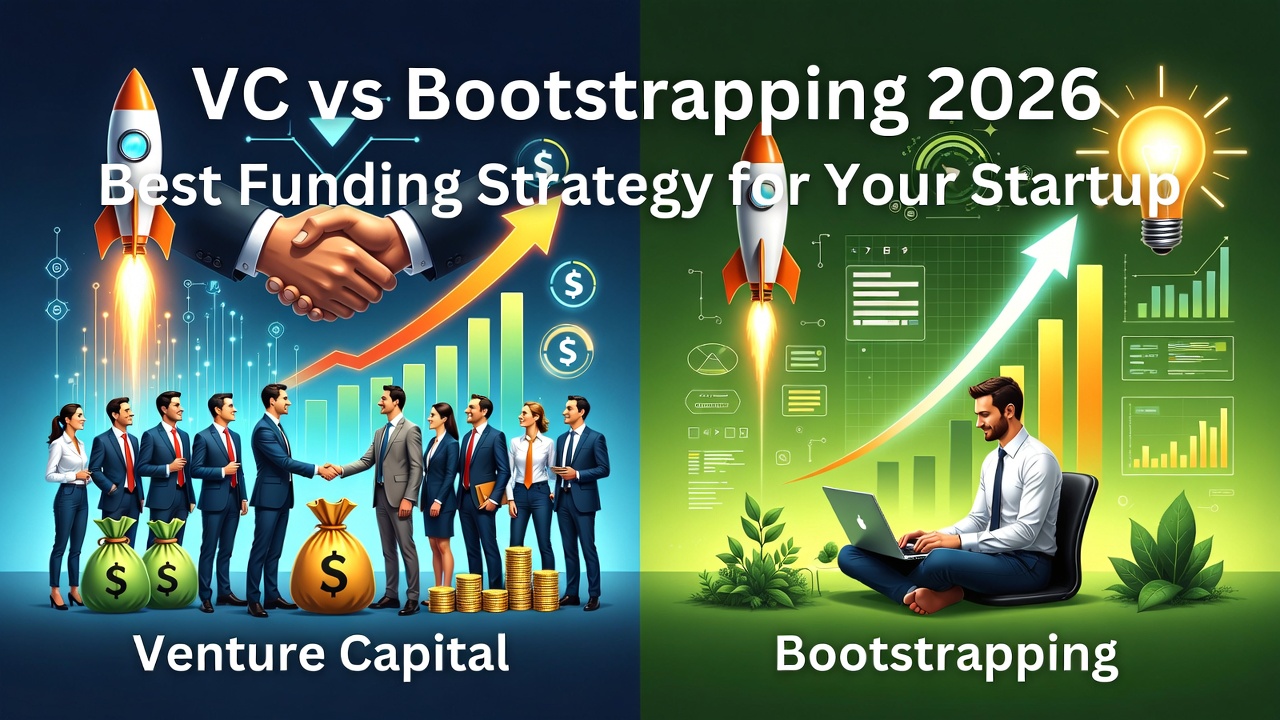
Discover funding options for entrepreneurs in 2026. Compare venture capital, bootstrapping, and alternatives to choose the right strategy for your startup success.
Picture this: 90% of startups fail, and choosing the wrong funding strategy accelerates that failure. In 2026’s evolving entrepreneurship landscape, the funding decision you make today determines whether your business thrives or joins the statistics. The entrepreneurship funding spectrum ranges from self-reliant bootstrapping to institutional venture capital funding, each offering distinct pathways to success.
Successful entrepreneurs understand that funding strategy extends far beyond raising money. It’s about aligning capital with vision, maintaining control while enabling growth, and choosing partners who accelerate rather than hinder progress. Whether you’re launching a tech startup or scaling a service business, your startup funding choice shapes every aspect of your entrepreneurial journey.
The modern funding landscape offers numerous options. Traditional venture capital still dominates headlines, but alternative funding sources like crowdfunding, angel investors, and government grants provide viable pathways for different business models. The key lies in matching your funding strategy to your business stage, industry requirements, and personal risk tolerance.
Key Takeaways:
- Multiple funding options exist for entrepreneurs, each with distinct advantages and trade-offs
- Bootstrapping offers maximum control but limits growth potential due to resource constraints
- Venture capital provides substantial resources but requires ownership dilution and rapid growth expectations
- The right funding choice depends on business stage, industry, and entrepreneur’s risk tolerance
- Successful funding strategy often combines multiple sources rather than relying on a single approach
Let’s start by examining the most talked-about funding option in entrepreneurship circles.
Venture Capital: The High-Growth Highway
Venture capital represents private equity financing designed for startups with exceptional growth potential. VC firms pool funds from institutional investors, wealthy individuals, and pension funds to support businesses that can deliver substantial returns. This funding mechanism operates across multiple investment stages: seed funding for early concepts, early-stage investment for market validation, growth capital for scaling operations, and late-stage funding for market expansion.
VC investment typically targets technology, biotech, and fintech sectors where scalability becomes essential for success. These industries offer the potential for rapid growth and market disruption that VC firms seek in their portfolio companies.
Advantages of VC funding include access to substantial capital that enables rapid scaling, strategic guidance from experienced investors who’ve built successful companies, extensive industry connections that open doors to partnerships and talent, and enhanced marketplace credibility that attracts customers and additional investors.
However, VC investment carries important disadvantages. Ownership dilution reduces your control over business decisions, while pressure for rapid returns creates aggressive growth expectations that may not align with sustainable business practices. High failure risk expectations mean investors anticipate most investments will fail, creating additional pressure on portfolio companies to deliver exceptional returns.

Venture capital makes sense for businesses requiring large upfront capital for product development or market entry, scalable business models in innovative sectors with large addressable markets, and entrepreneurial teams ready to exchange control for growth resources and expertise.
While venture capital grabs headlines, many successful entrepreneurs choose a different path entirely.
Bootstrapping: The Self-Reliant Approach
Bootstrapping means self-funding your business through personal savings, early revenues, and reinvested profits. This approach prioritizes independence, frugality, and sustainable growth over rapid scaling. Bootstrapped entrepreneurs maximize existing resources while avoiding external capital that dilutes ownership or creates debt obligations.
Common bootstrapping strategies include reinvesting early revenues directly into business expansion, maintaining lean operational costs through remote work and minimal overhead, using existing personal and professional networks for business development, and avoiding both debt obligations and equity dilution that compromise future flexibility.
Bootstrapping benefits are substantial for the right entrepreneur. You retain complete control over business decisions without investor interference, avoid debt obligations and repayment pressure that constrain cash flow, foster a disciplined, resource-efficient mindset that improves long-term sustainability, and keep 100% ownership of future profits and business value.
Bootstrapping limitations include restricted growth potential due to limited resources, increased personal financial risk that affects your personal financial security, slower scaling compared to well-funded competitors, and potential cash flow challenges during key growth phases when reinvestment needs exceed current revenues.
Best candidates for bootstrapping include service-based businesses with low startup costs and quick revenue generation potential, entrepreneurs with sufficient personal savings to sustain themselves during early business phases, and businesses operating in markets where rapid scaling isn’t essential for competitive advantage.
Between the extremes of venture capital and bootstrapping lies a rich collection of alternative funding options.
Alternative Funding Landscape
Angel investors provide the middle ground between bootstrapping and venture capital. These wealthy individuals invest their personal funds in exchange for equity, typically providing $25,000 to $500,000 during early business stages. Key benefits include mentorship and industry connections alongside capital investment. Main drawbacks involve ownership dilution with potential expectation mismatches about business direction. Angel investment works best for early-stage companies needing smaller funding rounds with strategic guidance.
Crowdfunding uses community power through platform-based funding from many small contributors. Types include reward-based crowdfunding where backers receive products, equity crowdfunding that offers ownership stakes, and donation-based crowdfunding for social causes. Advantages include marketing exposure and real-world idea validation. Challenges require substantial marketing effort with no guarantee of reaching funding goals. Crowdfunding works ideally for consumer-facing products with strong community appeal and startup success stories.
Debt financing represents traditional borrowing through bank loans, microloans, and credit facilities. You repay borrowed funds with interest regardless of business success or failure. Benefits include retaining full ownership while building business credit history for future financing needs. Risks involve debt burden and mandatory repayment obligations that continue regardless of business performance. Debt financing suits businesses with predictable cash flows and sufficient collateral for loan security.
Government grants offer non-repayable funds from agencies and foundations, often targeting specific industries or social initiatives. Advantages include no repayment requirements and credibility boosts from government backing. Disadvantages involve competitive application processes and strict usage restrictions that limit flexibility. Grants work perfectly for innovative or socially beneficial projects that align with government priorities.
Incubators and accelerators provide structured support programs offering funding, mentorship, and resources in exchange for equity or program fees. Benefits include expert guidance from successful entrepreneurs and access to extensive investor networks. Drawbacks involve equity dilution and milestone pressure that may not match your business timeline. These programs suit early-stage startups seeking rapid growth through intensive support systems.
Funding Strategy Framework
Assessing your business needs requires thorough capital requirements analysis, realistic growth timeline expectations, industry-specific considerations that affect funding availability, and honest risk tolerance evaluation that matches your personal and professional situation.
Matching funding to business stage ensures optimal resource allocation:
| Business Stage | Primary Funding Options | Typical Amount | Key Considerations |
|---|---|---|---|
| Idea/Concept | Bootstrapping, Grants | $0-$50K | Proof of concept needed |
| Early Stage | Angel, Crowdfunding | $50K-$500K | Market validation important |
| Growth Stage | VC, Debt Financing | $500K-$5M+ | Scalability demonstrated |
| Expansion | Later-stage VC, Debt | $5M+ | Proven business model |
Creating a funding mix strategy involves combining multiple funding sources strategically, timing different funding rounds to maximize business value, and maintaining flexibility for future opportunities as your business evolves and market conditions change.
Understanding these options is just the beginning—successful entrepreneurs know how to execute their funding strategy effectively.
Practical Implementation Tips
Preparing for investors requires essential documents including detailed financial projections, comprehensive business plans, and market analysis. Your pitch deck must include storytelling that connects with investor interests while demonstrating clear value propositions. Due diligence preparation involves organizing financial records, legal documents, and operational metrics that investors will scrutinize.
Building investor relationships starts with strategic networking and securing warm introductions through mutual connections. Successful entrepreneurs manage investor communications transparently while setting realistic expectations about business progress, challenges, and timelines. Long-term relationship building often proves more valuable than individual transactions.
Frequently Asked Questions
Q: How much equity should I expect to give up for venture capital funding? A: Typical equity dilution ranges from 15-25% for early-stage VC funding, with later rounds potentially requiring 10-20% additional dilution. The exact percentage depends on your business valuation, funding amount, and negotiation skills.
Q: Can I switch from bootstrapping to external funding later? A: Yes, many successful companies start bootstrapped and later raise external funding for growth acceleration. However, transitioning requires demonstrating proven business model and strong financial metrics to attract investors.
Q: What’s the average time to secure different types of funding? A: Bootstrapping begins immediately, angel funding typically takes 2-6 months, venture capital requires 6-12 months, while grants can take 3-18 months depending on the program and application complexity.
Q: Do I need to choose just one funding source? A: No, successful entrepreneurs often combine multiple funding sources. You might bootstrap initially, then secure angel funding for growth, and later pursue venture capital for scaling operations.
Q: How do I know if my business is suitable for venture capital? A: VC-suitable businesses typically operate in large markets, demonstrate scalable business models, show strong growth potential, and can deliver 10x+ returns to investors within 5-10 years.
The entrepreneurship funding spectrum from bootstrapping to venture capital offers multiple pathways to business success. Your optimal funding strategy aligns capital choices with business goals, growth timeline, and personal vision for your company’s future. Rather than choosing funding based on popular trends, assess your specific situation including industry requirements, growth potential, and risk tolerance.
Start with a clear funding strategy assessment that considers all available funding options. Remember that entrepreneurship funding represents an ongoing journey rather than a one-time decision, with successful entrepreneurs adapting their approach as businesses evolve and opportunities emerge.
Entrepreneurship Funding Guide
Venture Capital (VC)
Venture Capital (VC) is a form of private equity financing where investors provide capital to startups and early-stage companies with high growth potential. Typically managed through venture capital firms, which pool funds from various investors, VC investments are structured to support businesses through different stages: seed, early, growth, and late stages. These investments target innovative sectors such as technology, biotech, and fintech, where scalability and rapid growth are essential Venture Capital.
VC funding offers significant advantages, including access to substantial capital, strategic guidance, industry connections, and enhanced credibility. However, it also involves disadvantages like ownership dilution, loss of control, pressure for rapid returns, and high failure risk for startups Venture Capital.
Bootstrapping
Bootstrapping is an entrepreneurial funding method characterized by self-funding and resourcefulness. It involves using personal savings, reinvesting profits, minimizing expenses, and leveraging existing resources to finance and grow a business without external capital. Core principles include independence, frugality, and a focus on sustainable growth. Common strategies encompass reinvesting early revenues to fund expansion, maintaining low operational costs, and avoiding debt or external equity dilution Startup India.
The primary advantages of bootstrapping are retaining full control over the business, avoiding debt obligations, and fostering a disciplined, resource-efficient mindset. Conversely, disadvantages include limited growth potential due to resource constraints, increased personal financial risk, and slower scaling compared to externally funded counterparts LivePlan.
Other Common Funding Methods
Angel Investors
Angel investors are wealthy individuals who provide capital to startups in exchange for equity or convertible debt. They often offer mentorship and industry connections, making them suitable for early-stage companies needing smaller amounts of funding. Advantages include access to experienced guidance and flexible investment terms, while disadvantages involve ownership dilution and potential mismatched expectations Founders Network.
Crowdfunding
Crowdfunding involves raising small amounts of money from a large number of people via online platforms. It is particularly useful for consumer-facing products and projects with strong community appeal. Benefits include marketing exposure and validation of ideas, but challenges include the need for significant marketing effort and the risk of not reaching funding goals Stripe Resources.
Debt Financing
Debt financing entails borrowing money through bank loans, microloans, or other credit facilities, which must be repaid with interest. It is suitable for businesses with predictable cash flows and assets to collateralize. Advantages include retaining ownership and building credit history, while disadvantages involve repayment obligations regardless of business success and potential debt burden SBA.
Grants
Grants are non-repayable funds provided by government agencies, foundations, or organizations, often targeted at specific industries, research, or social initiatives. They are ideal for startups engaged in innovative or socially beneficial projects. The main advantages are no repayment and validation, but disadvantages include competitive application processes and restrictions on fund use JPMorgan.
Incubators and Accelerators
Incubators and accelerators are programs that offer seed funding, mentorship, resources, and networking opportunities in exchange for equity or fees. They are suitable for early-stage startups seeking structured support and rapid growth. Benefits include access to expert guidance and investor networks, while drawbacks involve equity dilution and the pressure to meet program milestones FI.co.
This comprehensive overview provides entrepreneurs with a clear understanding of various funding options, their strategic fit, and associated pros and cons, enabling informed decision-making in their startup journey.
Sources
- https://openai.com/research
- https://startupindia.gov.in/content/sih/en/funding.html
- https://www.liveplan.com/blog/funding/top-alternative-funding-methods
- https://foundersnetwork.com/types-of-funding-for-startups
- https://stripe.com/resources/more/alternatives-to-venture-capital
- https://www.sba.gov/business-guide/plan-your-business/fund-your-business
- https://jpmorgan.com/insights/banking/commercial-banking/startup-fundraising-how-to-raise-capital-for-your-startup
- https://fi.co/startup-funding-checklist
Discover more from Startups Pro,Inc
Subscribe to get the latest posts sent to your email.
Analysis
Digital Nomad Visas in Asia: Your Complete 2026 Guide to Working Remotely Across the Continent
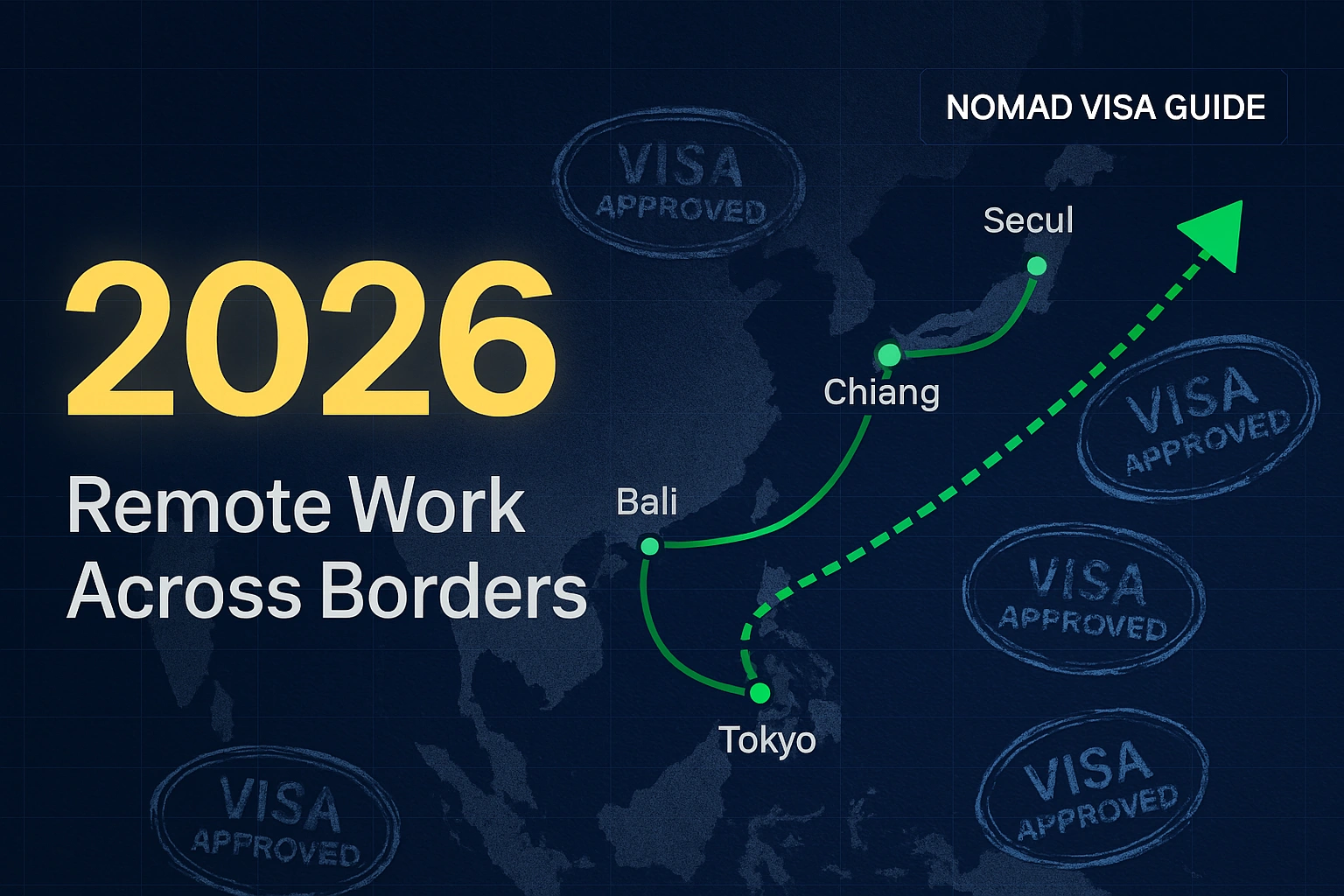
Imagine ! You’re sipping coconut water at a beachside café in Bali, laptop open, ocean breeze cooling your workspace. Your morning meeting wraps up just as the sun hits that perfect golden angle. This isn’t a vacation—it’s your everyday life as a digital nomad in Asia.
The numbers tell a remarkable story. The global digital nomad economy has exploded to $787 billion, with over 40 million remote workers now calling themselves location-independent. And here’s the kicker: Asia isn’t just participating in this revolution—it’s leading it. From Thailand’s revamped Long-Term Resident Visa to Japan’s surprising entry into the digital nomad space, Asian countries are rolling out the welcome mat for remote workers in ways that would’ve seemed impossible five years ago.
Why the sudden enthusiasm? Governments across Asia have done the math. Digital nomads spend an average of $2,000–$4,000 monthly in their host countries without taking local jobs. They fill coworking spaces, rent apartments, eat at restaurants, and boost local economies while requiring minimal public services. It’s economic development gold.
But navigating the visa landscape can feel overwhelming. Requirements vary wildly between countries. Application processes range from surprisingly simple to bureaucratically Byzantine. And finding reliable, up-to-date information? That’s its own challenge.
This guide cuts through the confusion. You’ll discover which Asian countries offer digital nomad visas in 2026, exactly what each program requires, realistic costs of living, and insider tips that only come from people who’ve actually done this. Whether you’re dreaming of temples in Thailand, tech hubs in South Korea, or tropical islands in Indonesia, you’ll walk away knowing exactly which visa suits your situation—and how to get it.
The Asian Digital Nomad Visa Landscape: What’s Changed in 2026
Asia’s approach to remote work visas has matured dramatically. What started as experimental programs in 2020–2022 has evolved into competitive, well-structured visa options designed to attract the growing pool of location-independent professionals.
Currently, nine Asian countries offer dedicated digital nomad or remote work visas, with another four providing long-term tourist visas that effectively serve the same purpose. The competition is fierce. Thailand extended its visa duration. Malaysia slashed income requirements. Japan—previously resistant to long-term tourism—launched its own program. Even the UAE, technically in Western Asia, has entered the game with aggressive marketing.
The key differences? Duration is the big one. Some visas last just six months, while others offer up to five years. Income requirements range from $1,000 to $5,000 monthly. Application complexity varies from “upload three documents online” to “visit an embassy with notarized paperwork.” And costs run anywhere from $50 to $1,000 in visa fees alone.
Understanding these distinctions matters because the “best” digital nomad visa in Asia doesn’t exist. The best visa for you depends on your income level, desired length of stay, comfort with bureaucracy, and the lifestyle you’re chasing. A freelance writer earning $2,500 monthly will have different options than a software engineer pulling $8,000. Someone planning a six-month test run needs different visa terms than someone ready to commit to two years.
The good news? There’s genuinely something for everyone in 2026. Asia’s remote work visa guide has expanded to accommodate budget travelers, mid-range professionals, and high-earning executives. Let’s break down exactly what each country offers.
Country-by-Country Breakdown: Asia’s Digital Nomad Visas for 2026
Thailand: The Long-Term Resident (LTR) Visa
Thailand has long been a digital nomad favorite, and the LTR visa—introduced in 2022 and refined through 2025—makes it official. This is arguably the most generous digital nomad visa Asia offers right now.
Visa Type & Duration: The LTR visa lasts up to 10 years with five-year renewals. Yes, you read that right. Ten years.
Application Process: Apply online through Thailand’s Board of Investment portal. Upload your passport, proof of income ($80,000 annually or $40,000 with qualifying employment), health insurance covering $100,000, and background check. Processing takes 30–60 days. No need to visit an embassy initially—though you’ll need to activate the visa in Thailand.
Income Requirements: $80,000 annually ($6,667/month) or $40,000 annually if you work for a well-established foreign company or own shares in publicly traded companies.
Cost of Living: Bangkok averages $1,500–$2,500 monthly depending on lifestyle. Chiang Mai runs $1,200–$1,800. Beach towns like Hua Hin fall somewhere between. You’re looking at $400–800 for a comfortable apartment, $300–500 for food, $100–200 for transportation, and $200–300 for entertainment and coworking.
Internet Speed & Coworking: Thailand’s internet infrastructure is excellent. Bangkok averages 200+ Mbps in most areas. Coworking spaces like The Hive, HUBBA, and AIS D.C. offer professional environments for $150–250 monthly. Coffee shops with solid WiFi are everywhere.
Cultural Adaptation Tips: Learn basic Thai phrases—it goes a long way. Respect the monarchy (seriously, this is law). Remove shoes when entering homes and temples. Thai culture values “sanuk” (fun) and “sabai sabai” (relaxed)—embrace it. The bureaucracy can be slow, so patience isn’t optional.
The Reality Check: The high income requirement excludes many nomads. Tax implications are complex—Thailand is moving toward taxing foreign income for tax residents. And while Bangkok is cosmopolitan, smaller cities require more cultural flexibility.
Indonesia: The B211A Visit Visa (Second Home Visa)
Indonesia launched its “Second Home Visa” in late 2023, targeting digital nomads and retirees. Bali has been a digital nomad hub for years; now there’s finally a proper visa for it.
Visa Type & Duration: The B211A allows stays up to two years (initial six months plus four possible extensions).
Application Process: Apply online or through an Indonesian embassy. You’ll need passport copies, proof of $2,000 monthly income or $130,000 in an Indonesian bank account, health insurance, and a sponsor letter (many visa agencies provide this service for $100–200). Processing typically takes 7–14 days.
Income Requirements: $2,000 monthly income or substantial savings deposited in an Indonesian bank.
Cost of Living: Bali’s Canggu and Ubud run $1,000–$2,000 monthly for a comfortable lifestyle. Jakarta is slightly higher at $1,500–$2,500. You’ll pay $300–600 for housing, $200–400 for food (eating local cuts this significantly), $50–100 for transportation, and $150–250 for coworking and activities.
Internet Speed & Coworking: Bali’s internet has improved dramatically. Canggu and Ubud average 50–100 Mbps, adequate for most remote work. Starlink is becoming more common. Coworking spaces like Dojo Bali, Outpost, and Tropical Nomad are legendary in nomad circles—expect to pay $100–200 monthly.
Cultural Adaptation Tips: Bali is predominantly Hindu (unlike Muslim-majority Indonesia). Dress modestly when visiting temples. Traffic is chaotic—rent a scooter but get insurance. Balinese people are warm but value indirect communication. Learn about “hari raya” ceremony days when much of the island shuts down.
The Reality Check: Visa extensions require leaving and re-entering Indonesia every six months, which adds cost and complexity. Internet reliability varies significantly by location. And Bali’s nomad scene, while vibrant, can feel like a bubble disconnected from authentic Indonesian culture.
Malaysia: The DE Rantau Nomad Pass
Malaysia’s digital nomad visa launched in October 2022 and has been quietly gaining traction. It’s one of the most straightforward visa requirements for remote workers in Asia.
Visa Type & Duration: The DE Rantau Pass allows 12 months with possible renewal for another 12 months.
Application Process: Entirely online through the Malaysia Digital Economy Corporation (MDEC) website. Upload passport, proof of $24,000 annual income, employment contract or client letters, and bank statements. Approval typically takes 7–14 days. The visa fee is approximately $200.
Income Requirements: $24,000 annually ($2,000/month)—one of the lowest thresholds among digital nomad visas in Asia.
Cost of Living: Kuala Lumpur runs $1,200–$2,000 monthly. Penang is slightly cheaper at $1,000–$1,600. Expect $400–700 for a modern apartment, $300–500 for food, $100–150 for transportation (the metro is excellent and cheap), and $100–200 for coworking.
Internet Speed & Coworking: Malaysia boasts some of Asia’s fastest internet—Kuala Lumpur averages 100–300 Mbps. Coworking spaces like Common Ground, WORQ, and The Co. offer professional environments for $120–200 monthly.
Cultural Adaptation Tips: Malaysia is multicultural—Malay, Chinese, and Indian communities coexist. English is widely spoken in cities. “Bahasa Malaysia” is the official language, but learning a few words helps. Respect Islamic customs during Ramadan. Food is phenomenal and incredibly cheap.
The Reality Check: Malaysia’s visa is straightforward, but the country sometimes falls off nomads’ radars compared to Thailand or Bali. The weather is hot and humid year-round. And while Kuala Lumpur is modern, it lacks the beach appeal of other Asian countries digital nomads favor.
Japan: The Digital Nomad Visa (New for 2025)
This is the surprise entry. Japan, long resistant to anything resembling long-term tourism, launched a six-month digital nomad visa in March 2025. It’s causing buzz in nomad communities worldwide.
Visa Type & Duration: Six months, non-renewable (though you can apply for different visa types afterward).
Application Process: Apply through a Japanese embassy with passport, proof of $60,000 annual income, employment verification, travel insurance covering your stay, and a detailed itinerary. Processing takes 14–30 days. The visa fee is around $30—surprisingly cheap.
Income Requirements: $60,000 annually ($5,000/month)—reflecting Japan’s higher cost of living.
Cost of Living: Tokyo runs $2,500–$4,000 monthly. Osaka and Kyoto are slightly lower at $2,000–$3,000. Smaller cities like Fukuoka or Sapporo drop to $1,500–$2,500. Budget $800–1,500 for housing, $600–900 for food, $150–250 for transportation, and $200–300 for activities.
Internet Speed & Coworking: Japan’s internet is world-class—200+ Mbps is standard even in rural areas. Tokyo’s coworking scene includes WeWork, Fabbit, and Impact Hub, running $200–400 monthly. Coffee shops typically offer free WiFi, though cultural norms discourage staying all day without ordering multiple items.
Cultural Adaptation Tips: Learn basic Japanese—English proficiency outside major cities is limited. Respect is paramount: bow when greeting, remove shoes indoors, be quiet on trains. Punctuality isn’t valued, it’s expected. The cultural learning curve is steeper than Southeast Asia, but the experience is incomparable.
The Reality Check: Six months isn’t long for settling in. Japan’s cost of living digital nomad Asia travelers face is among the highest on the continent. Bureaucracy is real—opening a bank account or renting an apartment requires multiple visits and substantial paperwork. But for those who can swing it, living in Japan is a bucket-list experience.
South Korea: The F-1 Visit and Sojourn Visa
South Korea doesn’t have a dedicated digital nomad visa, but its F-1 visa effectively serves this purpose for many remote workers.
Visa Type & Duration: The F-1 allows stays up to two years depending on your nationality and circumstances.
Application Process: Apply at a Korean embassy with passport, bank statements showing $3,000+ balance, employment letter or freelance contract, and accommodation proof. Processing takes 7–14 days. The fee is approximately $80.
Income Requirements: No official minimum, but demonstrating financial stability ($3,000+ in savings) is necessary.
Cost of Living: Seoul runs $1,800–$3,000 monthly. Busan is cheaper at $1,400–$2,200. Expect $600–1,200 for housing, $400–600 for food, $100–150 for transportation (the metro is excellent), and $200–300 for entertainment.
Internet Speed & Coworking: South Korea has the world’s fastest internet—300+ Mbps is common. Seoul’s coworking scene includes Sparkplus, FastFive, and Maru180, running $200–350 monthly.
Cultural Adaptation Tips: Learn Hangul (the alphabet)—it’s surprisingly easy and dramatically improves daily life. Korean work culture is intense, but you’ll find the expat-friendly Asian cities culture in neighborhoods like Itaewon and Hongdae. Respect hierarchies and age in social situations. The food scene is incredible—embrace it.
The Reality Check: South Korea’s immigration policies can be unpredictable. The F-1 visa doesn’t explicitly allow remote work for foreign companies, creating legal gray areas. Winter is brutally cold. And while Seoul is cosmopolitan, smaller cities have limited English support.
United Arab Emirates: The Virtual Working Program
Technically in Western Asia, the UAE’s program attracts many Asian-bound nomads due to Dubai’s position as a global hub.
Visa Type & Duration: One year, renewable.
Application Process: Apply online through the Dubai government portal. Upload passport copies, proof of $5,000 monthly income, employment contract, one-month bank statement, and health insurance. Processing takes 2–5 days (impressively fast). The fee is around $600—steep, but includes health insurance.
Income Requirements: $5,000 monthly ($60,000 annually).
Cost of Living: Dubai runs $2,500–$4,500 monthly. Expect $1,200–2,000 for housing, $600–900 for food, $200–300 for transportation, and $300–500 for entertainment.
Internet Speed & Coworking: Dubai’s infrastructure is world-class—300+ Mbps is standard. Coworking options like The Bureau, Nook, and Astrolabs run $300–500 monthly.
Cultural Adaptation Tips: Respect Islamic customs—dress modestly, no public displays of affection, no alcohol outside licensed venues. Arabic is official, but English is widely spoken. Dubai is transient—most residents are expats, creating an international but sometimes impersonal atmosphere.
The Reality Check: The high cost barrier excludes many nomads. Dubai’s summer heat (120°F+) is oppressive. And while it’s technically open-minded, conservative laws occasionally create unexpected situations for Western visitors.
Taiwan: The Gold Card (Employment Gold Card)
Taiwan’s Gold Card isn’t specifically a digital nomad visa, but many remote workers qualify under its “specialized professional” category.
Visa Type & Duration: One to three years with work authorization and permanent residence pathway.
Application Process: Apply online demonstrating specialized skills in tech, finance, education, or other fields. Requirements vary by category but generally include portfolio evidence, income history, and professional certifications. Processing takes 30–60 days. The fee runs $100–300 depending on duration.
Income Requirements: Varies by specialization—generally $50,000+ annually.
Cost of Living: Taipei runs $1,500–$2,500 monthly. Kaohsiung and Taichung drop to $1,200–$1,800. Expect $500–900 for housing, $400–600 for food, $50–100 for transportation, and $150–250 for activities.
Internet Speed & Coworking: Taiwan’s internet averages 150–250 Mbps. Taipei’s coworking scene includes CIT, Kafnu, and The Hive, running $150–300 monthly.
Cultural Adaptation Tips: Mandarin is essential outside Taipei—English proficiency is limited. Taiwanese people are incredibly friendly and helpful. The scooter culture is intense—be cautious. Food is fantastic and cheap. Taiwan has a distinct identity from mainland China—be mindful of politics.
The Reality Check: The application process is subjective—qualifying as a “specialized professional” isn’t always clear. Processing times vary wildly. And Taiwan’s international status creates occasional complications (some countries don’t recognize Taiwanese visas for transit).
Philippines: The Special Resident Retiree’s Visa (SRRV)
While marketed toward retirees, the Philippines’ SRRV works excellently for younger digital nomads willing to make a refundable deposit.
Visa Type & Duration: Indefinite, essentially permanent residency.
Application Process: Apply through the Philippine Retirement Authority office in Manila. Deposit $10,000 in a Philippine bank (refundable when leaving), provide health clearance, police records, and passport. Processing takes 2–4 weeks. The total cost runs around $1,500 including fees and deposit interest loss.
Income Requirements: None beyond the $10,000 deposit.
Cost of Living: Manila runs $1,000–$2,000 monthly. Cebu, Dumaguete, and other cities drop to $800–$1,500. Expect $300–600 for housing, $250–400 for food, $100–150 for transportation, and $100–200 for entertainment.
Internet Speed & Coworking: Philippines’ internet has improved but remains inconsistent—50–100 Mbps in good areas, much slower elsewhere. Manila’s coworking scene includes KMC Solutions, The Grovery, and Acceler8, running $100–200 monthly.
Cultural Adaptation Tips: English is widely spoken—the Philippines is the third-largest English-speaking country globally. Filipino culture is warm and welcoming. Traffic in Manila is among Asia’s worst—plan accordingly. Island-hopping is a way of life—embrace it.
The Reality Check: The $10,000 deposit is a barrier, though it’s refundable. Internet reliability frustrates remote workers—have backup plans. Typhoon season (June–November) brings disruptions. And while English is common, cultural differences run deeper than language.
Comparing Asia’s Digital Nomad Visas: The Decision Matrix
Here’s how the best countries for digital nomads in Asia stack up:
| Country | Duration | Cost | Min. Income | Internet | Expat Scene | Processing |
|---|---|---|---|---|---|---|
| Thailand | 10 years | $1,000+ | $80K/year | Excellent | Massive | 30–60 days |
| Indonesia | 2 years | $200–400 | $24K/year | Good | Large | 7–14 days |
| Malaysia | 2 years | $200 | $24K/year | Excellent | Moderate | 7–14 days |
| Japan | 6 months | $30 | $60K/year | World-class | Growing | 14–30 days |
| South Korea | 2 years | $80 | Flexible | World-class | Large | 7–14 days |
| UAE | 1 year | $600 | $60K/year | World-class | Massive | 2–5 days |
| Taiwan | 1–3 years | $100–300 | $50K/year | Excellent | Moderate | 30–60 days |
| Philippines | Indefinite | $1,500 | $10K deposit | Variable | Large | 14–30 days |
The cheapest countries with digital nomad visas in Asia are clearly Malaysia and the Philippines, with Indonesia close behind. Thailand offers the longest duration but requires significant income. Japan provides a bucket-list experience but limits you to six months.
Emerging Trends: What’s Coming in Asia’s Remote Work Revolution
The competition for digital nomads is intensifying. Vietnam is reportedly developing a digital nomad visa for launch in late 2026. Cambodia is considering similar programs. Even India—traditionally challenging for long-term stays—is exploring options for remote workers in tech hubs like Bangalore and Hyderabad.
Tax policies are evolving too. Thailand’s announcement that it may tax foreign income for tax residents sent shockwaves through the nomad community in late 2024. Other countries are watching closely. The affordable Asian countries digital nomads love may become less affordable if tax treaties don’t keep pace with visa programs.
Regional cooperation is another trend. ASEAN countries are discussing reciprocal digital nomad agreements, potentially allowing one visa to work across multiple Southeast Asian nations. Think Schengen for remote workers. It’s early stages, but momentum is building.
Looking ahead to 2027–2028, expect income requirements to drop as countries compete more aggressively. Application processes will streamline—fully digital applications will become standard. And we’ll likely see differentiated programs targeting specific demographics: family-friendly visas, startup founder visas, and student-nomad hybrid options.
The visa-free countries for remote workers concept is also gaining traction. Several nations allow 30–90 day stays without visas for many nationalities. While not officially sanctioned for remote work, enforcement is minimal for those working online. Countries like Georgia, Armenia, and Sri Lanka (not technically Asia but close) have built large nomad communities this way.
Your Practical Planning Guide: Making It Happen
Choosing the right visa starts with honest self-assessment. Ask yourself:
- How long do I want to stay? Six months exploring or two years settling in?
- What’s my realistic monthly income? Minimum requirements are non-negotiable.
- How much bureaucracy can I handle? Some visas are straightforward; others require patience.
- What lifestyle am I seeking? Beach towns, megacities, or cultural immersion?
- Do I have dependents? Many visas allow family members; others don’t.
Once you’ve narrowed your options, gather documents early. The standard checklist includes:
- Passport with 6+ months validity
- Proof of income (bank statements, employment contracts, client letters)
- Health insurance covering your destination
- Police background check (some countries)
- Passport photos (specific sizes—check requirements)
- Accommodation proof (sometimes)
- Return flight booking (sometimes)
Insurance deserves special attention. Many countries require minimum coverage amounts. SafetyWing and World Nomads are popular among remote workers, running $50–80 monthly. Ensure your policy explicitly covers Asia and doesn’t exclude activities you plan to do (scooter riding is often excluded—get additional coverage).
Banking before arrival saves headaches. Wise (formerly TransferWise) offers multi-currency accounts accepted widely in Asia. Charles Schwab reimburses ATM fees globally. Revolut provides good rates and virtual cards. Having 2–3 banking options prevents disasters if one card gets blocked.
The step-by-step visa process for remote workers generally follows this pattern:
- Research requirements (you’re doing this now—good job)
- Gather documents (2–4 weeks depending on background checks)
- Submit application (online or embassy, 1–3 days)
- Wait for processing (7–60 days depending on country)
- Receive approval (digital or stamped passport)
- Enter country (activate visa at immigration)
- Complete in-country registration (some countries require this within 7–30 days)
Pro tips from experienced nomads:
- Apply early. Processing times are estimates, not guarantees.
- Over-document. Immigration prefers too much proof over too little.
- Use visa agencies for complex applications (costs $100–500 but reduces stress).
- Join online communities. Facebook groups and Reddit’s r/digitalnomad offer real-time advice.
- Have Plan B. Not all applications succeed—know your backup option.
The Future Is Already Here
Asia is shaping the future of remote work, and that future looks remarkably welcoming. What started as pandemic-era experiments has evolved into comprehensive programs designed to attract, retain, and benefit from the world’s growing population of location-independent professionals.
The digital nomad visas Asia offers in 2026 represent genuine opportunities. Whether you’re earning $2,000 monthly and eyeing Malaysia or making $8,000 and dreaming of Tokyo, there’s a visa designed for you. The bureaucracy is manageable. The costs are reasonable. And the experiences—cultural immersion, professional growth, personal transformation—are priceless.
Yes, challenges exist. Language barriers are real. Cultural adaptation takes time. Internet reliability varies. Tax situations can be complex. But millions of digital nomads are proving these challenges are surmountable. The coworking spaces Asia 2026 offers buzz with remote workers from every corner of the globe. The expat communities provide support and friendship. The local populations welcome the economic and cultural exchange.
The question isn’t whether you can become a digital nomad in Asia. The question is which country you’ll choose first, how long you’ll stay, and what adventures you’ll have along the way. The visas are ready. The infrastructure is built. The communities are waiting.
Your laptop, passport, and sense of adventure are all you need. The rest is paperwork—and we’ve just shown you exactly how to handle it.
Frequently Asked Questions
Can I work for local companies on a digital nomad visa?
No. Digital nomad visas Asia countries offer explicitly prohibit local employment. You can work remotely for foreign employers or clients but cannot take jobs that would otherwise go to local residents. Violating this risks visa cancellation and deportation.
Do I need to pay taxes in my host country?
It depends on the country and duration. Most digital nomad visas don’t create tax residency if you stay under 183 days annually. But Thailand’s new rules and other evolving policies complicate this. Consult a tax professional familiar with international remote work—seriously, don’t guess on this.
Can my family come with me?
Many visas allow dependent visas for spouses and children, though requirements and costs vary. Thailand, Malaysia, and the UAE offer family-friendly options. Japan and South Korea are more restrictive. Always check specific country requirements for dependents.
What happens if I overstay my visa?
Don’t. Overstaying results in fines, deportation, and future visa bans. If you need to extend your stay, apply for extensions well before expiration or leave and apply for a new visa. Immigration violations have serious consequences.
How do I prove income as a freelancer?
Bank statements showing consistent deposits work for most countries. Some accept client letters on company letterhead. Tax returns help but aren’t always accepted. Having 3–6 months of bank statements showing income above the minimum threshold is your safest bet.
Do I need to show a return ticket when entering?
Many countries require proof of onward travel—either a return ticket or travel to another destination. Some accept fully refundable bookings made just for visa purposes (you can cancel after entering). Check your specific country’s requirements.
Can I renew digital nomad visas indefinitely?
It depends. Thailand’s 10-year LTR is essentially renewable indefinitely. Malaysia and Indonesia limit renewals. Japan doesn’t allow renewals at all. Check each country’s specific policies—some nomads “visa hop” between countries when renewals aren’t available.
What’s the best country for beginners?
Malaysia or Thailand. Both offer clear processes, strong infrastructure, large expat communities, affordable living, and English-speaking support. They’re genuinely the best countries for digital nomads in Asia who are new to remote work abroad.
Is health insurance really necessary?
Yes, both legally and practically. Many visas require proof of coverage. More importantly, medical emergencies happen. A hospital stay in Bangkok or Kuala Lumpur without insurance can cost thousands. $50–80 monthly for coverage is cheap insurance against financial disaster.
Can I travel to other countries while holding a digital nomad visa?
Usually yes, though re-entry rules vary. Some visas are multiple-entry, allowing unlimited exits and returns. Others are single-entry, requiring a new visa if you leave. Always clarify re-entry provisions before booking regional travel—getting stuck outside your host country is expensive and stressful.
The world of remote work is still young, and Asia is writing the playbook. These visas, requirements, and processes will continue evolving. But the fundamental opportunity—to live, work, and explore this incredible continent—is real, achievable, and waiting for you to take the first step.
Discover more from Startups Pro,Inc
Subscribe to get the latest posts sent to your email.

Top 10 Media Startup Ideas for Massive Success in 2026

Billionaire Enrique Razon Accelerates Energy Push With Colombia, Philippine Deals

Bangladesh Rations Fuel as Mideast War Deepens Energy Crisis

Virgin Atlantic’s Strategic Swoop: On Track to Lure Tens of Thousands from British Airways’ Frequent Flyer Fold

The Great Launch Rush: How China’s Rocket IPO Surge Is Reshaping the Global Space Race

The Top 10 Business and Tech Institutes in the USA for Aspiring Business Leaders in 2026

ETFs Are Eating the World: AI Jitters and Oil’s Reversal

The Future is Now: Top 10 UK Startups Defining 2026

Entrepreneurship Funding: From Venture Capital to Bootstrapping

FITUR 2026: US, Mexico, India, China, and Spain Lead Global Tourism
Bangladesh Rations Fuel as Mideast War Deepens Energy Crisis
Billionaire Enrique Razon Accelerates Energy Push With Colombia, Philippine Deals
Top 10 Media Startup Ideas for Massive Success in 2026
-
Digital5 years ago
Social Media and polarization of society
-
Digital5 years ago
Pakistan Moves Closer to Train One Million Youth with Digital Skills
-
Digital5 years ago
Karachi-based digital bookkeeping startup, CreditBook raises $1.5 million in seed funding
-
News5 years ago
Dr . Arif Alvi visits the National Museum of Pakistan, Karachi
-
Digital5 years ago
WHATSAPP Privacy Concerns Affecting Public Data -MOIT&T Pakistan
-
Kashmir5 years ago
Pakistan Mission Islamabad Celebrates “KASHMIRI SOLIDARITY DAY “
-
Business4 years ago
Are You Ready to Start Your Own Business? 7 Tips and Decision-Making Tools
-
China5 years ago
TIKTOK’s global growth and expansion : a bubble or reality ?