
Funding
Dawaai raises investment from Sarmayacar and London-based Kingsway Capital

Dawaai – the largest digital platform catering to healthcare in Pakistan – primarily operates as an online pharmacy targeting both the B2B (retail pharmacies, medical stores and businesses) and the B2C segments across the entire country.
Pakistan’s pharmaceutical market is estimated to be at least $3 billion in size and growing at a double-digit rate (excluding the rampant counterfeit market of $1+ billion).
Despite its size and growth, the sector remains extremely fragmented with incumbents including a handful of regional chains and a large number of single-location retail players reliant on an inefficient and expensive supply chain riddled with counterfeit products. Dawaai instead sources products directly from manufacturers and established distributors to ensure authenticity and subsequently fulfils demand aggregated across the country through its managed end-to-end logistics function.

Furquan Kidwai, a former investment banker from London, started Dawaai in 2013 with a mission to digitize pharmaceutical logistics in Pakistan. After a prolonged period of establishing a foothold in the highly regulated and complex pharmaceutical space in the country.
Furquan’s business appears to be thriving – growing more than 6x in scale in less than a year. The increased scale has also appealed to manufacturers who previously struggled to have their products reach far-flung areas of the country, which in turn has helped Dawaai win more attractive terms from manufacturers. The challenge for Dawaai, it appears, is not the addition of customers rather ensuring efficient logistics and sufficient inventory supply to fulfil orders from across the country.
Furquan believes: “Healthcare should be accessible and affordable for everyone, and to make that happen we are setting up the infrastructure, supply chain and logistics. The way consumers access essential items is changing fast and we expect the same trend with their healthcare needs.
Dawaai is positioning itself to lead the charge on fulfilling that customer demand. With the capital we have raised and support of partners like Sarmayacar and Kingsway, we are focused on driving scale in the most capital efficient manner and ushering Pakistan’s healthcare system into the new era.”
The investment round brings together Sarmayacar, Pakistan’s leading venture capital firm, together with London-based investment firm Kingsway Capital (also investors in Zameen.com’s parent entity EMPG) and San Francisco-based Mentors Fund. Rabeel Warraich, Sarmayacar’s Founder and Managing Director said: “Moving pharmaceutical products across Pakistan comes with logistical challenges, impacting margins in a price-controlled market.
This creates the opportunity for a parallel counterfeit market to thrive as consumers cannot access affordable and authentic medicines. Dawaai, in our view, is tackling these very real pain points – by aggregating demand across the country and managing logistics end to end, customers now have a company that will bring authentic drugs direct from manufacturers and distributors to their doorstep.
We believe Pakistan is quickly moving through its digital revolution and an increasing proportion of its population, much like other developed countries, will buy its drugs online in the years to come. We have absolute conviction in Furquan being the leader that will make Dawaai the protagonist in that transformation across Pakistan and beyond.”
Discover more from Startups Pro,Inc
Subscribe to get the latest posts sent to your email.


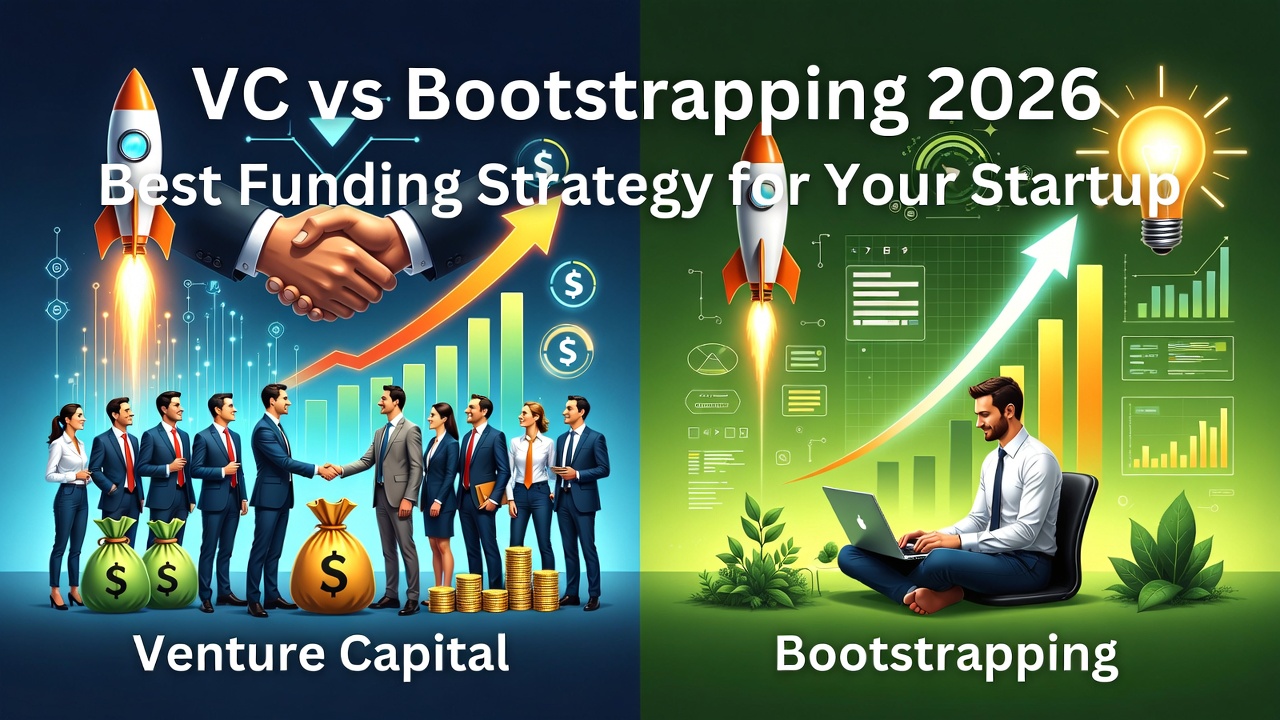
Discover funding options for entrepreneurs in 2026. Compare venture capital, bootstrapping, and alternatives to choose the right strategy for your startup success.
Picture this: 90% of startups fail, and choosing the wrong funding strategy accelerates that failure. In 2026’s evolving entrepreneurship landscape, the funding decision you make today determines whether your business thrives or joins the statistics. The entrepreneurship funding spectrum ranges from self-reliant bootstrapping to institutional venture capital funding, each offering distinct pathways to success.
Successful entrepreneurs understand that funding strategy extends far beyond raising money. It’s about aligning capital with vision, maintaining control while enabling growth, and choosing partners who accelerate rather than hinder progress. Whether you’re launching a tech startup or scaling a service business, your startup funding choice shapes every aspect of your entrepreneurial journey.
The modern funding landscape offers numerous options. Traditional venture capital still dominates headlines, but alternative funding sources like crowdfunding, angel investors, and government grants provide viable pathways for different business models. The key lies in matching your funding strategy to your business stage, industry requirements, and personal risk tolerance.
Key Takeaways:
- Multiple funding options exist for entrepreneurs, each with distinct advantages and trade-offs
- Bootstrapping offers maximum control but limits growth potential due to resource constraints
- Venture capital provides substantial resources but requires ownership dilution and rapid growth expectations
- The right funding choice depends on business stage, industry, and entrepreneur’s risk tolerance
- Successful funding strategy often combines multiple sources rather than relying on a single approach
Let’s start by examining the most talked-about funding option in entrepreneurship circles.
Venture Capital: The High-Growth Highway
Venture capital represents private equity financing designed for startups with exceptional growth potential. VC firms pool funds from institutional investors, wealthy individuals, and pension funds to support businesses that can deliver substantial returns. This funding mechanism operates across multiple investment stages: seed funding for early concepts, early-stage investment for market validation, growth capital for scaling operations, and late-stage funding for market expansion.
VC investment typically targets technology, biotech, and fintech sectors where scalability becomes essential for success. These industries offer the potential for rapid growth and market disruption that VC firms seek in their portfolio companies.
Advantages of VC funding include access to substantial capital that enables rapid scaling, strategic guidance from experienced investors who’ve built successful companies, extensive industry connections that open doors to partnerships and talent, and enhanced marketplace credibility that attracts customers and additional investors.
However, VC investment carries important disadvantages. Ownership dilution reduces your control over business decisions, while pressure for rapid returns creates aggressive growth expectations that may not align with sustainable business practices. High failure risk expectations mean investors anticipate most investments will fail, creating additional pressure on portfolio companies to deliver exceptional returns.

Venture capital makes sense for businesses requiring large upfront capital for product development or market entry, scalable business models in innovative sectors with large addressable markets, and entrepreneurial teams ready to exchange control for growth resources and expertise.
While venture capital grabs headlines, many successful entrepreneurs choose a different path entirely.
Bootstrapping: The Self-Reliant Approach
Bootstrapping means self-funding your business through personal savings, early revenues, and reinvested profits. This approach prioritizes independence, frugality, and sustainable growth over rapid scaling. Bootstrapped entrepreneurs maximize existing resources while avoiding external capital that dilutes ownership or creates debt obligations.
Common bootstrapping strategies include reinvesting early revenues directly into business expansion, maintaining lean operational costs through remote work and minimal overhead, using existing personal and professional networks for business development, and avoiding both debt obligations and equity dilution that compromise future flexibility.
Bootstrapping benefits are substantial for the right entrepreneur. You retain complete control over business decisions without investor interference, avoid debt obligations and repayment pressure that constrain cash flow, foster a disciplined, resource-efficient mindset that improves long-term sustainability, and keep 100% ownership of future profits and business value.
Bootstrapping limitations include restricted growth potential due to limited resources, increased personal financial risk that affects your personal financial security, slower scaling compared to well-funded competitors, and potential cash flow challenges during key growth phases when reinvestment needs exceed current revenues.
Best candidates for bootstrapping include service-based businesses with low startup costs and quick revenue generation potential, entrepreneurs with sufficient personal savings to sustain themselves during early business phases, and businesses operating in markets where rapid scaling isn’t essential for competitive advantage.
Between the extremes of venture capital and bootstrapping lies a rich collection of alternative funding options.
Alternative Funding Landscape
Angel investors provide the middle ground between bootstrapping and venture capital. These wealthy individuals invest their personal funds in exchange for equity, typically providing $25,000 to $500,000 during early business stages. Key benefits include mentorship and industry connections alongside capital investment. Main drawbacks involve ownership dilution with potential expectation mismatches about business direction. Angel investment works best for early-stage companies needing smaller funding rounds with strategic guidance.
Crowdfunding uses community power through platform-based funding from many small contributors. Types include reward-based crowdfunding where backers receive products, equity crowdfunding that offers ownership stakes, and donation-based crowdfunding for social causes. Advantages include marketing exposure and real-world idea validation. Challenges require substantial marketing effort with no guarantee of reaching funding goals. Crowdfunding works ideally for consumer-facing products with strong community appeal and startup success stories.
Debt financing represents traditional borrowing through bank loans, microloans, and credit facilities. You repay borrowed funds with interest regardless of business success or failure. Benefits include retaining full ownership while building business credit history for future financing needs. Risks involve debt burden and mandatory repayment obligations that continue regardless of business performance. Debt financing suits businesses with predictable cash flows and sufficient collateral for loan security.
Government grants offer non-repayable funds from agencies and foundations, often targeting specific industries or social initiatives. Advantages include no repayment requirements and credibility boosts from government backing. Disadvantages involve competitive application processes and strict usage restrictions that limit flexibility. Grants work perfectly for innovative or socially beneficial projects that align with government priorities.
Incubators and accelerators provide structured support programs offering funding, mentorship, and resources in exchange for equity or program fees. Benefits include expert guidance from successful entrepreneurs and access to extensive investor networks. Drawbacks involve equity dilution and milestone pressure that may not match your business timeline. These programs suit early-stage startups seeking rapid growth through intensive support systems.
Funding Strategy Framework
Assessing your business needs requires thorough capital requirements analysis, realistic growth timeline expectations, industry-specific considerations that affect funding availability, and honest risk tolerance evaluation that matches your personal and professional situation.
Matching funding to business stage ensures optimal resource allocation:
| Business Stage | Primary Funding Options | Typical Amount | Key Considerations |
|---|---|---|---|
| Idea/Concept | Bootstrapping, Grants | $0-$50K | Proof of concept needed |
| Early Stage | Angel, Crowdfunding | $50K-$500K | Market validation important |
| Growth Stage | VC, Debt Financing | $500K-$5M+ | Scalability demonstrated |
| Expansion | Later-stage VC, Debt | $5M+ | Proven business model |
Creating a funding mix strategy involves combining multiple funding sources strategically, timing different funding rounds to maximize business value, and maintaining flexibility for future opportunities as your business evolves and market conditions change.
Understanding these options is just the beginning—successful entrepreneurs know how to execute their funding strategy effectively.
Practical Implementation Tips
Preparing for investors requires essential documents including detailed financial projections, comprehensive business plans, and market analysis. Your pitch deck must include storytelling that connects with investor interests while demonstrating clear value propositions. Due diligence preparation involves organizing financial records, legal documents, and operational metrics that investors will scrutinize.
Building investor relationships starts with strategic networking and securing warm introductions through mutual connections. Successful entrepreneurs manage investor communications transparently while setting realistic expectations about business progress, challenges, and timelines. Long-term relationship building often proves more valuable than individual transactions.
Frequently Asked Questions
Q: How much equity should I expect to give up for venture capital funding? A: Typical equity dilution ranges from 15-25% for early-stage VC funding, with later rounds potentially requiring 10-20% additional dilution. The exact percentage depends on your business valuation, funding amount, and negotiation skills.
Q: Can I switch from bootstrapping to external funding later? A: Yes, many successful companies start bootstrapped and later raise external funding for growth acceleration. However, transitioning requires demonstrating proven business model and strong financial metrics to attract investors.
Q: What’s the average time to secure different types of funding? A: Bootstrapping begins immediately, angel funding typically takes 2-6 months, venture capital requires 6-12 months, while grants can take 3-18 months depending on the program and application complexity.
Q: Do I need to choose just one funding source? A: No, successful entrepreneurs often combine multiple funding sources. You might bootstrap initially, then secure angel funding for growth, and later pursue venture capital for scaling operations.
Q: How do I know if my business is suitable for venture capital? A: VC-suitable businesses typically operate in large markets, demonstrate scalable business models, show strong growth potential, and can deliver 10x+ returns to investors within 5-10 years.
The entrepreneurship funding spectrum from bootstrapping to venture capital offers multiple pathways to business success. Your optimal funding strategy aligns capital choices with business goals, growth timeline, and personal vision for your company’s future. Rather than choosing funding based on popular trends, assess your specific situation including industry requirements, growth potential, and risk tolerance.
Start with a clear funding strategy assessment that considers all available funding options. Remember that entrepreneurship funding represents an ongoing journey rather than a one-time decision, with successful entrepreneurs adapting their approach as businesses evolve and opportunities emerge.
Entrepreneurship Funding Guide
Venture Capital (VC)
Venture Capital (VC) is a form of private equity financing where investors provide capital to startups and early-stage companies with high growth potential. Typically managed through venture capital firms, which pool funds from various investors, VC investments are structured to support businesses through different stages: seed, early, growth, and late stages. These investments target innovative sectors such as technology, biotech, and fintech, where scalability and rapid growth are essential Venture Capital.
VC funding offers significant advantages, including access to substantial capital, strategic guidance, industry connections, and enhanced credibility. However, it also involves disadvantages like ownership dilution, loss of control, pressure for rapid returns, and high failure risk for startups Venture Capital.
Bootstrapping
Bootstrapping is an entrepreneurial funding method characterized by self-funding and resourcefulness. It involves using personal savings, reinvesting profits, minimizing expenses, and leveraging existing resources to finance and grow a business without external capital. Core principles include independence, frugality, and a focus on sustainable growth. Common strategies encompass reinvesting early revenues to fund expansion, maintaining low operational costs, and avoiding debt or external equity dilution Startup India.
The primary advantages of bootstrapping are retaining full control over the business, avoiding debt obligations, and fostering a disciplined, resource-efficient mindset. Conversely, disadvantages include limited growth potential due to resource constraints, increased personal financial risk, and slower scaling compared to externally funded counterparts LivePlan.
Other Common Funding Methods
Angel Investors
Angel investors are wealthy individuals who provide capital to startups in exchange for equity or convertible debt. They often offer mentorship and industry connections, making them suitable for early-stage companies needing smaller amounts of funding. Advantages include access to experienced guidance and flexible investment terms, while disadvantages involve ownership dilution and potential mismatched expectations Founders Network.
Crowdfunding
Crowdfunding involves raising small amounts of money from a large number of people via online platforms. It is particularly useful for consumer-facing products and projects with strong community appeal. Benefits include marketing exposure and validation of ideas, but challenges include the need for significant marketing effort and the risk of not reaching funding goals Stripe Resources.
Debt Financing
Debt financing entails borrowing money through bank loans, microloans, or other credit facilities, which must be repaid with interest. It is suitable for businesses with predictable cash flows and assets to collateralize. Advantages include retaining ownership and building credit history, while disadvantages involve repayment obligations regardless of business success and potential debt burden SBA.
Grants
Grants are non-repayable funds provided by government agencies, foundations, or organizations, often targeted at specific industries, research, or social initiatives. They are ideal for startups engaged in innovative or socially beneficial projects. The main advantages are no repayment and validation, but disadvantages include competitive application processes and restrictions on fund use JPMorgan.
Incubators and Accelerators
Incubators and accelerators are programs that offer seed funding, mentorship, resources, and networking opportunities in exchange for equity or fees. They are suitable for early-stage startups seeking structured support and rapid growth. Benefits include access to expert guidance and investor networks, while drawbacks involve equity dilution and the pressure to meet program milestones FI.co.
This comprehensive overview provides entrepreneurs with a clear understanding of various funding options, their strategic fit, and associated pros and cons, enabling informed decision-making in their startup journey.
Sources
- https://openai.com/research
- https://startupindia.gov.in/content/sih/en/funding.html
- https://www.liveplan.com/blog/funding/top-alternative-funding-methods
- https://foundersnetwork.com/types-of-funding-for-startups
- https://stripe.com/resources/more/alternatives-to-venture-capital
- https://www.sba.gov/business-guide/plan-your-business/fund-your-business
- https://jpmorgan.com/insights/banking/commercial-banking/startup-fundraising-how-to-raise-capital-for-your-startup
- https://fi.co/startup-funding-checklist
Discover more from Startups Pro,Inc
Subscribe to get the latest posts sent to your email.

A well-crafted business plan is the cornerstone of any successful business venture. Whether you’re starting a new company, seeking funding, or looking to pivot your existing business, a comprehensive business plan is essential for guiding your efforts and convincing stakeholders of your vision. In this comprehensive guide, we will take you through the process of writing a business plan step by step, providing you with the knowledge and tools necessary to create a compelling and effective plan.
1. Introduction
What is a Business Plan?
A business plan is a comprehensive document that outlines your business’s goals, strategies, and financial projections. It serves as a roadmap for your company, providing direction for its growth and development. A well-structured business plan not only helps you clarify your ideas and goals but also communicates your vision to potential investors, partners, and employees.
Why is a Business Plan Important?
A business plan is crucial for several reasons:
- Guidance: It provides a clear roadmap for your business, helping you stay on course and make informed decisions.
- Communication: It communicates your business idea and strategy to stakeholders, including investors and lenders.
- Funding: It is often required when seeking financing, as it demonstrates your business’s viability.
- Benchmarking: It sets measurable goals and allows you to track your progress.
- Risk Management: It helps identify potential challenges and develop contingency plans.
Now that we understand the importance of a business plan, let’s dive into the various sections that make up a comprehensive plan.

2. Executive Summary
The executive summary is the first section of your business plan, but it’s often written last, as it provides a concise overview of the entire plan. This section should grab the reader’s attention and provide a snapshot of your business.
Key Elements of the Executive Summary:
- Business Description: Briefly describe your business, its mission, and its products or services.
- Market Opportunity: Highlight the market need or problem your business addresses.
- Unique Selling Proposition (USP): Explain what sets your business apart from competitors.
- Financial Summary: Provide a high-level overview of your financial projections.
- Funding Requirements: If you’re seeking financing, state how much you need and how you plan to use it.
- Team: Mention key team members and their qualifications.
3. Company Description
In this section, you’ll provide more detailed information about your company, its history, and its mission.
Key Components of the Company Description:
- Company History: Describe how your business was founded and its growth over time.
- Mission and Vision: Explain your business’s purpose and long-term goals.
- Legal Structure: Detail your company’s legal structure (e.g., sole proprietorship, LLC, corporation).
- Location: Mention your physical location and any plans for expansion.
- Ownership: List the owners and their percentage of ownership.
4. Market Research and Analysis
Understanding your market is essential for developing a successful business plan. This section should demonstrate your knowledge of the industry, target market, and competitors.
Components of Market Research and Analysis:
- Market Overview: Provide an overview of the industry, including size, growth trends, and major players.
- Target Market: Define your ideal customer, including demographics, preferences, and buying behaviour.
- Competitive Analysis: Analyze your competitors, their strengths, weaknesses, and market share.
- SWOT Analysis: Identify your business’s strengths, weaknesses, opportunities, and threats.
- Market Strategy: Explain how you plan to position your business in the market.
5. Products or Services
Describe in detail the products or services your business offers. Highlight their unique features and benefits.
Key Elements of the Products or Services Section:
- Product/Service Description: Provide a detailed description, including specifications, features, and benefits.
- Development and Production: Explain how your products/services are developed or produced.
- Intellectual Property: Mention any patents, trademarks, or copyrights associated with your offerings.
- Future Product/Service Plans: Discuss any plans for expanding or enhancing your offerings.
6. Marketing and Sales Strategy
Your marketing and sales strategy outlines how you will attract and retain customers. It’s a crucial section for demonstrating how you plan to generate revenue.
Components of the Marketing and Sales Strategy:
- Target Audience: Specify your primary and secondary target customer segments.
- Marketing Plan: Detail your marketing tactics, including advertising, PR, social media, and content marketing.
- Sales Strategy: Explain your sales channels (e.g., online, retail, wholesale) and sales approach.
- Pricing Strategy: Describe your pricing strategy and how it aligns with your market positioning.
- Customer Acquisition: Outline how you plan to acquire and retain customers.
- Sales Projections: Provide sales forecasts based on your marketing and sales strategies.
7. Management and Organization
This section introduces your management team and outlines your company’s organizational structure.
Key Components of the Management and Organization Section:
- Management Team: Introduce key team members, their roles, and their qualifications.
- Board of Directors/Advisors: If applicable, mention any external advisors or board members.
- Ownership Structure: Reiterate the ownership structure and share ownership percentages.
- Key Personnel: Describe any critical personnel who are not part of the management team.
8. Funding Request (if applicable)
If you’re seeking financing, this section outlines your funding needs and how you plan to use the funds.
Elements of the Funding Request Section:
- Funding Needs: Specify the amount of funding required and the purpose (e.g., startup capital, expansion).
- Use of Funds: Explain how you will allocate the funds, including a breakdown of expenses.
- Funding Timeline: Detail when you need the funds and how they will be disbursed.
- Repayment Plan: If applicable, outline how and when you plan to repay investors or lenders.
9. Financial Projections
Financial projections provide a glimpse into your business’s financial future, helping investors assess its potential.
Key Components of Financial Projections:
- Income Statement: Present revenue, expenses, and profitability projections for the next 3-5 years.
- Cash Flow Statement: Outline expected cash flows, including operating, investing, and financing activities.
- Balance Sheet: Display your company’s assets, liabilities, and equity at the end of each projected year.
- Break-Even Analysis: Calculate the point at which your business becomes profitable.
- Assumptions: Document the assumptions and methodologies used in your financial projections.
10. Appendix
The appendix is where you include supplementary materials that support your business plan. This might include resumes of key team members, market research data, product/service images, or any other relevant documents.
11. Conclusion
In conclusion, writing a comprehensive business plan is a crucial step in starting or growing your business. It serves as a roadmap, a communication tool, and a guide for financial planning. Remember that your business plan should be a dynamic document that evolves as your business grows and changes.
While this guide provides a structured framework for creating a business plan, the specific content and format may vary depending on your industry, target audience, and purpose. Tailor your plan to your unique business needs and goals, and don’t hesitate to seek assistance from mentors, advisors, or professional business plan writers if needed.
With a well-written and thought-out business plan, you’ll be better equipped to navigate the challenges of entrepreneurship and increase your chances of success in the competitive business world. So, roll up your sleeves, gather your data, and start crafting your business plan today—it’s the first step on the path to realizing your entrepreneurial dreams.
Discover more from Startups Pro,Inc
Subscribe to get the latest posts sent to your email.

Introduction
A well-crafted business plan is essential for any startup, serving as a roadmap to success and a key document to attract investors and partners. In this comprehensive guide, we will explore ten expert tips to create professional business plans that will set your startup on the path to growth and profitability. From conducting thorough market research to crafting a compelling executive summary, these essential tips will empower you to create a comprehensive and compelling business plan that maximizes your chances of achieving startup success.
I.Understand Your Audience
Before diving into the details of your business plan, it’s crucial to understand your audience. Tailor your plan to resonate with investors, lenders, and potential partners. Consider their priorities, interests, and expectations, and customize your business plan accordingly. Address their concerns, highlighting how your startup will solve specific problems and provide unique value.
II.Thoroughly Research the Market
Conduct comprehensive market research to gain a deep understanding of your industry, target market, and competitors. Analyze market trends, customer preferences, and emerging opportunities. Showcase your knowledge of the market by providing data-driven insights that support the viability of your startup’s products or services.
III.Clearly Define Your Value Proposition
Craft a clear and concise value proposition that outlines the unique benefits your startup offers to customers. Explain how your products or services address pain points in the market and differentiate them from competitors. A strong value proposition sets the foundation for a compelling business plan.
IV.Outline a Solid Business Model
Clearly articulate your startup’s business model. Describe your revenue streams, cost structure, and anticipated profit margins. Present various monetization strategies and demonstrate their feasibility. Investors want to see a well-thought-out business model that promises long-term sustainability and growth potential.
V.Know Your Financial Projections
Develop accurate and realistic financial projections that outline your startup’s financial performance over the next few years. Include detailed revenue forecasts, expense estimates, and cash flow projections. Transparently present your assumptions and methodologies, showing that you’ve thoroughly analyzed potential risks and opportunities.
VI.Describe Your Marketing and Sales Strategy
Explain your marketing and sales approach to reach and acquire customers. Highlight the channels you’ll utilize, your sales team’s structure, and the strategies for customer retention. Demonstrating a well-researched marketing and sales plan reflects your ability to drive business growth.
VII.Present a Strong Management Team
Investors place significant importance on the capabilities of the management team. Introduce key team members and their relevant expertise, highlighting how their skills complement each other. Emphasize the team’s track record, previous successes, and their dedication to the startup’s vision.
VIII.Address Potential Risks
Acknowledge and address potential risks that your startup might face. Be honest and transparent about challenges in the market, potential regulatory hurdles, or any other external factors that could impact your business. Show that you have contingency plans in place to mitigate these risks.
IX.Create a Compelling Executive Summary
Your executive summary is a snapshot of your entire business plan. Craft a compelling summary that provides a clear overview of your startup’s mission, product/service, target market, financial projections, and funding requirements. An impactful executive summary should pique the interest of potential investors and prompt them to delve deeper into your plan.
X.Polish the Presentation and Formatting
A professional business plan not only contains valuable content but also exhibits a clean and well-structured layout. Use clear headings, charts, and visuals to make your plan easy to read and understand. Pay attention to grammar and spelling, as errors can diminish the credibility of your proposal.
Conclusion
Creating a professional business plan for your startup is a critical step towards success. By following these ten expert tips, you’ll be equipped with the knowledge and strategies to develop a comprehensive and compelling plan that attracts investors, secures funding, and guides your startup on its journey to growth and profitability. Remember, a well-crafted business plan demonstrates your dedication, preparedness, and strategic thinking, positioning your startup for a bright and prosperous future.
Discover more from Startups Pro,Inc
Subscribe to get the latest posts sent to your email.

PM Invites US-Based Pakistani Business Community to Invest in Pakistan as Investment Opportunities Expand

Trump Accounts Reshuffle Tens of Millions in Big Tech & AI Holdings

NIC Islamabad Launches Exclusive Acceleration Program with Up to PKR 5 Million Equity-Free Grant Support

World School Summit 2026 Malaysia: 41st Edition

Global Digital Trade Expo 2026: Dates, Schedule, Venue, Registration and Everything You Need to Know

How to Claim Your Sony PlayStation Store Credit Settlement (Up to $33.66)

CES 2027 Las Vegas: Registration Details, Dates and Venue [Ultimate Guide]

IPhone 18 Pro Specifications, Pricing, and Thermal Architecture Leaks Analyzed

Pre-IPO Investing Strategies: How Institutional Money is Approaching Anthropic

Smash Bros Ultimate 13.0.5 Patch Notes: What Actually Changed
CES 2027 Las Vegas: Registration Details, Dates and Venue [Ultimate Guide]
Global Digital Trade Expo 2026: Dates, Schedule, Venue, Registration and Everything You Need to Know
How to Claim Your Sony PlayStation Store Credit Settlement (Up to $33.66)
IPhone 18 Pro Specifications, Pricing, and Thermal Architecture Leaks Analyzed
NIC Islamabad Launches Exclusive Acceleration Program with Up to PKR 5 Million Equity-Free Grant Support
World School Summit 2026 Malaysia: 41st Edition
Trump Accounts Reshuffle Tens of Millions in Big Tech & AI Holdings
PM Invites US-Based Pakistani Business Community to Invest in Pakistan as Investment Opportunities Expand
-
Digital5 years ago
Social Media and polarization of society
-
Digital6 years ago
Pakistan Moves Closer to Train One Million Youth with Digital Skills
-
Digital5 years ago
Karachi-based digital bookkeeping startup, CreditBook raises $1.5 million in seed funding
-
Kashmir6 years ago
Pakistan Mission Islamabad Celebrates “KASHMIRI SOLIDARITY DAY “
-
Digital6 years ago
WHATSAPP Privacy Concerns Affecting Public Data -MOIT&T Pakistan
-
News6 years ago
Dr . Arif Alvi visits the National Museum of Pakistan, Karachi
-
China5 years ago
TIKTOK’s global growth and expansion : a bubble or reality ?
-
Business5 years ago
Are You Ready to Start Your Own Business? 7 Tips and Decision-Making Tools