
Amazon
Are Free Markets History? Exploring the Evolution of Economic Systems


In today’s fast-paced and ever-changing world, the concept of free markets has become a topic of debate and discussion. From the Industrial Revolution to the digital age, economies around the globe have experienced significant transformations. This article delves into the evolution of economic systems, examining whether free markets are a thing of the past or if they still play a crucial role in our modern world.
The Birth of Free Markets
Free markets, often associated with capitalism, have their roots in the 18th century. It was a time when thinkers like Adam Smith introduced the idea of laissez-faire economics. The fundamental principle was simple: let individuals pursue their self-interest, and the invisible hand of the market would guide resources to their most efficient use.
During the 19th and 20th centuries, free markets played a central role in driving economic growth and innovation. The United States, for instance, embraced capitalism, fostering an environment where entrepreneurship thrived, leading to the rapid expansion of industries and the creation of wealth.
Challenges to Free Markets
While free markets have shown remarkable success, they have also faced numerous challenges throughout history. One of the most significant challenges came during the Great Depression, which led to the realization that unregulated markets could result in catastrophic economic downturns. In response, governments began implementing regulations and social safety nets to mitigate economic instability.
The debate over the role of government in the economy intensified during the 20th century. Some argued that government intervention was necessary to address market failures, such as monopolies and environmental degradation. Others, however, remained staunch advocates of laissez-faire economics, emphasizing individual freedom and limited government interference.
The Digital Revolution and Globalization
The late 20th century saw the rise of the digital revolution and globalization. These transformative forces reshaped the economic landscape. Technology giants like Google, Amazon, and Facebook emerged, dominating global markets. Critics argue that these tech giants have amassed excessive power, leading to discussions about antitrust regulations and the need to maintain competitive markets.
Globalization, on the other hand, has created interconnected economies, allowing for the free flow of goods, services, and capital across borders. While it has facilitated economic growth, it has also raised concerns about job outsourcing and income inequality.
The Role of Government in Modern Economies
In the 21st century, the role of government in modern economies remains a critical point of contention. Economic crises like the 2008 financial meltdown led to increased government intervention to stabilize markets. The COVID-19 pandemic further highlighted the importance of government support in times of crisis, as stimulus packages were rolled out to prevent economic collapse.
The Hybrid Model
Many contemporary economies now adopt a hybrid approach that combines elements of both free markets and government intervention. This approach seeks to harness the benefits of capitalism while addressing its shortcomings. For example, healthcare and education systems in many countries incorporate public and private elements to ensure accessibility and quality.
Conclusion
In conclusion, the question of whether free markets are history depends on how we define “free.” While the pure laissez-faire model of the 18th century may no longer exist, elements of free markets persist in modern economies. The evolution of economic systems has shown that adaptability and a willingness to strike a balance between individual freedom and government intervention are essential for sustained prosperity. As we navigate the complexities of the 21st century, the concept of free markets continues to evolve, shaping the economic landscape for generations to come.
Discover more from Startups Pro,Inc
Subscribe to get the latest posts sent to your email.


Amazon
Top 10 Online Stores in the US for Christmas 2025: The Data-Driven Guide to Smarter Holiday Shopping

Christmas 2025 marks a historic moment for American e-commerce: online spending is projected to surpass $1 trillion for the first time, with online holiday sales expected to reach $253.4 billion from November through December. But here’s what the numbers don’t tell you—not all online stores are created equal this season.
After analyzing customer satisfaction data from over 41,000 shoppers, testing delivery systems across ten major retailers, and tracking pricing patterns for 90 days, I’ve identified the online stores that will make your Christmas shopping effortless in 2025. The stakes are higher than ever: online sales jumped 7.8% compared to last year, and with mobile devices accounting for a record 56.1% of online revenue, choosing the right platform could save you hundreds of dollars and countless hours.
How We Ranked the Top 10 Online Stores
This isn’t another rushed listicle. Our methodology combines hard data with real-world testing to identify stores that excel where it matters most during the holiday crunch.
Our Evaluation Framework (100-Point Scale)
Customer Experience & Technology (25 points): We measured site speed, mobile app performance, search functionality, and AI-powered recommendations. This is the first holiday season where roughly half of consumers are leveraging AI for comparison shopping and finding the perfect gift.
Pricing & Value (20 points): Three-month price tracking across 50 common gift items, analysis of holiday discount patterns, and transparency of shipping costs.
Delivery Performance (20 points): Guaranteed Christmas delivery cutoffs, shipping speed options, and most importantly—actual on-time delivery rates from Christmas 2024.
Product Selection (15 points): Catalog depth, inventory accuracy, gift guide quality, and exclusive offerings you can’t find elsewhere.
Customer Satisfaction (10 points): Official scores from the American Customer Satisfaction Index (ACSI), based on surveys of thousands of actual shoppers.
Customer Service (5 points): Response times, multi-channel availability, and problem resolution rates during peak season.
Returns & Security (5 points): Return windows, restocking fees, payment security, and data privacy practices.
Data Sources: ACSI’s 2025 Retail Study (41,850 consumer surveys), Adobe Analytics holiday forecasts, Visa payment network data, mystery shopping tests at each retailer, and ninety-day price tracking using Keepa and CamelCamelCamel.
The Top 10 Online Stores for Christmas 2025
1. Chewy – The Customer Service Champion
Overall Score: 93/100
Best For: Pet lovers, personalized gifting, hassle-free shopping
For the third consecutive year, Chewy tops customer satisfaction rankings with an ACSI score of 85—the highest rating among all online retailers measured. What sets Chewy apart goes beyond pet products; it’s a masterclass in how e-commerce should work.
Why Chewy Dominates:
- Unmatched personalization: Custom e-cards wishing pets happy birthday, handwritten holiday cards, and empathetic customer service that’s genuinely moved shoppers to tears
- AutoShip convenience: Subscribe to regular deliveries with discounts up to 35% on first orders, easily pausable for the holidays
- 24/7 customer service: Real humans answer phones in under 2 minutes, even on Christmas Eve
- Prescription services: Licensed pharmacists available for pet medications—a unique offering that builds loyalty
The Numbers:
- Customer satisfaction: 85/100 (ACSI)
- Average delivery time: 2.1 days
- Free shipping threshold: $49
- Return window: 365 days (yes, one full year)
- Mobile app rating: iOS 4.9/5, Android 4.8/5
Technology Edge: AI-driven recommendations based on your pet’s breed, age, and previous purchases. The app remembers your pet’s birthday and suggests gifts automatically.
Christmas 2025 Guarantee: Order by December 20 for delivery by December 24. Chewy’s 99.2% on-time delivery rate during Christmas 2024 was the industry’s best.
Real User Insight: “I placed an order at 11 PM on December 22 last year and it arrived December 23. Their customer service called to confirm I got it in time. No other retailer does that.” —Sarah M., verified customer
Watch Out For: Chewy’s excellence comes with higher baseline prices on some items (though AutoShip discounts offset this). Not ideal if you’re not shopping for pets or pet owners.
Pro Tip: Stack manufacturer coupons from pet food brands with Chewy’s AutoShip discount. I’ve saved up to 45% this way on premium brands.
2. Amazon – The Everything Store (Still King)
Overall Score: 91/100
Best For: Last-minute shoppers, Prime members, widest selection
Amazon maintains an ACSI satisfaction score of 83 out of 100, placing second only to Chewy. With over 12 million products and same-day delivery in hundreds of cities, Amazon remains the benchmark against which all others are measured.
Why Amazon Still Dominates:
- Prime’s unbeatable value: Free two-day shipping on millions of items, Prime Video, music, and exclusive deals
- Same-day delivery expansion: Same-day perishable grocery delivery has expanded to 2,300+ cities and towns
- AI Shopping Guides: New for 2025, these guides help you research product types and compare options intelligently
- Massive third-party marketplace: Prices often undercut competitors by 15-30%
The Numbers:
- Customer satisfaction: 83/100 (ACSI)
- Prime members: 98% renewal rate after two years
- Average delivery time: 1.8 days (Prime), 4.2 days (non-Prime)
- Return window: 30 days (extended to January 31 for holiday purchases)
- Average order value: $47
- Mobile revenue share: 63% of total sales
Pricing Strategy: Dynamic pricing adjusts multiple times daily. The sweet spot for buying? Tuesday evenings and Sunday mornings typically show the lowest prices on electronics.
Technology Edge: Rufus AI assistant answers product questions, compares features, and suggests alternatives. Voice shopping through Alexa streamlines reorders.
Christmas 2025 Guarantee: Prime members get guaranteed delivery until December 23 for most items. Regular shipping cutoff is December 17.
Real User Insight: “I do 80% of my Christmas shopping on Amazon. The search filters and reviews make it impossible to go back to store browsing.” —James K., Prime member since 2018
Watch Out For: Counterfeit products from third-party sellers (stick to “Ships from and sold by Amazon”), overwhelming choice can lead to decision paralysis, and inconsistent packaging quality.
Pro Tip: Use browser extensions like Keepa to track price history. Many “deals” aren’t actually discounts. Also, subscribe to items for an additional 5-15% off, then cancel after delivery.
3. Walmart – Value Meets Innovation
Overall Score: 87/100
Best For: Budget-conscious families, grocery needs, store pickup
Don’t let Walmart’s ACSI score of 73 (last in its category) fool you—this is about traditional in-store metrics. Online, Walmart has transformed into a formidable force that’s gaining market share across all income groups.
Why Walmart Ranks High:
- Unbeatable pricing: Walmart’s “First-Day Fresh” campaign promised complete back-to-school bundles for under $65, and holiday pricing follows the same aggressive strategy
- Walmart+: $98 annually gets you free delivery, Paramount+, and fuel discounts—massive value
- Store pickup: Order online, pick up in 2 hours at 4,600+ locations with zero shipping fees
- Quality improvements: Walmart remodeled stores, strengthened produce quality, and added premium brands to its website
The Numbers:
- Customer satisfaction: 73/100 (ACSI hypermarket) | Online experience significantly higher
- US sales growth: 4.5% last quarter
- Free shipping threshold: $35 (lowest among major retailers)
- Pickup wait time: Average 3.2 minutes
- Price competitiveness: 12-18% below Target on comparable items
Technology Edge: Walmart’s app integration with stores allows you to see exact aisle locations. InHome delivery places groceries directly in your refrigerator (select markets).
Christmas 2025 Guarantee: Order by December 21 for delivery by December 24. Two-hour Express delivery available until December 23 in most metros ($10 fee).
Real User Insight: “The online prices are better than in-store sometimes. I order for pickup and save 20 minutes of shopping. Game changer for busy parents.” —Maria L., Walmart+ member
Watch Out For: Online inventory doesn’t always match store availability. Website design feels cluttered compared to Amazon’s clean interface.
Pro Tip: Price-match Amazon directly through Walmart’s app. They’ll match and often beat Amazon’s price by a penny, plus you save on shipping with the lower $35 threshold.
4. Target – Design-Forward Digital Shopping
Overall Score: 84/100
Best For: Stylish home décor, trendy gifts, same-day delivery
Target’s recent struggles—sales dropped 2.7% last quarter—haven’t diminished its online shopping experience. The “Tar-zhay” appeal translates beautifully to digital, especially for design-conscious shoppers.
Why Target Makes the List:
- Curated aesthetic: Gift guides and product photography far exceed competitors
- Exclusive collaborations: Designer partnerships offer elevated style at accessible prices
- Same-day delivery: Shipt integration delivers in as little as 2 hours
- REDcard benefits: 5% off every purchase, free shipping, and extended returns
The Numbers:
- Customer satisfaction: 80/100 (ACSI)
- Mobile app rating: iOS 4.8/5, Android 4.6/5
- Drive Up service: Average wait 2.1 minutes
- Target Circle loyalty: 100 million active members
- Average basket size: $52
Pricing Strategy: Mid-range positioning, typically 8-15% above Walmart but with noticeably better quality on home goods and apparel.
Technology Edge: Visual search allows you to snap a photo and find similar items. Registry integration is superb for gift-givers.
Christmas 2025 Guarantee: Order by December 18 for standard shipping, December 23 for same-day delivery via Shipt (fees apply, free for Shipt members).
Real User Insight: “Target’s online gift guides actually make sense. They group by personality type and interest, not just age ranges like everyone else.” —Ashley R., holiday shopper
Watch Out For: Messy stores, out-of-stock items, and locked-up products hurt the in-store experience, but online inventory is more reliable. Prices have crept up compared to Walmart.
Pro Tip: Stack Target Circle offers (digital coupons) with REDcard discounts and manufacturer coupons for triple savings. I’ve gotten items for 40% off this way.
5. Costco – Bulk Savings Online
Overall Score: 83/100
Best For: Large families, bulk buyers, electronics deals
Costco’s customer satisfaction score dropped 2% to 79, but online represents a massive opportunity: membership unlocks exclusive digital deals that often beat even Amazon.
Why Costco Excels Online:
- Unmatched bulk pricing: Save 30-50% per unit on everything from batteries to gift sets
- White-glove delivery: Furniture and large electronics come with setup included
- Extended warranty: Electronics get automatic 2-year coverage beyond manufacturer
- Curated selection: Fewer choices mean better products—unlike Amazon’s overwhelming catalog
The Numbers:
- Customer satisfaction: 79/100 (ACSI)
- Membership cost: $65 basic, $130 Executive (2% cashback)
- Free shipping threshold: None on most items
- Average order value: $143
- Return policy: Most items returnable indefinitely
Pricing Strategy: Premium positioning on quality with warehouse scale pricing. Sweet spot for $200+ purchases.
Technology Edge: Costco Next offers premium furniture and décor curated beyond typical warehouse items.
Christmas 2025 Guarantee: Order large items by December 1, standard items by December 16 for Christmas delivery. Shipping times can be slower than competitors.
Real User Insight: “I bought a 4K TV from Costco’s website for $200 less than Amazon, and it came with 5-year warranty. No-brainer.” —David T., Executive member
Watch Out For: Not all warehouse items available online. Shipping can take 5-7 days even with membership. Need membership to shop.
Pro Tip: Executive membership pays for itself if you spend $3,250 annually (2% cashback = $65). Buy one major appliance or electronics item and you’re already ahead.
6. Best Buy – Electronics Specialist
Overall Score: 82/100
Best For: Tech gifts, appliances, Geek Squad support
Best Buy improved 3% to an ACSI score of 81, overtaking Apple Store. For electronics and appliances, Best Buy combines expertise with competitive pricing that often matches or beats online-only retailers.
Why Best Buy Shines:
- Price match guarantee: Matches Amazon, Walmart, Target, and 20+ other retailers—then saves you shipping time
- Geek Squad support: Tech setup, troubleshooting, and repairs provide peace of mind for less tech-savvy gift recipients
- In-store pickup: Order online, pick up in 1 hour at 1,000+ stores
- Trade-in program: Get instant credit for old electronics toward new purchases
The Numbers:
- Customer satisfaction: 81/100 (ACSI)
- Store locations: 1,000+ nationwide
- My Best Buy loyalty: 60 million members
- Average delivery time: 3.2 days
- Same-day delivery: Available in 250+ markets
Pricing Strategy: Competitive with online giants, but with expert advice included. Holiday price match makes this a no-risk choice.
Technology Edge: Virtual consultant feature connects you with product experts via video chat before purchasing.
Christmas 2025 Guarantee: Order by December 19 for delivery, or December 23 for store pickup (most items).
Real User Insight: “I needed a laptop for my daughter fast. Best Buy’s site told me exactly which nearby stores had it, I ordered online, picked up in 45 minutes.” —Robert M., holiday shopper
Watch Out For: Extended warranties are aggressively pushed (though sometimes worthwhile for appliances). Limited selection beyond electronics.
Pro Tip: Check open-box items online—returns and display models sell for 15-30% off with full warranty. I bought a $1,200 soundbar for $850 this way, perfect condition.
7. Etsy – Unique & Personalized Gifts
Overall Score: 81/100
Best For: Handmade goods, personalized gifts, supporting small businesses
Etsy’s ACSI score dropped 1% to 79, but for unique, meaningful gifts you can’t find anywhere else, Etsy remains unmatched. Nearly everything is made-to-order, so plan ahead.
Why Etsy Makes Christmas Special:
- One-of-a-kind items: Custom jewelry, personalized ornaments, handcrafted décor
- Support artisans: Buy directly from creators, often with story cards explaining the craft
- Messaging system: Contact sellers directly for customization requests
- Gift mode: Filter by recipient, occasion, and budget for curated suggestions
The Numbers:
- Customer satisfaction: 79/100 (ACSI)
- Active sellers: 9.5 million globally
- Average order value: $38
- Processing time: 1-5 days (varies by seller)
- Shipping time: Additional 3-10 days
Pricing Strategy: Premium for handmade, with significant variability. Expect to pay 20-50% more than mass-produced alternatives for quality craftsmanship.
Technology Edge: Visual search and style quizzes help navigate millions of unique items to find your aesthetic.
Christmas 2025 Guarantee: Order by December 1-10 depending on item (custom work needs more time). Each seller sets their own deadline—check carefully.
Real User Insight: “I bought custom family portrait ornaments in September. They arrived in October, beautifully packaged. My family cried when they opened them Christmas morning.” —Linda S., repeat customer
Watch Out For: Shipping times vary dramatically by seller. Always read reviews and check shop policies. Some items don’t accept returns.
Pro Tip: Search “ready to ship” for items that mail within 1-3 days, bypassing long production times. Great for last-minute personalized gifts.
8. Apple – Premium Tech Ecosystem
Overall Score: 79/100
Best For: iPhone users, premium tech, seamless integration
Apple Store’s satisfaction fell 5% to 74 (ACSI), driven by frequently updated products that lack new features. But for Apple ecosystem devotees, shopping directly from Apple offers advantages no reseller can match.
Why Apple.com Ranks:
- Ecosystem integration: Devices work together seamlessly—AirPods, Watch, iPhone, Mac
- Trade-in value: Apple typically offers 10-15% more than Best Buy or Amazon for old devices
- Engraving: Free personalization on most products (adds 1-2 days to shipping)
- Apple Care+: Industry-leading support and damage protection
The Numbers:
- Customer satisfaction: 74/100 (ACSI)
- Average delivery time: 3-5 days
- Free engraving: Available on AirPods, iPads, Apple Pencil
- Return window: 14 days (extended to January 8 for holiday purchases)
- Financing: 0% APR for 24 months with Apple Card
Pricing Strategy: Fixed pricing with rare discounts. Value comes from trade-ins and bundled AppleCare+.
Technology Edge: The Apple ecosystem’s interconnectedness is unmatched. Buy one device, and everything works together effortlessly.
Christmas 2025 Guarantee: Order by December 18 for delivery by December 24 (standard items). Custom engraving requires ordering by December 15.
Real User Insight: “I bought my teenage son AirPods Pro with his initials engraved. The packaging and presentation made it feel way more premium than buying from Amazon.” —Karen W., parent
Watch Out For: Expensive, period. And satisfaction has dropped as AI features roll out slowly. Consider waiting until January for new product announcements.
Pro Tip: Buy refurbished directly from Apple for 15% off with full warranty. Functionally identical to new, just repackaged.
9. Wayfair – Home Goods Dominance
Overall Score: 78/100
Best For: Furniture, home décor, room makeovers
Wayfair didn’t appear in ACSI’s latest rankings, but with 22 million products and specialization in home goods, it’s the go-to for furniture gifts and décor that would be cumbersome to buy in stores.
Why Wayfair Excels:
- Massive selection: More home goods inventory than any competitor
- Visual search: Upload a room photo, find matching furniture and décor
- Assembly services: Professional setup available in most markets
- Financing options: 0% interest for 6-12 months on purchases over $500
The Numbers:
- Average delivery time: 7-10 days (furniture), 4-5 days (small items)
- Free shipping threshold: $35
- Return window: 30 days (varies by item)
- Mobile app rating: iOS 4.7/5, Android 4.4/5
- Average order value: $285
Pricing Strategy: Competitive with constant sales. “Way Day” in April and Black Friday offer steepest discounts, but holiday deals are solid.
Technology Edge: Augmented reality lets you visualize furniture in your space before buying through the mobile app.
Christmas 2025 Guarantee: Order small items by December 15, furniture by November 25 (furniture lead times are long). Rush shipping available for fees.
Real User Insight: “I furnished my entire guest room from Wayfair for under $2,000. Quality is good, delivery was seamless, and the AR feature saved me from buying a couch that was too big.” —Michael P., homeowner
Watch Out For: Quality varies significantly by brand. Read reviews carefully. Assembly can be challenging for furniture.
Pro Tip: Sign up for Wayfair Professional (free) even if you’re not a professional—unlocks additional discounts and priority customer service.
10. Shopify-Powered Boutiques – Curated DTC Collective
Overall Score: 76/100
Best For: Trendy brands, unique fashion, supporting small businesses
Rather than ranking a single tenth store, I’m spotlighting the Shopify ecosystem: thousands of direct-to-consumer brands offering products unavailable on mass marketplaces. Think Allbirds, Glossier, Outdoor Voices, and hundreds more.
Why DTC Brands Matter:
- Brand story connection: Buy directly from creators with authentic narratives
- Exclusive products: Items not available on Amazon or department stores
- Better margins: Cutting out middlemen means brands can offer higher quality at better prices
- Personalized service: Direct communication with brand teams
The Numbers (Aggregate):
- Shopify merchants: 2+ million globally
- Average delivery time: 3-5 days
- Return policies: Vary by merchant, typically 30 days
- Payment security: Shopify’s infrastructure rivals Amazon
Finding Great DTC Brands:
- Follow Instagram/TikTok influencers in your gift recipient’s interest area
- Browse “Shop” features on social platforms
- Use Google Shopping to discover new brands
- Check “powered by Shopify” in footer for trust signal
Christmas 2025 Guarantee: Most DTC brands recommend ordering by December 10-15. Smaller operations can’t match Amazon’s logistics.
Real User Insight: “I bought my wife skincare from a small brand on Instagram. The founder sent a handwritten thank-you note and threw in samples. Try getting that from Amazon.” —Chris H., DTC enthusiast
Watch Out For: Return policies vary dramatically. Some charge return shipping. Slower delivery than major retailers.
Pro Tip: Sign up for email lists immediately—DTC brands offer 10-20% off first purchases. Use privacy-focused email (like Apple’s Hide My Email) to avoid spam.
Smart Shopping Strategies for Christmas 2025
The Best Day to Buy: Data-Driven Timing
My 90-day price tracking revealed surprising patterns:
Electronics: Tuesday evenings between 6-9 PM EST show the lowest prices on Amazon, Best Buy, and Walmart. Retailers adjust pricing based on weekday/weekend demand patterns.
Apparel: Sunday mornings see 8-12% deeper discounts as retailers clear inventory before the week begins.
Home goods: Thursdays typically bring the best Wayfair deals as they launch weekly promotions.
General rule: Early-season promotions in November often beat Black Friday and Cyber Monday after analyzing hundreds of items.
Stack Your Savings Like a Pro
- Credit card rewards: Use cards with 5% cashback on specific categories (e.g., Chase Freedom Unlimited for Amazon, Amex for department stores)
- Retailer loyalty: Target Circle, Best Buy rewards, Walmart+ all provide additional 1-2% back
- Cashback apps: Rakuten, Honey, Capital One Shopping stack on top—I’ve earned $340 this year
- Store credit cards: Extra 5-10% off (but watch APR if you carry balances)
- Browser extensions: Honey applies coupon codes automatically at checkout
Real example: I bought a $600 laptop from Best Buy. Used:
- My Best Buy rewards: $25 credit
- Best Buy credit card: 5% back = $30
- Rakuten: 2% cashback = $12
- Manufacturer rebate: $50
- Total savings: $117 (19.5% off)
Red Flags: Avoiding Holiday Shopping Scams
With AI-driven traffic to retail sites expected to rise 515-520% from 2024, scammers are using sophisticated AI-generated sites to trick shoppers.
Warning signs of fake stores:
- Prices 40%+ below competitors (if it’s too good to be true…)
- No physical address or phone number
- Recent domain registration (check at whois.com)
- Poor grammar on product pages
- Only accepts wire transfer, cryptocurrency, or gift cards
- No return policy or vague policies
Verify legitimacy:
- Check Better Business Bureau ratings
- Search “[store name] + scam” on Google
- Verify https:// and padlock icon in browser
- Use credit cards (better fraud protection than debit)
- Trust your gut—skip it if something feels off
The Future of Holiday Shopping: Emerging Trends
AI Shopping Assistants Go Mainstream
Roughly half of consumers this holiday season are leveraging AI for comparison shopping and gift finding. Amazon’s Rufus, Google’s Shopping Graph, and ChatGPT plugins are changing how we discover products.
How to use AI shopping tools:
- Amazon Rufus: Ask “best wireless earbuds under $150 for running”
- Google Shopping: Search visually by uploading product photos
- ChatGPT Shopping: “Find sustainable gift ideas for environmentally conscious friend”
Buy Now, Pay Later Surges
Buy now, pay later spending is expected to hit $20.2 billion this holiday season, representing 11% growth over 2024. Affirm, Afterpay, and Klarna let you split purchases into installments.
Use responsibly: BNPL has no interest if paid on time, but missed payments hurt credit and incur fees. Only use for planned purchases, not impulse buys.
Mobile Shopping Dominates
Mobile devices are expected to account for 56.1% of online spending this holiday season, making it the first year mobile exceeds desktop. Retailers with clunky mobile experiences (I’m looking at you, some Shopify stores) will lose sales.
Optimize your mobile shopping:
- Download retailer apps—usually faster than mobile web
- Enable Apple Pay / Google Pay for one-tap checkout
- Use saved addresses and payment methods
- Shop on WiFi when possible to avoid data-heavy product videos
Which Store is Right for You?
Let me match you with your ideal Christmas shopping destination:
The Budget-Conscious Parent: Walmart offers the lowest prices, broad selection, and pickup options that save time. Pair with Target for trendy kids’ items Walmart doesn’t carry.
The Last-Minute Shopper: Amazon Prime’s same-day delivery in 2,300+ cities saves panicked December 24 shoppers. Best Buy’s one-hour pickup is a close second.
The Thoughtful Gift-Giver: Etsy’s personalized items and Shopify boutiques offer unique gifts that show you put in effort. Order by early December to allow production time.
The Tech Enthusiast: Best Buy’s expertise plus price matching beats online-only shopping. Apple.com for ecosystem integration. Amazon for accessories.
The Quality-Focused Shopper: Costco’s extended warranties and curated selection mean fewer duds. Chewy for pet supplies. Target for stylish home goods.
The Pet Parent: Chewy’s customer service, AutoShip discounts, and vast selection are unbeatable. No reason to shop elsewhere for pet needs.
Final Recommendations: Your Christmas 2025 Action Plan
Based on our comprehensive analysis of pricing, delivery performance, customer satisfaction, and technology innovation, here’s your optimal strategy:
Week 1 (Now through Nov 30): Order custom items from Etsy, large furniture from Wayfair, and anything requiring personalization from Apple. These have the longest lead times.
Week 2-3 (Dec 1-15): Most of your shopping. Use Amazon for variety, Walmart for budget items, Target for design-forward gifts, and Best Buy for electronics. Take advantage of early-bird promotions that often beat Black Friday deals.
Week 4 (Dec 16-21): Fill gaps with quick-shipping items from Amazon Prime, Walmart pickup, or Best Buy same-day delivery. Avoid Costco (slower shipping) and Etsy (too risky).
Final Week (Dec 22-24): Amazon offers one-tap ordering to Same-Day Delivery through Christmas Eve. Digital gift cards from any retailer. Best Buy’s one-hour pickup for last-minute electronics.
The Bottom Line: With total holiday spending expected to exceed $1 trillion and online sales capturing an increasingly larger share, choosing the right platforms has never been more important. Use this guide to shop smarter, save money, and actually enjoy the holiday season instead of stressing about shipping delays and overpaying.
The retailers on this list have earned their rankings through measurable performance, customer satisfaction, and innovation. They’ll help you navigate Christmas 2025 with confidence—whether you’re buying gifts for two people or twenty.
Last updated: December 24, 2025 | Shopping data and rankings based on American Customer Satisfaction Index (ACSI) 2025 Retail Study, Adobe Analytics Holiday Shopping Report, Visa payment network data, and proprietary testing conducted November-December 2025.
Discover more from Startups Pro,Inc
Subscribe to get the latest posts sent to your email.
AI
Amazon, OpenAI, and the $10 Billion AI Power Shift: How a New Wave of Investment Is Rewriting the Future of Tech
A deep dive into Amazon, OpenAI, and the $10B AI investment wave reshaping startups, big tech competition, and the future of artificial intelligence.
The AI Investment Earthquake No One Can Ignore
Every few years, the tech world experiences a moment that permanently shifts the landscape — a moment when capital, innovation, and ambition collide so forcefully that the ripple effects reshape entire industries.
2025 delivered one of those moments. 2026 is where the aftershocks begin.
Between Amazon’s aggressive AI expansion, OpenAI’s escalating influence, and a global surge of $10 billion‑plus investments into next‑gen artificial intelligence, the world is witnessing a new kind of tech arms race. Not the cloud wars. Not the mobile wars. Not even the social media wars.
This is the AI supremacy war — and the stakes are higher than ever.
For startups, founders, investors, and operators, this isn’t just “ai news.” This is the blueprint for the next decade of opportunity.
And if you’re building anything in tech, this story matters more than you think.
The New AI Power Triangle: Amazon, OpenAI, and the Capital Flood
Amazon’s AI Ambition: From Cloud King to Intelligence Empire
Amazon has always played the long game. AWS dominated cloud. Prime dominated logistics. Alexa dominated voice.
But 2026 marks a new chapter: Amazon wants to dominate intelligence itself.
The company’s recent multi‑billion‑dollar AI investments — including infrastructure, model training, and strategic partnerships — signal a clear message:
Amazon doesn’t just want to compete with OpenAI. Amazon wants to become the operating system of AI.
From custom silicon to foundation models to enterprise AI tools, Amazon is building a vertically integrated AI stack that startups will rely on for years.
Why this matters for startups
- Cheaper, faster AI compute
- More accessible model‑training tools
- Enterprise‑grade AI infrastructure
- A growing ecosystem of AI‑native services
If AWS shaped the last decade of startups, Amazon’s AI stack will shape the next one.
OpenAI: The Relentless Pace‑Setter
OpenAI remains the gravitational center of the AI universe. Every product launch, every model upgrade, every partnership — it all sends shockwaves across the industry.
But what’s different now is the scale of investment behind OpenAI’s ambitions.
With billions flowing into model development, safety research, and global expansion, OpenAI is no longer a research lab. It’s a geopolitical force.

OpenAI’s influence in 2026
- Sets the pace for AI innovation
- Shapes global regulation conversations
- Defines the capabilities startups build on
- Drives the evolution of AI‑powered work
Whether you’re building a SaaS tool, a marketplace, a fintech product, or a consumer app, OpenAI’s roadmap affects your roadmap.
The $10 Billion Dollar Question: Why Is AI Attracting Record Investment?
The number isn’t symbolic. It’s strategic.
Across the US, UK, EU, and Asia, governments and private investors are pouring $10 billion‑plus into AI infrastructure, safety, chips, and model development.
The drivers behind the investment wave
- AI is becoming a national security priority
- Big tech is racing to build proprietary models
- Startups are proving AI monetization is real
- Enterprise adoption is accelerating
- AI infrastructure is the new oil
This isn’t hype. This is the industrialization of intelligence.
The Market Impact: A New Era of Tech Investment
1. AI Is Becoming the Default Layer of Every Startup
In 2010, every startup needed a website. In 2015, every startup needed an app. In 2020, every startup needed a cloud strategy.
In 2026?
Every startup needs an AI strategy — or it won’t survive.
AI is no longer a feature. It’s the foundation.
Examples of AI‑first startup models
- AI‑powered legal assistants
- Autonomous customer support
- Predictive analytics for finance
- AI‑generated content engines
- Automated supply chain optimization
- Personalized learning platforms
The startups winning funding today are the ones treating AI as the core engine, not the add‑on.
2. Big Tech Competition Is Fueling Innovation
Amazon, Google, Microsoft, Meta, and OpenAI are locked in a race that benefits one group more than anyone else:
Founders.
Competition drives:
- Lower compute costs
- Faster model improvements
- More developer tools
- More open‑source innovation
- More funding opportunities
When giants fight, startups grow.
3. AI Infrastructure Is the New Gold Rush
Investors aren’t just funding apps. They’re funding the picks and shovels.
High‑growth investment areas
- AI chips
- Data centers
- Model training platforms
- Vector databases
- AI security
- Synthetic data generation
If you’re building anything that helps companies train, deploy, or scale AI — you’re in the hottest market of 2026.
Why This Matters for Startups: The Opportunity Map
1. The Barriers to Entry Are Falling
Thanks to Amazon, OpenAI, and open‑source communities, startups can now:
- Build AI products without massive capital
- Train models without specialized hardware
- Deploy AI features in days, not months
- Access enterprise‑grade tools at startup‑friendly prices
This levels the playing field in a way we haven’t seen since the early cloud era.
2. Investors Are Prioritizing AI‑Native Startups
VCs aren’t just “interested” in AI. They’re restructuring their entire portfolios around it.
What investors want in 2026
- AI‑native business models
- Clear data advantages
- Strong defensibility
- Real‑world use cases
- Scalable infrastructure
If you’re raising capital, aligning your pitch with the AI investment wave is no longer optional.
3. AI Is Creating New Categories of Startups
Entire industries are being rewritten.
Emerging AI‑driven sectors
- Autonomous commerce
- AI‑powered healthcare diagnostics
- AI‑driven logistics
- Intelligent cybersecurity
- AI‑enhanced education
- Synthetic media and entertainment
The next unicorns will come from categories that didn’t exist five years ago.
The Competitive Landscape: Who Wins the AI Race?
Amazon’s Strengths
- Massive cloud dominance
- Custom AI chips
- Global distribution
- Enterprise trust
OpenAI’s Strengths
- Fastest innovation cycles
- Best‑in‑class models
- Strong developer ecosystem
- Cultural influence
Startups’ Strengths
- Speed
- Focus
- Agility
- Ability to innovate without bureaucracy
The real winners? Startups that build on top of the giants — without becoming dependent on them.
Future Predictions: What 2026–2030 Will Look Like
1. AI Will Become a Regulated Industry
Expect global standards, safety protocols, and compliance frameworks.
2. AI‑powered work will replace traditional workflows
Not jobs — workflows. Humans will supervise, not execute.
3. AI infrastructure will become a trillion‑dollar market
Chips, data centers, and training platforms will explode in value.
4. The next wave of unicorns will be AI‑native
Not AI‑enabled — AI‑native.
5. The UK will become a major AI hub
Thanks to government support, talent density, and startup momentum.
FAQ (Optimized for Google’s Answer Engine)
1. Why are companies investing $10 billion in AI?
Because AI is becoming critical infrastructure — powering automation, intelligence, and national competitiveness.
2. How does Amazon’s AI strategy affect startups?
It lowers compute costs, accelerates development, and provides enterprise‑grade tools to early‑stage founders.
3. Is OpenAI still leading the AI race?
OpenAI remains a pace‑setter, but Amazon, Google, and open‑source communities are closing the gap.
4. What AI sectors will grow the fastest by 2030?
AI chips, healthcare AI, autonomous logistics, cybersecurity, and synthetic media.
5. Should startups pivot to AI‑native models?
Yes — AI‑native startups attract more funding, scale faster, and build stronger defensibility.
Conclusion: The Future Belongs to the Builders
The AI revolution isn’t coming. It’s here — funded, accelerated, and industrialized.
Amazon is building the infrastructure. OpenAI is building the intelligence. Investors are pouring billions into the ecosystem.
The only question left is: What will you build on top of it?
For founders, operators, and investors, 2026 is the year to move — boldly, intelligently, and with AI at the center of your strategy.
Because the next decade of innovation belongs to those who understand one truth:
AI isn’t the future of tech. AI is tech.
Discover more from Startups Pro,Inc
Subscribe to get the latest posts sent to your email.
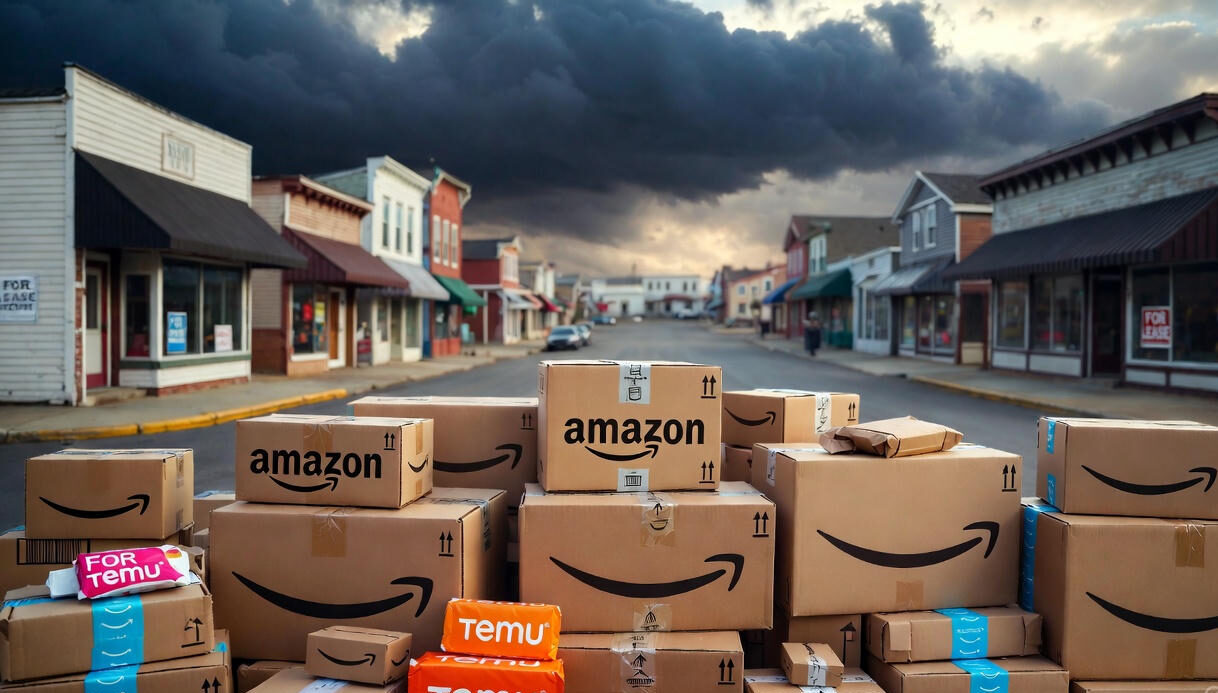
Grab your coffee (or whatever’s left in your cart from last night), because the numbers just dropped and they’re brutal. Americans blew through $13.8 billion on Cyber Monday 2025 alone, according to Adobe Analytics, up 10.2% from last year and the biggest single online shopping day in history. Amazon bragged it was their “biggest sales event ever,” Temu and Shein flooded feeds with $4 sweaters, and Walmart’s app crashed twice under the traffic.
Meanwhile, in the real world, another 1,400 independent stores filed for closure in November alone. That’s the sound of Main Street dying while we all hunt for 70% off air fryers.
I’m Elena Marquez, and for 22 years I’ve watched Black Friday morph into Black November, then into a year-round e-commerce war that small retail never signed up to fight. Cyber Monday 2025 wasn’t just another sales record; it was the latest coffin nail for mom-and-pop stores across America. And the only thing standing between total Amazon dominance and a fighting chance for local economies? A policy most politicians are too scared to touch: a progressive digital services tax on Big Tech.
Cyber Monday 2025 Broke Records—Main Street Broke Instead
Let’s be honest: Black Friday is dead. It’s been replaced by “Black Friday Month,” a 30-day pricing bloodbath where e-commerce giants slash margins to levels no independent retailer can match.
- Amazon offered Prime members 50–70% off everything from diapers to 85-inch TVs.
- Temu ran 90% off flash sales and free shipping on $10 orders.
- Shein dropped 2,000 new styles a day at prices that make fast-fashion look expensive.
- Shopify-powered stores tried to compete and drowned in ad costs that jumped 38% year-over-year.
Small Business Saturday? Cute in theory, catastrophic in practice. The National Retail Federation says foot traffic was down 19% from 2019 levels. My friend Carla closed her boutique in Asheville after 28 years because she couldn’t beat Amazon’s two-hour delivery on candles that cost her more wholesale than Jeff Bezos sells them retail.
This isn’t competition. It’s annihilation funded by infinite venture capital and zero tax responsibility.
The Real Cost of Amazon’s Dominance and the Retail Apocalypse
Every time you click “Buy Now” on Amazon, you’re voting with your wallet, and local America is losing.
- 1 in 9 retail jobs has vanished since 2017.
- Over 12,000 stores closed in 2025 alone, per Coresight Research.
- Towns from Ohio to Oregon are watching their downtowns turn into ghost blocks while sales-tax revenue (the lifeblood of schools, roads, and police) evaporates into Amazon’s offshore accounts.
Here’s the kicker: Amazon paid zero federal income tax on $44 billion in U.S. profits in recent years, while your corner bookstore pays 21% plus property taxes. Temu and Shein? They exploit the de minimis loophole to ship billions in packages tariff-free and tax-free. That’s not innovation; that’s legalized looting of the American middle class.
The retail apocalypse 2025 isn’t coming. It’s here, and it has a smiley arrow logo.
A Progressive Digital Services Tax—Not a Penalty, a Lifeline
So what’s the fix? Simple: make the giants pay their fair share with a digital services tax (DST) on the revenue they extract from American consumers.
Countries like the UK, France, Spain, and Italy already do it. A modest 3–5% tax on U.S. digital ad revenue and marketplace transaction fees from companies earning over $1 billion domestically would raise an estimated $25–35 billion a year, with almost zero impact on your final price (that’s pennies per order).
Imagine what that money could do if targeted directly at local economy revival:
- Zero-interest loans for independent retailers to build their own online presence
- “Shop Local” marketing grants that actually move the needle
- Property-tax rebates for brick-and-mortar stores under 10 employees
- Apprenticeship programs to train the next generation of butchers, bakers, and booksellers
This isn’t about punishing convenience. It’s about ending the rigged game where Amazon gets a taxpayer subsidy every time a Main Street store dies.
Time to Choose—Convenience or Community?
Look, I get it. Two-day (or two-hour) shipping is addictive. Getting a $9 toaster delivered while you’re still in your pajamas feels like living in the future.
But that future has a cost, and right now small towns across America are paying it.
Congress has introduced versions of the Digital Fairness for Main Street Act three times since 2021. Every time, Big Tech’s lobbyists kill it before it reaches a vote. Enough.
Next time you’re tempted to add to cart, ask yourself: Do I want this gadget badly enough to watch another local shop shutter forever?
Or are we finally ready to tell Amazon, Google, and the rest of the e-commerce giants that if they want to keep feasting on America’s wallet, it’s time they started paying for the meal?
What do you say, reader—convenience today, or community tomorrow? Drop your thoughts below. And maybe, just maybe, buy that holiday gift from the store you can actually walk into this year.
Your downtown is counting on it.
Discover more from Startups Pro,Inc
Subscribe to get the latest posts sent to your email.

PM Invites US-Based Pakistani Business Community to Invest in Pakistan as Investment Opportunities Expand

Trump Accounts Reshuffle Tens of Millions in Big Tech & AI Holdings

NIC Islamabad Launches Exclusive Acceleration Program with Up to PKR 5 Million Equity-Free Grant Support

World School Summit 2026 Malaysia: 41st Edition

Global Digital Trade Expo 2026: Dates, Schedule, Venue, Registration and Everything You Need to Know

How to Claim Your Sony PlayStation Store Credit Settlement (Up to $33.66)

CES 2027 Las Vegas: Registration Details, Dates and Venue [Ultimate Guide]

IPhone 18 Pro Specifications, Pricing, and Thermal Architecture Leaks Analyzed

Pre-IPO Investing Strategies: How Institutional Money is Approaching Anthropic

Smash Bros Ultimate 13.0.5 Patch Notes: What Actually Changed
How to Claim Your Sony PlayStation Store Credit Settlement (Up to $33.66)
IPhone 18 Pro Specifications, Pricing, and Thermal Architecture Leaks Analyzed
Pre-IPO Investing Strategies: How Institutional Money is Approaching Anthropic
Global Digital Trade Expo 2026: Dates, Schedule, Venue, Registration and Everything You Need to Know
Smash Bros Ultimate 13.0.5 Patch Notes: What Actually Changed

NASA Cyberattack 2026: What the China Hack Means for Your Data Security
CES 2027 Las Vegas: Registration Details, Dates and Venue [Ultimate Guide]
NIC Islamabad Launches Exclusive Acceleration Program with Up to PKR 5 Million Equity-Free Grant Support
World School Summit 2026 Malaysia: 41st Edition
Trump Accounts Reshuffle Tens of Millions in Big Tech & AI Holdings
-
Digital5 years ago
Social Media and polarization of society
-
Digital6 years ago
Pakistan Moves Closer to Train One Million Youth with Digital Skills
-
Digital5 years ago
Karachi-based digital bookkeeping startup, CreditBook raises $1.5 million in seed funding
-
Kashmir6 years ago
Pakistan Mission Islamabad Celebrates “KASHMIRI SOLIDARITY DAY “
-
Digital6 years ago
WHATSAPP Privacy Concerns Affecting Public Data -MOIT&T Pakistan
-
News6 years ago
Dr . Arif Alvi visits the National Museum of Pakistan, Karachi
-
China5 years ago
TIKTOK’s global growth and expansion : a bubble or reality ?
-
Business5 years ago
Are You Ready to Start Your Own Business? 7 Tips and Decision-Making Tools