
Business
Top 5 business books entrepreneurs should be reading on World Book Day 2022

Prolific children’s author Roald Dahl once said, ‘If you are going to get anywhere in life, you have to read a lot of books.’ So, budding entrepreneur – what are you waiting for?
If you’re a business owner, CEO or entrepreneur with kids, you’ll no doubt be very aware that today is World Book Day.
You’ve more than likely either spent the last week making a costume for your kid(s) that (roughly) resembles their favourite fictional character, or done a double take at the money you’ve just spent ordering a costume online.
But regardless of your view on World Book Day, it’s hard to deny the immense impact reading has on our lives. And this celebration is not just for our children, though they definitely learn and develop through the power of reading.
World Book Day is also for us adults and business owners to recognise the personal and professional development books provide us. Plus, as an entrepreneur, you don’t have to dress up to celebrate!
Based on over 20 years of experience interviewing CEOs, founders and successful business owners, Startups has identified the top five business books any future leader should read.
So what books are they, and how can they help you become a success?
How to Win Friends and Influence People, Dale Carnegie
Ask any successful business owner, and they will tell you the key to their success is largely due to the relationships they’ve developed with their employees, business partners, and customers.
This is likely why Dale Carnegie’s prolific and timeless classic makes it onto our list of the best business books for entrepreneurs.
Carnegie’s advice and guidance is instrumental to running a successful business, as it teaches the reader how to deal with people, which according to Carnegie himself is the ‘biggest problem founders are faced with’.
The book advises how to:
- Make friends quickly and easily
- Increase your popularity
- Persuade people to follow your way of thinking
- Win new clients and customers
- Become a better speaker
- Boost enthusiasm among your colleagues
You’ll need all of these skills as you navigate the startup world, and the importance of each is reiterated time and time again by successful entrepreneurs we’ve interviewed at Startups over the years.
Traction: Get a Grip on Your Business, Gino Wickman
Gino Wickman’s 2012 guide to running your business is seen as a bible to many successful entrepreneurs. It is centered around the Entrepreneurial Operating System, a practical approach to achieving business success by strengthening six key components of your business.
These components are:
- Vision
- People
- Data
- Issues
- Process
- Traction
There are similar books that scratch the surface of business management, but none delve quite as deep as Wickman’s Traction. It is a true ‘how to achieve business success’ guide that will help you keep control of your business as it scales without losing your sense of direction.
Sophie Baron, founder of Mamamade:
“The book Traction: Get a Grip on Your Business by Gino Wickman was recommended to me by a mentor, and now I recommend it to every new hire we bring on. It’s an important reminder to stay focused on what works – and keep an eye out for what doesn’t.”
Tools of Titans, Tim Ferriss
Tim provides several great tips on how to start a business in the video below:
Tim Ferriss is highly regarded in the business community, not only for his incredibly successful podcast The Tim Ferriss Show but also for his self-help book series, which includes the No.1 New York Times bestseller The 4-Hour Work Week.
Making his millions as an early-stage technology investor, Tim has made angel investments in companies such as Uber and Shopify, which have earned him a reputation as one of the most innovative business people in the world.
His 2016 effort Tools of Titans earns a place on our list of the top business books for entrepreneurs. In it, Ferriss takes the teachings, lessons, and tactics of successful CEOs and founders he’s interviewed over the past few years and explores them further, applying them to his own idea of business success.
The result is, as Ferriss calls it, ‘an ultimate notebook of high-leverage tools that will ensure you make the most out of your day and excel in high-stakes negotiations, environments and business dealings’.
Cathy Moseley, CEO of Boundless:
“I refer to Tools of Titans every day. Tim’s book is full of great insights, and in my opinion it should be a startup’s bible.”
The Culture Map, Erin Meyers
For entrepreneurs and startups aiming to operate on an international scale, Erin Meyers’ pivotal guide to breaking through the cultural boundaries of global business is a must-read.
Working with other businesses in the UK alone can be an arduous task, but even more challenges arise once you start operating internationally and dealing with clients and employees from across the globe.
The Culture Map provides a field-tested, practical model for understanding how cultural differences impact businesses that have entered the international business space. Meyer’s guide is full of actionable advice that is integral to the success of your business overseas.
Drawing on her own experiences in the business world, Meyers explains how to increase your organisation’s success by improving your ability to understand the behaviours of employees, clients and suppliers from different countries.
‘The Culture Map’ is Sprout.ai founder Niels Thone’s favourite book about leadership and management.
Turn the Ship Around!: A True Story of Building Leaders by Breaking the Rules, David Marquet
One of the biggest challenges facing founders and business leaders today is burnout.
Instead of building a team of independent free thinkers, many business owners are surrounded by followers that they are in charge of.
This can make running a business challenging and exhausting, particularly when the weight of responsibility is placed on you as the leader.
David Marquet, an experienced Navy officer, realised this whilst serving as Captain on the U.S. Navy’s Santa Fe ship.
He decided to make radical changes to his leadership style, and before long the Santa Fe skyrocketed from the worst to best ship in the fleet.
Turn the Ship Around is Marquet’s account of how he took matters into his own hands and challenged the U.S. Navy’s traditional leader-follower approach.
Instead of maintaining a culture of followers, Marquet pushed for leadership at every level. His guidelines for leadership are now adopted by countless successful entrepreneurs, who run businesses where every individual takes responsibility for their actions.
This book is great for any business owner who wants to use Marquet’s lessons and teachings in leadership to help propel their business forward.
Stephen Covey, author of one of the most highly regarded business books ever published (7 Habits) argued that Captain Marquet’s model of leadership was the ‘finest I have seen’.
If you want to learn how to manage a team of leaders rather than followers, look no further than Turn the Ship Around.
Alex Young, founder of Virti:
“[This is] a great book which focuses on empowering your people to think like mini-CEOs. As we bring more amazing people into our business, surrounding myself with people I can directly learn from is really important, whereas previously I figured things out by myself.”
Via Startups
Discover more from Startups Pro,Inc
Subscribe to get the latest posts sent to your email.



Microsoft officially introduced the Xbox Nano Controller on October 14, 2026. The compact controller is priced at $49.99 in the United States and is intended for people who want a lighter device, including users with smaller hands and players who carry a controller between locations. The company states it includes the standard 18 gameplay inputs, rechargeable battery, programmable Action Button, Xbox Wireless and Bluetooth connectivity.
A November 2026 launch is listed on Microsoft’s retail page. These are manufacturer specifications; independent comfort, latency and battery-life reviews still matter for a buying decision. For primary-source background, consult Xbox Wire official announcement; Xbox official specification page; Microsoft Store US. In a fast-moving topic, publication time and information cutoff matter: subsequent events may require updating the figures or legal status, not merely changing the date in the footer.
What Microsoft actually announced
The Xbox Wire announcement places the controller at a little over five inches long and approximately 3.5 ounces. Microsoft says it retains 18 standard gameplay inputs despite the smaller chassis. Its list price is $49.99 USD, though local prices and availability differ. It also reports a rechargeable internal battery and a programmable Action Button for tasks such as capturing screenshots or gameplay. This is a real official product launch, not a rumor based on leaked images. Product listings and availability should be checked for the buyer’s country.
Who benefits from a smaller controller
Small-hand ergonomics may be useful for some adults and younger players, but one size does not fit everyone. Grip diameter, shoulder-button reach, thumbstick placement and hand fatigue can matter more than weight alone. A tiny controller may be convenient in a bag but less comfortable during extended sessions for some users. A good review therefore evaluates real people with different hand sizes rather than calling compactness universally better. For parents, compatibility with age-appropriate games and device setup is part of the purchase decision. A low sticker price does not remove the need for usability testing.
Microsoft officially introduced the Xbox Nano Controller on October 14, 2026.
Wireless support and device compatibility
Microsoft says the Nano supports Xbox Wireless with compatible consoles and Bluetooth with supported PCs, mobile devices, tablets and smart TVs. That does not mean every game on every device is compatible. Operating-system support, cloud-play subscription availability and game-specific controller input differ. Players should inspect Microsoft’s compatibility notes before purchase, particularly for smart TVs or mobile games that require touch input. The internal battery uses USB-C charging, but the product page notes that the charging cable may be sold separately. Such minor accessories are relevant to total cost and should be visible in product comparisons.
Battery, Action Button and trade-offs
A built-in rechargeable battery changes ownership convenience compared with controllers that use replaceable cells, but it does not guarantee a particular play time. Battery duration depends on wireless mode, features and conditions. Microsoft has not established every real-world endurance result in the launch announcement, so editors should wait for independent testing before making precise claims. The programmable Action Button could reduce menu navigation for popular tasks, but users should verify exactly which shortcuts are available in supported software. Standard inputs may preserve familiar gameplay while smaller thumbstick travel or grip could affect precision; these are review questions, not proven flaws.
Is $49.99 good value?
Value depends on the buyer’s existing devices, preferred games and ergonomics. Someone who already owns a comfortable full-size controller may gain portability without needing to replace their main controller. A family seeking a second or third controller may prioritize price and consistent wireless pairing. A competitive player might instead favor adjustable controls, wired latency or premium hardware that the Nano does not claim to provide. Compare after-sales warranty, charging accessory costs, import taxes, local support and return rules. The launch is best understood as a compact mainstream option, not a universal upgrade from every other Xbox controller.
Worked example: how to interpret a difficult headline
Two buyers can reach different conclusions at the same price: a traveler wanting a lightweight Bluetooth controller may value the smaller form factor, while someone who plays long racing sessions on a console may prefer a larger grip. A useful review explains this trade-off rather than ranking products solely by price or feature count. Check a local store’s return policy in case the fit is unsuitable. This is a deliberately illustrative comparison unless explicit documented numbers are identified. It should not be mistaken for a real person’s financial circumstances, an unverified event, or a guaranteed forecast. Its purpose is to show how a reader can apply the underlying principle and identify which information still needs to be checked.
Three concepts that are often confused
| Concept | What it actually establishes |
|---|---|
| Official Xbox Nano | Small, $49.99 list price, rechargeable and portable. |
| Full-size standard controller | Potentially different hand fit and battery arrangements. |
| Premium controller | May add advanced customization at a higher price. |
These distinctions are more than technical niceties. They change the answer to the reader’s question. An estimate does not carry the same evidentiary weight as a final rule; an announcement does not have the same practical consequence as a completed transaction; and a provisional interpretation should not be presented as a confirmed event. Wherever a live source supplies a new fact, the editor should check whether the old text still describes the right stage of the process.
A reader’s verification workflow
Start by recording the precise claim and the date it was allegedly true. Open the primary announcement or filing rather than a social-media screenshot. Ask whether the source has an incentive to present only the most favorable interpretation, and corroborate material facts with reputable independent reporting where available. For numerical claims, note the denominator, timeframe and whether the number is a stock, a flow, a forecast or a realized result. For legal claims, note the court, agency, stage of proceedings and exact published document.
Next, separate information useful for immediate decisions from context that merely explains the headline. A person may need to act on a deadline even when the long-run political debate remains unresolved. Someone evaluating a security may need financing details, while a customer comparing technology products needs a tested specification and local warranty terms. The same headline can matter for different reasons; the article should therefore provide an actionable answer without implying that every reader faces the same circumstances.
Indicators and developments worth monitoring
- November 2026 retail availability and regional pricing.
- Independent battery-life and ergonomic testing.
- Compatibility changes via software updates.
- Store returns, warranty and accessory requirements.
Avoid treating these signals as a checklist that mechanically predicts the future. Some are leading indications and others are lagging measurements. A change becomes significant only after its magnitude, source and comparison period are understood. If two reputable sources disagree, explain the source of the difference—definitions, timing, jurisdiction, measurement or uncertainty—instead of selecting whichever number makes the strongest headline. That practice strengthens both reader trust and the article’s usefulness in search features that surface isolated paragraphs.
The specific information advantage of this article
Specifications make the Nano controller appealing, but personal hand fit, device compatibility, charging accessories, and return policy determine its value. The editorial differentiator is a use-case comparison rather than a copied feature list or an unsupported claim about measured latency.
Frequently asked questions
What is the Xbox Nano price?
Microsoft lists $49.99 USD before location-specific taxes and differences. For individual decisions, consult the primary institution or product provider, and use the exact relevant date.
When does Xbox Nano launch?
Microsoft describes November 2026 availability, with a specific November 4 date on its US store listing. For individual decisions, consult the primary institution or product provider, and use the exact relevant date.
Does it have all the standard buttons?
Microsoft says it includes 18 standard gameplay inputs. For individual decisions, consult the primary institution or product provider, and use the exact relevant date.
Does it work on PC and phones?
It supports Bluetooth on compatible devices; verify software and game compatibility. For individual decisions, consult the primary institution or product provider, and use the exact relevant date.
Microsoft officially introduced the Xbox Nano Controller on October 14, 2026. The compact controller is priced at $49.99 in the United States and is intended for people who want a lighter device, including users with smaller hands and players who carry a controller between locations. The company states it includes the standard 18 gameplay inputs, rechargeable battery, programmable Action Button, Xbox Wireless and Bluetooth connectivity.
A November 2026 launch is listed on Microsoft’s retail page. These are manufacturer specifications; independent comfort, latency and battery-life reviews still matter for a buying decision. The best next step is to identify which of the monitored developments could change this answer and use a current, authenticated record before acting. Clear distinctions between confirmed facts, estimates, proposals and contested claims are more valuable than dramatic certainty.
Discover more from Startups Pro,Inc
Subscribe to get the latest posts sent to your email.
AI
PM Invites US-Based Pakistani Business Community to Invest in Pakistan as Investment Opportunities Expand

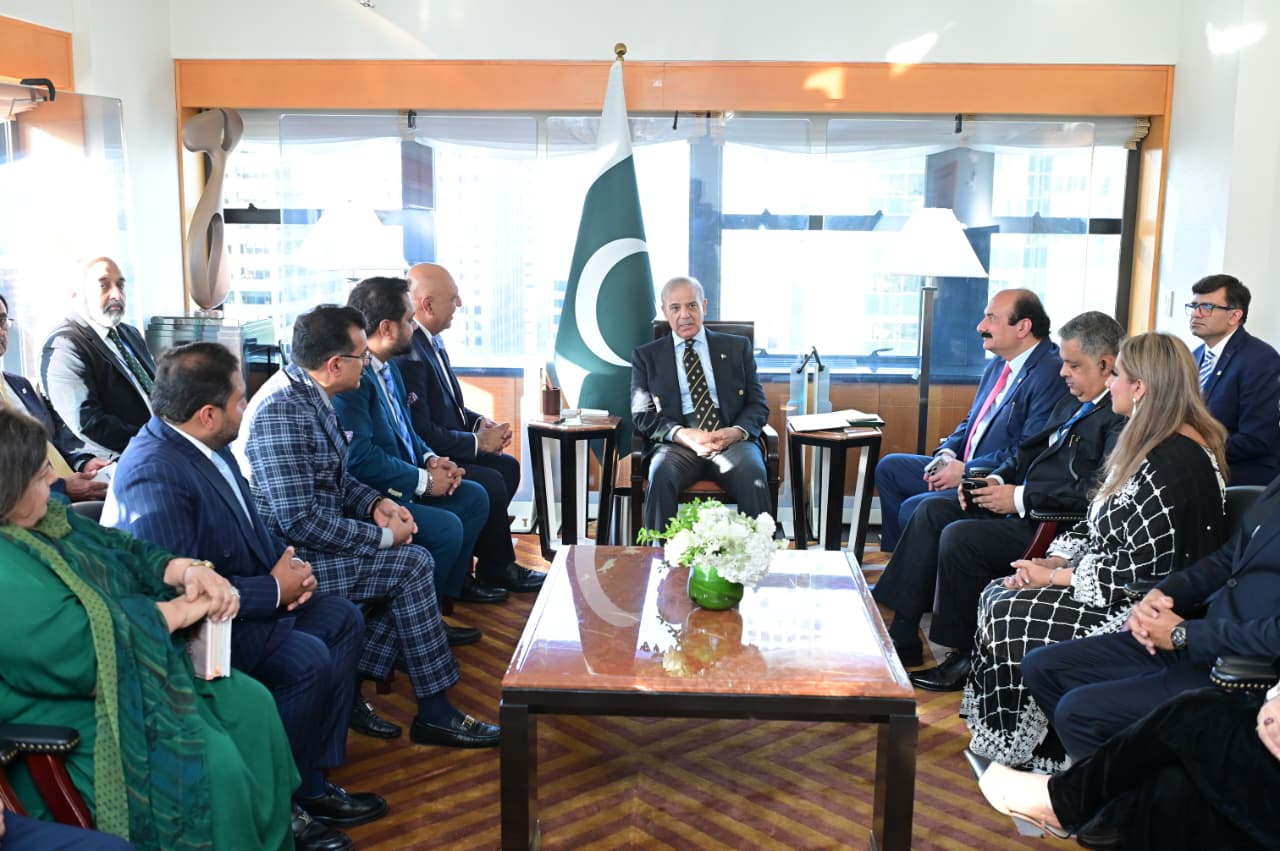
NEW YORK, September 24, 2026 — Prime Minister Muhammad Shehbaz Sharif has invited Pakistani business leaders and professionals based in the United States to invest in Pakistan, highlighting government measures aimed at improving the business environment and encouraging investment.
The invitation came during meetings with Pakistani-American business personalities and professionals working across information technology, artificial intelligence, automobiles, energy, construction and other sectors.
According to the Associated Press of Pakistan (APP), the prime minister said the government was working to create a conducive environment for investment and business activity. He also pointed to reforms at the Federal Board of Revenue (FBR) and measures intended to promote innovation in agriculture.
But the latest appeal to the Pakistani-American business community comes against a broader backdrop: Pakistan is seeking to attract more private investment, expand exports and turn improving macroeconomic conditions into sustained economic activity.
Why Pakistani-American Investors Are Being Targeted
The Pakistani diaspora represents an important source of capital, business expertise and international commercial connections.
Pakistan’s remittance flows demonstrate the economic significance of its overseas population. World Bank data show that Pakistan received approximately $40.48 billion in personal remittances in 2025, equivalent to around 9.9% of GDP.
The State Bank of Pakistan also reported workers’ remittances of approximately $3.66 billion in August 2026, with the monthly series showing substantial inflows throughout 2026.
Investment, however, differs from remittances: it involves deploying capital into businesses, projects or financial assets with the expectation of returns. That distinction makes the government’s effort to attract diaspora entrepreneurs particularly relevant.
IT and AI Among the Sectors in Focus
The technology sector is one of the most significant areas highlighted by the government.
The September 24 meeting included Pakistani-American professionals associated with IT and artificial intelligence, alongside representatives from traditional sectors such as automobiles, energy and construction.
Pakistan’s broader investment framework identifies services, including IT and telecommunications, as areas open to foreign investment. The Board of Investment says Pakistan maintains a liberal investment regime and has mechanisms designed to facilitate local and foreign investors.
For Pakistani-American technology entrepreneurs, potential areas include:
- Software and SaaS businesses
- Artificial intelligence
- IT-enabled services
- Fintech
- Digital infrastructure
- Business-process outsourcing
- Export-oriented technology companies
- Technology startups and venture investment
The attraction for diaspora entrepreneurs is not necessarily limited to providing capital. Entrepreneurs with operations in the United States can potentially bring technology, management expertise, international customers, investment networks and access to global markets.
Agriculture Is Another Priority
Agriculture was also specifically mentioned during the prime minister’s meetings.
APP reported that Shehbaz Sharif said the government was taking measures to promote innovation in agriculture.
That creates potential investment themes around:
- Agri-processing
- Agricultural technology
- Cold-chain infrastructure
- Food processing
- Irrigation technology
- Storage and logistics
- Export-oriented agriculture
- Livestock and dairy
- Farm mechanization
For investors, the distinction between producing agricultural commodities and investing in higher-value processing and supply-chain infrastructure can be particularly important because value-added businesses can connect domestic production with international markets.
What Pakistan’s Investment Framework Offers Foreign Investors
Pakistan’s Board of Investment states that the country follows a liberal investment regime and that its mandate includes promoting, encouraging and facilitating both local and foreign investment.
The Board’s investment information also states that foreign investors can have 100% equity ownership in many areas, although restrictions or specific rules apply to certain sectors.
The government’s Investment Policy 2023 also emphasizes investor protection, investment promotion and expanding Pakistan’s investment-promotion presence abroad, including in the United States.
That policy framework provides important context for the prime minister’s latest appeal to Pakistani-American businesses.
Pakistan Has Also Introduced a New Long-Term Residency Route for Investors
Another development relevant to international investors is Pakistan’s Long-Term Residency (LTR) framework.
According to the Board of Investment, the Foreigners (Long Term Residency) Order, 2025 created a residency-by-investment framework offering five-, seven- and ten-year residency options, subject to eligibility and investment requirements. The BOI says the minimum investment requirement is $50,000, to be materialized within one year through authorized banking channels.
The scheme is separate from the government’s broader investment-promotion policies, but it illustrates the effort to create additional mechanisms for attracting international capital and entrepreneurs.
The U.S.-Pakistan Economic Relationship Adds Another Layer
The appeal to Pakistani-American businesses also comes while economic engagement between Pakistan and the United States remains an important part of Pakistan’s external economic strategy.
In July 2026, Reuters reported that Pakistan had requested a proposed $10 billion U.S. exchange stabilization facility, while discussions were also taking place with U.S. financial institutions including the Export-Import Bank and the U.S. International Development Finance Corporation.
More recently, Reuters reported that Pakistan expected a decision from the United States on the proposed facility while continuing discussions with U.S. EXIM Bank and the Development Finance Corporation on potential projects.
These developments concern government-to-government and institutional financing rather than Pakistani-American private investment, but together they illustrate the wider economic relationship in which the latest business-community outreach is taking place.
What the Government Says About Investment Facilitation
Pakistan’s Board of Investment describes itself as the interface between international and domestic investors and the public and private sectors. Its investment regime information highlights measures intended to reduce the cost and procedural burden of doing business and to facilitate investment.
The government has also continued promoting the Special Investment Facilitation Council and other mechanisms intended to streamline investment processes.
For an investor considering Pakistan, however, the existence of an investment framework does not remove the need for sector-specific due diligence, regulatory approvals, taxation analysis, foreign-exchange considerations and commercial risk assessment.
What Pakistani-American Investors Should Examine Before Investing
The prime minister’s invitation is a political and economic call for greater investment, but prospective investors still need to evaluate individual opportunities on their own merits.
Key issues include:
1. Regulatory requirements
Investment rules differ according to the sector. The BOI notes that some industries are subject to specific restrictions or approvals.
2. Ownership structure
Foreign ownership can reach 100% in many sectors, but exceptions exist, making a sector-specific review necessary before establishing a company.
3. Profit and capital repatriation
Pakistan’s investment framework provides mechanisms for foreign investors to repatriate eligible profits, dividends and investment proceeds, subject to applicable foreign-exchange procedures.
4. Taxation
Investors should examine federal and provincial taxes, withholding obligations, customs duties and sector-specific incentives before committing capital.
5. Infrastructure and operating costs
An attractive investment proposition depends not only on headline incentives but also on electricity, logistics, labor, financing, connectivity and supply-chain costs.
6. Exit strategy
Investors should establish how capital can be repatriated, shares transferred and profits distributed before entering the market.
Pakistan’s Investment Push Extends Beyond the United States
The latest initiative is part of a wider effort to attract overseas Pakistani capital.
Earlier in September 2026, Economic Affairs Minister Ahad Cheema directed officials to develop a structured mechanism through which overseas Pakistanis could participate in viable infrastructure projects, including potential opportunities involving railways, highways, power, civic infrastructure and airports.
In July, Planning Minister Ahsan Iqbal also invited Pakistani-American entrepreneurs, technologists and financiers in Chicago to bring capital, expertise and global networks to Pakistan’s economic development.
This indicates that the September 24 appeal is not an isolated announcement but part of a broader government effort to engage overseas Pakistanis and international investors.
The Bigger Question: Can Investment Follow the Outreach?
The government’s challenge is to convert investment invitations into bankable projects and completed investments.
That requires more than announcements. Investors typically assess regulatory predictability, taxation, currency convertibility, infrastructure, security, financing costs, market size, contract enforcement and the ability to repatriate returns.
The U.S. State Department’s investment-climate assessment has previously identified challenges in Pakistan including regulatory complexity, intellectual-property concerns, changing taxation policies and security-related investor concerns. At the same time, it noted that U.S. companies operate profitably in several Pakistani sectors and that there are no restrictions specifically targeting U.S. investors.
That combination—investment opportunity alongside identifiable investment risks—is important context when assessing the latest government outreach.
What Comes Next for Pakistani-American Investment
Prime Minister Shehbaz Sharif’s September 24 appeal places Pakistani-American businesses at the center of Pakistan’s effort to attract additional investment.
The sectors discussed—AI, IT, energy, automobiles, construction and agriculture—cover both emerging technologies and established parts of the economy.
Pakistan’s investment framework, expanding diaspora-focused initiatives and continuing U.S.-Pakistan economic engagement could provide additional channels for investment. However, the eventual impact will depend on whether proposed opportunities develop into commercially viable projects and whether investors find the regulatory and economic environment sufficiently predictable.
For Pakistani-American entrepreneurs, the latest message from Islamabad is therefore straightforward: the government wants greater diaspora participation not only through remittances, but also through entrepreneurship, capital, technology and long-term investment.
Discover more from Startups Pro,Inc
Subscribe to get the latest posts sent to your email.

Singapore’s economy delivered a genuine surprise heading into the second half of 2026: Q1 GDP growth came in at 6.0% year-on-year, comfortably beating flash estimates of 4.6% and marking the strongest quarterly growth since Q3 2024 (Joey Choy Newsletter). That’s a substantial beat — not a rounding error — and it deserves more scrutiny than the celebratory framing it’s mostly received.
What Actually Drove the Beat
The growth was broad-based rather than concentrated in a single sector, which is itself a meaningfully positive signal. Construction output picked up, the services sector expanded faster than expected — led specifically by wholesale and retail trade, accommodation, and finance and insurance — while manufacturing held up reasonably well despite slower underlying momentum (Joey Choy Newsletter).
The Curious Gap Nobody’s Fully Explaining
Here’s the detail that deserves far more scrutiny than it’s getting: despite this substantial first-quarter beat, Singapore’s Ministry of Trade and Industry has maintained its full-year 2026 GDP growth forecast at a relatively modest 2.0% to 4.0% range (Singstat / Business Times, cited in Joey Choy Newsletter).
That’s a genuinely unusual pattern. A 6.0% first-quarter print against a full-year forecast ceiling of 4.0% implies MTI is either expecting a meaningfully sharp deceleration through the remaining three quarters, or is being deliberately conservative in its official guidance — perhaps to preserve policy flexibility given ongoing global trade uncertainty, tariff risk, and the broader geopolitical volatility still working through the Middle East conflict’s aftermath. Coverage celebrating the Q1 beat has largely glossed over this tension rather than interrogating it, which is precisely the kind of gap a sharper competitive analysis piece should fill.
The Economic Strategy Review: Singapore’s Long-Game Positioning
Running alongside the growth numbers, Singapore released the Final Report of its Economic Strategy Review, offering more detailed proposals for the country’s longer-term economic direction (Business Times, cited in Joey Choy Newsletter). While the specific policy contents of that review extend beyond what’s captured in available reporting, its timing alongside a growth beat and unchanged full-year guidance suggests Singapore’s policymakers are focused on structural, multi-year positioning rather than reacting to any single quarter’s data — consistent with the country’s historical approach to economic planning.
Singapore Airlines: A Microcosm of the Broader Margin Story
One specific corporate data point illustrates a pattern worth watching across Singapore’s broader economy: Singapore Airlines reported full-year FY2026 revenue of S$20.5 billion, up 5.0% from the prior year and beating analyst revenue estimates by 2.2%, with earnings per share surpassing estimates by 9.4%. Yet net income declined 57% to S$1.18 billion, driven by higher expenses, and profit margin fell sharply to 5.8% from 14% in FY2025 (Joey Choy Newsletter).
That’s a genuinely instructive pattern: revenue growth remaining resilient while margins compress sharply due to elevated costs — plausibly linked to the same energy price volatility and broader input-cost pressures affecting economies globally through 2026. Despite the profit decline, SIA still declared a final dividend of S$0.29 per share, covered at a 70% payout ratio on earnings and a 36% cash payout ratio, translating to a dividend yield of approximately 5.8% — a signal that management retains confidence in the underlying cash generation capacity of the business even amid margin pressure.
Why This Matters Beyond Singapore’s Borders
Singapore’s economic performance functions as a genuinely useful bellwether for the broader Southeast Asian and global trade environment, given the city-state’s outsized role as a regional financial hub, trade entrepôt, and — as detailed in the parallel Johor-Singapore Special Economic Zone story — an increasingly important node in the global AI infrastructure buildout through its role funneling data centre investment into neighboring Johor.
A services-led, broad-based Q1 growth beat, occurring even as the Middle East conflict’s energy price volatility and US tariff uncertainty weighed on global sentiment, suggests underlying Southeast Asian demand may be more resilient than headline global risk narratives suggest — though the unusually cautious full-year MTI forecast is a meaningful counter-signal worth taking seriously rather than dismissing.
What Investors and Businesses Should Watch Next
The practical signals worth tracking through the remainder of 2026: whether Q2 and Q3 GDP prints show the sharp deceleration implicit in MTI’s unchanged full-year forecast range, or whether the ministry revises its guidance upward as subsequent quarters confirm the Q1 strength wasn’t a one-off; whether services-sector momentum (wholesale/retail trade, finance and insurance specifically) proves durable or was partly boosted by one-off factors; and whether corporate margin compression, visible clearly in Singapore Airlines’ results, is broadening across other Singapore-listed companies as a signal of economy-wide cost pressure rather than an airline-specific story tied to fuel costs.
The Bottom Line
Singapore’s 6.0% Q1 GDP print is a genuine, broad-based positive surprise that deserves recognition — but the striking gap between that result and the Ministry of Trade and Industry’s unchanged, far more conservative full-year forecast is the more interesting and underexplored story. Either Singapore’s policymakers are bracing for a meaningful slowdown through the rest of 2026 that hasn’t been fully explained publicly, or official guidance is running deliberately behind the data as a hedge against global uncertainty. Investors and businesses positioning around Singapore’s growth trajectory should watch which of those two explanations proves correct over the next two quarters, rather than extrapolating the Q1 beat forward uncritically.
Discover more from Startups Pro,Inc
Subscribe to get the latest posts sent to your email.

Why Is My Social Security Payment Late? What to Check Before Calling SSA

Bitcoin ETF Outflows: Has Institutional Demand Really Turned?

Xbox Nano Controller 2026: $49.99 Price, Features, November Release

PM Invites US-Based Pakistani Business Community to Invest in Pakistan as Investment Opportunities Expand

Trump Accounts Reshuffle Tens of Millions in Big Tech & AI Holdings

NIC Islamabad Launches Exclusive Acceleration Program with Up to PKR 5 Million Equity-Free Grant Support

World School Summit 2026 Malaysia: 41st Edition

Global Digital Trade Expo 2026: Dates, Schedule, Venue, Registration and Everything You Need to Know

How to Claim Your Sony PlayStation Store Credit Settlement (Up to $33.66)

CES 2027 Las Vegas: Registration Details, Dates and Venue [Ultimate Guide]
Xbox Nano Controller 2026: $49.99 Price, Features, November Release
Why Is My Social Security Payment Late? What to Check Before Calling SSA
Bitcoin ETF Outflows: Has Institutional Demand Really Turned?
-
Digital6 years ago
Social Media and polarization of society
-
Digital6 years ago
Pakistan Moves Closer to Train One Million Youth with Digital Skills
-
Digital6 years ago
Karachi-based digital bookkeeping startup, CreditBook raises $1.5 million in seed funding
-
Kashmir6 years ago
Pakistan Mission Islamabad Celebrates “KASHMIRI SOLIDARITY DAY “
-
Digital6 years ago
WHATSAPP Privacy Concerns Affecting Public Data -MOIT&T Pakistan
-
News6 years ago
Dr . Arif Alvi visits the National Museum of Pakistan, Karachi
-
China6 years ago
TIKTOK’s global growth and expansion : a bubble or reality ?
-
Business5 years ago
Are You Ready to Start Your Own Business? 7 Tips and Decision-Making Tools